

Thyroid Cancer: Symptoms, Diagnosis, and Treatment Planning

Most thyroid nodules are benign, but a new or growing neck lump should be assessed by a qualified doctor. Diagnosis usually involves thyroid ultrasound, blood tests, and fine-needle aspiration biopsy when a nodule has suspicious features.
Key Takeaways
- Most thyroid nodules are benign, but a new or growing neck lump should be assessed by a qualified doctor.
- Diagnosis usually involves thyroid ultrasound, blood tests, and fine-needle aspiration biopsy when a nodule has suspicious features.
- Treatment planning depends on the cancer type, size, spread, risk category, patient age, general health, and personal preferences.
- Surgery is the main treatment for many thyroid cancers; radioactive iodine, thyroid hormone therapy, external radiation, targeted therapy, or chemotherapy may be used in selected cases.
- Long-term follow-up is important because thyroid cancer can recur, sometimes years after initial treatment.
Thyroid cancer often starts as a thyroid nodule and may cause few or no symptoms at first. Careful evaluation with ultrasound, biopsy when needed, and individualized treatment planning helps many patients receive effective, well-coordinated care.
Overview
Thyroid cancer is a condition in which abnormal cells grow in the thyroid gland, a small butterfly-shaped gland at the front of the neck. The thyroid produces hormones that help regulate metabolism, heart rate, body temperature, and energy use. Many thyroid cancers are found when a person or clinician notices a thyroid nodule, or when imaging for another reason shows an unexpected thyroid finding.
There are several types of thyroid cancer. Papillary thyroid cancer is the most common and often grows slowly. Follicular thyroid cancer is also usually treatable but may behave differently. Medullary thyroid cancer begins in hormone-producing C cells and can sometimes run in families. Anaplastic thyroid cancer is rare and more aggressive, requiring urgent specialist care.
It is reassuring to know that most thyroid nodules are not cancer. However, because some nodules do need diagnosis and treatment, a structured medical evaluation is important. The goal is not only to identify cancer when present, but also to avoid unnecessary procedures for nodules that are low risk.
Symptoms and Early Signs
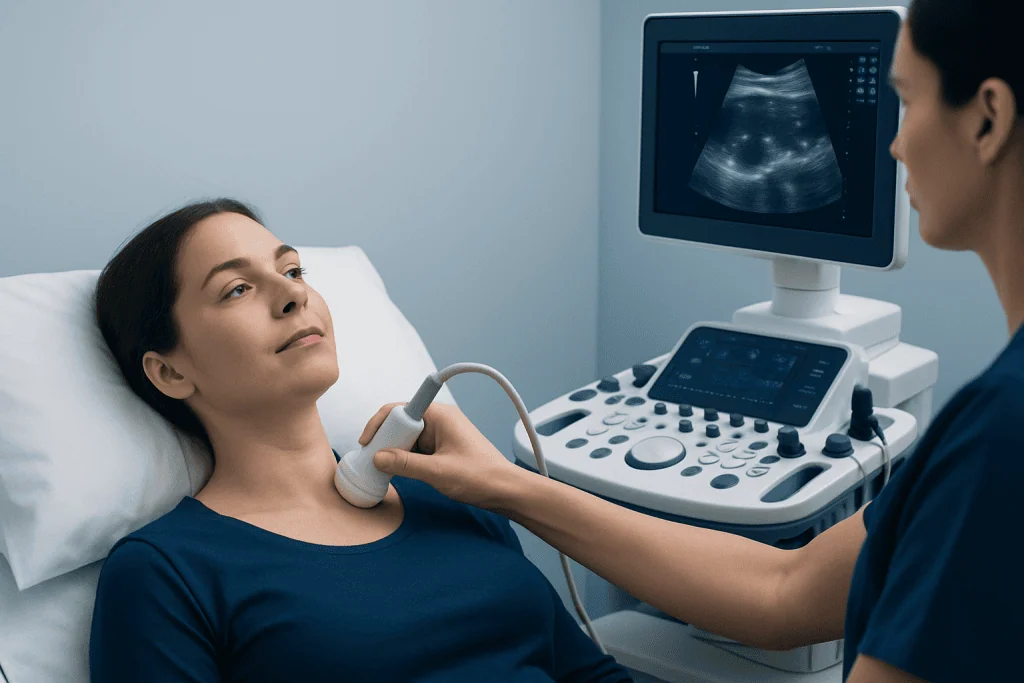
Thyroid cancer may not cause symptoms in its early stages. A person may feel well and have normal thyroid hormone levels. In many cases, the first sign is a painless lump or swelling in the lower front of the neck, often moving slightly when swallowing.
Possible symptoms include a new thyroid nodule, a lump that seems to grow, hoarseness or voice changes, difficulty swallowing, a feeling of pressure in the neck, swollen lymph nodes, or less commonly trouble breathing. These symptoms can also occur with non-cancerous thyroid enlargement, inflammation, infections, or other throat and neck conditions.
Symptoms that persist or progress should be checked, especially when a neck lump is firm, fixed, growing, or associated with enlarged lymph nodes. A timely evaluation helps determine whether observation, further testing, or treatment is appropriate.
Causes & Risk Factors

In many people, the exact cause of thyroid cancer is not known. Cancer develops when genetic changes allow cells to grow and divide in an uncontrolled way. These changes may occur by chance over time, or less commonly may be inherited as part of a family syndrome.
Known risk factors include a history of radiation exposure to the head, neck, or upper chest, especially during childhood; a family history of thyroid cancer; certain inherited genetic conditions; and a personal history of thyroid nodules or goiter. Medullary thyroid cancer has a stronger genetic link than most other thyroid cancer types, so genetic counseling and testing may be recommended in selected cases.
Being female and having thyroid nodules are associated with a higher chance of being evaluated for thyroid cancer, although people of any sex can develop the disease. Iodine intake, autoimmune thyroid disease, and other thyroid conditions may influence thyroid health, but they do not mean a person will necessarily develop cancer. Risk assessment should always be individualized by a clinician.
Diagnosis
Diagnosis usually begins with a medical history and physical examination. The doctor checks the thyroid gland and nearby lymph nodes, asks about symptoms, previous radiation exposure, family history, and thyroid-related conditions. Blood tests commonly include thyroid-stimulating hormone, known as TSH, and sometimes additional thyroid hormone or antibody tests. Blood tests alone cannot diagnose most thyroid cancers, but they help guide the next steps.
Thyroid ultrasound is the key imaging test for evaluating thyroid nodules. It can show the size, shape, borders, internal structure, and blood flow of a nodule, as well as whether nearby lymph nodes look abnormal. Based on ultrasound features and nodule size, the doctor may recommend monitoring or a fine-needle aspiration biopsy.
Fine-needle aspiration biopsy is a commonly used, minimally invasive test. A thin needle removes a small sample of cells from the nodule, often guided by ultrasound. The sample is examined by a pathologist to determine whether the nodule is benign, suspicious, malignant, or indeterminate. If results are unclear, repeat biopsy, molecular testing, or diagnostic surgery may be considered.
Additional imaging such as CT, MRI, PET/CT, or radioiodine scanning may be used when cancer is confirmed or suspected to have spread beyond the thyroid. These tests are not needed for every patient. They are selected according to the cancer type, clinical findings, and treatment plan.
Treatment Planning
Treatment planning for thyroid cancer is highly individualized. Doctors consider the cancer type, tumor size, whether it has spread to lymph nodes or distant organs, ultrasound and biopsy findings, surgical risks, patient age, other medical conditions, and personal priorities. Risk stratification helps estimate the chance of recurrence and guides how intensive treatment and follow-up should be.
For many patients, surgery is the main treatment. Depending on the situation, surgery may involve removing one thyroid lobe, called lobectomy, or removing nearly all or all of the thyroid, called total thyroidectomy. If lymph nodes are involved or strongly suspected to contain cancer, lymph node removal may be performed at the same operation.
After total thyroidectomy, lifelong thyroid hormone replacement is usually required. In some patients, thyroid hormone is given at a level that also suppresses TSH, because TSH can stimulate some thyroid cancer cells. The degree of TSH suppression is carefully balanced against possible side effects, such as heart rhythm concerns or bone thinning, especially in older adults or people with other health conditions.
Good treatment planning includes discussion of benefits, risks, expected recovery, and long-term monitoring. Patients may find it helpful to ask what type of thyroid cancer they have, whether lymph nodes are involved, what stage and risk category apply, whether radioactive iodine is recommended, and how follow-up will be organized.
Treatment Options Beyond Surgery
Radioactive iodine therapy may be recommended after surgery for selected differentiated thyroid cancers, such as many papillary or follicular cancers. It works because thyroid cells can absorb iodine, allowing targeted radiation to destroy remaining thyroid tissue or microscopic cancer cells. It is not useful for all thyroid cancers and is typically not used for medullary or anaplastic thyroid cancer.
External beam radiation therapy may be considered when cancer cannot be fully removed, has returned in the neck, or does not respond to radioactive iodine. It may also be part of treatment for certain aggressive thyroid cancers. Treatment is planned carefully to target cancer while limiting exposure to nearby healthy tissues.
Targeted therapies may be used for advanced thyroid cancers with specific molecular features or for cancers that continue to grow despite standard treatments. These medicines act on pathways that cancer cells use to grow or form blood vessels. Chemotherapy is used less often in thyroid cancer, but it may be considered in specific advanced cases, particularly for anaplastic thyroid cancer or as part of combined treatment strategies.
Some small, very low-risk papillary thyroid cancers may be managed with active surveillance rather than immediate surgery. This means regular ultrasound and clinical review to watch for growth or spread. Active surveillance is not suitable for everyone, but it can be a reasonable option when the tumor is small, confined to the thyroid, and the patient can attend reliable follow-up.
Recovery, Follow-up, and Self-care
Recovery after thyroid surgery varies depending on the extent of surgery and the individual. Temporary sore throat, neck discomfort, voice fatigue, or low calcium levels can occur. The care team will explain wound care, activity restrictions, signs of low calcium such as tingling or muscle cramps, and when to return for review.
Long-term follow-up is an important part of thyroid cancer care. Follow-up may include physical examination, neck ultrasound, thyroid hormone blood tests, thyroglobulin testing for many differentiated thyroid cancers, calcitonin and CEA testing for medullary thyroid cancer, and imaging when needed. The schedule depends on the original risk category and response to treatment.
Self-care supports overall health but does not replace medical treatment. Patients should take thyroid hormone exactly as prescribed, attend follow-up visits, inform clinicians about new symptoms, and discuss supplements or iodine-containing products before use. A balanced diet, regular activity as approved by the doctor, not smoking, and maintaining bone and heart health are also helpful.
Emotional wellbeing matters, too. It is common to feel uncertain after a cancer diagnosis, even when the outlook is favorable. Clear communication with the medical team, written questions before appointments, and support from family, counselors, or patient groups can make decision-making and recovery easier.
When to See a Doctor
A person should see a doctor if they notice a new lump in the front of the neck, a thyroid nodule that is growing, persistent hoarseness, difficulty swallowing, a feeling of pressure in the neck, or swollen lymph nodes. These symptoms do not automatically mean cancer, but they deserve professional assessment.
People with a family history of medullary thyroid cancer, multiple endocrine neoplasia, or significant childhood radiation exposure should discuss screening and risk assessment with an endocrinologist or appropriate specialist. Anyone previously treated for thyroid cancer should seek medical advice for new neck swelling, unexplained cough, bone pain, voice changes, or abnormal follow-up test results.
International patients may need coordinated evaluation by endocrinology, endocrine surgery, radiology, pathology, nuclear medicine, and oncology teams. Acibadem International provides diagnosis and treatment planning for thyroid cancer through multidisciplinary specialists and JCI-accredited hospitals, with care pathways adapted to each patient’s medical needs.
Frequently asked questions
Are all thyroid nodules cancerous?
No. Most thyroid nodules are benign and do not become cancer. Ultrasound features, nodule size, medical history, and sometimes biopsy results help doctors decide whether a nodule needs monitoring or treatment.
Can thyroid cancer occur with normal thyroid blood tests?
Yes. Many people with thyroid cancer have normal thyroid hormone levels and a normal TSH result. Blood tests are useful for understanding thyroid function, but ultrasound and biopsy are often more important for evaluating a suspicious nodule.
Is surgery always required for thyroid cancer?
Surgery is the main treatment for many thyroid cancers, but the extent of surgery varies. In carefully selected patients with very small, low-risk papillary thyroid cancers, active surveillance may be discussed as an alternative to immediate surgery.
What is radioactive iodine therapy?
Radioactive iodine therapy uses a form of iodine that releases radiation inside thyroid tissue. It may be used after surgery for selected differentiated thyroid cancers to treat remaining thyroid tissue or microscopic disease. It is not appropriate for every thyroid cancer type.
Will a person need thyroid hormone after treatment?
After total thyroidectomy, lifelong thyroid hormone replacement is usually needed. After lobectomy, some people still make enough thyroid hormone, while others need medication. Blood tests guide the correct plan.
Can thyroid cancer come back after treatment?
Yes, thyroid cancer can recur, sometimes years later, although many patients do well with appropriate care. This is why follow-up with examination, blood tests, ultrasound, and imaging when needed is important.
What questions should patients ask before treatment?
Patients may ask what type of thyroid cancer they have, whether it has spread, what treatment options are suitable, and what side effects to expect. It is also helpful to ask about follow-up, thyroid hormone needs, voice and calcium risks after surgery, and whether genetic testing is recommended.
This article is for general information only and is not a substitute for professional medical advice. Please consult a qualified doctor about your individual situation.
Thyroid Cancer in Turkey — costs, top hospitals & a free quote
JCI-accredited · board-certified surgeons · reply within 24h
Add us as a Preferred Source to see more of our trusted health content across Google Search, AI Overviews and Discover.
Check your numbers in seconds
BMI, calories, due date, blood pressure and 30+ more clinical calculators — free, instant, doctor-reviewed ranges.

Related Conditions
More from the Health Library

How Diabetes Is Diagnosed: Blood Tests, Symptoms, and Next Steps

Hypoglycemia: Low Blood Sugar Symptoms and Safe Treatment

Type 2 Diabetes: Early Signs, Blood Tests, and Long-Term Control

What Is an Endocrinologist? What They Do and When to See One

How to Choose the Right Endocrinologist or Endocrine Center

Diabetes Doctor vs Endocrinologist: Who Should Manage Your Care?
Endocrinology Specialists at Acibadem
Assoc. Prof. Dr. Sinan Kırım
Endocrinology
Assoc. Prof. Dr. Tuğçe Apaydın
Endocrinology
Dr. Tural Safarlı
Endocrinology
Assoc. Prof. Dr. Adnan Batman (m)
Endocrinology