What Does LASIK Eye Surgery Correct?
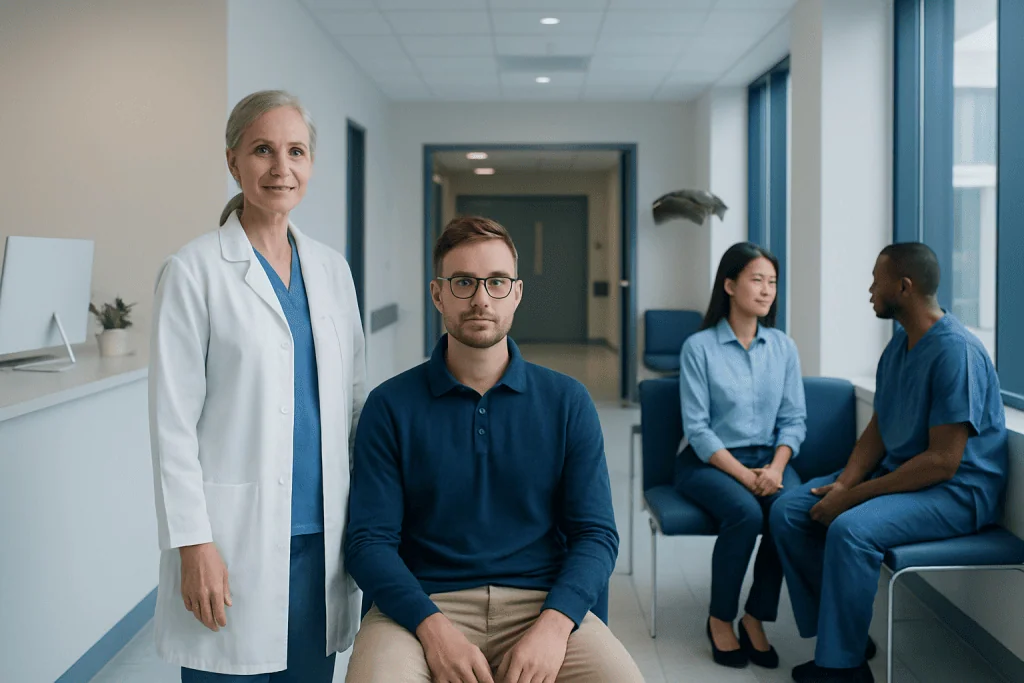
LASIK most commonly corrects myopia, hyperopia, and astigmatism. The procedure reshapes the cornea so incoming light focuses more accurately on the retina.
Key Takeaways
- LASIK most commonly corrects myopia, hyperopia, and astigmatism.
- The procedure reshapes the cornea so incoming light focuses more accurately on the retina.
- LASIK does not treat all causes of blurred vision, such as cataracts or many retinal diseases.
- A detailed eye exam is needed to decide whether LASIK is suitable and safe.
- Alternatives such as PRK, SMILE, or lens-based procedures may be better for some people.
LASIK eye surgery is a laser vision correction procedure that mainly treats common refractive errors so light focuses more clearly on the retina. It can reduce dependence on glasses or contact lenses, but it is not the right option for every vision problem or every patient.
Overview: What LASIK Eye Surgery Corrects
LASIK eye surgery is designed to correct refractive errors, which are focusing problems that cause blurry vision. In a healthy eye, light passes through the cornea and lens and focuses sharply on the retina at the back of the eye. When the eye’s shape causes light to focus in front of or behind the retina, vision becomes blurred.
LASIK works by reshaping the cornea, the clear front surface of the eye. This changes the way light enters the eye so it can focus more precisely on the retina. For many people, the result is clearer distance vision and less reliance on glasses or contact lenses for everyday activities.
The main conditions LASIK corrects are nearsightedness, farsightedness, and astigmatism. It may also help some people with age-related near vision changes, but standard LASIK is generally not a full solution for presbyopia. Because vision needs vary from person to person, an eye specialist evaluates whether LASIK is likely to provide useful, stable improvement.
Which Vision Problems Can LASIK Treat?
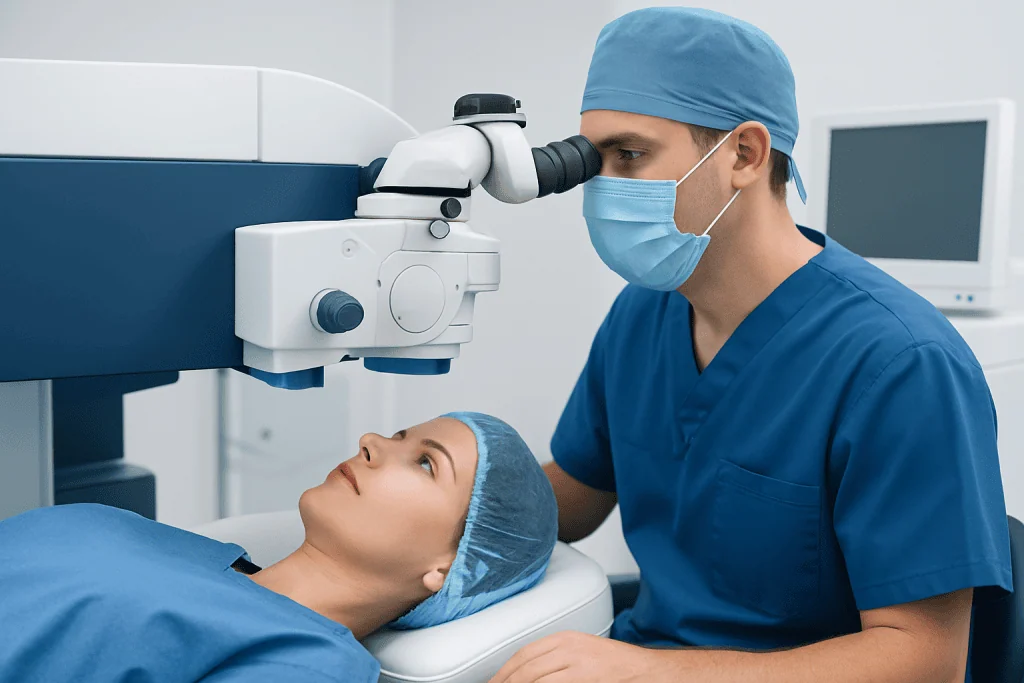
The most common condition treated with LASIK is myopia, also called nearsightedness. In myopia, distant objects appear blurry because light focuses in front of the retina. LASIK flattens the cornea in a controlled way so light moves closer to the correct focal point, improving distance vision.
LASIK can also treat hyperopia, or farsightedness. In hyperopia, close objects may be harder to see clearly, and sometimes distance vision is affected too. Here, the laser reshapes the cornea to increase its focusing power so light reaches the retina more accurately.
A third major use of LASIK is correcting astigmatism. With astigmatism, the cornea or lens has an irregular curve rather than a smooth, even shape. This can cause blurred or distorted vision at all distances, and LASIK can smooth these irregularities to improve clarity.
- Myopia: improves distance vision
- Hyperopia: improves near vision and sometimes overall focus
- Astigmatism: reduces blur caused by an uneven corneal shape
What LASIK Does Not Correct
Although LASIK is very effective for many refractive errors, it does not treat every cause of poor vision. If blurred vision is due to an eye disease rather than a focusing error, LASIK is unlikely to help. For example, vision loss caused by retinal disease, optic nerve disorders, severe dry eye, or scarring of the cornea requires a different approach.
LASIK also does not remove a cataract. A cataract is a clouding of the eye’s natural lens, and it typically causes hazy, dim, or glare-prone vision that cannot be fixed by reshaping the cornea. When cataracts are the main reason for poor eyesight, cataract surgery may be the more appropriate treatment.
Another important limitation is presbyopia, the age-related loss of near focusing ability that usually becomes noticeable in the 40s and beyond. Standard LASIK does not restore the eye’s natural ability to focus up close in the same way it did at a younger age. Some people may still need reading glasses after LASIK, even if their distance vision becomes excellent, and options such as presbyopia treatment may be discussed when relevant.
Who May Be a Good Candidate for LASIK?
A good LASIK candidate usually has a stable glasses or contact lens prescription, healthy eyes, and a cornea that is thick enough for safe reshaping. Most surgeons also look for adults whose vision has not changed significantly over time. Stability matters because performing LASIK before the prescription settles may reduce the durability of the result.
Eye health is just as important as the prescription itself. Conditions such as significant dry eye, corneal thinning, active infection, uncontrolled glaucoma, or certain retinal problems can affect whether LASIK is advisable. People with irregular corneal conditions may need other treatments, including evaluation for keratoconus treatment if corneal weakness is suspected.
General health can matter too. Pregnancy, breastfeeding, some autoimmune conditions, and medications that affect healing may influence timing or eligibility. The decision is individualized, and a full preoperative examination helps the ophthalmologist balance likely benefits with safety.
How Doctors Decide What LASIK Can Correct
Before recommending LASIK, the eye specialist performs a detailed assessment to measure the refractive error and examine the structure of the eye. This usually includes testing vision, measuring corneal thickness, mapping the corneal surface, checking pupil size, and evaluating the tear film. These steps help show not only what LASIK may correct, but also whether the eye can safely undergo the procedure.
Corneal mapping is especially important because it reveals subtle irregularities that may not be obvious during a routine eye exam. If the cornea is unusually thin, steep, or uneven, another procedure may be safer. In some cases, alternatives such as PRK or ReLEx SMILE are considered, depending on the person’s prescription, corneal shape, and lifestyle needs.
The doctor also discusses expectations. LASIK aims to reduce dependence on glasses or contact lenses, but it does not promise perfect vision in every situation. Some people may still need glasses for night driving, very fine detail, or reading as they age.
What to Expect From Results and Recovery
Many patients notice improved vision within a day or two after LASIK, though full stabilization can take longer. During recovery, temporary symptoms such as dryness, glare, halos, light sensitivity, or fluctuating sharpness are not unusual. These effects often improve as the eye heals.
The amount of correction LASIK can provide depends on the type and degree of refractive error, as well as the characteristics of the cornea. Mild to moderate myopia, hyperopia, and astigmatism are often well suited to treatment, while very high prescriptions may require different approaches. In some cases, an enhancement procedure may be considered later if a residual prescription remains and the eye is suitable.
Long-term satisfaction is usually highest when the procedure matches the patient’s visual goals and eye anatomy. People who understand that LASIK corrects focusing errors—but not normal aging changes or unrelated eye disease—tend to have more realistic expectations. Following aftercare instructions, using prescribed eye drops, and attending follow-up visits are important parts of recovery.
When to Consider Other Options and When to See a Doctor
LASIK is not the only method of vision correction, and sometimes it is not the best one. If the cornea is thin, dry eye is significant, or the prescription pattern is less suitable, another laser procedure or a lens-based treatment may be recommended instead. A careful consultation helps identify the most appropriate option rather than assuming one procedure fits everyone.
A person should see an eye doctor if glasses or contact lenses no longer provide clear, comfortable vision, if vision is changing, or if there are symptoms such as eye pain, sudden blur, flashes, floaters, or marked sensitivity to light. These signs may point to a problem that needs medical evaluation before any refractive surgery is considered.
It is also wise to seek professional advice before LASIK if there is a history of corneal disease, eye injury, or previous eye surgery. At Acibadem International, multidisciplinary specialists in JCI-accredited hospitals evaluate and treat patients with refractive errors and other eye conditions, helping international patients understand whether LASIK or another approach is most suitable for their needs.
Frequently asked questions
Can LASIK correct both near and distance vision?
LASIK mainly corrects refractive errors such as myopia, hyperopia, and astigmatism. It can improve either distance or near focus depending on the prescription, but age-related near vision loss from presbyopia may still require reading glasses.
Does LASIK cure astigmatism permanently?
LASIK can effectively reduce or correct astigmatism by reshaping the cornea. However, the eyes can still change over time with aging or other eye conditions, so some people may notice future vision changes.
Can LASIK treat cataracts?
No, LASIK does not treat cataracts. Cataracts occur when the eye’s natural lens becomes cloudy, and the usual treatment is surgical removal of that cloudy lens.
Will someone still need glasses after LASIK?
Some people achieve very little dependence on glasses after LASIK, while others may still need them for certain tasks. Reading glasses are especially common later in life because LASIK does not prevent presbyopia.
Who should not have LASIK?
LASIK may not be suitable for people with unstable prescriptions, significant dry eye, thin or irregular corneas, active eye disease, or some health conditions that affect healing. A full eye examination is the safest way to decide.
Is LASIK the same as other laser eye surgeries?
No, LASIK is one type of laser vision correction. Other procedures, such as PRK or SMILE, work differently and may be better choices for some eyes depending on corneal shape, lifestyle, and prescription.
References
- American Academy of Ophthalmology
- National Eye Institute
- Royal College of Ophthalmologists
- American Society of Cataract and Refractive Surgery
This article is for general information only and is not a substitute for professional medical advice. Please consult a qualified doctor about your individual situation.
Eye Surgery in Turkey — costs, top hospitals & a free quote
JCI-accredited · board-certified surgeons · reply within 24h
Add us as a Preferred Source to see more of our trusted health content across Google Search, AI Overviews and Discover.

Ophthalmology
Comprehensive eye care from laser vision correction to retina, cornea and cataract surgery.
75 specialists in this unit