What Does the Nervous System Do? A Simple Guide for Patients
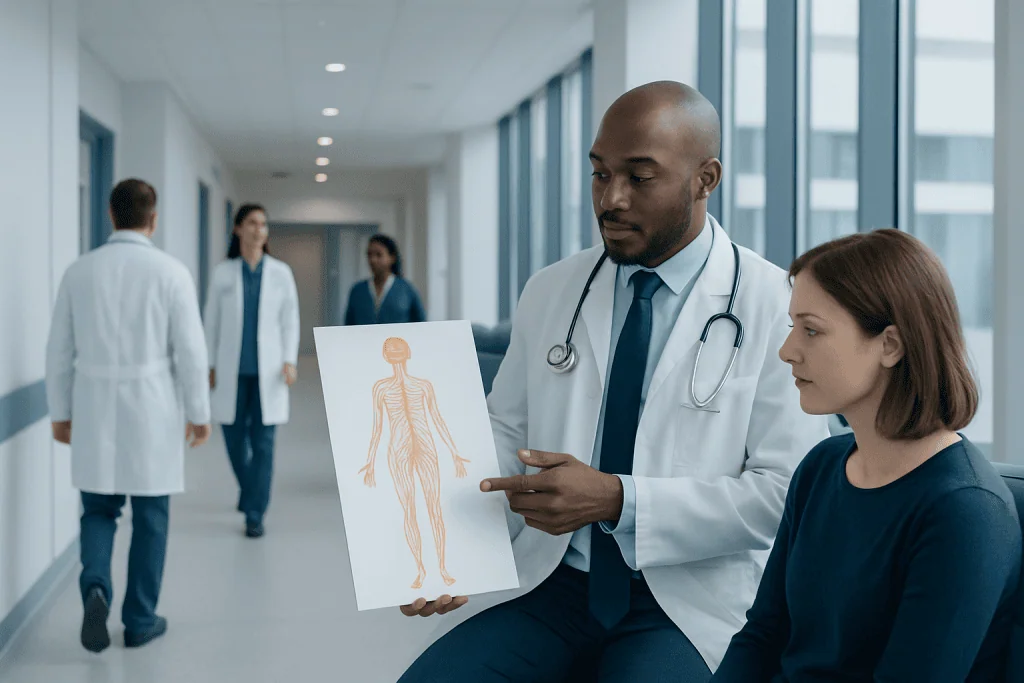
The nervous system includes the brain, spinal cord, and nerves throughout the body. It carries messages that control sensation, movement, memory, emotions, and many automatic body functions.
Key Takeaways
- The nervous system includes the brain, spinal cord, and nerves throughout the body.
- It carries messages that control sensation, movement, memory, emotions, and many automatic body functions.
- Problems in the nervous system can cause symptoms such as weakness, numbness, headaches, balance problems, or changes in speech and thinking.
- Doctors use the medical history, physical exam, and tests such as imaging or nerve studies to diagnose nervous system disorders.
- Healthy habits like exercise, sleep, blood pressure control, and injury prevention support nervous system health.
The nervous system is the body’s communication network. It helps people think, feel, move, and regulate automatic functions such as breathing, heartbeat, digestion, and sleep.
Overview: what the nervous system does
The nervous system is the body’s main control and communication system. It receives information from inside and outside the body, processes that information, and sends instructions back out. In simple terms, it helps a person sense the world, make decisions, and respond appropriately.
Everyday actions depend on this network. The nervous system allows a person to see, hear, smell, taste, and feel touch, temperature, and pain. It also makes it possible to walk, speak, swallow, remember, learn, and manage emotions. Even when a person is not actively thinking about it, the nervous system continues to regulate breathing, heartbeat, blood pressure, digestion, and sleep.
Because it affects nearly every organ and activity, the nervous system plays a central role in health. When it is working well, signals travel quickly and smoothly. When there is an injury, inflammation, infection, poor blood flow, or a degenerative condition, these signals may be disrupted, leading to a wide range of symptoms.
Main parts of the nervous system
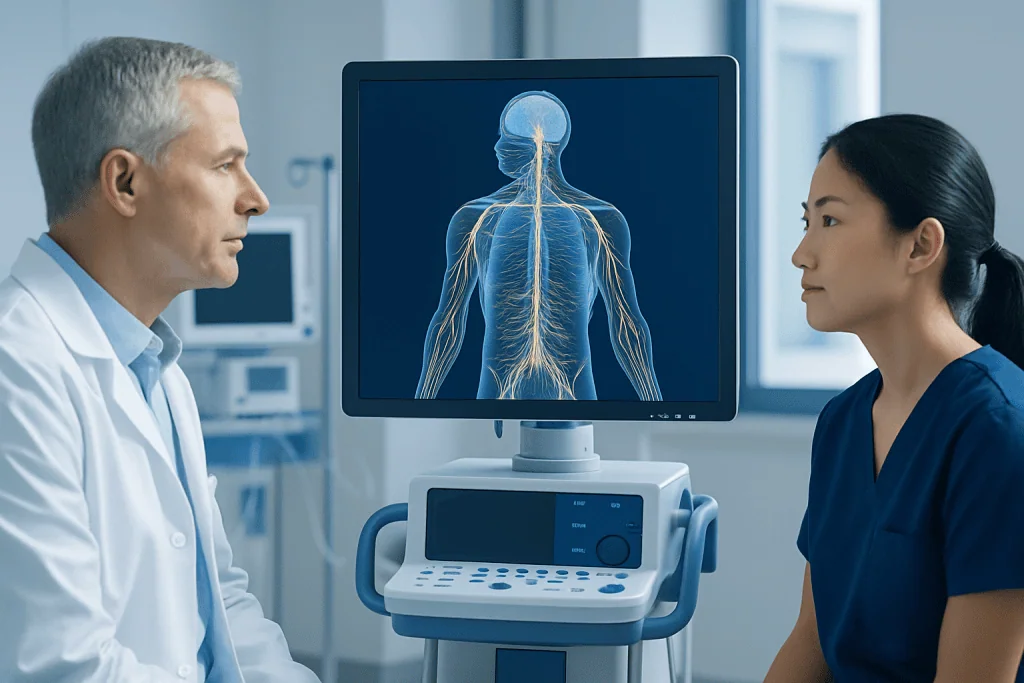
The nervous system is usually divided into two main parts: the central nervous system and the peripheral nervous system. The central nervous system includes the brain and spinal cord. The peripheral nervous system includes all the nerves that branch out from the brain and spinal cord to the rest of the body.
The brain acts as the command center. Different areas of the brain help control movement, language, memory, balance, vision, and emotions. The spinal cord is the main pathway that carries signals between the brain and the body. Peripheral nerves extend this communication system into the arms, legs, face, organs, muscles, and skin.
Doctors also describe a special part of the peripheral system called the autonomic nervous system. This system manages involuntary functions such as heart rate, digestion, sweating, and pupil size. It works continuously in the background to help keep the body in balance.
- Brain: interprets information and directs many body functions
- Spinal cord: carries signals between the brain and the body
- Peripheral nerves: connect the central nervous system to muscles, skin, and organs
- Autonomic nervous system: controls automatic processes such as breathing and digestion
How nerve signals work

Nerve cells, called neurons, are the basic working units of the nervous system. They send electrical signals along their length and communicate with other cells using chemical messengers. This allows messages to travel from one area of the body to another in a highly organized way.
For example, if a person touches something hot, sensory nerves carry that information toward the spinal cord and brain. The brain quickly recognizes danger, and motor nerves send a message back to the muscles to pull the hand away. This process happens very fast, often in a fraction of a second.
The nervous system also works together with other body systems. It communicates closely with muscles for movement, with the endocrine system for hormones, and with the cardiovascular system to maintain blood flow to the brain and nerves. Good communication between these systems supports normal function and overall well-being.
Functions the nervous system controls
The nervous system does much more than control movement. It supports both conscious actions and automatic activities that keep the body alive. Some functions are obvious, such as speaking or raising an arm, while others happen silently, such as adjusting breathing during sleep or changing heart rate during exercise.
Higher brain functions include attention, learning, memory, judgment, planning, and emotional responses. The nervous system also helps regulate pain signals, sleep cycles, appetite, bladder control, and sexual function. This is why neurological conditions can affect many areas of life at once.
Examples of nervous system functions include:
- Processing sight, sound, smell, taste, and touch
- Coordinating balance, posture, and walking
- Controlling muscles used for facial expression, speech, and swallowing
- Supporting memory, concentration, and decision-making
- Regulating heartbeat, breathing, digestion, and blood pressure
- Managing sleep and wakefulness through services such as neurological sleep medicine when needed
Because the nervous system is so broad, symptoms can vary depending on which part is affected. A problem in one area may cause numbness, while another may affect vision, speech, mood, or movement.
Common nervous system problems and symptoms
Nervous system disorders can involve the brain, spinal cord, nerves, or muscles. Some are sudden, such as a stroke, while others develop gradually over time, such as Parkinson disease or other movement disorders. Some affect the coverings of nerves or the immune system, and others may be related to trauma, blood vessel problems, infections, or tumors.
Common symptoms of a nervous system problem include headaches, dizziness, numbness, tingling, weakness, tremor, balance problems, memory changes, seizures, vision changes, and difficulty speaking or swallowing. Some conditions cause pain along a nerve, such as trigeminal neuralgia. Others may affect facial movement, as can happen with Bell palsy.
Not every headache, dizzy spell, or episode of tingling means there is a serious neurological disease. Still, repeated, persistent, or worsening symptoms should be assessed by a qualified doctor. Sudden symptoms, especially weakness on one side, trouble speaking, severe confusion, or a sudden severe headache, need urgent medical attention.
How doctors evaluate the nervous system
Diagnosis begins with a careful medical history and neurological examination. The doctor asks about symptoms, when they started, what makes them better or worse, and whether there is any family history of neurological disease. The examination may assess strength, reflexes, sensation, coordination, balance, vision, speech, and mental function.
If more information is needed, tests may be recommended. Brain or spine imaging can help show structural changes, bleeding, tumors, or signs of poor blood flow. In some cases, specialists may use neuroradiology or neurophysiology studies to better understand how the brain, spinal cord, and nerves are functioning.
Depending on the situation, evaluation may also include blood tests, cognitive testing, sleep studies, or examinations by related specialists such as eye, rehabilitation, or mental health teams. The goal is to identify the cause accurately so treatment can be tailored to the person’s needs.
Treatment and support for nervous system conditions
Treatment depends on the underlying cause. Some conditions improve with medication, physical therapy, occupational therapy, speech therapy, rest, or lifestyle changes. Others may require more advanced interventions, especially if there is a blood vessel problem, severe pain, a movement disorder, or an inflammatory or degenerative neurological disease.
Care is often multidisciplinary. Neurologists may work together with rehabilitation physicians, neurosurgeons, radiologists, pain specialists, psychologists, and other experts. For some patients, services such as movement disorders care or stroke medicine are important parts of diagnosis and treatment planning.
Living with a neurological condition can affect independence, work, school, sleep, and emotional health. Supportive care matters as much as medical treatment. Education, counseling, family support, rehabilitation, and regular follow-up can all help improve daily function and quality of life. Near the end of the care journey, some international patients may choose centers such as Acibadem International, where multidisciplinary specialists in JCI-accredited hospitals diagnose and treat a wide range of neurological conditions.
Protecting nervous system health and when to seek help
While not all neurological conditions can be prevented, many healthy habits support the brain and nerves. These include regular physical activity, a balanced diet, adequate sleep, stress management, and avoiding smoking. Managing blood pressure, diabetes, and cholesterol is especially important because these conditions can affect blood vessels that supply the brain and nerves.
Safety also matters. Wearing seat belts, using helmets when appropriate, preventing falls, and seeking treatment for infections can reduce the risk of certain neurological injuries or complications. People should also review new or unusual symptoms promptly rather than waiting for them to worsen.
A person should arrange a medical evaluation if they have ongoing headaches, repeated dizziness, numbness, weakness, tremor, memory concerns, or changes in balance, speech, or vision. Emergency care is needed for sudden facial drooping, arm weakness, severe confusion, seizures, loss of consciousness, or signs of stroke. Early assessment often helps doctors find the cause sooner and begin the most appropriate care.
Frequently asked questions
What is the nervous system in simple terms?
The nervous system is the body’s communication network. It carries messages between the brain, spinal cord, nerves, and the rest of the body so a person can feel, think, move, and regulate automatic functions.
What are the two main parts of the nervous system?
The two main parts are the central nervous system and the peripheral nervous system. The central nervous system includes the brain and spinal cord, while the peripheral nervous system includes the nerves that connect the rest of the body to that central control system.
What symptoms can suggest a nervous system problem?
Symptoms can include headaches, dizziness, numbness, tingling, weakness, tremor, balance problems, memory changes, or trouble with speech and vision. The symptoms depend on which part of the nervous system is affected and how severe the problem is.
Can nervous system disorders be treated?
Many nervous system disorders can be treated or managed, even if they cannot always be cured completely. Treatment may involve medication, rehabilitation, lifestyle changes, monitoring, or specialized procedures depending on the diagnosis.
How do doctors test the nervous system?
Doctors start with a medical history and neurological examination. If needed, they may order imaging scans, nerve studies, blood tests, or other assessments to understand the cause of symptoms more clearly.
When should someone seek urgent help for neurological symptoms?
Urgent help is needed for sudden weakness, facial drooping, trouble speaking, severe confusion, seizures, loss of consciousness, or a sudden severe headache. These may be signs of a serious condition that needs immediate medical evaluation.
References
- World Health Organization
- National Institute of Neurological Disorders and Stroke
- MedlinePlus
- Centers for Disease Control and Prevention
- American Academy of Neurology
This article is for general information only and is not a substitute for professional medical advice. Please consult a qualified doctor about your individual situation.
Explore treatments in Turkey — costs, top hospitals & a free quote
JCI-accredited · board-certified surgeons · reply within 24h
Add us as a Preferred Source to see more of our trusted health content across Google Search, AI Overviews and Discover.
Check your numbers in seconds
BMI, calories, due date, blood pressure and 30+ more clinical calculators — free, instant, doctor-reviewed ranges.

Neurology
Diagnosis and treatment of disorders of the brain, spinal cord, nerves and muscles.
51 specialists in this unit