When Are You Most Fertile?

The fertile window usually includes the five days before ovulation and the day of ovulation. In a typical 28-day cycle, ovulation often happens around day 14, but cycle timing varies widely.
Key Takeaways
- The fertile window usually includes the five days before ovulation and the day of ovulation.
- In a typical 28-day cycle, ovulation often happens around day 14, but cycle timing varies widely.
- Cervical mucus changes, basal body temperature, and ovulation predictor kits can help estimate fertile days.
- Irregular periods, certain health conditions, and age can make ovulation harder to predict.
- If pregnancy does not happen after months of well-timed intercourse, medical evaluation may be helpful.
A person is usually most fertile during the five days before ovulation and on the day ovulation happens. Understanding this fertile window can help with pregnancy planning, cycle tracking, and knowing when to seek medical advice.
Overview: Understanding the Fertile Window
The question “when are you most fertile?” is closely linked to ovulation. Ovulation is the point in the menstrual cycle when one of the ovaries releases an egg. Pregnancy is most likely if sperm are already present in the reproductive tract when the egg is released, or if intercourse happens very close to that time.
For most people, the fertile window includes the five days before ovulation, the day of ovulation, and possibly the following day. This is because sperm can survive in the female reproductive tract for several days, while the egg usually remains viable for only about 12 to 24 hours after release. In practical terms, the best chance of conception is often in the two days before ovulation and on the day ovulation occurs.
Although many people learn that ovulation happens on day 14, that is only an average for a 28-day cycle. Real-life cycles vary. Some people ovulate earlier or later, and ovulation can shift from month to month, especially with stress, travel, illness, weight change, or underlying hormonal conditions.
When in the Cycle Is Fertility Highest?

A menstrual cycle is counted from the first day of a period to the first day of the next period. In a 28-day cycle, ovulation often happens around day 14. In a 30-day cycle, it may happen closer to day 16. In a 24-day cycle, it may happen around day 10. This means the fertile window depends on the individual cycle length rather than a fixed calendar date.
A helpful way to estimate ovulation is to count backward about 14 days from the expected start of the next period. That is because the second half of the cycle, called the luteal phase, is often more consistent than the first half. Even so, this remains an estimate, not a guarantee.
If a person has intercourse every one to two days during the fertile window, the chance of sperm meeting the egg is highest. For those trying to conceive, regular intercourse every two to three days throughout the cycle can also be a practical approach, especially if cycle timing is uncertain.
- Typical fertile window: about 6 days total
- Highest fertility: usually the 2 days before ovulation and the day of ovulation
- Lower chance of conception: after ovulation has clearly passed
Signs That Ovulation May Be Approaching
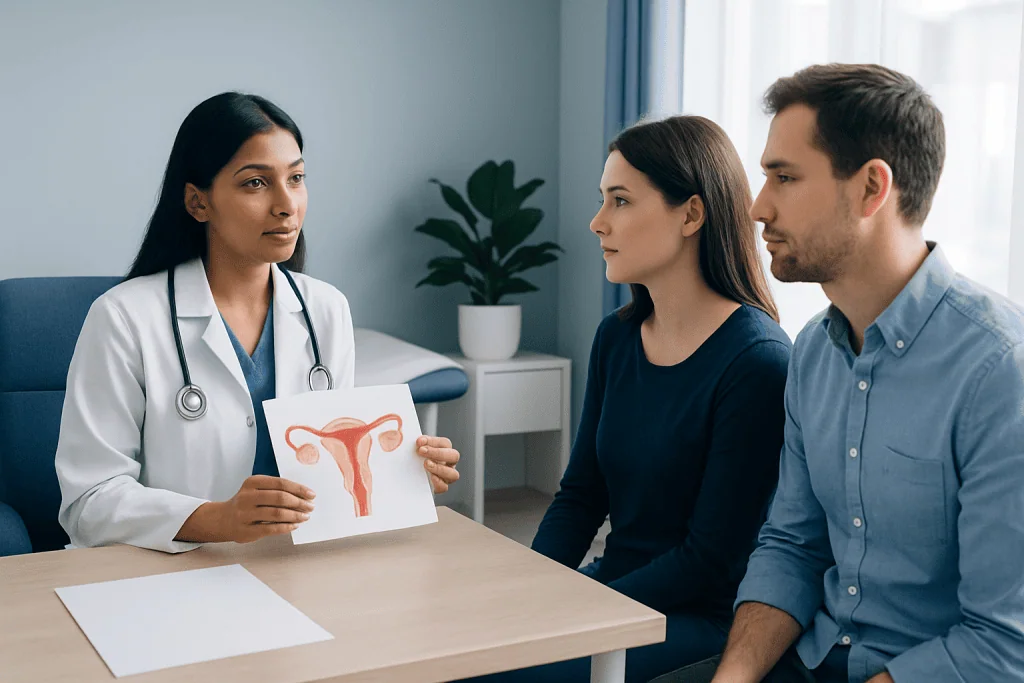
The body may give clues that ovulation is near. One of the most useful signs is a change in cervical mucus. As ovulation approaches, mucus often becomes clear, slippery, and stretchy, similar to raw egg white. This type of mucus helps sperm move more easily through the cervix.
Some people notice mild one-sided lower abdominal discomfort around ovulation, sometimes called mittelschmerz. Others may feel increased sexual desire, mild bloating, breast tenderness, or light spotting. These symptoms can suggest that ovulation is near, but they are not reliable for everyone.
Basal body temperature tracking can also help. After ovulation, progesterone causes a slight rise in resting body temperature. This temperature shift confirms that ovulation has likely already happened, so it is most useful for learning cycle patterns over time rather than predicting the fertile window in advance.
Ovulation predictor kits detect the rise in luteinizing hormone (LH) that usually happens 24 to 36 hours before ovulation. For many people, these kits are one of the most practical home tools for identifying the most fertile days. However, results may be harder to interpret in some hormonal conditions, including polycystic ovary syndrome.
Why Fertility Timing Can Vary
Not everyone ovulates in a predictable way. Irregular periods can make the fertile window difficult to estimate. Cycles may vary because of adolescence, approaching menopause, stress, significant exercise, low body weight, obesity, thyroid disorders, elevated prolactin, or conditions that affect the ovaries.
Age also matters. Fertility gradually declines over time, especially from the mid-30s onward, because both the number and quality of eggs decrease. A person may still ovulate regularly but have a lower chance of conception each cycle than at a younger age.
Certain gynecologic conditions can affect fertility even when intercourse is well timed. Examples include ovulation disorders, endometriosis, uterine abnormalities, blocked fallopian tubes, and infections such as pelvic inflammatory disease. Structural issues such as uterine septum may also play a role in some people.
It is also important to remember that fertility is not only about the female partner. Sperm health, including sperm count, movement, and shape, is a major part of conception. When pregnancy is delayed, evaluating both partners is often the most efficient and supportive approach.
How Doctors Assess Ovulation and Fertility
If someone is trying to conceive and is unsure about their fertile days, a doctor may begin with a review of menstrual history, cycle length, symptoms, and any prior pregnancies or miscarriages. The clinician may ask about weight changes, exercise, medications, pelvic pain, and signs of hormonal imbalance such as acne or excess hair growth.
Tests may include blood work to evaluate hormones involved in ovulation, such as thyroid hormones, prolactin, progesterone, and ovarian hormones. Ultrasound can help assess the ovaries and uterus. In some cases, doctors monitor follicle growth through the cycle to estimate when ovulation is likely to occur.
When pregnancy has not happened after a period of regular, well-timed intercourse, a more complete fertility assessment may be recommended. This may include checking whether the fallopian tubes are open and arranging semen analysis for the male partner. Care may involve specialists in infertility evaluation or female infertility care depending on the findings.
Improving the Chances of Conception
For many couples, the simplest strategy is to have intercourse every one to two days during the estimated fertile window. This helps ensure that sperm are present before ovulation occurs. If cycle timing is uncertain, intercourse every two to three days throughout the month may reduce stress while still supporting a good chance of conception.
General health also supports reproductive health. Reaching a healthy weight, stopping smoking, limiting alcohol, sleeping well, managing stress, and treating ongoing medical conditions can all be helpful. Taking folic acid before conception is commonly advised for people who are trying to become pregnant.
Some fertility-friendly habits are about avoiding unnecessary pressure. Tracking every sign too closely can become emotionally tiring. Many people benefit from combining one or two reliable methods, such as cycle tracking with LH testing, rather than using many methods at once.
If natural conception is not happening, medical treatment may help depending on the cause. Options can range from ovulation support and timed intercourse to insemination or IVF treatment. The most suitable path depends on age, test results, duration of infertility, and personal preferences.
When to See a Doctor
Medical advice is sensible if pregnancy has not occurred after 12 months of regular unprotected intercourse in people under 35, or after 6 months if the female partner is 35 or older. Earlier evaluation is often recommended for very irregular periods, absent periods, known endometriosis, prior pelvic infection, repeated miscarriage, or known male factor concerns.
A doctor should also be consulted if there is severe menstrual pain, unusually heavy bleeding, bleeding between periods, or symptoms suggesting a hormonal disorder. These issues do not always mean infertility, but they may point to a condition that would benefit from assessment and treatment.
Professional support can also be valuable for emotional reasons. Trying to conceive can be stressful, especially when timing intercourse becomes a source of pressure. Clear guidance can make the process more manageable and help couples focus on realistic next steps.
Near the end of the care pathway, some international patients choose centers with coordinated fertility services. Acibadem International’s multidisciplinary specialists and JCI-accredited hospitals diagnose and treat fertility-related conditions for international patients when further evaluation is needed.
Frequently asked questions
How many days after a period is someone most fertile?
It depends on the length of the menstrual cycle. In a 28-day cycle, fertility is often highest around days 12 to 14, but many people ovulate earlier or later. The most fertile time is usually the five days before ovulation and the day of ovulation.
Can someone get pregnant right after their period?
Yes, especially if they have a short cycle or if ovulation happens early. Sperm can live in the reproductive tract for several days, so intercourse soon after a period may still lead to pregnancy. This is one reason cycle timing can be difficult to predict using calendar dates alone.
Is ovulation always on day 14?
No. Day 14 is only a common average for a 28-day cycle. Many people ovulate on a different day, and the timing can vary from one month to the next.
What are the best signs of ovulation?
Common signs include clear, slippery cervical mucus, a positive ovulation predictor kit, and sometimes mild pelvic discomfort. A rise in basal body temperature can confirm that ovulation has likely happened. Not everyone notices physical symptoms, so combining methods can be more helpful.
How often should couples have intercourse when trying to conceive?
A common recommendation is every one to two days during the fertile window. If predicting ovulation is difficult, intercourse every two to three days throughout the cycle is also reasonable. This approach can reduce pressure while still giving a good chance of conception.
When should someone seek help for trouble getting pregnant?
It is generally a good idea to seek medical advice after 12 months of trying if under age 35, or after 6 months if age 35 or older. Earlier evaluation may be appropriate for irregular periods, absent periods, known pelvic disease, or previous miscarriages. A doctor can assess ovulation, reproductive anatomy, and sperm factors.
References
- World Health Organization
- American College of Obstetricians and Gynecologists
- American Society for Reproductive Medicine
- NHS
- Centers for Disease Control and Prevention
This article is for general information only and is not a substitute for professional medical advice. Please consult a qualified doctor about your individual situation.
IVF & fertility treatment in Turkey — success rates and costs
JCI-accredited · board-certified surgeons · reply within 24h
Add us as a Preferred Source to see more of our trusted health content across Google Search, AI Overviews and Discover.
Check your numbers in seconds
BMI, calories, due date, blood pressure and 30+ more clinical calculators — free, instant, doctor-reviewed ranges.

Related Treatments
Related Conditions
More from the Health Library



Related Specialists

Prof. Dr. Bülent Tıraş
Gynecology & Obstetrics
Prof. Dr. Mete Güngör
Gynecology & Obstetrics
Prof. Dr. Faruk Suat Dede
Gynecology & Obstetrics
Prof. Dr. Tansu Küçük
Gynecology & Obstetrics