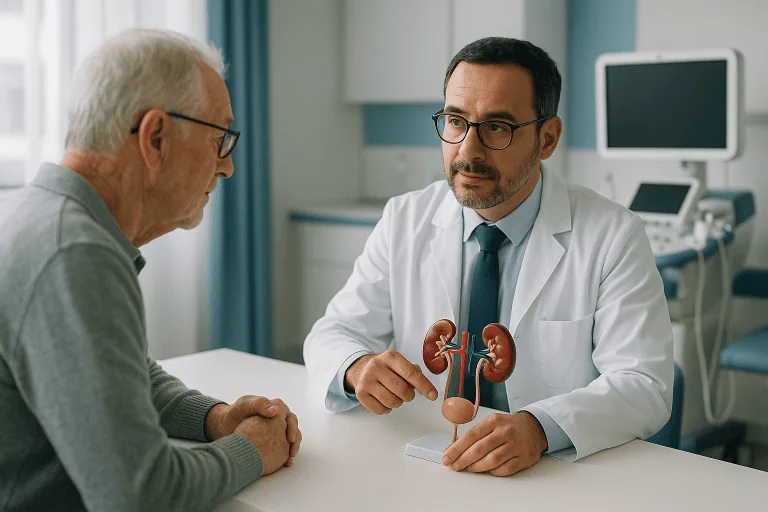
Complicated UTI Treatment
Complicated UTI treatment manages urinary infections linked to obstruction, stones, catheters, pregnancy, kidney involvement, or chronic disease using targeted diagnostics, antibiotics, and urology care.

Quick answer
Complicated UTI treatment is the management of urinary tract infections that occur with a complicating factor, kidney involvement, obstruction, stones, a catheter, pregnancy, diabetes or immune suppression. It combines urine culture, blood tests and imaging with culture-directed antibiotics, and adds urological procedures such as drainage or catheter exchange when the infection cannot clear until the underlying cause is corrected.
Complicated UTI: When a Urinary Infection Is More Than Simple Cystitis
A complicated UTI is a urinary tract infection that occurs alongside a factor that makes it harder to treat: kidney involvement, a blockage such as a stone, a urinary catheter, pregnancy, diabetes, an abnormal urinary tract or a weakened immune system. Treatment combines carefully chosen antibiotics for UTI control with tests, and sometimes urological procedures, that identify and correct the underlying cause. It is designed for patients whose infection is severe, keeps returning or has not cleared with a standard short course of tablets.
The most familiar urinary infection, cystitis, sits at the mild end of the spectrum. Most people who develop a straightforward urinary tract infection expect exactly what usually happens: a urine test, a short antibiotic course and relief within a few days. A complicated infection behaves differently. It may reach the kidneys, develop around a catheter, sit behind an obstruction, or arise during pregnancy or immune suppression. In these situations the infection is harder to clear and more likely to come back if the reason it took hold is never found.
For many patients, the uncertainty is worse than the symptoms. Why did the infection return after antibiotics? Is there a kidney stone? Will hospital admission be needed? Could bacteria reach the bloodstream? How long will recovery take? These are reasonable questions, and complicated UTI treatment exists to answer them systematically, with targeted diagnostics, microbiology-guided antibiotics and, where necessary, urological intervention. The aim is not aggressive treatment for its own sake. It is to establish severity and cause, treat the infection effectively, protect kidney function and reduce recurrence, while avoiding antibiotics and procedures the patient does not need.
What is a complicated UTI?
A complicated UTI is any urinary tract infection in which an anatomical, functional, medical or procedural factor raises the risk of treatment failure, spread of infection or recurrence. In practice, a UTI is considered complicated when it involves the kidneys, occurs with obstruction, stones, an enlarged prostate, urinary reflux or a catheter, follows recent urinary tract surgery, or develops in a patient who is pregnant, diabetic, immunosuppressed or living with chronic kidney disease or a neurological bladder disorder. The label matters because it changes the whole approach: the choice of antibiotic, the length of treatment, the need for imaging and the question of whether a procedure is required alongside medication.
What makes a UTI complicated?
A UTI becomes complicated when something prevents the urinary system from clearing bacteria the way a healthy, unobstructed system normally would. The most common complicating factors are:
- Obstructiona stone, stricture, tumour or enlarged prostate blocking the flow of urine, so infected urine cannot drain.
- Kidney involvementinfection that has ascended beyond the bladder to one or both kidneys (pyelonephritis).
- Foreign materialindwelling catheters, stents and urinary devices, on which bacteria form biofilms that antibiotics struggle to penetrate.
- Incomplete bladder emptyingresidual urine from prostate enlargement, neurological disease or urinary retention gives bacteria a reservoir in which to persist.
- Host factorspregnancy, diabetes, chronic kidney disease, transplant medication, cancer treatment or other immune suppression, all of which reduce the body’s ability to contain infection.
- Resistant or unusual organismsbacteria that do not respond to first-line antibiotics, often after repeated antibiotic exposure or healthcare contact.
Any one of these factors is enough. Several together, an elderly diabetic patient with a catheter and a stone, for example, call for particularly careful, coordinated management.
How is a complicated UTI different from acute cystitis?
Acute cystitis is a sudden bacterial infection of the bladder lining: the burning, urgency and frequency most people picture when they hear “UTI”, and in an otherwise healthy, non-pregnant woman it is usually classed as uncomplicated. A complicated UTI may start the same way but occurs in a setting where a short standard course cannot be relied upon to work. It helps to keep the anatomy in mind: you may see the phrase “UTI tract” written online, and although UTI already stands for urinary tract infection, the tract in question runs from the kidneys, down the ureters, into the bladder and out through the urethra. The higher the infection sits and the more obstacles it hides behind, the further it moves from simple cystitis. An acute UTI confined to a healthy bladder responds quickly; an infection behind a blocked ureter does not.
Why are male UTIs considered complicated?
UTIs in men are traditionally classed as complicated because the male urinary tract is anatomically better defended, so when infection does occur there is usually an underlying reason, prostate enlargement, prostatitis, incomplete bladder emptying, a stone, or recent catheterisation or instrumentation. The prostate itself adds a second problem: bacteria can lodge within prostate tissue, where many antibiotics penetrate poorly, so treatment may need a different drug choice and a longer duration than the same infection would in a woman. That is why a first UTI in a man commonly prompts evaluation rather than a reflex prescription. In current practice the rule is applied with some nuance, not every male UTI needs the full complicated pathway, but the default remains careful assessment.
What Is Complicated UTI Treatment?
Complicated UTI treatment is the medical and, when necessary, urological management of urinary infections that occur in higher-risk situations. It is not a single medication or procedure but a structured pathway. In outline, it runs through five steps:
- Step 1, locate and grade the infection. A bladder infection in a patient with a catheter is approached differently from a kidney infection caused by an obstructing stone. Severity assessment decides whether care is outpatient or hospital-based.
- Step 2, identify the organism. Urine culture and antibiotic susceptibility testing show which bacteria are present and which drugs are likely to work.
- Step 3, image when indicated. Ultrasound or CT looks for obstruction, stones, abscesses or structural abnormality.
- Step 4, treat the infection and its cause together. Antibiotics are combined with drainage, catheter management or stone treatment where a physical problem is keeping the infection alive.
- Step 5, narrow, complete and prevent. Therapy is refined once cultures return, treatment is completed for the appropriate duration, and a prevention plan addresses the factor that caused the infection.
Antibiotics remain central to care, but in a complicated UTI they must be chosen deliberately. Broad initial cover may be needed for patients who are acutely unwell, febrile, have kidney involvement or carry risk factors for resistant bacteria. Once culture results are available, therapy is usually narrowed to the most appropriate agent. This improves effectiveness and supports responsible antibiotic use.
Some patients can be managed as outpatients with oral medication and close follow-up. Others need intravenous antibiotics, hospital monitoring, fluid support, drainage of an obstructed kidney, or removal or exchange of a catheter. The plan depends on symptoms, vital signs, kidney function, pregnancy status, prior infections, previous antibiotic use, imaging findings and the bacteria identified. Two patients with the same symptoms can quite properly receive very different treatment.
Who May Need Treatment for a Complicated UTI?
Specialised evaluation is worth considering when symptoms are severe, recurrent, unusual or occur alongside another medical condition. Typical UTI symptoms include burning during urination, urgency, frequent urination, cloudy or foul-smelling urine, lower abdominal discomfort and blood in the urine: the classic picture of a bladder infection. When infection reaches the kidneys, the picture changes: fever, chills, flank or back pain, nausea, vomiting and marked fatigue.
Not everyone presents typically. Older adults may develop confusion, weakness, reduced appetite or a general decline in function with little urinary complaint. Patients with spinal cord injury or neurological bladder conditions may not feel classic pain, noticing instead fever, increased spasms, leakage, catheter blockage or a change in urine appearance. People with diabetes or immune suppression can deteriorate quickly even when early symptoms seem mild. And some bladder symptoms are not infection at all, conditions such as interstitial cystitis can mimic a UTI with sterile urine, which is one more reason culture results matter.
Diagnosis begins with history and examination. Clinicians ask about previous UTIs, recent antibiotics, kidney stones, catheter use, urinary retention, pregnancy, diabetes, kidney disease, urological procedures and any recent hospital care elsewhere. A urinalysis can show white blood cells, bacteria, blood or nitrites within minutes, but urine culture is especially important in complicated cases because it names the organism and shows which antibiotics are likely to work against it.
Blood tests assess kidney function, inflammation, blood counts and electrolyte balance. Blood cultures are drawn if fever, chills, low blood pressure or suspected bloodstream infection is present. Imaging is added when there is flank pain, persistent fever, suspected obstruction or stones, recurrent infection, impaired kidney function, poor response to treatment or a history suggesting structural disease. Ultrasound evaluates the kidneys and bladder without radiation; CT gives finer detail on stones, abscesses and obstruction when clinically justified.
Patients typically arrive at complicated UTI care through one of a few scenarios: symptoms did not improve on initial antibiotics; infections keep returning; fever and flank pain suggest the kidneys; a culture has shown resistant bacteria; a catheter is or was in place; a stone or enlarged prostate is suspected; or a chronic condition raises the stakes. In each case the real question is not only “which antibiotic?” but “why is this infection happening, and what must be corrected so it clears safely?”
Conditions and Indications Addressed by Complicated UTI Treatment
Complicated UTI treatment covers a broad group of infections in which standard short-course therapy may not be enough. The most common indication is acute pyelonephritiskidney infection, which can cause fever, flank pain, nausea and systemic illness. Kidney infections need timely care because they can affect kidney function and may seed the bloodstream.
UTI with urinary obstruction is the most urgent indication. A stone, enlarged prostate, ureteral narrowing, tumour or severe retention can prevent infected urine from draining. When infection sits behind a blockage, antibiotics alone may not be sufficient; drainage of the urinary system may be urgently required to control the infection and protect the kidney.
Catheter-associated UTI is a routine part of complicated care. Indwelling catheters, intermittent catheterisation and urinary devices give bacteria a route into the tract and a surface on which to form biofilms. Treatment usually combines culture-directed antibiotics with catheter replacement, or removal, if the catheter is no longer needed, and a review of catheter technique and necessity.
Recurrent UTI warrants complicated-pathway evaluation when infections are frequent, involve resistant organisms, occur in men, follow urological surgery, or accompany stones, incomplete bladder emptying or anatomical abnormality. In men, infection may be linked to prostate enlargement, prostatitis, retention or instrumentation, and should be assessed with those possibilities in mind.
UTI in pregnancy changes the calculus entirely, because infection can affect both maternal and fetal health. Antibiotics must be selected for safety in pregnancy, and kidney infection in a pregnant patient usually means closer monitoring. Patients with diabetes, chronic kidney disease, a transplant, cancer treatment or immune suppression likewise need individualised care, because they are more vulnerable to severe infection and to resistant organisms.
The pathway also covers rarer, more serious conditions: emphysematous (gas-forming) infections, renal or perinephric abscess, infection involving urinary diversions, infection after urological procedures, and UTIs caused by multidrug-resistant organisms. These are uncommon but demand coordinated input from infectious disease, urology, nephrology, obstetrics or intensive care, depending on the patient.
UTI Antibiotics: How Antibiotics for UTI Treatment Are Chosen
UTI antibiotics are not interchangeable, and in complicated infection the choice is more consequential than in simple cystitis. The right drug must be active against the specific organism, safe for the specific patient, kidney function, pregnancy, allergies and drug interactions all count, and able to reach the site of infection, whether that is the bladder lining, kidney tissue or the prostate. Antibiotics for UTI in complicated cases are therefore ideally chosen from culture and susceptibility results rather than by habit or by repeating whatever worked last time.
When a patient is too unwell to wait for culture results, clinicians start empiric therapy: a broader antibiotic selected from the likely organisms, local resistance patterns and the patient’s own culture history. Once the laboratory reports which bacteria are growing and which drugs they respond to, treatment is narrowed. This two-stage approach, cover first, refine later, is standard in complicated UTI and is the safest balance between undertreating a serious infection and overusing broad antibiotics.
Which antibiotic is best for a UTI infection?
The best antibiotic is the one your cultured bacteria are susceptible to, that is safe for you, and that reaches the infected site: there is no single best antibiotic for UTI in every situation. For uncomplicated acute cystitis, commonly used first-line agents include nitrofurantoin, fosfomycin and trimethoprim–sulfamethoxazole, depending on local resistance and patient factors. Complicated infections, kidney involvement or resistant organisms may call for different classes, cephalosporins, fluoroquinolones, aminoglycosides, piperacillin–tazobactam or, for multidrug-resistant bacteria, carbapenems, often started intravenously. Which of these is “best” can only be answered by the culture report and the prescribing doctor, which is precisely why complicated UTI care leans so heavily on microbiology.
What are the 3 day antibiotics for UTI?
Three-day antibiotic courses apply to uncomplicated acute cystitis, not to complicated UTI. In healthy, non-pregnant women with a simple bladder infection, some regimens are conventionally short, trimethoprim–sulfamethoxazole is often given for three days, nitrofurantoin for around five, and fosfomycin as a single dose. Complicated infections need longer treatment because bacteria are harder to eradicate from kidney tissue, the prostate, stones or biofilm. Duration is set individually by the treating doctor according to the site of infection, the organism, whether obstruction was relieved and how quickly the patient improves. Taking a three-day course for what is actually a complicated infection is one of the classic reasons symptoms return within weeks.
What is the fastest-acting antibiotic for treating a UTI?
Any correctly matched antibiotic begins killing susceptible bacteria within hours of the first dose; the practical difference between agents lies less in raw speed than in whether the organism is susceptible at all. Most patients on an effective drug notice symptoms easing within the first one to three days. An antibiotic the bacteria resist acts at no speed whatsoever, which is why a “fast” drug chosen blindly can be slower, in real terms, than a culture-directed one started a day later. If symptoms are not improving after a few days of treatment, the working assumptions, organism, drug, dose, drainage, need to be re-examined rather than simply waiting longer.
What is the fastest way to clear a UTI?
The fastest reliable route is an antibiotic matched to the organism, plus correction of anything blocking urine flow: there is no instant fix, and no over-the-counter product eradicates the bacteria of a true infection. Hydration and urinary analgesics can ease symptoms while the antibiotic works, but they do not substitute for it. In complicated UTI, speed comes from sequence: prompt assessment, a properly collected culture, appropriate empiric cover, and early drainage if the system is obstructed. Skipping steps, in particular, taking leftover antibiotics for UTI symptoms before a culture is collected, usually costs time later, because it can mask the organism and muddy every subsequent decision.
Antibiotics also carry their own considerations: side effects, interactions and the wider problem of resistance. Repeated broad or incomplete courses select for resistant bacteria and raise the risk of complications such as antibiotic-associated diarrhoea. Patients finishing a prescribed course at home are usually advised to take doses at consistent intervals, to complete the full course unless the treating team changes the plan, and to report side effects such as a rash, severe diarrhoea or a new fever promptly rather than stopping silently and hoping for the best.
How Complicated UTI Treatment Is Performed
Initial Assessment and Stabilisation
The first step is establishing whether the patient is stable. Clinicians check temperature, blood pressure, heart rate, breathing, hydration, pain and mental state. High fever, shaking chills, low blood pressure, confusion, severe flank pain, persistent vomiting or reduced urine output all point towards a more serious infection and hospital-based care. If sepsis is suspected, treatment starts at once: intravenous fluids, blood and urine cultures, and empiric antibiotics while results are pending. Nothing about that sequence waits for imaging or paperwork.
For stable patients, evaluation can happen in an outpatient or day-care setting. The team reviews prior urine cultures, previous antibiotic exposure, allergies, kidney function, pregnancy status and recent procedures. Patients who bring existing records, imaging reports, culture results, medication lists, allow the team to avoid repeating tests and to reach a decision faster. In complicated UTI, an old culture report is often the single most useful document a patient owns.
Urine Culture, Laboratory Tests and Imaging
A properly collected urine sample is essential. In catheterised patients, the sample is taken from the catheter sampling port or after catheter replacement, never from the drainage bag, where stagnant urine misrepresents what is happening in the bladder. Urinalysis gives rapid orientation, but culture and susceptibility testing guide definitive therapy. If antibiotics have already been taken, the culture may be less reliable, so sample timing is weighed carefully.
Blood tests show how the body is responding and whether kidney function is affected. In more severe illness, blood cultures can identify bacteria in the bloodstream. Additional tests follow the individual history, glucose control markers in diabetes, pregnancy-related assessments where relevant.
Imaging is matched to the clinical question. Ultrasound can show kidney swelling, bladder retention, some stones and structural change, all without radiation, useful in pregnancy. CT gives more detail on stones, obstruction, abscesses and gas-forming infection when needed. In selected cases, cystoscopy or other endoscopic evaluation is arranged after the acute infection settles, to investigate recurrent infection, bleeding, suspected bladder pathology or structural concerns. The principle throughout: image to answer a specific question, not by routine.
Escalating, Narrowing and Completing the Antibiotic Course
Antibiotic strategy evolves over the course of treatment. A stable patient without severe features may start oral therapy while cultures are pending, provided local resistance patterns and prior cultures support the choice. A patient with fever, kidney involvement, vomiting, likely resistant organisms, pregnancy-related concerns or significant chronic disease usually starts intravenously, in hospital or an infusion setting.
When culture results return, the plan is refined: switching from intravenous to oral once the patient improves, narrowing to a more targeted drug, changing therapy if resistance is found, or adjusting the dose for kidney function. Duration depends on where the infection sits, which organism is involved, whether the prostate or kidney is affected, whether obstruction was present and how quickly the patient responds. Prostate involvement in particular pushes both drug choice and duration in a different direction, because few antibiotics penetrate prostate tissue well.
Stewardship runs through every decision. Overly broad or repeated antibiotics drive resistance and side effects; undertreating a serious infection is dangerous. A culture-directed plan is how clinicians hold both risks in balance, enough drug, for long enough, and no more.
Addressing Obstruction, Stones, Catheters and Other Causes
If the urinary tract is blocked, relieving the obstruction may be the most urgent step of all. An infected, obstructed kidney is a medical emergency, because infected urine under pressure cannot drain. Urologists place either a ureteral stent through the bladder or a nephrostomy tube through the skin into the kidney, depending on anatomy, the patient’s condition and available expertise. Definitive stone treatment or reconstruction usually waits until the infection has stabilised.
For catheter-associated infection, the catheter is removed if it is no longer needed, or exchanged if it must stay. Long-term catheter management includes reviewing catheter size, drainage technique, hygiene, change frequency and alternatives such as intermittent catheterisation. Treating the infection while leaving a colonised catheter untouched is a recipe for relapse.
When stones are involved, timing matters. During acute infection the priorities are antibiotics and drainage; stone removal follows once inflammation has settled and cultures are controlled. Depending on size and location, options include endoscopic techniques, laser fragmentation and other urological procedures. For patients with recurrent stones, stone analysis and metabolic evaluation help reduce the chance of the next one, and with it, the next infection.
In men with suspected prostate involvement, antibiotics are chosen for prostate penetration and given for an appropriate duration. Where prostate enlargement and retention are feeding the infections, later management may involve medication, bladder drainage or surgery, decided with the treating urologist. In patients with neurogenic bladder or incomplete emptying, assessing bladder function and settling a long-term drainage strategy is often the real key to preventing recurrence.
Monitoring, Follow-Up and Recovery
During treatment, clinicians track fever, pain, urinary symptoms, hydration, kidney function and response to antibiotics. Most patients on effective therapy start to feel better within the first few days, although fatigue can linger after a kidney infection or sepsis. If symptoms do not improve, the team reassesses systematically: the diagnosis itself, the culture results, the antibiotic choice and dose, the imaging, and whether an undrained source remains somewhere in the system.
Repeat urine cultures are not needed for every patient once symptoms resolve, but they are advised in pregnancy, recurrent infection, resistant organisms, persistent symptoms, kidney involvement or before certain urological procedures. Follow-up then pivots to prevention: hydration habits, bladder emptying, catheter care, stone prevention, diabetes control, medication review and correction of anatomical issues where present.
Recovery pace differs with severity. Someone recovering from a milder complicated UTI can usually return to normal activity within days once symptoms are improving and oral therapy is tolerated. Someone recovering from sepsis, kidney infection, a drainage procedure or surgery may need a longer period of observation and a more gradual return to daily routines. Discharge documentation, medication instructions and follow-up recommendations are prepared so that care continues without a gap, whichever physician takes over the follow-up afterwards.
Why Acting Early Matters
Delaying care allows a complicated UTI to progress. A bladder infection can ascend to the kidneys. A kidney infection can lead to dehydration, kidney impairment or bloodstream infection. Where obstruction is present, pressure and infection together can damage kidney tissue and become life-threatening without drainage. Patients with diabetes, immune suppression, pregnancy or chronic kidney disease have less physiological reserve and can deteriorate faster than they or their families expect.
Delay also makes treatment harder. Repeated incomplete antibiotic courses select for resistant bacteria. Persistent obstruction or stones let bacteria hide, producing relapse after symptoms briefly improve. Catheter biofilms make eradication difficult unless the catheter itself is managed. Each postponed decision narrows the options available later.
Early evaluation does not automatically mean hospitalisation or invasive treatment, often the opposite. A timely urine culture, kidney function test and appropriate imaging spare the patient trial-and-error antibiotic use, and they identify the minority who genuinely need urgent urological intervention while everyone else is treated more simply. The earlier the assessment, the more proportionate the treatment tends to be.
Benefits of Complicated UTI Treatment
The benefits are strongest when antibiotics, diagnostics and urological care are coordinated around the actual cause of the infection rather than delivered piecemeal.
| Benefit | What It Means for You |
|---|---|
| Targeted infection control | Urine culture and susceptibility testing help select antibiotics that are more likely to work against the specific bacteria causing your infection. |
| Protection of kidney function | Prompt treatment of kidney infection, obstruction or urinary retention reduces the strain on kidney tissue and the risk of lasting injury. |
| Lower risk of recurrence | Identifying stones, catheter issues, prostate enlargement or incomplete bladder emptying addresses the reason infections keep returning. |
| Safer care for higher-risk patients | Patients who are pregnant, diabetic, immunosuppressed or medically complex receive antibiotic and monitoring plans adapted to their situation. |
| More appropriate antibiotic use | Therapy can be narrowed once culture results return, limiting unnecessary broad antibiotic exposure and its side effects. |
| Timely urological intervention when needed | Drainage, catheter management or stone treatment is arranged when antibiotics alone are unlikely to resolve the infection. |
Recovery Timeline After Complicated UTI Treatment
Recovery varies with the severity of infection, the presence of obstruction or stones, the patient’s overall health, and whether hospital care or a procedure was required. The table below describes a typical course, not a promise; your own timeline may run faster or slower.
| Time Period | What Patients Can Expect |
|---|---|
| Day 1 | Assessment focuses on severity, cultures, blood tests and imaging if needed. Antibiotics may begin immediately, especially with fever, kidney involvement or suspected sepsis. |
| First 48 to 72 Hours | Fever, pain and urinary symptoms usually begin to improve if the antibiotic is effective and urine is draining adequately. Lack of improvement prompts re-evaluation, not just patience. |
| First Week | Treatment may transition from intravenous to oral antibiotics when appropriate. Catheter changes, drainage procedures or additional imaging are completed if indicated. |
| First Month | Follow-up reviews culture results, kidney function, recurrence risk and any planned urological treatment, such as stone removal after infection control. |
| Longer Term | Prevention becomes the focus: stones, bladder emptying, prostate issues, catheter strategy, diabetes control and other individual risk factors. |
What Influences Outcomes and a Good Result?
A good result means more than symptom relief. It means the infection is controlled, kidney function is protected, the antibiotic was appropriate, and the underlying risk factor has been managed or clearly scheduled for follow-up. Several factors shape whether that is achieved.
Timing. Patients treated before severe dehydration, kidney impairment or sepsis develops generally have a safer, more predictable course. The window between “uncomfortable” and “seriously unwell” can be short in higher-risk patients.
Accurate microbiology. Culture-directed antibiotics matter most when there have been repeated infections, prior antibiotic exposure, recent hospitalisation or a realistic chance of resistant bacteria. Guessing wrongly in these patients costs days and options.
Source control. If infected urine is trapped behind a stone or obstruction, antibiotics cannot do their work until drainage is restored. If a catheter stays colonised, infection recurs unless it is exchanged or removed. If the bladder empties poorly, residual urine keeps offering bacteria a foothold. In complicated UTI, correcting the plumbing is often as important as choosing the drug.
The patient’s own health. Diabetes control, immune function, kidney health, pregnancy, hydration, drug interactions and allergies all shape both the antibiotic choice and the pace of recovery. In men, prostate involvement demands a different strategy and longer treatment. In chronic kidney disease, dosing must be adjusted precisely to stay effective without becoming toxic.
Adherence. Antibiotics should be taken exactly as prescribed unless the treating team changes the plan. Stopping early because symptoms improve lets infection return; extending or restarting old antibiotics on your own initiative can obscure culture results and feed resistance. Both errors are common, and both are avoidable.
Individualised prevention. Some patients need a stone-prevention strategy; others a revised catheter plan, evaluation for retention, discussion of options such as vaginal oestrogen after menopause, pregnancy monitoring, tighter diabetes management or follow-up imaging. The most effective plan explains not only how the current infection is being treated, but how the next one will be made less likely.
How Acibadem Organises Complicated UTI Care
Patients with complicated UTI often need more than a prescription: they may be dealing with persistent symptoms, resistant bacteria, conflicting past advice or the need to coordinate urology and infectious disease input alongside work, family and other health commitments. At Acibadem, evaluation follows a clear clinical pathway: confirm the infection, grade its severity, identify the risk factors, treat with appropriate antibiotics and involve urology when source control is needed.
Because complicated infections cut across specialties, care is coordinated rather than sequential. Laboratory testing, radiology, inpatient care, intensive monitoring where required and urological procedures can be arranged within the same hospital network, and complex cases are reviewed by the relevant specialist teams, urology, infectious diseases, nephrology, obstetrics, radiology, intensive care or internal medicine, depending on the situation. Urine culture and susceptibility testing move treatment from broad initial cover to a targeted plan; ultrasound, CT and endoscopic evaluation are used where they answer a defined question.
For patients who need procedures, urologists manage drainage, catheter-related problems, stones and prostate-related obstruction. The sequencing principle holds throughout: controlling infection safely comes first, and definitive stone or prostate treatment is scheduled once the infection has stabilised, except where emergency drainage of an infected, obstructed system cannot wait.
Practical support surrounds the medicine as well. Previous records, imaging and culture reports are reviewed rather than repeated wherever possible; admission is arranged when the clinical picture requires it; and the team takes time to make sure patients and families genuinely understand the plan, which drug, for how long, what to watch for and when the next review happens. Discharge documents, medication instructions and follow-up recommendations are prepared to support continuity with the patient’s own physician afterwards, because a complicated UTI is only fully treated when the follow-up actually happens.
The Bottom Line
A complicated UTI is unsettling precisely because it breaks the script, symptoms return, antibiotics fail, or imaging raises questions about stones, obstruction or the kidneys. The reassuring path is a methodical one: identify the organism with a proper culture, understand why this particular infection is complicated, treat it with an antibiotic strategy matched to the bacteria and the patient, and correct whatever physical factor is stopping recovery.
None of this requires drama. Most of it requires sequence: assessment before prescription, culture before commitment, drainage before definitive surgery, and prevention before the next infection has a chance to start. Understood that way, complicated UTI treatment is less a battle against a stubborn infection than a process of removing, one by one, the reasons it became stubborn in the first place.
Preparation
- Evaluation usually includes urine culture, blood tests, kidney function tests, and imaging when obstruction or stones are suspected. Patients should share current medicines, allergies, pregnancy status, catheter use, and previous antibiotic history. Severe fever, flank pain, vomiting, or sepsis signs may require urgent hospital assessment.
Aftercare
- Antibiotics should be taken exactly as prescribed, even if symptoms improve. Follow-up urine culture or imaging may be needed, especially for recurrent infection, kidney involvement, stones, or catheter-related UTI. Patients should seek urgent care if fever, worsening pain, confusion, or reduced urination develops.
Frequently Asked Questions
What affects the cost of complicated UTI treatment?
The main factors are the severity of infection, need for imaging, culture results, antibiotic route, hospital admission, and whether a urology procedure is required. Costs may also change if resistant bacteria, obstruction, stones, catheter issues, pregnancy, or chronic disease are involved.
How can I get a personalised quote from Acibadem?
You can request a free consultation and share your medical records, urine culture results, blood tests, imaging reports, medication list, and current symptoms. The international patient team can then help the specialist estimate the likely diagnostic and treatment plan.
Is a complicated UTI usually treated as an outpatient or in hospital?
Some stable patients can be managed as outpatients, while others need hospital care for intravenous antibiotics, monitoring, or urgent urology treatment. The decision is made by a specialist after reviewing symptoms, risk factors, test results, and imaging.
What is typically included in a treatment package?
A package may include specialist consultation, urine and blood tests, microbiology culture, imaging, antibiotics, hospital care if needed, urology procedures when indicated, interpreter support, and discharge planning. The exact inclusions should be confirmed before travel.
Can the final cost change after arrival?
Yes. Complicated UTI treatment may change after culture results, imaging, or specialist examination. If a blockage, stone, resistant organism, catheter problem, or kidney involvement is found, additional treatment may be needed.
Is this information medical or financial advice?
No. This is general educational information only. A specialist assessment and a personalised quote are needed to understand the safest treatment plan and likely cost for your case.
Medically reviewed by the Acıbadem International Medical Board September 1, 2026
See our medical review board →
Update history
- PublishedJune 8, 2026
- Medical review approvedSeptember 1, 2026
- Last content updateSeptember 8, 2026
Trusted care for international patients
From the Acibadem Blog

What Makes a UTI Complicated? Obstruction, Catheters, Pregnancy and Kidney Involvement
A UTI is called complicated when something about the person or their urinary tract raises the risk that standard treatment will fail or the…