Conjunctivitis Treatment
Conjunctivitis, or pink eye, is inflammation of the conjunctiva causing redness, discharge, itching and tearing. Care focuses on identifying viral, bacterial or allergic causes and relieving symptoms.

Quick answer
Conjunctivitis, commonly called pink eye, is inflammation of the conjunctiva: the thin, transparent membrane covering the white of the eye and lining the eyelids. It can be viral, bacterial, allergic or irritant-related, and treatment differs for each: viral cases usually need supportive care and hygiene, bacterial cases may need antibiotic drops or ointment, and allergic cases respond to trigger avoidance and anti-allergy eye drops.
What Is Conjunctivitis?
Conjunctivitis is inflammation of the conjunctiva, the thin, transparent membrane that covers the white part of the eye and lines the inside of the eyelids. It is commonly called pink eye because the tiny blood vessels in this membrane swell when inflamed, turning the eye pink or red. It affects children and adults alike, and it is one of the most frequent reasons people of any age seek eye care.
Conjunctivitis is not a single condition with one standard treatment. The inflammation may be caused by viruses, bacteria, allergies, irritants, contact lens problems, dry eye or, less commonly, more serious infections and inflammatory diseases. Each cause behaves differently. Some forms spread through a household or classroom within days. Others are not contagious at all. A few point to problems that go beyond the conjunctiva and need a different kind of care entirely.
For most people, the first worry is contagion, whether a child can go to school, whether the rest of the family will catch it, whether shared towels are a risk. Others worry about vision, pain, recurring episodes, or whether antibiotics are needed. These are reasonable questions, and the honest answer to each of them depends on the cause of the inflammation, not on the redness alone.
The most important step in managing conjunctivitis is therefore identifying why the eye is inflamed. Viral conjunctivitis usually needs supportive care and careful hygiene. Bacterial conjunctivitis may need antibiotic eye drops or ointment. Allergic conjunctivitis responds to reduced allergen exposure and medication that calms the allergic response. And occasionally, what looks like pink eye is actually keratitis, uveitis, a corneal abrasion, glaucoma or a contact lens–related infection, conditions that are managed quite differently and assessed with more urgency. This page explains how the causes are told apart, how each is treated, and what recovery usually looks like.
Pink Eye Symptoms
Pink eye symptoms typically include redness, discharge, tearing, itching, burning, eyelid swelling and a gritty sensation, some patients describe it as having sand in the eye. Symptoms may begin in one eye and spread to the other, depending on the cause, and many people wake to find the eyelids stuck together because discharge has dried into crusts overnight.
The redness itself follows a recognisable pattern. Pull the lower eyelid down gently and you may notice the eye inside red where the lining is normally pale pink. In milder irritation, particularly with allergy, you may find the eye inside reddish rather than intensely inflamed. The white of the eye can look uniformly pink, or you may see individual dilated blood vessels running across it.
How do you tell if you have conjunctivitis?
You can usually tell by the combination of a red or pink eye, watering or discharge, and irritation, while vision stays essentially normal. The character of the discharge and the dominant symptom then point towards the likely cause, although only an eye examination can confirm it.
Viral conjunctivitis typically causes watery discharge, redness, irritation and light sensitivity that is usually mild. It often follows a cold, sore throat or other upper respiratory infection, or recent contact with someone who has red eyes. It frequently starts in one eye and reaches the other within a few days.
Bacterial conjunctivitis tends to produce thicker yellow, green or white discharge. The eyelids may crust heavily, especially first thing in the morning, and the discharge often reappears soon after the eye is wiped clean.
Allergic conjunctivitis makes itching the dominant symptom. It usually affects both eyes at once and often travels with sneezing, nasal congestion, eczema, asthma or a clear seasonal pattern. The eyes may water heavily, the lids can look puffy, and symptoms flare after exposure to pollen, dust, pets or cosmetics.
These patterns overlap, which is why redness alone should not be self-diagnosed with confidence. Significant eye pain, blurred vision that does not clear with blinking, and marked light sensitivity are not typical of conjunctivitis. When they appear alongside a red eye, they suggest a different diagnosis and change how quickly the eye needs to be examined.
What Causes Conjunctivitis of the Eye?
Conjunctivitis of the eye is caused by anything that inflames the conjunctiva, and clinicians group the causes into a handful of categories: infection (viral or bacterial), allergy, irritation, chemical injury, contact lens–related problems, and inflammation linked to other eye or systemic conditions. Knowing which category you are in determines everything that follows, whether you are contagious, whether medication helps, and how long recovery is likely to take.
What can trigger conjunctivitis?
Common triggers include viruses, most often adenoviruses, and bacteria carried on skin, in the respiratory tract, or transferred from contaminated hands, cosmetics, eye drop bottles and contact lens cases. Airborne allergens such as pollen, dust mites, animal dander and moulds trigger the allergic form. Irritants such as smoke, chlorine, air pollution, sprays, dust and some preserved eye drops inflame the surface directly. In contact lens users, overwear, sleeping in lenses, water exposure and poor lens hygiene are frequent triggers, and chemical splashes can injure the conjunctiva outright.
Viral conjunctivitis
Viral conjunctivitis is the most common form in many communities. It is frequently associated with adenoviruses and often occurs alongside cold-like symptoms. It spreads easily through hand-to-eye contact, shared towels, contaminated surfaces and close personal contact, which is why it moves quickly through households, schools, childcare settings, offices and travel environments. Treatment focuses on comfort, hygiene and monitoring for corneal involvement or unusually prolonged symptoms; antibiotics have no effect on the virus itself.
Bacterial conjunctivitis
Bacterial conjunctivitis occurs in children and adults and is often related to common skin or respiratory bacteria. It can also follow exposure to contaminated hands, shared cosmetics, old or shared eye drops, or a poorly cleaned contact lens case. Some bacterial cases are mild and short-lived; others need prompt treatment, particularly in newborns, immunocompromised patients and contact lens users. When treatment is indicated, antibiotic drops or ointment are the usual approach.
Allergic conjunctivitis
Allergic conjunctivitis is common in people with seasonal or year-round allergies. It can be intermittent, flaring with pollen seasons, or chronic when the trigger, dust mites, pets, moulds, is part of the home environment. Eye rubbing, eyelid swelling, watery discharge and significant itching are typical. Treatment aims to control symptoms, calm the inflammation and reduce exposure to the allergens driving it, and avoiding the trigger can matter as much as any medication.
Contact lens–associated conjunctivitis
Contact lens–associated conjunctivitis and ocular surface irritation deserve particular caution. Redness in a contact lens wearer should never be assumed to be simple pink eye. Improper lens hygiene, overwear, sleeping in lenses, exposing lenses to tap water or swimming pools, and reactions to lens solutions can all contribute to irritation or infection. Because an early corneal infection, keratitis, can look very similar to conjunctivitis and can threaten vision if untreated, corneal evaluation is an important part of assessing any red eye in a lens user.
Irritant and chemical conjunctivitis
Irritant conjunctivitis can result from smoke, chlorine, air pollution, cosmetics, sprays, dust or foreign particles landing on the eye. Symptoms usually improve once the irritant is removed, but redness or discomfort that persists deserves evaluation. Chemical conjunctivitis, after exposure to cleaning products, industrial chemicals, acids, alkalis or certain personal care substances, is a different matter. Clinicians treat chemical exposure as an emergency, particularly with alkaline substances, because the cornea and deeper eye structures can be injured rapidly.
Neonatal conjunctivitis
Neonatal conjunctivitis, eye inflammation in a newborn, is treated as a priority in clinical practice. It can be associated with blocked tear ducts, bacterial infection, or infections acquired during birth. Because some neonatal eye infections can be serious, these cases are examined early rather than observed, even when the discharge looks mild.
Recurrent or chronic conjunctivitis
Recurrent or chronic conjunctivitis often reflects something other than repeated bad luck: blepharitis, dry eye disease, ongoing allergy, sensitivity to a medication or preservative, eyelid abnormalities, autoimmune disease, or an infection that needs targeted rather than empiric treatment. Patients with repeated episodes benefit from a broader diagnostic approach, because treating each flare in isolation leaves the underlying cause in place.
Who May Need Medical Assessment
Medical evaluation for conjunctivitis makes sense when eye redness comes with discharge, tearing, itching, burning, eyelid swelling or a persistent gritty sensation. The pattern matters: symptoms that started in one eye and spread, symptoms that follow a cold, symptoms that flare every spring, each tells the examining physician something useful. So do risk factors such as contact lens wear, recent eye surgery, trauma, chemical exposure, immune system conditions and pregnancy.
Do I need to see a doctor for conjunctivitis?
Not every case needs a clinic visit. Mild viral or allergic conjunctivitis often settles with supportive care at home, lubricating drops, compresses and strict hand hygiene. An examination becomes worthwhile when symptoms are severe, last longer than expected, keep returning, involve a newborn, follow an injury or chemical splash, or occur in anyone who wears contact lenses. It is also sensible when the discharge is thick and constant, when the eyelids are markedly swollen, or when you simply cannot tell which type of conjunctivitis you have, because the treatments differ.
Certain features are treated as red flags in eye clinics because they point beyond the conjunctiva: significant eye pain, reduced vision, marked light sensitivity, a foreign body sensation that does not improve, a cloudy cornea, severe headache with nausea, a fixed pupil, or redness after trauma or chemical exposure. These patterns are assessed urgently in clinical practice, because they may indicate keratitis, uveitis, acute glaucoma or a corneal injury rather than routine conjunctivitis.
Some groups are examined more readily regardless of how mild the symptoms look. Newborns fall into this category, as do contact lens wearers, people with diabetes or weakened immune systems, patients who have recently had eye surgery, and anyone whose red eye sits alongside other unexplained illness. In these situations, the cost of a missed diagnosis is higher, and the examination itself is quick.
Pink Eye Treatment: Matching Care to the Cause
Pink eye treatment is the medical care used to reduce inflammation of the conjunctiva, relieve symptoms, address the underlying cause and prevent complications, or transmission, when the condition is contagious. It is not the same from one patient to the next, because the causes are not the same. What helps a bacterial infection does nothing for an allergy, and vice versa.
How is conjunctivitis in the eye treated?
Conjunctivitis in the eye is treated according to its cause: supportive care for viral cases, antibiotic drops or ointment for bacterial cases when they are indicated, anti-allergy measures for allergic cases, and removal of the offending substance for irritant and chemical cases.
In viral conjunctivitis, treatment is usually supportive. Your physician may recommend lubricating eye drops, cold compresses, gentle cleaning of eyelid crusts, careful handwashing, separate towels and pillowcases, and a pause in contact lens wear until the eye has recovered. Crusts are most comfortably removed with a clean, damp cotton pad or gauze, wiping gently from the inner corner outwards, using a fresh pad for each eye and each pass, so that discharge is carried away from the eye rather than back across it. Antibiotics do not treat viruses, so they are not routinely used unless there is concern about a secondary bacterial infection or a different diagnosis. In viral cases with significant inflammation or corneal involvement, additional prescription medication may be considered under specialist supervision.
In bacterial conjunctivitis, antibiotic eye drops or ointment may be prescribed, particularly when there is thick discharge, heavy eyelid crusting, involvement of both eyes or a clinical pattern suggesting bacterial infection. The choice of medication depends on the patient’s age, symptoms, risk factors, contact lens use, pregnancy status, allergies and local medical standards. Symptoms often begin improving within a few days, and physicians usually ask patients to complete the prescribed course even if the eye looks better sooner.
In allergic conjunctivitis, treatment focuses on calming the immune reaction. Options may include preservative-free artificial tears to dilute allergens on the eye’s surface, cold compresses to ease swelling and itching, antihistamine or mast cell stabiliser eye drops, and, in selected cases, short-term anti-inflammatory medication under an ophthalmologist’s supervision. Steroid eye drops are not first-line treatment for routine allergy and are used only under medical supervision, because they can raise eye pressure and worsen certain infections. Avoiding triggers, pollen, dust mites, animal dander, cosmetics, smoke or particular eye drops, can be just as important as any prescription.
For irritant and chemical conjunctivitis, the priority is removing the offending substance safely. In clinical management, thorough eye rinsing comes first, followed by examination of the ocular surface and treatment to reduce inflammation and protect the cornea. Chemical exposure, especially involving acids, alkalis, cleaning products or industrial substances, is handled as an urgent problem. Contact lens wearers with any form of conjunctivitis are asked to stop lens wear and not restart it until the eye specialist has confirmed the surface has healed.
Will conjunctivitis go away by itself?
Often, yes. Viral conjunctivitis usually clears on its own over one to two weeks as the body deals with the infection, and many mild bacterial cases also settle without prescription treatment. Allergic conjunctivitis, by contrast, tends to persist for as long as the trigger is present: it fades when the pollen season ends or the exposure stops, and returns when it resumes. The exceptions matter: conjunctivitis in a newborn, in a contact lens wearer, after chemical exposure, or with pain and vision changes does not belong in the wait-and-see category.
How long is conjunctivitis contagious?
Viral conjunctivitis is generally considered contagious for as long as the eye remains red and watery, which often means a week or more, in some cases for as long as symptoms last. Bacterial conjunctivitis is usually regarded as far less contagious after a day or two of appropriate antibiotic treatment, or once the discharge has stopped in mild cases that settle on their own. Allergic and irritant conjunctivitis are not contagious at all. This is one of the most practical reasons an accurate diagnosis matters: it answers the school, work and travel questions immediately, instead of leaving a family guessing.
What is the fastest way to clear conjunctivitis?
There is no shortcut that works for every case; the fastest route is matching the treatment to the cause. For bacterial cases, appropriate antibiotic drops can shorten the course in selected patients. For allergic cases, removing the trigger and using anti-allergy drops brings the quickest relief. For viral cases, nothing speeds up the virus itself, but lubricating drops and compresses make the days more comfortable, and strict hygiene prevents the infection bouncing from one eye to the other or through the household, which is what most often prolongs an episode. What does not help: taking antibiotics for viral or allergic conjunctivitis, or using leftover steroid drops without supervision, both of which can make matters worse.
Good treatment also includes education. Patients leave knowing how to use their drops correctly, how long they may be contagious, when to expect improvement and which changes mean the eye should be looked at again. That practical guidance often makes the difference between a straightforward recovery and prolonged irritation, reinfection or unnecessary medication use.
How Conjunctivitis Care Is Performed, Step by Step
Conjunctivitis care is almost always outpatient care. Most patients do not need hospitalisation or any procedure. The visit is structured to identify the cause, protect the cornea, relieve symptoms and send you home with instructions you can actually follow. A typical assessment moves through these stages:
- Medical history and risk assessment
- Eye examination
- Identifying the likely cause
- A personalised treatment plan
- Diagnostic technology where needed
- Discussion of duration and expectations
- Recovery guidance and follow-up planning
Step 1: Medical History and Risk Assessment
The visit begins with a detailed discussion of symptoms. Your physician will ask when the redness started, whether it began in one eye or both, and whether there is itching, pain, tearing, discharge, crusting, blurred vision or light sensitivity. The appearance of the discharge helps guide the diagnosis, although it is never the only factor.
Risk factors are reviewed carefully: contact lens use, recent upper respiratory infection, allergy history, exposure to someone with pink eye, recent eye surgery, trauma, chemical exposure, immune system conditions, pregnancy, current medications and prior episodes. For children, school or nursery exposure may be relevant. For patients who have been travelling, recent flights, hotel stays, climate changes and environmental exposures can also come into the picture.
Step 2: Eye Examination
The examination typically starts with checking vision in each eye. This step matters because uncomplicated conjunctivitis does not usually reduce vision significantly, so if vision is down, the physician looks carefully for another explanation.
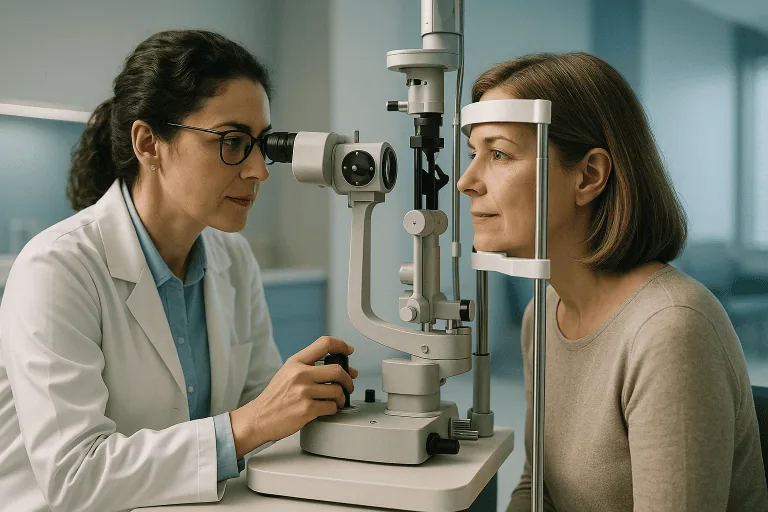
The eyelids, lashes, conjunctiva, cornea and tear film are then examined under magnification. This allows the physician to distinguish conjunctival inflammation from corneal disease, eyelid inflammation, dry eye or deeper inflammation inside the eye. The pattern of redness, the type of discharge, any swelling, small bumps or follicles under the eyelids, and the clarity of the cornea all carry diagnostic information.
Fluorescein dye may be placed on the eye to highlight scratches, ulcers or areas of corneal irritation. The test is quick and generally well tolerated. In contact lens users, fluorescein evaluation is particularly important. Eye pressure measurement or a dilated examination may be added when the symptoms suggest a condition beyond conjunctivitis.
Step 3: Identifying the Likely Cause
In most cases, the diagnosis is made clinically. Watery discharge, recent cold symptoms and a contagious contact suggest a viral cause. Thicker discharge with heavy morning crusting suggests bacteria. Prominent itching in both eyes with an allergy history suggests allergy.
The picture can overlap, though. A patient may have dry eye alongside allergy, a viral infection with unexpectedly heavy discharge, or contact lens irritation with early corneal involvement. This is exactly why the examination matters, especially when symptoms are severe, recurrent or not improving on the expected timeline.
Laboratory culture or molecular testing is not needed for routine cases, but it may be used when the infection is severe, unusual, recurrent, affects a newborn, is suspected to be sexually transmitted, or is not responding to standard treatment. Testing may also be considered for patients with compromised immune systems or complex eye histories.
Step 4: A Personalised Treatment Plan
The plan follows from the diagnosis, along the lines described in the treatment section above: supportive care and hygiene for viral cases, antibiotic drops or ointment when a bacterial cause justifies them, anti-allergy measures for allergic cases, and irrigation plus surface protection after irritant or chemical exposure. The physician explains how often to use each medication, for how long, how to keep the bottle tip from touching the eye or hands, and, where more than one drop is prescribed, how far apart to space them.
The plan also reflects who you are, not just what the eye shows. A parent managing a contagious child, a business traveller with three days in the city, a lens wearer who depends on lenses for work, each needs slightly different practical advice, even when the diagnosis is identical.
Step 5: Technology and Diagnostic Support
Conjunctivitis is usually diagnosed through careful clinical examination, but modern eye care technology improves accuracy and safety. Slit-lamp biomicroscopy allows detailed inspection of the conjunctiva, cornea, eyelids, tear film and anterior chamber. Fluorescein staining reveals corneal abrasions, ulcers and dryness patterns. In selected cases, imaging or additional ocular surface assessment is used to evaluate complex or persistent inflammation.
These tools help separate simple conjunctivitis from conditions that need different treatment. A patient with redness and light sensitivity may have corneal inflammation rather than pink eye. A lens wearer may have an early corneal infection. A patient with recurring redness may have dry eye disease, blepharitis or allergy that needs long-term management rather than another round of drops.
Step 6: How Long the Visit and Treatment Take
A straightforward consultation and eye examination is usually completed in a single outpatient visit. The time needed depends on symptom complexity, whether additional testing is required and whether both eyes are affected. Most patients return to daily activities quickly, though precautions apply while the condition remains contagious.
Viral conjunctivitis often improves gradually over one to two weeks, although some cases last longer. Bacterial conjunctivitis may improve faster once appropriate treatment begins, but this varies from patient to patient. Allergic conjunctivitis can improve within days once triggers are controlled and treatment takes effect, but it may recur through allergy seasons or with ongoing exposure.
Step 7: Recovery Guidance and Follow-Up
Recovery care includes using medications correctly, avoiding eye rubbing, washing hands frequently, and not sharing towels, pillows, cosmetics or eye drops. Potentially contaminated eye make-up is discarded. Contact lenses, lens cases and solutions may need replacing, depending on the cause and the physician’s advice.
Children usually need extra help through recovery. Small children rarely manage eye drops, handwashing or the no-rubbing rule on their own, so parents are shown practical techniques, for instance, placing a drop in the inner corner of a gently closed eye while the child lies back, so it flows in when the eye opens. Giving the child their own towel and pillowcase, keeping tissues within reach, and trimming fingernails to limit damage from rubbing all make the contagious days easier to manage. School and nursery return policies vary from place to place, and the diagnosis, contagious or not, is what usually settles the question.
Follow-up is planned rather than left to chance. Reassessment is arranged if symptoms worsen, fail to improve as expected or recur, and in clinical practice, increasing pain, vision changes, severe light sensitivity, corneal cloudiness, swelling around the eye, fever or new symptoms in a contact lens wearer are all reasons an eye is re-examined promptly.
Why Acting Early Matters
Many cases of conjunctivitis are not dangerous, but early assessment is valuable because the symptoms can resemble more serious eye diseases. Redness alone does not tell the full story. Eye pain, reduced vision, marked light sensitivity or corneal involvement changes the situation entirely and calls for a different level of care.
Delay also prolongs discomfort and gives contagious infections more time to spread. In viral conjunctivitis, careful hygiene from day one reduces transmission through a family or classroom. In bacterial conjunctivitis, timely treatment can shorten the course in selected cases and reduce the risk of complications. In allergic conjunctivitis, early control reduces eye rubbing, which itself worsens inflammation and, in susceptible people, can contribute to other ocular surface problems over time.
Delay is especially risky for contact lens wearers. A corneal infection can begin with nothing more than redness, tearing and irritation, then progress quickly. Prompt examination protects vision. Chemical exposure behaves similarly: some substances damage the ocular surface within minutes, which is why it sits in the emergency category rather than the wait-and-see one.
Early attention pays off for recurrent cases too. Repeated conjunctivitis is often a sign of an underlying issue, blepharitis, dry eye disease, allergy, eyelid inflammation, medication sensitivity or a tear drainage problem. Treating only the visible redness, episode after episode, leads to repeated discomfort and unnecessary medication use, while the actual cause goes unaddressed.
Benefits of Conjunctivitis Treatment
The benefits of proper conjunctivitis treatment come from three things: an accurate diagnosis, symptom relief that targets the real cause, and prevention, of spread, of complications and of repeat episodes.
| Benefit | What It Means for You |
|---|---|
| Accurate identification of the cause | Your care is matched to viral, bacterial, allergic, irritant or contact lens–related conjunctivitis rather than relying on one-size-fits-all treatment. |
| Faster symptom relief | Appropriate drops, compresses, hygiene measures or allergy control can reduce redness, tearing, itching, discharge and irritation. |
| Reduced unnecessary antibiotic use | When conjunctivitis is viral or allergic, avoiding unnecessary antibiotics protects the ocular surface and supports responsible medication use. |
| Protection of the cornea and vision | A specialist examination can detect corneal scratches, ulcers, keratitis or other conditions that need urgent treatment. |
| Lower risk of transmission | Clear hygiene and activity guidance helps reduce spread to family members, classmates, colleagues or travel companions. |
| Better long-term control | For allergic or recurrent cases, identifying triggers and associated eye conditions can reduce repeat episodes and improve day-to-day comfort. |
Recovery Timeline
Recovery varies with the cause, but most patients follow a broadly similar pattern after evaluation and appropriate care.
| Time Period | What Patients Can Expect |
|---|---|
| Day 1 | The eye is examined, the likely cause is identified and treatment instructions are provided. Depending on the diagnosis, care may involve lubricating drops, compresses, allergy medication or antibiotics. |
| First Week | Symptoms often begin to improve. Bacterial cases may respond to prescribed treatment, allergic symptoms lessen with trigger control, and viral cases gradually become less uncomfortable. |
| First Month | Most uncomplicated cases have resolved. Persistent redness, recurrent discharge, ongoing itching or blurred vision is reassessed to look for another cause or a complication. |
| Longer Term | Patients with allergic conjunctivitis, dry eye, blepharitis or contact lens–related irritation may need preventive strategies, follow-up care, or changes in lens hygiene and environmental exposure. |
Factors That Influence Outcomes
Most patients with uncomplicated conjunctivitis recover well, but the speed and quality of recovery depend on several factors. The underlying cause is the most important. Viral conjunctivitis takes the time it takes, because the body clears the infection naturally. Bacterial conjunctivitis may improve with appropriate antibiotics when they are indicated. Allergic conjunctivitis will keep returning as long as the trigger remains in the environment.
Early and accurate diagnosis improves outcomes. Red eye conditions overlap, and treating the wrong cause delays recovery. Antibiotics will not resolve allergy; steroid drops used without proper supervision can worsen certain infections or raise eye pressure. Specialist evaluation exists precisely to avoid those mistakes.
Contact lens use is another significant factor. Lens wearers need careful corneal assessment and are asked to pause lens wear during treatment. Going forward, lens hygiene, sensible replacement schedules, not sleeping in lenses unless they are specifically prescribed for it, and keeping lenses away from water all reduce the risk of the next episode.
Medication technique matters more than most people expect. Drops should be used exactly as directed by the treating physician. The bottle tip should never touch the eye, lashes, skin or hands. Where more than one type of drop is prescribed, patients are usually asked to separate them by several minutes so the second does not wash out the first. Preservative-free lubricating drops may be preferred for frequent use or for sensitive eyes.
Hygiene influences both recovery and transmission. Washing hands before and after touching the eye, using clean tissues, laundering pillowcases and towels, and not sharing cosmetics all reduce reinfection and spread. Children usually need help with these steps, particularly during the contagious period.
General health plays a role too. People with diabetes, immune system conditions, autoimmune disease or recent eye surgery may need closer monitoring. Newborns, older adults, pregnant patients and people with significant allergies or chronic ocular surface disease often need a more tailored approach. Environment adds its own layer: dry air, smoke, pollution, chlorinated pools, wind, cosmetics, workplace chemicals and allergens can all prolong irritation, and addressing them is often essential when symptoms are recurrent or seasonal.
A good result means more than the eye looking less red. It means comfort returns, discharge resolves, vision stays clear, inflammation is controlled, the contagion question is answered, and any underlying condition has been identified. For patients with recurring episodes, the best outcome is usually a prevention plan rather than yet another treatment of a single flare.
Conjunctivitis Care at Acibadem
At Acibadem, conjunctivitis care starts from the principle that runs through this page: determine the cause before treating the redness. Patients are assessed by experienced ophthalmology physicians using slit-lamp examination, ocular surface assessment, corneal staining where needed, and additional testing for complex or treatment-resistant cases. These tools support clinical judgement by showing the details of the conjunctiva, cornea, eyelids and tear film, which, for the patient, translates into a more confident diagnosis and a plan that is easier to understand and follow.
Care follows evidence-based treatment principles. Antibiotics are used when they are appropriate, not automatically. Allergic conjunctivitis is managed with attention to triggers and safe anti-inflammatory strategies. Contact lens–related symptoms are approached cautiously because of the potential risk to the cornea. Every patient leaves with practical instructions on medication use, hygiene, return to school or work, travel considerations and the signs that would prompt re-examination.
When a red eye turns out to be part of a broader problem, Acibadem’s multidisciplinary structure becomes useful. Ophthalmologists coordinate with paediatricians, infectious disease specialists, allergy specialists, dermatologists and other physicians when needed, relevant for children and newborns, for patients with immune system concerns or allergic disease, and for recurrent inflammation with a suspected systemic cause. A patient with seasonal allergic conjunctivitis, a parent with a newborn showing eye discharge, and a lens wearer with pain and light sensitivity all need different plans, and the recommendations are adapted to the diagnosis, medical history and follow-up needs of each.
Outlook and Prevention
The outlook for conjunctivitis is generally good. Most episodes resolve without lasting effect on the eye, and even the contagious forms burn out once hygiene interrupts their spread. The condition earns respect mainly at its edges, in newborns, in contact lens wearers, after chemical exposure, and whenever pain or vision changes enter the picture.
Prevention is largely a matter of habits. Regular handwashing, keeping hands away from the eyes, separate towels and pillowcases during any household infection, replacing eye cosmetics on schedule and never sharing them, and disciplined contact lens hygiene together remove most of the everyday routes by which conjunctivitis arrives. For lens wearers, that discipline is specific: cleaning and storing lenses exactly as instructed, replacing the lens case regularly, never topping up old solution, and keeping lenses out of showers, pools and hot tubs, where waterborne organisms can reach the ocular surface. For allergic conjunctivitis, prevention means knowing your triggers, pollen seasons, dust, pets, particular cosmetics, and planning around them before the itching starts: keeping windows closed on high-pollen days, washing hair and changing clothes after time outdoors, using dust mite covers, and choosing fragrance-free products for sensitive eyes.
For people whose conjunctivitis keeps coming back, the most useful step is a proper diagnostic look at why: blepharitis, dry eye, allergy or something else may be sustaining the cycle. Once the underlying driver is identified and managed, many patients find that the episodes that once seemed inevitable simply stop arriving.
Preparation
- Before evaluation, avoid wearing contact lenses and eye makeup if possible. Bring any eye drops, medications, allergy history and details about recent infections or exposure. Seek urgent assessment if redness is accompanied by severe pain, light sensitivity or reduced vision.
Aftercare
- Use prescribed eye drops exactly as directed and avoid touching or rubbing the eyes. Wash hands frequently, do not share towels or cosmetics, and replace contaminated contact lenses or cases when advised. Avoid contact lenses until symptoms have resolved and your doctor confirms it is safe.
Frequently Asked Questions
What affects the cost of conjunctivitis treatment?
Cost is influenced by the cause of conjunctivitis, whether an ophthalmologist is needed, the type of eye examination, any laboratory tests, prescribed medicines and follow-up visits. Travel, translation and international patient coordination may also affect the total.
How can I get a personalised quote from Acibadem?
You can request a free consultation and share your symptoms, medical history, contact lens use, current medicines and any previous eye reports. The team can then advise which assessment is appropriate and provide a personalised quote.
Is conjunctivitis usually treated as an outpatient condition?
Most cases are assessed and managed in an outpatient eye clinic or general clinical setting. Urgent specialist review may be needed if there is eye pain, light sensitivity, reduced vision, contact lens use or symptoms that do not improve.
Will the quote include medicines and tests?
This depends on the package or clinic policy. A quote may include consultation and basic examination, while prescriptions, laboratory testing or follow-up may be listed separately, so it is best to confirm what is included before travel.
Do I need antibiotics for conjunctivitis?
Not always. Viral and allergic conjunctivitis are not treated in the same way as bacterial conjunctivitis. A clinician should assess the likely cause before recommending antibiotics or other eye drops.
Medically reviewed by the Acıbadem International Medical Board August 31, 2026
See our medical review board →
Update history
- PublishedJune 8, 2026
- Medical review approvedAugust 31, 2026
- Last content updateSeptember 8, 2026
References3
- Pink Eye (Conjunctivitis) cdc.gov
- Pink Eye medlineplus.gov
- Conjunctivitis (pink eye) nhs.uk
Trusted care for international patients
From the Acibadem Blog

Does Every Case of Pink Eye Need Antibiotic Drops? Conjunctivitis Myths, Corrected
No. Most pink eye does not need antibiotic drops. Roughly four in five cases of infectious conjunctivitis are viral, and antibiotics have no effect…