Hair Transplant For Women
Hair transplant for women restores density in thinning areas by moving healthy follicles from donor zones to the scalp, with individualized planning for natural-looking female hairlines.
Quick answer
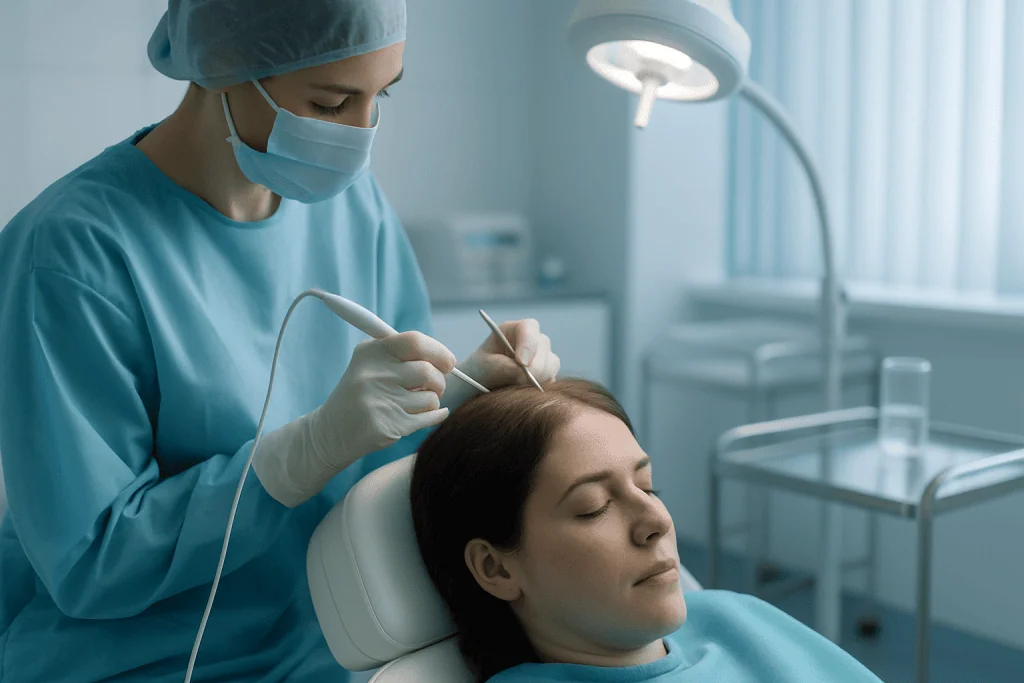
A hair transplant for women moves healthy hair follicles from a donor area, usually the back or sides of the scalp, to areas of thinning. It is a microsurgical procedure performed under local anaesthesia, most often using FUE or DHI techniques. It suits women whose hair loss is diagnosed, stable and localised enough for donor hair to cover; diffuse thinning that affects the donor area may make surgery unsuitable.
Hair Transplant for Women: Understanding the Decision
A hair transplant for women is a microsurgical procedure that moves healthy hair follicles from a donor area, usually the back or sides of the scalp, to areas where hair has become thin or sparse. It is performed under local anaesthesia, and it suits women whose hair loss has a clear diagnosis, a stable pattern and a donor area strong enough to supply the grafts. Not every woman with thinning hair is a candidate, which is why careful diagnosis comes before any surgical plan.
Hair loss in women is often more than a cosmetic concern. It can change how you recognise yourself in the mirror, how you style your hair, and how comfortable you feel in social or professional settings. Many women describe thinning hair as especially distressing because it feels unexpected, is difficult to discuss, and becomes harder to camouflage over time. The emotional weight is real, even when the hair loss itself is medically benign.
Female thinning can appear gradually: a widening part line, reduced volume at the crown, thinning at the temples, or a scalp that shows more under bright light. Some women notice heavy shedding after childbirth, illness, stress, weight loss, medication changes or menopause. Others have long-standing genetic thinning that progresses slowly over years. In some cases, hair loss follows traction from tight hairstyles, previous surgery, burns or scarring skin conditions. Each of these causes has a different answer, and only some of those answers are surgical.
Many women researching a hair transplant for women in Turkey arrive with the same core questions: does the procedure actually work for women, what does it involve, how long does recovery take, and how is treatment planned when you live in another country. This page answers those questions in order, plainly, including the limits, because knowing when a hair transplant is the wrong choice is as important as knowing when it is the right one.
At Acibadem, women considering hair transplantation are evaluated with attention to both medical and aesthetic factors. The goal is not simply to add follicles, but to design a natural result that respects the female hairline, facial proportions, hair direction, age, ethnicity and future hair loss risk. A thoughtful plan may combine a hair transplant and medical therapy, correction of nutritional or hormonal contributors, or a staged approach, depending on what the diagnosis actually shows.
What Is a Hair Transplant for Women?
A hair transplant for women is a procedure that relocates individual follicles, or small follicular units, from an area of stronger, more permanent growth to a thinning or sparse area of the scalp. The transplanted follicles retain many of the characteristics of the donor area, which is why donor hair selection matters so much. Once the follicles establish a new blood supply and heal, they can produce hair in their new location for the long term.
The follicles are harvested individually, prepared under magnification, and implanted into tiny recipient sites created at a specific angle, depth and direction. These details are not cosmetic fine print; they determine whether the result looks like hair or looks like a procedure. In the frontal hairline and along the part line, the two zones women see every day, hair orientation is highly visible, and small errors show.
One point deserves emphasis: a hair transplant does not create new hair follicles. It redistributes the follicles you already have. Planning must therefore balance your current needs against the likely future pattern of loss. In women with progressive genetic thinning, medical treatment may be recommended before or after transplantation to help protect the surrounding non-transplanted hair. In women with scarring or traction-related loss, the underlying condition must be confirmed as stable before surgery is even considered.
Do hair transplants work for women?
Yes, for the right candidate, transplanted follicles grow in women just as they do in men, because the biology of graft survival is the same. What differs is candidacy. A transplant works when the hair loss is stable or medically managed, the target area is defined, and the donor zone is genuinely spared from the thinning process. Where women more often run into difficulty is diffuse thinning: when the miniaturisation process affects the whole scalp, including the back and sides, the “donor” hair carries the same vulnerability as the hair it is meant to replace, and reliable long-term density cannot be promised. This is why a magnified scalp assessment of the donor area is a standard part of the evaluation, and why an honest clinic will sometimes advise against surgery.
How is a female hair transplant different from a male one?
The surgical steps are similar; the planning is not. Women more often present with diffuse thinning rather than a receding hairline or bald crown, so the work is usually about restoring density between existing hairs rather than covering bare skin, which demands careful graft placement that does not damage the native follicles already growing there. The donor area itself may be partially affected in some women, limiting how many grafts can be taken safely. Many women also want to keep their hair long and avoid visible signs of surgery during recovery, which shapes the choice of technique, whether and how much of the donor area is trimmed, and the postoperative instructions. Finally, a female hairline has its own anatomy: it is typically lower, softer and more rounded than a male hairline, with subtle irregularity rather than straight edges. Designing it well is as much about restraint as about grafts.
Who Is a Good Candidate for a Female Hair Transplant?
Women usually consider hair transplantation when thinning or localised loss has become visible, stable, and difficult to manage with styling or medical therapy alone. Typical concerns include a widening centre part, reduced density across the frontal scalp, thinning at the temples, loss of hairline definition, or patchy areas caused by traction, scars, burns or previous procedures. Some women seek restoration after hairline changes from earlier cosmetic or reconstructive surgery, although these cases require their own specific assessment.
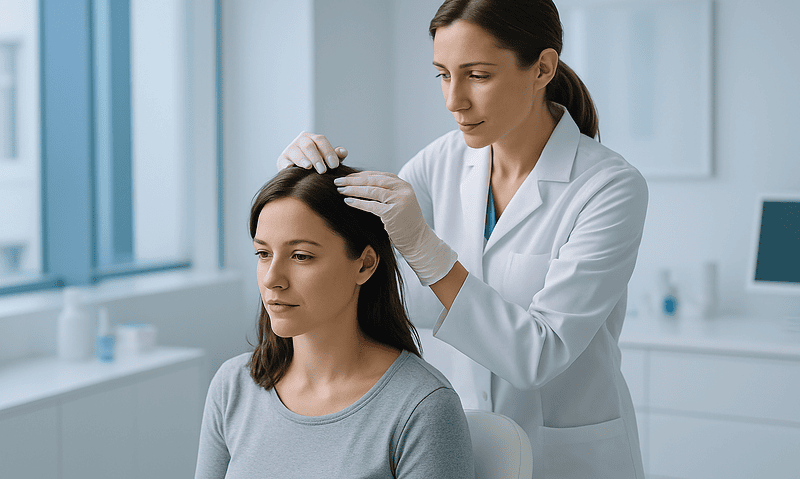
The first step is always diagnosis. A detailed consultation covers medical history, family history, the pattern and duration of hair loss, medication review, previous pregnancies, menstrual or menopausal history, thyroid or hormonal symptoms, nutritional status and styling practices. The scalp is then examined for density, miniaturisation, donor strength, scalp health, scarring, inflammation and hair shaft quality. Magnified scalp analysis is often used to measure follicle size variation and to look for signs of active disease that would change the plan.
Laboratory tests may be recommended when the history suggests iron deficiency, thyroid disease, hormonal imbalance, vitamin deficiency, autoimmune conditions or other medical contributors. In selected cases a scalp biopsy is needed, particularly when scarring alopecia, inflammation or an unclear diagnosis is suspected. This step matters because transplanting into an actively inflamed scalp can produce poor growth or worsen the underlying condition. Surgery into the wrong diagnosis is not a small mistake; it wastes donor hair that cannot be replaced.
Is hair transplant successful in females?
It can be, provided the selection criteria are respected. Good candidates generally share five features: a clearly defined target area, adequate donor hair, hair loss that is stable or medically controlled, realistic expectations, and scalp conditions that support healing. Women with diffuse thinning across the entire scalp, including the donor zone, are usually not good candidates, because the transplanted hair may not be robust enough for durable density. Women with active alopecia areata, untreated scarring alopecia, uncontrolled medical causes or ongoing heavy shedding typically need medical management first, with surgery reconsidered once the picture is stable.
Many women do best with a combined plan. A transplant can improve density in the areas that matter most cosmetically, while medication, topical therapy, nutritional correction, platelet-based treatments or supportive laser-based therapy may be considered to protect the existing hair around the grafts. The exact combination depends on the diagnosis and your medical suitability, decisions about any medication belong to your treating doctor, who reviews your full history before recommending anything.
Conditions Treated with Female Hair Transplantation
Hair transplantation in women may be appropriate for several forms of hair loss, provided the underlying condition is stable and the donor area is suitable. The most common indication is female pattern hair loss, also called androgenetic alopecia, in which thinning typically appears along the part line and crown while the frontal hairline is relatively preserved. In selected cases, transplantation adds density to the frontal scalp, mid-scalp or part line, while medical therapy works to maintain the surrounding hair.
Traction alopecia is another important indication. This form of loss can develop after years of tight braids, ponytails, extensions, weaves or other styles that place repeated tension on the hairline. Caught early, the hair may recover once styling habits change. If the follicles have been permanently damaged and the loss is stable, transplantation can help rebuild the frontal or temporal hairline. Women with tightly curled hair considering this route should know that curl below the skin surface changes how follicles must be extracted, which is why Afro-textured hair carries its own specific graft-handling considerations.
Transplantation can also improve areas of scarring from burns, injury, previous surgery, or certain dermatological conditions that are confirmed inactive. Scar tissue has a different blood supply and texture from normal scalp, so graft survival and density planning require particular caution. In some patients, more than one session is needed to build density gradually rather than risking graft loss by overloading compromised tissue in a single sitting. Women who are unhappy with the design or growth of a previous procedure elsewhere may be candidates for repair work, which follows the same diagnostic logic with the added constraint of an already-used donor area.
Some women seek hairline refinement when the natural hairline is high, or when earlier procedures have altered it. Here the aesthetic plan must be especially precise. A natural female hairline is soft, subtly irregular, and proportioned to the face. Overly dense, straight or low hairlines look artificial, design discipline matters as much as graft placement.
Not all hair loss should be treated surgically. Telogen effluvium: the common shedding condition triggered by stress, illness, childbirth, dieting or medication changes, usually improves once the trigger is corrected, and operating on it would waste grafts on hair that was going to return anyway. Active inflammatory or scarring alopecias require medical treatment first. The whole purpose of a careful consultation is to establish whether transplantation is the right step, the right timing, or whether a different treatment should come first.
Techniques Used in Female Hair Transplantation
Several techniques exist, and the differences matter more to women than to most male patients, because women’s choices about shaving, hair length and visible recovery shape which method fits.
FUE hair transplant
An FUE hair transplantfollicular unit extraction, removes follicular units one by one from the donor area using a fine punch, leaving tiny dot marks rather than a linear scar. It is the most widely used harvesting method today and the foundation of most female procedures. For women, FUE is usually planned so that only a limited strip of donor hair is trimmed, allowing the surrounding longer hair to fall over the area and conceal it during healing. Variations exist in how the recipient sites are opened; a sapphire hair transplant uses sapphire-tipped blades to create the recipient channels, which some surgeons prefer for fine, close-set incisions in high-visibility zones.
DHI and implanter-based placement
A DHI hair transplant uses an implanter pen that opens the recipient site and places the graft in a single motion. Its practical relevance for women is that it can allow placement between existing hairs with less need to shave the recipient area, useful when the goal is adding density to a thinning part line rather than covering bare scalp. Whether DHI or conventional FUE placement is more suitable depends on graft numbers, hair characteristics and the treated zone; neither method changes the underlying biology of graft survival.
Can women have a hair transplant without shaving?
Often, yes, and for many women this is the deciding factor. A hair transplant without shaving, sometimes offered as an unshaven (U-FUE) technique, keeps the visible hair long while follicles are harvested from a concealed trimmed zone or extracted individually at their existing length. The trade-offs are honest ones: unshaven techniques are slower, usually limited to smaller graft numbers per session, and demand more meticulous work from the surgical team. For a woman treating a defined area who needs to return to work or social life without visible signs of surgery, the trade-off is frequently worth it. Whether it is feasible in your case depends on the size of the area, your graft requirement and your hair type: this is decided at examination, not from a price list.
How a Female Hair Transplant Is Performed, Step by Step
A female hair transplant begins well before the operating day. The physician confirms the diagnosis, assesses donor capacity, and evaluates hair calibre, curl, colour, and the contrast between hair and scalp, all of which affect how much visual coverage a given number of grafts can achieve. Photographs are taken for planning and later comparison. The hairline or density zones are marked with you sitting upright, because facial proportions and the natural fall of your hair are best judged in that position, not lying down.
Preparation also covers medical conditions, current medications, allergies, bleeding risks and anaesthesia suitability. Your treating doctor reviews everything you take and decides whether any adjustment is needed before surgery: that judgement is theirs, made against your full medical picture. You will usually be advised to avoid smoking and to follow specific scalp care instructions in the days beforehand. For international patients, planning may begin remotely with photographs and medical history, but candidacy is only confirmed after in-person examination.
On the day itself, the procedure follows a defined sequence:
- Donor preparation. Depending on the technique and your goals, a small area of donor hair is trimmed or shaved. In many women, partial trimming is planned so the surrounding hair conceals the donor site during recovery.
- Anaesthesia. Local anaesthetic numbs the scalp. Sedation may be considered depending on your medical profile and the planned duration. You are monitored throughout.
- Harvesting. Healthy follicular units are extracted with attention to spacing, so the donor area keeps a natural, even appearance rather than looking overharvested.
- Graft preparation. Each graft is examined and prepared under magnification, and kept in controlled conditions that protect it from drying, temperature change and handling trauma. Time outside the body is kept as short as possible.
- Recipient site creation. Fine instruments open tiny channels at the planned angle, depth and direction. This step determines most of the natural appearance of the result: hairline hairs must emerge at a shallow angle with soft irregularity; part-line and crown hairs must follow your native growth pattern.
- Implantation. Single-hair grafts go into the leading edge of the hairline for softness; larger follicular units are placed behind it or wherever more coverage is needed. The team works methodically to protect grafts and keep placement accurate.
- Closing the day. The scalp is cleaned, the donor area dressed if needed, and the postoperative instructions reviewed in detail before you leave.
Depending on graft numbers and case complexity, the procedure takes several hours and sometimes most of a day. Density is planned strategically rather than maximally: the scalp has a limited blood supply, and grafts need adequate spacing to survive. Packing grafts too densely in one session can reduce, not increase, the final result.
Modern female hair transplantation relies on magnification, refined graft-handling protocols, precise implantation instruments, digital planning tools and good-quality imaging for assessment and follow-up. These tools help the team evaluate donor density, minimise follicle trauma, plan natural distribution and monitor healing. They support surgical judgement; they do not replace individualised design and a correct diagnosis.
Recovery After a Female Hair Transplant
Recovery is gradual, and knowing the normal stages makes the months before visible growth far less stressful. Mild swelling, redness, tenderness and small scabs around the transplanted follicles are expected in the first days. You will be shown how to sleep, how to wash the scalp, how to avoid friction and how to protect the grafts: the practical detail, including sleeping positions during the early phase, is covered in our complete post-op aftercare instructions.
| Time Period | What Patients Can Expect |
|---|---|
| Day 1 | The scalp may feel tight, tender or mildly swollen. Small crusts are visible around grafts. Patients receive detailed instructions for sleeping position, medications and graft protection. |
| First Week | Redness, mild swelling and scabbing gradually improve. Gentle washing begins as instructed. Most patients avoid strenuous exercise, heat, friction and styling products near the treated area. |
| Weeks 2 to 6 | Many transplanted hairs shed, which is expected. The scalp continues to settle. Patients may resume more normal routines as approved, while avoiding tight hairstyles and scalp irritation. |
| First Month | The recipient area often looks calmer, though visible new growth is usually limited. Existing hair care may be adjusted to protect both transplanted and native hair. |
| Months 3 to 6 | Early new growth may begin. Hairs can appear fine at first and gradually thicken. Density develops unevenly, which is normal during this stage. |
| Longer Term | Hair calibre, length and coverage continue to mature. Final assessment is usually made after sufficient growth has occurred, and additional planning may be discussed if future density goals require staging. |
The shedding phase deserves a plain explanation, because it alarms almost everyone. In the weeks after a hair transplant, hair in the recipient area falls out, and that is normal. The follicles themselves remain alive under the skin and gradually restart production over the following months. Hair transplant hair growth follows the follicle’s natural cycle: shedding first, then fine regrowth that thickens with time. Visible improvement builds progressively rather than appearing at once, and final density and texture take many months to mature, varying with individual biology, hair characteristics and the extent of treatment. Photographs at agreed intervals during follow-up help track this progression stage by stage, from the quiet early months through to mature growth.
Exercise, swimming, hair colouring, heat styling and tight hairstyles are restricted for a period your physician sets individually, and the same goes for headwear: when a hat or head covering becomes safe depends on how your grafts are healing, so follow the individual timeline you are given rather than a generic rule.
Why Acting Early Matters
Early evaluation is valuable because many causes of female hair loss are far more treatable when identified promptly. Iron deficiency, thyroid imbalance, hormonal changes, inflammatory scalp disease, medication-related shedding and traction from hairstyles can often be improved or controlled before permanent follicle damage occurs. Waiting too long can allow temporary shedding to become chronic, traction-related loss to become scarring, or genetic thinning to progress to the point where the donor area can no longer meet your cosmetic goals.
Acting early does not mean operating early. In many women, the best first step is diagnosis and stabilisation. If hair loss is actively progressing, transplantation is usually postponed while medical treatment does its work. This protects your existing hair and improves the likelihood that a surgical result will stay balanced over time. A transplant placed into an unstable pattern can look good initially and then become less satisfactory as the surrounding native hair continues to thin around it.
Delay also affects the donor area itself. Female pattern hair loss may involve broader thinning than many patients realise. If donor density declines, both the number and the quality of follicles available for transplantation shrink. A timely assessment lets the physician document donor strength, estimate future needs, and recommend preventive or supportive treatment where appropriate, even if the recommendation is simply to monitor and wait.
For women with scarring alopecia, early specialist evaluation is particularly important. Active inflammation destroys follicles permanently and can continue silently, without obvious symptoms. Transplantation is considered only after the condition has been inactive for a suitable period and the treating physician judges the scalp stable enough to support graft survival. In this context, patience and medical control are not delays to the result: they are part of achieving it.
Benefits of Hair Transplantation for Women
For appropriately selected patients, a female hair transplant can deliver meaningful cosmetic and emotional benefits by restoring density in the areas that matter most for everyday appearance.
| Benefit | What It Means for You |
|---|---|
| Natural-looking density | Healthy follicles are placed in thinning areas using angles and patterns that match your native hair growth, helping the result blend with existing hair. |
| Improved hairline or part-line coverage | Transplantation can soften a sparse frontal hairline, reduce visibility of the scalp, or improve density along the part line when donor hair is adequate. |
| Use of your own hair | The procedure relocates your own follicles, so the new growth has the texture and characteristics of your natural hair from the donor area. |
| Long-term improvement in selected areas | Once transplanted follicles establish and grow, they can provide lasting coverage, although ongoing hair loss in surrounding areas may still require management. |
| More styling flexibility | Greater density in visible areas may make it easier to wear hair parted, pulled back gently, or styled with less reliance on concealers. |
| Personalized aesthetic planning | The design can be adapted to female facial proportions, age, hair direction, hair calibre, and the patient’s preferred way of wearing her hair. |
Factors That Influence Outcomes
The result of a hair transplant for women depends on several interacting factors, and it is worth understanding them before committing: they explain why two patients with the same graft number can end up with very different results.
The first is diagnosis. A transplant works best when the cause of hair loss is clearly understood and the pattern is stable or medically managed. If the underlying condition continues unchecked, non-transplanted hair keeps thinning, which erodes the overall cosmetic effect even when the grafts themselves grow well.
Donor hair quality is the second major factor. Hair calibre, density, curl, colour and the contrast between hair and scalp all influence visual coverage. Coarser or wavier hair can create the appearance of more fullness than very fine, straight hair, graft for graft. Low contrast between hair and scalp colour tends to make thinning less visible. Every donor area has limits, and ethical planning respects them: it avoids taking too many grafts in one session and avoids depleting donor hair that may be needed later in life.
The recipient area matters too. Healthy scalp skin with a good blood supply supports graft healing. Scarred or previously operated areas can accept grafts, but density there must be built more conservatively, sometimes across staged sessions. Active inflammation, infection or untreated dermatological disease compromises results and must be addressed before surgery.
Surgical technique influences both graft survival and natural appearance. Gentle extraction, proper hydration and storage of grafts, limited time outside the body, accurate recipient site creation and careful implantation all add up. In the frontal hairline, artistry and restraint are essential: a feminine hairline is not a solid line but a soft transition, single-hair grafts at the leading edge, subtle variation behind it, and a design that will still look appropriate as you age.
Your own participation counts as well. Following postoperative instructions protects grafts during the vulnerable early healing period. Smoking, poor nutrition, uncontrolled medical conditions and scalp trauma can all interfere with healing. Long-term maintenance of native hair may require ongoing treatment, especially in genetic hair loss, whether supportive or medical therapies are appropriate for you is a decision your treating doctor makes with you, against your full medical picture. A transplant improves density in selected areas; it does not stop the biological process affecting the hair around it.
Finally, expectations should be realistic. Hair transplantation can create visible, worthwhile improvement, but it cannot restore unlimited density or reproduce the hair volume of adolescence. The honest goal is a natural, balanced improvement that fits your hair characteristics and donor capacity. Some women need more than one session, particularly for larger areas or scar tissue; others reach their goals with a focused procedure combined with medical therapy.
Hair Transplant Cost for Women: What Shapes the Price
Hair transplant cost is one of the first things most women research, and it is also where generic answers mislead the most. No responsible figure can be quoted before an examination, because the price of a female procedure is driven by variables that differ from patient to patient: the size and number of the areas being treated, the graft count required, the harvesting and placement technique (shaven, partially shaven or fully unshaven work take very different amounts of surgical time), the complexity of working between existing hairs without damaging them, whether scar tissue is involved, and whether the plan is a single session or staged.
How much is a hair transplant for a woman?
There is no single honest number, and any clinic quoting one before assessing your scalp is quoting a marketing figure, not a medical one. Female procedures are frequently priced differently from standard male packages because they more often involve unshaven or partially shaven techniques, implanter-based placement between native hairs, and longer surgical time per graft. A meaningful quotation follows a proper evaluation of your diagnosis, donor area and goals: the same evaluation that determines whether you should have surgery at all.
How much do 3,000 hair grafts cost?
Graft count is one of the main pricing drivers everywhere, but it is the wrong starting question for most women. Large graft numbers of that scale are typical of advanced male pattern baldness; female cases are usually about targeted density in a defined zone, and the appropriate graft number is set by your donor capacity and the area being treated, not by a package tier. Buying more grafts than your donor area can safely spare, or than your recipient area can safely accept in one session, harms the result rather than improving it. The right question is not the price of a fixed graft count but what your scalp actually needs and can support.
What do hair transplant expenses include?
Hair transplant expenses typically cover more than the surgery itself, and comparing offers is only meaningful when you compare what is included. A complete care pathway generally involves the pre-operative consultation and examination, any blood tests the physician requires, the procedure with its surgical team and materials, the anaesthesia, post-operative medications and care products, the first professional wash and dressing check, and structured follow-up. For international patients, packages often also coordinate accommodation and local transfers. When weighing options, ask what happens if a concern arises after you fly home, access to remote follow-up is part of the real value, not an extra.
Coming to Turkey for a Female Hair Transplant: How International Patients Plan It
Turkey has become one of the most established destinations for hair restoration, and a large share of the women treated at Acibadem travel from abroad. Planning a female hair transplant across borders is entirely workable, but it goes best when the sequence is understood in advance: a general overview of how treatment journeys are structured is available in our hair transplant in Turkey treatment guide.
A typical pathway begins remotely. Photographs of the scalp under good light, a summary of medical history, and any previous test results allow the clinical team to form a preliminary view: whether transplantation looks appropriate, roughly what approach might suit, and, importantly, whether the pattern suggests a diagnosis that needs medical work-up before anyone should operate. This preliminary review is exactly that: preliminary. Final candidacy is confirmed only after in-person examination, including magnified assessment of the donor area, and an honest clinic reserves the right to change or decline the plan at that point.
The visit itself is usually compact. Most patients arrive a day before the procedure for the in-person consultation, examination and any required tests; the procedure occupies one day; and the first professional wash and graft check typically take place a day or two afterwards, before you are cleared to travel. Many women plan a stay of several days so that the early, most delicate phase of healing happens under direct clinical supervision. Flying home is generally possible soon after, with specific guidance on protecting the grafts in transit, headwear, seat headrests, sun exposure and washing routines are all covered in your individual instructions.
Follow-up continues after you leave. Because visible results develop over many months, structured remote follow-up, photographs at agreed intervals, review of the shedding phase, and guidance through the regrowth stages, is a standard part of care for international patients. Practical questions that arise at home, from washing technique to the use of supportive scalp-care products, are handled through the same channel, so distance does not mean being left alone with the recovery.
Is it risky to get a hair transplant in Turkey?
The risk of a hair transplant depends on the setting and the team, not on the country as such. Hair transplantation carries the same inherent considerations everywhere: infection risk, imperfect graft growth, unnatural design, overharvesting of the donor area, and, specific to women, the risk of operating on the wrong diagnosis altogether. What varies enormously, in Turkey as in every country, is the standard of the provider. The factors that reduce avoidable risk are physician-led assessment rather than sales-led booking, willingness to decline unsuitable candidates, hospital-grade sterility and medical oversight, transparent information about who performs each stage of the procedure, and structured follow-up after you go home. Those are the questions worth asking any clinic, anywhere, before you commit.
Why International Patients Choose Acibadem for Female Hair Transplantation
International patients considering hair transplantation abroad usually want more than a procedure. They want a careful diagnosis, straightforward communication, medical safety, privacy, and a team that understands the emotional weight of female hair loss. Acibadem’s approach to hair transplant care is built around individualised assessment and coordinated hospital-based care, for patients travelling from the United States, Europe, the Middle East and other regions.
Female hair loss often needs more than one specialty’s perspective, and this is where a hospital setting earns its place for an elective procedure. When indicated, patients are evaluated by dermatology, plastic surgery, endocrinology, gynaecology, nutrition or other specialists, with direct access to diagnostic services under the same roof. Complex cases can be discussed through multidisciplinary review, particularly when the diagnosis is uncertain or when scarring alopecia, hormonal imbalance or systemic disease is suspected. The practical effect is simple: surgery is recommended only when it is medically appropriate, and sometimes the recommendation is not to operate.
The treatment plan is personalised rather than formulaic. The physician decides whether transplantation should be performed at all, which areas to prioritise, how many grafts can be used safely, whether donor hair should be held in reserve for future needs, and whether medical treatment should accompany the procedure. The design is adapted to female hairline anatomy, hair direction, age, hair quality, and cultural or personal styling preferences. For women who wear their hair long or cover their hair, donor-area planning and recovery instructions are adjusted wherever medically feasible.
Acibadem uses modern diagnostic pathways and surgical technology to support precision: scalp imaging, magnified follicle assessment, careful graft preparation, refined implantation instruments and structured postoperative monitoring. The emphasis is on using appropriate tools inside an evidence-based clinical process, not on technology as a stand-alone promise, no instrument compensates for a wrong diagnosis or a poorly designed hairline.
For international patients, logistics are treated as part of the medicine. Acibadem International provides coordination in more than 20 languages, covering appointment planning, medical record review, interpreter support, hospital navigation and follow-up communication. Privacy and cultural sensitivity matter here too: female hair loss can feel deeply personal, and concerns about shaving, visible recovery, prayer or head-covering practices, returning to work or travelling soon after the procedure are discussed before surgery, so the plan reflects your real life as well as your scalp.
Choosing where to have a hair transplant is ultimately a medical decision. The right centre is willing to say when surgery is appropriate, when it should be delayed, and when another treatment is more suitable. For women that judgement carries particular weight, because wrong timing or an incomplete diagnosis is the most common route to disappointment. A careful, medically grounded approach protects both the surgical result and your long-term hair health.
Making a Well-Informed Decision
If you are weighing up a female hair transplant, the most useful preparation is understanding your own hair loss: its cause, its pattern, and whether it is still progressing. A thorough medical evaluation clarifies whether you are a good candidate, what degree of improvement is realistic, whether medical treatment should come first, and how a procedure would be planned around your hairline, donor area and personal goals. Gathering your medical history, previous test results and a record of treatments you have already tried makes any evaluation, wherever you have it, faster and more accurate.
Hair restoration is a gradual process, and the best outcomes follow from careful diagnosis and realistic planning rather than urgency. For the right candidate, at the right time, a hair transplant for women can be one part of a considered strategy: restoring density where it matters most, protecting the hair you still have, and letting you feel at ease with your appearance again.
Preparation
- A specialist evaluates the hair loss pattern, donor area quality, medical history, and possible hormonal or nutritional causes. Blood tests or dermatologic assessment may be requested. Patients are usually advised to stop smoking and avoid blood-thinning medicines or supplements as instructed.
Aftercare
- The scalp should be protected from rubbing, scratching, sun exposure, and strenuous activity during early healing. Gentle washing is started according to the clinic’s instructions, and prescribed sprays or medicines should be used as directed. Temporary shedding can occur before new growth gradually appears.
Frequently Asked Questions
What affects the cost of a hair transplant for women?
Cost is influenced by the pattern and stability of hair loss, donor hair quality, the area to be treated, the technique used, the medical team’s role, facility standards, medications, aftercare, and travel-related services. A specialist assessment is needed before a personalised quote can be prepared.
How can I get a personalised quote from Acibadem International?
You can request a free consultation by sharing clear scalp photos, your medical history, previous hair treatments, and your expectations. The team can review suitability, explain likely treatment options, and provide a personalised estimate based on your case.
Is a female hair transplant priced the same as a male hair transplant?
Not always. Female hair loss often requires different planning because thinning may be diffuse, the hairline design is different, and shaving preferences can affect the technique. The final cost depends on the individual treatment plan rather than gender alone.
What should be included in a hair transplant package?
Patients should ask whether the package includes specialist consultation, procedure planning, the transplant session, medications, post-procedure washing guidance, follow-up instructions, interpreter support, transfers, and accommodation guidance. Inclusions vary by provider.
Can I know the cost before travelling to Turkey?
An initial estimate may be possible after remote review, but the final plan can depend on in-person scalp and donor area assessment. Acibadem International can help coordinate the consultation process and clarify what is included before you travel.
Is hair transplant suitable for all women with thinning hair?
No. Suitability depends on the cause of hair loss, donor hair strength, scalp condition, medical history, and whether the hair loss is stable. A specialist may recommend medical treatment first or combine surgery with supportive therapies.
Medically reviewed by the Acıbadem International Medical Board September 8, 2026
See our medical review board →
Update history
- PublishedJune 8, 2026
- Medical review approvedSeptember 8, 2026
- Last content updateSeptember 8, 2026
Planning tools for this treatment
Indicative figures for orientation only: your written plan and quote follow a free medical review.
Trusted care for international patients
Compare options, costs and recovery
Hair transplant cost in Turkeyledger-based guide ranges, or browse the full Turkey Medical Price Index.
From the Acibadem Blog
Can Women With Diffuse Thinning Have a Hair Transplant? Why Donor Stability Decides
Some women with diffuse thinning can have a hair transplant, but many cannot, and the deciding factor is the donor area at the back…