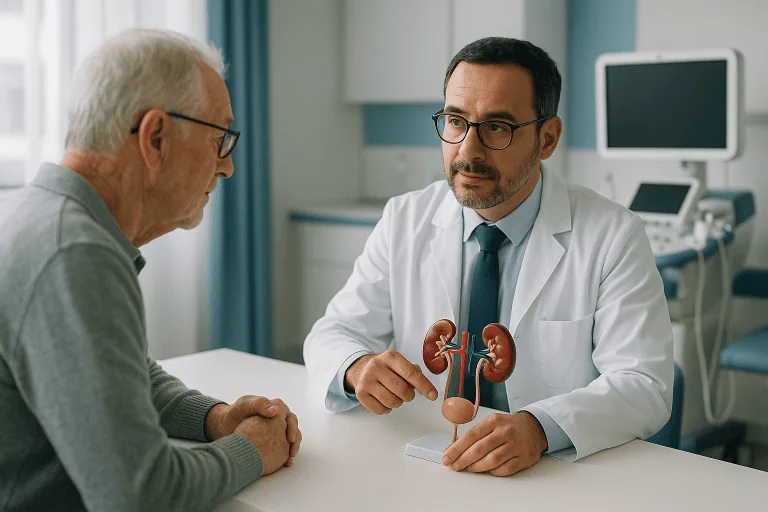
Interstitial Cystitis Treatment
Interstitial cystitis is a chronic bladder pain syndrome managed with personalized urology care, lifestyle changes, medications, and bladder-directed therapies to reduce pain, urgency, and frequency.

Quick answer
Interstitial cystitis, also called bladder pain syndrome, is chronic bladder pain or pressure with urinary urgency and frequency that occurs without a bacterial infection. Treatment is stepwise: dietary and trigger management, pelvic floor physiotherapy, oral medication, bladder instillations, and cystoscopy-based procedures where Hunner lesions are found. Most people improve through a personalised combination of approaches rather than a single therapy.
What Is Interstitial Cystitis?
Interstitial cystitis is a chronic condition that causes bladder pain or pressure together with an urgent, frequent need to urinate, without the bacterial infection that would normally explain those symptoms. It is also called bladder pain syndrome, and clinicians often write the two names together as interstitial cystitis/bladder pain syndrome, or IC/BPS. The condition affects both women and men, although it is diagnosed more often in women, and it typically follows a pattern of flares and quieter periods rather than a steady, predictable course.
The name causes real confusion. Ordinary cystitis simply means inflammation of the bladder, and in everyday use it usually refers to a bladder infection that clears with a short course of antibiotics. Interstitial cystitis is different in every practical respect: urine cultures are typically negative, antibiotics do not resolve it, and the irritation of the bladder wall, where it exists at all, is not driven by bacteria. You may also see the abbreviation IC used on its own, and the condition is sometimes misspelt as “sistius” in online searches. All of these terms point towards the same diagnosis.
There is no single test that confirms every case of interstitial cystitis. Diagnosis rests on the pattern of symptoms, physical examination, urine testing and the careful exclusion of other explanations, recurrent infection, bladder stones, overactive bladder, gynaecological disorders, prostate-related problems, endometriosis and, in specific situations, bladder cancer. That is why the diagnostic phase matters as much as the treatment phase, and why many people arrive at this diagnosis only after months or years of repeated urine tests and courses of antibiotics that did not help.
Interstitial cystitis is chronic, but it is not a condition you simply have to endure. With an accurate diagnosis and a personalised, stepwise plan, many people experience meaningful improvement in pain, urgency, frequency and daily quality of life. At Acibadem, this care is led by urology specialists and supported when needed by gynaecology, pain medicine, physiotherapy and radiology, because bladder pain rarely respects the boundaries of a single specialty.
What is the difference between interstitial cystitis and a urinary tract infection?
A urinary tract infection is caused by bacteria, shows up on a urine culture and usually improves quickly with appropriate antibiotics. Interstitial cystitis produces very similar sensations, burning, urgency, frequency, pelvic pressure, but the culture is negative and antibiotics make no lasting difference. Many people type urinary infection cystitis into a search engine because, from the inside, the two conditions feel almost identical. The distinction only becomes clear with testing. The classic clue is a history of repeated “infections” treated with antibiotics, where the urine was never actually positive for bacteria, or where symptoms persisted between confirmed infections. Some patients genuinely have both problems: an occasional true bladder infection layered on top of a chronic pain syndrome. Separating the two is one of the most useful things a careful urological evaluation can do, because each requires a different treatment logic.
What causes interstitial cystitis?
The honest answer is that no single cause has been confirmed. Several mechanisms are thought to contribute, in different combinations for different patients. One is a defect in the protective inner layer of the bladder lining, which may allow substances in urine to irritate the tissue beneath. Another involves mast cells, immune cells that release inflammatory chemicals, being more active in the bladder wall. A third is nerve sensitisation: over time, the nerves that carry signals between the bladder and the brain can become amplified, so that normal bladder filling registers as pain. Some researchers also point to autoimmune activity, and some patients trace the start of their symptoms to an infection, pelvic surgery or childbirth, even though no ongoing infection remains.
It is likely that interstitial cystitis is not one disease but several related conditions grouped under one label. This helps explain why patients respond so differently to the same treatments, and why a subset of patients have visible inflammatory areas in the bladder lining, Hunner lesions, while most do not. It also explains the overlap with other pain-sensitive conditions such as irritable bowel syndrome, fibromyalgia, vulvodynia and endometriosis: in some patients, the way the nervous system processes pain appears to be part of the picture. None of this means the symptoms are imagined. Interstitial cystitis is a recognised pain syndrome with physical, neurological and behavioural dimensions, and stress may intensify it without being its cause.
Interstitial Cystitis Symptoms
Interstitial cystitis symptoms centre on the bladder and pelvis, and the most characteristic feature is pain or pressure that builds as the bladder fills and eases, at least briefly, after urination. The full pattern varies considerably from person to person, in both character and severity. Common features include:
- Persistent bladder pain, pressure, burning or a constant awareness of the bladder
- Pain that worsens as the bladder fills and improves temporarily after voiding
- Frequent urination through the day, often in small volumes
- Waking at night to urinate (nocturia)
- A sudden, urgent need to urinate that is difficult to defer
- Pelvic, urethral, vaginal or perineal discomfort
- Pain during or after sexual intercourse
- Symptoms that flare after certain foods, drinks, stress, menstrual cycles or prolonged sitting
These differ from routine cystitis symptoms in their timing. An infection tends to arrive abruptly, burn constantly and resolve with treatment within days. Interstitial cystitis waxes and wanes over months or years, often with stretches of relative calm punctuated by flares. In women, the condition is frequently mislabelled for years as recurrent infection, thrush or gynaecological pain, which is why persistent symptoms with repeatedly negative cultures deserve a broader evaluation than another antibiotic course; the pattern seen in female cystitis is a useful comparison point. In men, symptoms often overlap with chronic prostatitis or chronic pelvic pain syndrome, and the same careful diagnostic logic applies.
What does an interstitial cystitis flare feel like?
Patients describe a flare as a marked intensification of their baseline symptoms: the bladder feels raw or heavy, pain builds quickly with even small amounts of urine, trips to the toilet become far more frequent, and the relief after voiding shrinks to seconds. Some describe burning that spreads to the urethra or pelvis; others describe deep aching or spasm-like cramping. Sleep usually suffers first, because night-time frequency increases. A flare can last hours, days or weeks, and its intensity often convinces people they have a new infection, which is precisely why a urine test during a flare can be informative, distinguishing a true infection from an exacerbation of the underlying syndrome.
What causes an interstitial cystitis flare?
Flares often follow identifiable triggers, although the list is personal rather than universal. Commonly reported triggers include caffeinated drinks, alcohol, carbonated beverages, citrus, tomatoes, spicy foods, acidic foods and artificial sweeteners. Non-dietary triggers matter just as much: emotional stress, poor sleep, prolonged sitting or driving, tight clothing, sexual activity, hormonal shifts around the menstrual cycle, and genuine urinary infections layered on top of the syndrome. Some flares arrive without any identifiable cause at all: an experience many patients find more distressing than the flare itself. A symptom and diet diary kept over a few weeks is the most reliable way to identify your own pattern, and it prevents unnecessarily strict long-term food restriction based on guesswork.
Can an online quiz tell you whether you have interstitial cystitis?
No. Symptom questionnaires exist and can be genuinely useful for describing severity and tracking change over time, but no quiz can confirm the diagnosis, because interstitial cystitis is defined partly by what it is not. A quiz cannot rule out infection, stones, endometriosis, prostate disease or bladder tumours, and ruling those out is the core of the diagnostic process. If an online score suggests your symptoms fit the pattern, treat that as a prompt to seek proper urological evaluation, not as an answer in itself.
How Is Interstitial Cystitis Diagnosed?
Diagnosis begins with a detailed conversation: how symptoms started, how often you urinate, how many times you wake at night, what worsens or relieves the pain, how flares behave, what you drink, which treatments have already been tried and what they achieved. A physical examination may include abdominal, pelvic or prostate assessment depending on your symptoms and sex, with particular attention to pelvic floor muscle tenderness, which changes the treatment plan when present.
A bladder diary is one of the most useful diagnostic tools and costs nothing. For a few days, you record fluid intake, urination times and volumes, urgency level, pain level and possible triggers. Even a short diary can reveal patterns, small frequent voids driven by pain, for example, versus large volumes driven by excessive drinking: that a consultation alone would miss.
Urine testing checks for infection, blood, inflammation and other abnormalities. This step matters because urinary infections must be either confirmed and treated or convincingly excluded before a chronic pain diagnosis is made. When appropriate, urine cytology, imaging such as ultrasound, uroflow testing or measurement of residual urine after voiding may be added. Research into urinary biomarkers continues, but at present no urine marker can confirm interstitial cystitis on its own, so testing remains a tool for exclusion and context rather than a definitive answer.
Cystoscopy, examination of the bladder lining through a thin camera passed via the urethra, is used when symptoms persist, when the diagnosis is uncertain, when blood is present in the urine, or when the physician needs to inspect the bladder directly. In a subset of patients, cystoscopy identifies Hunner lesions: distinct inflammatory areas of the bladder lining that define a specific subtype of interstitial cystitis and open the door to targeted treatment during the same or a subsequent procedure. Not every patient needs every test. The evaluation is tailored to your risk profile and clinical picture, and features such as visible blood in the urine, new symptoms later in life, a smoking history, unexplained weight loss or abnormal imaging widen the diagnostic net accordingly.
Previous results carry real value in this evaluation. Prior urine cultures, imaging, cystoscopy reports, medication lists and operative notes allow a specialist to avoid repeating what has already been done well and to focus on the questions that remain unanswered.
Who May Need Interstitial Cystitis Care
Evaluation is worth considering when bladder or pelvic symptoms persist without a proven infection, or when urinary symptoms keep returning despite standard treatment. Many patients in this position have entirely normal urine cultures; others have occasional genuine infections but continue to experience pain, urgency and frequency in the intervals between them. Both patterns deserve investigation rather than another empirical antibiotic course.
The indications a structured care plan commonly addresses include chronic bladder pain or pressure, urgency and frequency not explained by infection, nocturia driven by bladder discomfort, pain with bladder filling, pelvic pain associated with urinary symptoms, flares triggered by diet or lifestyle, painful intercourse related to bladder or pelvic floor sensitivity, and Hunner lesion-associated disease. Many patients seek care not because any single symptom is unbearable but because the accumulated effect on sleep, work, travel, relationships and mood has become impossible to ignore.
Care may also need to address overlapping conditions that amplify bladder symptoms: pelvic floor muscle dysfunction, vulvar or vaginal pain syndromes, endometriosis, irritable bowel syndrome, anxiety fed by unpredictable symptoms, and chronic pain sensitisation. Recognising these patterns does not mean the bladder symptoms are “not real”. It means the nervous system, the pelvic muscles and the bladder lining may all be contributing, and that effective care may need to address more than one source of pain. A patient with mild, diet-sensitive urgency needs a very different plan from a patient with severe pain, nightly urination and cystoscopic Hunner lesions: the aim is always to match treatment intensity to findings and goals.
How Interstitial Cystitis Treatment Is Performed
What are the treatment options for interstitial cystitis?
Treatment options range from lifestyle and dietary adjustment through pelvic floor physiotherapy, oral medication and bladder instillations, to cystoscopy-based procedures and, in selected severe cases, neuromodulation or bladder muscle injections. Care is deliberately stepwise: the least invasive effective option comes first, and each step is added or escalated based on response. For most patients the pathway looks like this:
- Education, bladder diary, fluid and dietary adjustment, trigger identification and stress management
- Pelvic floor assessment and physiotherapy where muscle dysfunction is found
- Oral medications selected for the individual symptom pattern
- Bladder instillation therapy delivered directly into the bladder
- Cystoscopy with hydrodistention and targeted treatment of Hunner lesions where present
- Advanced options, neuromodulation or bladder muscle injections, for persistent, severe symptoms
Very few patients need every step, and the order can be adapted. What matters is that each step is chosen for a reason, given time to work, and reassessed honestly.
Preparation and Initial Assessment
Before treatment begins, the urologist reviews your history in detail: symptom timing, voiding frequency, night waking, aggravating and relieving factors, and every treatment already tried. Testing typically includes urinalysis and urine culture to exclude active infection. Where there is blood in the urine, risk factors for malignancy, severe symptoms or an unclear diagnosis, further evaluation follows, imaging of the kidneys, bladder or pelvis when clinically indicated, and cystoscopy to examine the bladder lining for lesions, stones, tumours or inflammation. This groundwork prevents the most common failure in interstitial cystitis care: treating the wrong condition.
Conservative and Lifestyle-Based Treatment
Many patients begin with education and symptom-directed lifestyle changes. This does not mean the condition is considered minor; it reflects evidence-based practice, because for some patients identifying and reducing triggers meaningfully lowers the frequency and intensity of flares. Common bladder irritants include caffeinated drinks, carbonated beverages, alcohol, citrus, spicy and acidic foods, and artificial sweeteners, but triggers vary so widely between individuals that strict, blanket long-term restriction is not recommended unless a clear personal relationship is found through diary-based testing. Fluid intake is adjusted towards a sensible middle: excessive restriction concentrates the urine and can worsen irritation, while excessive intake drives frequency. Bladder training, gradually lengthening the interval between voids, helps some patients, and is approached cautiously when pain rather than urgency dominates.
Pelvic Floor Physiotherapy
Pelvic floor physical therapy is recommended when examination finds muscle tenderness, tightness or coordination problems, which is common in longstanding bladder pain. In interstitial cystitis, the therapy focuses on relaxation, trigger point release, breathing, posture and reducing muscle guarding, deliberately not on strengthening exercises, which can aggravate an already overactive pelvic floor. This distinction matters: generic “pelvic floor exercises” prescribed for urinary incontinence are usually the opposite of what a painful, tense pelvic floor needs. Results build over weeks of specialised technique and patient participation rather than in a single session.
Medication Options
Oral medications may be used to reduce pain, calm bladder sensitivity, improve sleep or treat associated symptoms. Depending on the individual case, physicians may draw on medicines that act on nerve-related pain, antihistamine-type pathways, bladder lining support or urinary discomfort. Because response varies considerably, medication plans usually require adjustment over time: some medicines take weeks to show benefit, side effects must be monitored, and combinations are sometimes more effective than single agents. All decisions about starting, changing or stopping any medication belong with your treating doctor, who weighs your other conditions and existing prescriptions. Where a medicine is likely to be continued long term, its practical availability and the monitoring it requires are considered as part of the plan from the outset.
Bladder Instillations and Bladder-Directed Therapy
Bladder instillation therapy delivers medication directly into the bladder through a small catheter. The solution may include agents intended to soothe the bladder lining, reduce irritation or provide local pain relief. After the medication is placed, you hold it in the bladder for a recommended period before urinating. Instillations are usually given as a series, with the schedule shaped by symptoms and response rather than a fixed formula. For some patients, this route provides relief when oral medications are insufficient or poorly tolerated, and it can be particularly helpful during flares. The procedure is brief, performed in an outpatient setting, and may cause temporary urethral discomfort after catheter placement; serious complications are uncommon with appropriate sterile technique and patient selection.
Cystoscopy, Hydrodistention and Treatment of Hunner Lesions
If cystoscopy identifies Hunner lesions, targeted treatment may be offered during the procedure, cauterisation, laser-based treatment or injection therapy, depending on the findings and the physician’s judgement. The purpose is to reduce inflammation and pain arising directly from these lesions, and for some patients in this subgroup the improvement is substantial. In selected cases, bladder hydrodistention under anaesthesia is also considered: the bladder is gently filled with fluid during cystoscopy to assess capacity and lining changes, and in some patients this provides symptom relief for a period of time. The decision is individualised, because both the benefit and its duration vary, and honest counselling beforehand matters more than optimism.
Advanced Options for Persistent Symptoms
When symptoms remain severe despite conservative treatment, medication and bladder-directed therapy, advanced approaches enter the discussion. Neuromodulation techniques influence nerve signalling between the bladder, pelvic organs and nervous system, and can help selected patients with urgency-dominant disease. Injections into the bladder muscle may also be considered for urgency-dominant symptoms in carefully chosen patients: a decision that requires frank discussion of possible effects, including temporary urinary retention and the possibility of needing to self-catheterise for a period. Major bladder surgery is rarely used for interstitial cystitis and is reserved for highly selected, severe cases after extensive evaluation. The overwhelming majority of patients are treated without major surgery, and a treatment ladder that escalates carefully is itself a safety feature.
Technology Used in Evaluation and Care
Modern care draws on high-resolution endoscopic visualisation of the bladder lining, laboratory testing that distinguishes infection from inflammation, imaging of the urinary tract where needed, and urodynamic or flow assessment in patients with complex voiding symptoms. These tools clarify the diagnosis, prevent unnecessary treatment and match therapy to findings. But technology is only useful alongside clinical judgement: a normal-looking bladder does not mean the symptoms are insignificant, and visible findings must always be interpreted in context. At Acibadem, diagnostic information is integrated with your history, examination and prior treatment record to build a plan that is practical rather than merely thorough.
Typical Duration and Recovery
Duration depends on what is needed. A consultation and diagnostic review can take place over a short visit; cystoscopy and bladder instillations are usually outpatient procedures; anything under anaesthesia requires additional preparation, monitoring and recovery time. Recovery varies by treatment type. Lifestyle changes and oral medications work gradually. Instillations may cause short-term urinary discomfort but do not usually require downtime. Cystoscopy can cause temporary burning, urgency or mild blood in the urine for a short period, and if a lesion is treated, symptoms may flare briefly before improving. The medical team explains in advance what to expect, which post-procedure symptoms warrant a call to the clinical team, and how follow-up will be organised, with clear discharge documentation, procedure reports and medication instructions so that any doctor involved in your ongoing care can continue it without gaps.
Will Interstitial Cystitis Go Away?
For most people, interstitial cystitis does not simply disappear, and any honest page should say so plainly. It is a chronic condition that typically runs in cycles: flares, quieter stretches, sometimes long remissions. Some patients, particularly those whose triggers are identified early or whose Hunner lesions are treated, reach a point where symptoms intrude very little on daily life. Others need ongoing management, with treatment adjusted as the condition shifts. What changes realistically with good care is not the label but the experience: fewer flares, shorter flares, less pain, more predictable days, better sleep. Framing the goal as long-term control rather than a one-time fix is not pessimism; it is the framing that produces the best decisions, because it favours sustainable treatments over aggressive short-term interventions.
Why Acting Early Matters
Interstitial cystitis is not usually a medical emergency, but delaying evaluation prolongs pain and quietly reshapes daily life. Patients begin restricting fluids excessively, avoiding travel, withdrawing from social plans, sleeping badly and taking repeated antibiotics without evidence of infection: a pattern that brings side effects and antibiotic resistance without addressing the actual problem. Over time, persistent pain also feeds pelvic floor muscle guarding and nervous system sensitisation, both of which make the condition harder to treat later.
Early evaluation additionally protects against missing something else. Recurrent urinary tract infections, bladder stones, overactive bladder, endometriosis, urethral disorders, prostate conditions and, less commonly, tumours can all produce overlapping symptoms, and excluding them is a core purpose of the diagnostic pathway. For many patients, the practical value of earlier care is simply fewer months of uncertainty: a structured plan replaces trial-and-error with measured clinical decision-making, and coping behaviours are addressed before they harden into restrictions.
Benefits of Interstitial Cystitis Treatment
The benefits of treatment depend on symptom severity, bladder findings and associated conditions, but the goals are practical and centred on daily life rather than laboratory values.
| Benefit | What It Means for You |
|---|---|
| Reduced bladder pain and pressure | Less discomfort as the bladder fills and fewer pain-driven interruptions during work, sleep or travel. |
| Improved urinary urgency and frequency | Longer intervals between bathroom visits and better ability to plan daily activities with confidence. |
| Fewer symptom flares | Identification of personal triggers and treatments that may reduce the intensity or duration of flare-ups. |
| More accurate diagnosis | Other causes of pelvic or urinary symptoms can be ruled out or treated appropriately. |
| Better sexual and pelvic comfort | When pelvic floor dysfunction or pain sensitivity is addressed, intimacy and pelvic comfort may improve. |
| Personalised long-term management | A plan that can be adjusted over time as symptoms change, rather than relying on repeated short-term fixes. |
Recovery Timeline After Interstitial Cystitis Treatment
Recovery differs for each patient and depends on whether treatment involves lifestyle changes, medication, instillations or cystoscopy-based therapy. The timeline below describes a typical shape rather than a promise.
| Time Period | What Patients Can Expect |
|---|---|
| Day 1 | After consultation, you receive a diagnostic plan and initial symptom guidance. After bladder instillation or cystoscopy, temporary burning, urgency or mild discomfort may occur. |
| First Week | You begin tracking symptoms, avoiding identified triggers and following medication or bladder therapy instructions. Mild post-procedure symptoms usually settle during this period. |
| First Month | Medication effects and lifestyle changes start to become clearer. Some patients need dose adjustments, additional instillations or pelvic floor therapy planning. |
| Three to Six Months | The care plan is refined based on response. Patients with persistent symptoms may be evaluated for additional bladder-directed or nerve-modulating therapies. |
| Longer Term | Many patients manage interstitial cystitis through trigger awareness, periodic treatment, follow-up and early action during flares. |
Factors That Influence Outcomes
Outcomes vary because the condition itself is heterogeneous. A good result depends on accurate diagnosis, identification of the drivers behind your particular symptoms and a plan that is realistic for your life. Patients with Hunner lesions may respond differently from those without visible lesions. Patients with significant pelvic floor dysfunction usually need targeted physiotherapy for bladder treatments to work well. Patients with sleep disruption, bowel symptoms, endometriosis or other chronic pain conditions benefit from a broader coordinated plan rather than bladder-only treatment.
Consistency matters as much as the choice of therapy. Dietary changes work when they are individualised rather than extreme. Medication plans work when you understand why each medicine is used, how long it may take to help and which side effects to report. Instillations usually require a schedule rather than a single session, and pelvic floor therapy requires specialised technique sustained over time.
Emotional stress does not cause interstitial cystitis in any simplistic sense, but it can intensify pain perception, worsen muscle tension and contribute to flares. Stress management, sleep support and pain-coping strategies are therefore included in care when appropriate, and this should never be read as the symptoms being “only psychological”.
Follow-up is the final ingredient. Symptoms change, so treatment should be reassessed; a plan that works during one phase may need adjustment later. Safety is part of a good outcome too: repeated antibiotics without proven infection carry real costs, excessive fluid restriction worsens urinary concentration and irritation, and overly aggressive procedures are not appropriate for every patient. The best care balances symptom relief against careful risk assessment at every step.
Interstitial Cystitis Care at Acibadem
Patients who come to Acibadem with suspected or established interstitial cystitis are typically people who have already seen several physicians. For them, the value of a fresh evaluation lies less in new technology than in method: re-examining the diagnosis from the beginning, organising a scattered treatment history into a coherent record, and deciding, with reasons stated openly, what to try next and what to stop repeating.
Urology care is supported by structured diagnostic pathways, endoscopic and imaging capability, and collaboration across specialties when symptoms involve the pelvic floor, the gynaecological system, bowel function or chronic pain pathways. Rather than treating interstitial cystitis as a single uniform disease, the physician evaluates the subtype, the severity, the response to prior treatment and your own priorities. Some patients need conservative management and education; others need cystoscopy, treatment of Hunner lesions, bladder instillations, medication adjustment or evaluation for advanced therapy. The plan follows the findings, not a template.
Clear communication is treated as part of the treatment itself. In a condition where details carry weight, prior urine cultures, medication trials, cystoscopy findings and symptom diaries all influence the next step, records are reviewed carefully and the reasoning behind each decision is documented and explained. Improvement in interstitial cystitis is often gradual and plans often need adjusting, so a good consultation explains not only what is recommended but why, what the alternatives are, what side effects may occur and how progress will be measured, leaving you with a plan you can understand and continue between visits.
Living With Interstitial Cystitis
Interstitial cystitis can be physically exhausting and emotionally discouraging, especially when symptoms have been dismissed for years or repeatedly treated as infection without lasting relief. The condition is real, it is recognised, and it responds to structured care more often than the long road to diagnosis suggests. A careful urological evaluation clarifies what is actually happening, identifies the treatable contributors, bladder lining, pelvic floor, nerve sensitisation, overlapping conditions, and converts trial-and-error into a strategy. Treatment still requires patience: some steps work quickly, others build over weeks, and the plan will be adjusted along the way. But with an accurate diagnosis and a personalised, stepwise approach, many people reduce their flares, sleep through more nights, travel with less anxiety and regain a sense of control over a condition that once dictated their days.
Preparation
- Patients usually undergo urologic evaluation, urine tests, symptom assessment, and sometimes cystoscopy to exclude other causes. A bladder diary, medication review, and discussion of diet triggers help personalize the treatment plan.
Aftercare
- Aftercare focuses on symptom tracking, avoiding bladder irritants, taking prescribed medicines correctly, and attending follow-up visits. Patients should report fever, worsening pain, or blood in urine promptly after any bladder procedure.
Frequently Asked Questions
What affects the cost of interstitial cystitis treatment?
Cost depends on the complexity of symptoms, required tests, specialist consultations, medications, bladder instillations, procedures, hospital setting and follow-up needs. Travel, accommodation and interpreter support can also influence the overall budget.
How can I get a personalised quote?
You can request a free consultation and share your symptoms, previous test results, medication history and any cystoscopy reports. The medical team can then advise which assessments may be needed and prepare a personalised estimate.
Is interstitial cystitis treated with the same plan for every patient?
No. Interstitial cystitis is a chronic bladder pain syndrome with variable triggers and symptom patterns. A urologist tailors care according to pain level, urinary urgency, frequency, previous treatments and associated pelvic floor or pain conditions.
Does a treatment package usually include all care?
Package content varies by hospital and treatment plan. It may include consultation, selected diagnostics and procedure coordination, but additional tests, medications, repeat instillations or follow-up services may be quoted separately.
Will I need to stay in Turkey for treatment?
The required stay depends on the planned assessment and therapy. Some patients need only outpatient evaluation, while others may require procedures or repeated bladder treatments. The care team can advise a suitable travel plan after reviewing your case.
Is this information medical or financial advice?
No. This is general educational information. A urology consultation is needed to confirm suitability for treatment options and to provide an individual cost estimate.
Medically reviewed by the Acıbadem International Medical Board September 1, 2026
See our medical review board →
Update history
- PublishedJune 8, 2026
- Medical review approvedSeptember 1, 2026
- Last content updateSeptember 8, 2026
References3
- Interstitial Cystitis medlineplus.gov
- Interstitial cystitis (bladder pain syndrome) nhs.uk
- Interstitial Cystitis (Painful Bladder Syndrome) my.clevelandclinic.org
Trusted care for international patients
From the Acibadem Blog

Interstitial Cystitis Flare or Something New? Fever and Blood in Urine That Need a Call
A typical interstitial cystitis flare brings bladder pressure, pelvic pain and urgency, but it does not usually cause fever or visible blood in the…

Why Interstitial Cystitis Is Called a Pain Syndrome and How Care Is Personalized
Interstitial cystitis is called a pain syndrome because its defining feature is bladder-related pain or pressure with urinary urgency and frequency, usually lasting more…

Is It Interstitial Cystitis or a Urinary Infection? Why Cultures Come Back Clear
Interstitial cystitis and a urinary tract infection can feel almost identical: burning, urgency, pelvic pressure, and frequent trips to the bathroom. The difference is…