Laser Dentistry
Laser dentistry uses focused light energy to treat gums, cavities, sensitivity, and cosmetic concerns with less bleeding and discomfort. It supports precise, minimally invasive dental care when suitable.
Quick answer
Laser dentistry uses focused light energy to treat teeth, gums and other oral tissues, either instead of or alongside conventional instruments. It is used for selected gum procedures, small cavities, tooth sensitivity, soft-tissue lesions and cosmetic gum reshaping. Soft-tissue laser work often involves less bleeding; hard-tissue work can reduce vibration. Most procedures are outpatient, with local anaesthesia used when needed.
Laser Dentistry: What It Is and When It Helps
Laser dentistry is the use of focused light energy to treat teeth, gums and other oral tissues. A dental laser delivers controlled energy that can remove, reshape or treat tissue with a high degree of precision, either instead of conventional instruments or alongside them. It is used for selected gum procedures, small cavities, tooth sensitivity, soft-tissue lesions and cosmetic gum reshaping, for the right patient and the right diagnosis, not for every dental problem.
Dental treatment often carries more emotional weight than people expect. Many patients delay care because they worry about pain, drilling sounds, bleeding, swelling, anaesthesia, recovery time or how a procedure may change their appearance. On top of that, many people are trying to work out whether a newer technique is genuinely appropriate for their case, and looking for a dental team that communicates clearly before they commit to anything.
Laser dentistry answers some of these concerns, but only some. When it is suitable, laser treatment can make certain procedures more precise and less invasive. It may reduce bleeding in soft-tissue work, limit discomfort, support faster early healing and help the dentist preserve healthy tissue. For some patients it can reduce the need for sutures or for extensive local anaesthesia, depending on the procedure and individual sensitivity. When it is not suitable, a conventional approach remains the more predictable choice, and an honest dentist will say so.
It is worth being clear from the start: laser dentistry is not a single treatment. It is a family of techniques that may be used for gum care, cavity preparation, dental sensitivity, cosmetic gum contouring, soft-tissue lesions, periodontal therapy and other indications. The result depends on an accurate diagnosis, careful case selection and a clinician trained in using lasers safely. Within a Dental & Oral Health department, laser dentistry sits inside a broader treatment plan rather than standing alone as a technology. The method is chosen to serve your oral health, comfort, function and long-term outcome, not the other way round.
What Is Laser Dentistry?
Laser dentistry means treating dental tissues with a concentrated beam of light that has specific, controllable properties. The word laser describes light energy that interacts with tissue in a predictable way, which is what allows a dentist to cut, reshape, vaporise or treat tissue without the mechanical contact of a drill or scalpel. In Spanish-language searches the same field is often called laserterapia dental; the techniques and the clinical logic are identical.
Different lasers suit different tissues. Some are designed mainly for soft tissues such as the gums, lips, tongue and inner cheeks. Others can be used on hard tissues, enamel, dentine and, in some settings, bone. The dentist selects the device and its settings according to the tissue being treated and the clinical objective, in the same way a surgeon selects instruments for a specific task.
How does laser dentistry work?
Laser dentistry works by delivering light energy at a wavelength that specific tissues absorb, which allows the dentist to remove or modify tissue in a targeted way. In soft-tissue procedures, the laser energy cuts, reshapes or removes tissue while helping seal small blood vessels as it works. This is why gum procedures performed with a laser often involve less bleeding than the same work done with a blade. In certain periodontal procedures, laser energy may also help reduce the bacterial load inside gum pockets, as one part of a broader cleaning and infection-control plan, not as a substitute for it.
In selected hard-tissue applications, lasers can help prepare small cavities, remove decayed tooth structure or treat areas of tooth sensitivity. Because the laser works without the rotary contact of a drill, it can reduce vibration and pressure, which some patients find noticeably more comfortable. Cooling with water or air spray protects the tooth from heat during hard-tissue work. The dentist adjusts power, pulse duration and exposure to match the tissue, which is where training and experience matter most: too little energy achieves nothing, too much can cause unnecessary thermal injury and slower healing.
What types of dental lasers are used?
Dental lasers fall broadly into soft-tissue and hard-tissue categories, and some systems can do both within defined limits. Soft-tissue lasers, such as diode systems, are widely used for gum reshaping, treatment of overgrown or inflamed tissue, and management of small lesions. Hard-tissue lasers, such as erbium-family systems, can interact with enamel and dentine and are the type used for selected cavity preparation. Other systems are used chiefly as adjuncts in periodontal therapy or for low-level applications aimed at supporting tissue comfort and healing.
You do not need to memorise device names. What matters is that the clinic uses a dental laser appropriate to your diagnosis, that the clinician is trained on that specific system, and that the plan explains why the laser is being used at all. A responsible evaluation will tell you whether laser treatment is recommended, whether it will be combined with conventional techniques, and what you can realistically expect. Lasers do not replace all dental instruments: larger restorations, dental crowns, complex root canal procedures and certain surgical treatments still require traditional methods, or a combination of laser and conventional care.
Who May Consider Laser Dentistry?
Patients look into laser dentistry for many reasons. Some want a gentler approach because they have dental anxiety or a low tolerance for vibration and pressure. Others have gum inflammation, periodontal pockets, excess gum tissue, oral lesions, tooth sensitivity or small cavities. Many ask about lasers simply because they want treatment that is precise, conservative and aesthetically refined.
Typical concerns that lead to a laser dentistry consultation include bleeding gums, swollen or tender gum tissue, gum pockets caused by periodontal disease, sensitivity to cold or touch, a visibly uneven gum line, excess gum display when smiling, small cavities, recurring soft-tissue irritation, ulcers or lesions that need evaluation, and discomfort around orthodontic appliances or existing restorations. Some patients explore laser treatment before cosmetic work such as veneers, bonding or a full smile design, particularly when the gum line needs refinement first.
How is the need for laser treatment diagnosed?
Diagnosis begins with a detailed dental examination, not with the laser. Your dentist reviews your medical history, dental history, medications, allergies, previous procedures and current symptoms. A clinical examination assesses the teeth, gums, bite, restorations, oral soft tissues and jaw function. For periodontal concerns, the dentist or periodontist measures gum pocket depths and checks for bleeding, recession, tooth mobility and bone support. For cavities or deeper problems, digital imaging assesses tooth structure and surrounding bone. In cosmetic cases, photographs, digital smile assessment and bite evaluation help plan the treatment.
Sharing existing dental records, X-rays or photographs with the treating clinic can support an initial opinion, but a definitive treatment plan usually requires an in-person examination. The reason is practical: laser dentistry depends on tissue quality, access, depth, inflammation, tooth anatomy and other details that must be assessed directly. Once the diagnosis is complete, your clinician can explain whether laser treatment is the primary approach, part of a combined plan, or not the right tool for your case.
What Does Laser Dentistry Do? Conditions and Indications
Laser dentistry treats or supports treatment across several areas of dental care: gum disease, gingival reshaping, excess gum tissue, soft-tissue lesions, selected cavity preparation, tooth sensitivity, frenectomy and cosmetic dental planning. Its exact role varies by diagnosis, the type of laser available, the clinician’s training and your overall oral health. The main laser assisted dental procedures are described below, with their honest limits.
What is laser teeth cleaning?
Laser teeth cleaning refers to the use of laser energy alongside professional periodontal cleaning to target inflamed tissue and bacteria inside gum pockets. You may also see it described as laser dental cleaning, and it is important to understand what it is not: it does not replace the mechanical removal of plaque and calculus by scaling and root planing, and it does not remove the need for daily home care. What it can do, in selected patients, is support tissue healing and reduce bleeding as part of a structured periodontal programme.
A realistic gum disease plan may therefore include scaling and root planing, laser-assisted therapy where indicated, regular maintenance visits, oral hygiene coaching and, if the disease is advanced, surgical periodontal care. Patients with significant bone loss should be cautious of any suggestion that a laser alone will resolve their condition. It will not. It is an adjunct: a useful one in the right case, but an adjunct nonetheless.
Cosmetic gum contouring and smile design
Cosmetic gum contouring uses a laser to reshape the gum margin with a high level of control. This may suit patients with an uneven gum line, small asymmetries, or excess gum tissue covering part of the teeth: the so-called gummy smile. In smile design, gum contouring is often coordinated with whitening, bonding, veneers, crowns or orthodontic treatment, and it sits naturally within aesthetic dentistry planning. The goal is not simply to remove tissue. It is to create a balanced relationship between teeth, gums, lips and facial features, which is why planning matters more than the device.
Soft-tissue procedures
Soft-tissue laser work covers a range of smaller but genuinely useful procedures: removal of fibromas, management of tissue overgrowth around orthodontic brackets, treatment of minor gum enlargement, tongue-tie or lip-tie release in selected patients, and tissue correction around implants or restorations. Some lasers are also used to provide relief for certain types of oral ulcer or localised sensitivity. Because soft-tissue lasers help seal small vessels as they work, these procedures often involve limited bleeding and, in many cases, no sutures. Healing time still applies; the tissue has been treated and needs to recover.
Hard-tissue applications: cavities and sensitivity
In cavity treatment, lasers may be suitable for small to moderate areas of decay, depending on the tooth’s location, the depth of the decay and the type of restoration planned. Laser preparation can be gentler in feel than conventional drilling, less vibration, less pressure, and it appeals particularly to anxious patients. The dentist will still determine whether laser preparation is appropriate or whether conventional instruments will produce the more durable result; the final restoration itself, such as one of the standard dental fillings, is placed conventionally either way. For tooth sensitivity, laser therapy can be used on exposed root or dentine surfaces as part of a management plan, once the cause of the sensitivity, recession, enamel wear, cracks, cavities or bite stress, has been properly identified.
How Dental Laser Treatment Is Performed
Dental laser treatment is almost always an outpatient procedure, planned and delivered in stages: assessment, preparation, the procedure itself, and structured aftercare. Here is what each stage involves.
Preparation and treatment planning
Your treatment begins with a consultation and diagnostic assessment. The dentist evaluates the reason for treatment, the condition of the teeth and gums, your bite, your oral hygiene pattern and any medical factors that may affect healing. Conditions such as diabetes, immune disorders, bleeding tendencies, use of blood-thinning medication, smoking and certain medications can all influence the plan. None of this means you cannot be treated; it means the plan is adjusted around you. If you have a history of heart valve disease, joint replacement or other relevant medical conditions, your dentist may coordinate with your physician about whether special precautions are needed. Decisions about any of your medications always sit with your treating doctors.
Preparation often starts before the appointment itself. Recent dental X-rays, photographs, a medication list and previous dental reports allow the team to sequence appointments sensibly, especially if laser dentistry is being combined with other dental procedures. If the treatment is part of cosmetic work, the dentist may also review smile photographs, facial proportions and your aesthetic goals in advance, so the consultation confirms a plan rather than starting one from zero.
Immediately before the procedure, the dentist explains what will be done, which tissues will be treated, whether local anaesthesia is recommended and what recovery to expect. Protective eyewear is mandatory for you and the clinical team, because laser light must be kept away from the eyes. The treatment area is isolated and cleaned. If periodontal therapy is planned, the laser may be used during or after the professional cleaning steps. If gum contouring is planned, the dentist may mark or digitally plan the new gum line before switching the laser on.
During the procedure
Most patients remain awake throughout. Local anaesthesia is used depending on the procedure, the tissue being treated and your individual sensitivity. Some very minor soft-tissue treatments need little or no anaesthesia, but comfort is assessed case by case rather than promised in advance. If you have significant dental anxiety, additional comfort measures can be discussed and planned before the appointment, not improvised during it.
The dentist directs the laser tip or handpiece towards the treatment area, and the energy interacts with the tissue in a controlled manner. In soft-tissue work, the laser removes or reshapes gum tissue while limiting bleeding. In periodontal applications, the laser tip may be passed within the gum pockets as part of the treatment of diseased tissue and bacterial contamination. In hard-tissue care, the laser assists with the removal of selected decay or with surface preparation, with water or air cooling protecting the tooth.
The value of the technology lies in control. Adjustable settings let the clinician tailor power, pulse duration and exposure to the exact tissue type. Magnification, digital imaging and intraoral cameras improve visualisation. In complex cases, digital smile planning, periodontal charting and radiographic imaging guide decisions. None of this makes the treatment automatic; it gives a trained clinician better information and finer control, which is where the benefit to you actually comes from.
Procedure time varies widely. A small soft-tissue adjustment may take one short appointment. Laser-assisted periodontal therapy or cosmetic gum contouring across several teeth needs a longer visit, and more advanced periodontal or restorative care may be staged over multiple appointments with healing intervals between them. Your dentist will set out the expected timing based on how many areas are treated and what else is planned.
After the procedure and early recovery
After laser dentistry you receive specific instructions for eating, oral hygiene and medication if any is needed. Mild tenderness, warmth, swelling or sensitivity can occur, particularly after gum procedures. Bleeding is often limited after soft-tissue laser work, but the treated area still needs time to heal, and treating it gently in the first days makes a difference. You may be advised to avoid spicy foods, very hot drinks, alcohol, smoking, vigorous rinsing and hard brushing for a short period. Soft foods are commonly recommended for the first day or two after more extensive gum treatment.
Oral hygiene remains central. Depending on the procedure, your dentist may recommend gentle brushing around the treated area, a prescribed mouth rinse, saltwater rinses or temporary changes to flossing. If periodontal disease is being treated, maintenance appointments and improved home care carry the long-term result. Laser therapy can support periodontal healing; it cannot compensate for persistent plaque or missed maintenance visits.
Most patients return to normal daily activities quickly after minor laser procedures. More extensive periodontal or cosmetic gum work may involve several days of tenderness and a longer tissue maturation period, gum tissue continues to refine in appearance over weeks. If your laser treatment is one step in a larger smile design plan, the final aesthetic result depends on the restorations, whitening or orthodontic steps that follow it.
Is Laser Dentistry Better Than Conventional Treatment?
Laser dentistry is better for some procedures, equivalent for others, and unsuitable for a good number, so “better” depends entirely on the diagnosis. For small soft-tissue procedures, gum contouring and selected periodontal adjunct therapy, lasers offer real advantages in precision, bleeding control and patient comfort. For small cavities in accessible locations, laser preparation can be a comfortable alternative to drilling. For large restorations, complex root canal work, most surgical extractions and many prosthetic procedures, conventional techniques remain more predictable, more efficient or simply the only appropriate option. The honest framing is this: a laser is a precision tool, and a good dentist reaches for it when it improves safety, comfort, tissue preservation or access, not because it is newer.
What are the downsides of laser dentistry?
The main downsides of laser dentistry are its limits of indication, its dependence on operator skill, and its cost structure. Specifically:
- Not every procedure qualifies. Lasers generally cannot be used on teeth with certain existing metal fillings, cannot prepare large or deep restorations as efficiently as a drill, and do not replace conventional instruments in most complex surgical or endodontic work.
- Anaesthesia may still be needed. Laser treatment reduces the need for local anaesthesia in some minor procedures, but it does not eliminate it, and comfort should never be promised in advance.
- Technique sensitivity. Incorrect settings or handling can cause thermal injury to tissue and slower healing. The device is only as safe as the training behind it.
- Some hard-tissue work takes longer. Laser cavity preparation can be slower than conventional drilling for certain cases.
- Evidence varies by application. For some periodontal uses, professional bodies describe lasers as adjuncts to mechanical therapy rather than replacements, because the added benefit depends heavily on case selection.
- Cost of delivery. Laser systems are expensive to buy and maintain, which can be reflected in how procedures are priced at some clinics.
None of these downsides argues against laser dentistry as such. They argue for careful case selection and for asking your dentist a simple question: what does the laser add in my specific case that a conventional approach would not?
Why don’t more dentists use lasers?
Fewer dentists use lasers than you might expect mainly because of equipment cost, the training investment required, and the fact that conventional instruments remain excellent for most everyday dentistry. A dental laser is a significant capital purchase, each system requires device-specific training to use safely, and the range of procedures where a laser clearly outperforms conventional tools is real but limited. Practices that focus on periodontal care, soft-tissue work or cosmetic gum treatment gain the most from the investment; a practice doing mostly large restorations and prosthetics gains less. The absence of a laser does not mean a dentist is behind the times, and the presence of one does not by itself mean better care.
Benefits of Laser Dentistry
How does laser dentistry improve treatment?
Laser dentistry improves treatment mainly by increasing precision and reducing collateral trauma to surrounding tissue. When it is matched to the right diagnosis, that translates into practical advantages you can feel and see:
| Benefit | What It Means for You |
|---|---|
| Precise tissue treatment | The dentist can target selected areas while helping preserve surrounding healthy tissue, especially useful in gum contouring and selected periodontal procedures. |
| Less bleeding in many soft-tissue procedures | Laser energy helps seal small blood vessels during treatment, making some gum procedures cleaner and easier to tolerate. |
| Reduced vibration and pressure in selected hard-tissue care | Some patients find laser-assisted cavity preparation more comfortable than conventional drilling, when the case is suitable. |
| Potentially faster early soft-tissue healing | Because treatment can be conservative and controlled, the early recovery period may be easier after selected gum procedures. |
| Fewer sutures in some procedures | Selected soft-tissue treatments can be completed without stitches, simplifying the days after treatment. |
| Support for aesthetic planning | Laser gum reshaping can improve gum symmetry and proportions before veneers, bonding, crowns or other smile design treatments. |
| Useful adjunct in periodontal care | Laser therapy can be combined with professional cleaning and maintenance to support infection control and tissue response in selected gum disease cases. |
Keep the word adjunct in mind throughout that table. In periodontal care in particular, the laser supports the plan; it does not replace scaling, maintenance or your own daily hygiene.
Recovery Timeline After Laser Dentistry
Recovery depends on the type and extent of treatment, but many patients resume normal routines soon after minor laser procedures. The table below describes a typical pattern; your own instructions take precedence.
| Time Period | What Patients Can Expect |
|---|---|
| Day 1 | Mild tenderness, sensitivity or warmth in the treated area may occur. Soft foods and gentle oral hygiene are usually recommended, especially after gum treatment. |
| First week | Most minor soft-tissue areas begin to feel more comfortable. Irritating foods, smoking and aggressive brushing should be avoided while the tissue heals. |
| First month | Gum tissue continues to mature and settle. Periodontal patients may have follow-up assessments of inflammation, pocket response and home care effectiveness. |
| Longer term | Results depend on the diagnosis, oral hygiene, maintenance visits, bite forces, smoking status and whether further restorative or cosmetic treatment is planned. |
Why Acting Early Matters
Dental and gum problems progress quietly. A small cavity may not hurt at first, but it can deepen into the dentine, reach the nerve and eventually require root canal treatment or extraction. Gum inflammation may begin as occasional bleeding, then develop into periodontal pockets, bone loss, gum recession and tooth mobility. A minor soft-tissue overgrowth becomes harder to manage the longer it stays chronically irritated. Early evaluation gives your dentist more conservative options, and laser dentistry is fundamentally a conservative tool.
The technique is often most valuable when disease is identified before extensive damage has occurred. In early gum disease, treatment may help reduce inflammation and support healthier tissue. In small cavities, conservative preparation preserves more tooth structure. In cosmetic gum concerns, early planning can avoid unnecessary restorative changes and coordinate the gum line with the final smile design. Delay tends to convert simple, laser-suitable problems into complex ones needing longer, broader treatment plans.
Delay can also matter beyond the mouth for some patients. Periodontal inflammation is associated with overall inflammatory burden and may be particularly relevant for people with diabetes, cardiovascular risk factors or immune concerns. Controlling oral infection and inflammation is part of managing overall health responsibly. Persistent bleeding, swelling, gum recession, sensitivity or loose teeth are typically signs that an underlying problem is progressing rather than settling.
Cost and Insurance: How Laser Dentistry Is Priced
How much does it cost to laser teeth?
The cost of laser dental treatment depends on the procedure, not on the laser itself, so there is no single meaningful figure. What determines the price of your treatment is the type of procedure (a small soft-tissue adjustment sits at one end of the range, staged periodontal therapy at the other), the number of teeth or areas involved, whether the laser work is combined with other treatments such as restorations or veneers, the experience of the clinician, and whether the treatment is medically necessary or elective and cosmetic. A written treatment plan should itemise exactly what is included, what is staged and what follow-up is expected. Be cautious of any quote given before an examination, for laser dentistry more than most fields, the price follows the diagnosis.
Is laser dentistry covered by insurance?
Insurance coverage for laser dentistry generally follows the procedure being performed, not the instrument used to perform it. If a periodontal treatment or a filling is covered under your policy, the laser-assisted version of that same procedure is usually handled under the same procedure code; insurers rarely pay extra simply because a laser was involved. Cosmetic gum contouring and other elective aesthetic work are typically not covered, whatever the technique. Health policies vary widely in how they treat dental care at all, so the practical step is to check your specific policy wording and, where relevant, ask the treating clinic for the procedure codes and documentation your insurer will need.
What Influences a Good Outcome?
A good outcome in laser dentistry begins with the right diagnosis, because the same symptom can have several different causes. Gum bleeding may come from plaque-related inflammation, periodontal disease, a poorly fitting restoration, hormonal changes, medication effects or systemic health issues. Tooth sensitivity may result from recession, enamel wear, cavities, cracks, whitening sensitivity or bite-related stress. Laser treatment only helps when it is aimed at the correct problem, which is why careful evaluation comes before any discussion of technique.
Case selection is equally important. A small area of excess gum tissue may respond well to laser reshaping, while advanced periodontal disease with significant bone loss requires a broader plan involving deep cleaning, possibly surgical treatment, regeneration techniques and long-term maintenance. A small cavity may suit laser-assisted preparation; a large restoration may require conventional preparation for strength and durability. The dentist’s responsibility is to recommend the method that best serves you, not the newest or the most frequently requested one.
The clinician’s experience with the specific laser system matters. Effective treatment requires an understanding of tissue interaction, energy settings, cooling, hand movement, anatomy and healing patterns. Proper training, careful technique and disciplined safety measures, protective eyewear, controlled settings, isolation of the field, reduce risk and improve predictability. It is entirely reasonable to ask how often a clinician performs the specific procedure you are considering.
Your general health and habits influence healing. Smoking and vaping slow gum healing and increase periodontal risk. Diabetes, particularly when poorly controlled, can affect infection control and tissue repair. Certain medications contribute to dry mouth, gum enlargement or bleeding tendency, which is a matter for your dentist and physician to weigh together, never something to adjust on your own. Grinding or clenching places extra stress on restorations and gum tissue. A well-made plan accounts for these factors rather than treating the mouth in isolation.
Home care is one of the strongest determinants of long-term success. Laser periodontal treatment may reduce inflamed tissue and support healing, but daily plaque control maintains the result. Brushing technique, interdental cleaning, professional maintenance, diet and management of dry mouth all matter, and consistent dental hygiene habits do more for gum health over years than any single procedure does in a day. Patients who attend recommended follow-up visits are more likely to catch recurrence early and keep what the treatment achieved.
For cosmetic laser dentistry, success is not measured in tissue removed. The gum line must be planned in relation to tooth shape, smile line, lip movement and facial proportions. Overcorrection can make teeth look too long or expose areas that are difficult to keep clean. Undercorrection leaves the smile asymmetrical. When gum contouring is part of a larger plan, coordination between restorative dentists, periodontists and other specialists produces the more balanced final result.
Laser Dentistry at Acibadem
At Acibadem, laser dentistry is offered within an established healthcare environment where dental and medical care can be coordinated when a case requires it. That matters most for patients with medical conditions, complex dental histories or combined aesthetic and functional goals, where the laser procedure itself is only one element of a longer sequence.
Multidisciplinary input shapes complex dental decisions. Depending on the condition, a plan may involve restorative dentists, periodontists, oral and maxillofacial surgeons, endodontists, orthodontists, prosthodontists or medical specialists. A patient with gum disease and missing teeth may need periodontal stabilisation before dental implants can even be planned. A patient seeking a smile makeover may need gum contouring coordinated with veneers or crowns. A patient with diabetes, bleeding risk or immune concerns may benefit from medical input before any elective treatment. Specialist collaboration keeps the sequence coherent rather than fragmented.
Planning is built around realistic timelines. Some laser procedures can be completed in a single visit; others require staged appointments, healing intervals or follow-up care, and a plan that ignores this serves no one. Appointment organisation and the exchange of records between the specialists involved are coordinated so that the clinical steps, not the administration, are what you spend your time on.
Technology supports the clinical work throughout. Digital dental imaging, intraoral cameras, periodontal assessment tools, magnification and laser systems help clinicians diagnose accurately and treat with control. In cosmetic cases, digital photography and smile analysis align expectations with what is clinically achievable. In periodontal cases, measurement and documentation allow the team to track response over time. Laser dentistry may be recommended as the main approach, as an adjunct to conventional therapy, or not recommended at all if another treatment is more appropriate, and that last possibility is a feature of honest planning, not a failure of it.
Making an Informed Decision
Laser dentistry can be an excellent option for selected dental and gum concerns. It allows precise soft-tissue treatment, supports periodontal care, refines gum aesthetics, assists with sensitivity management and makes certain procedures more comfortable for the right patient. Its value rests on proper diagnosis, the right type of laser, experienced technique and a treatment plan built around your long-term oral health rather than around the technology.
If you have already been advised to have gum surgery, extensive restorative work, periodontal therapy or cosmetic gum reshaping, a second professional opinion can be a genuinely useful step. It may clarify whether laser techniques could reduce the invasiveness of your treatment or improve its sequence, and, just as usefully, it may confirm that laser care alone is not enough for your case and that a more comprehensive plan is the sound choice. Either answer leaves you better informed, and informed is the right way to decide on any dental treatment, laser-assisted or not.
Preparation
- A dentist evaluates your oral health, medical history, medications, and treatment goals before deciding whether laser dentistry is appropriate. Dental X-rays or photographs may be taken if needed. You may be advised to eat normally unless sedation is planned, and to inform the team about pregnancy, implants, or bleeding disorders.
Aftercare
- Mild sensitivity, swelling, or gum tenderness can occur and usually improves quickly. Follow oral hygiene instructions, avoid very hot or spicy foods for the first day if gums were treated, and take prescribed medicines as directed. Attend any recommended follow-up visit to monitor healing and treatment results.
Frequently Asked Questions
What affects the cost of laser dentistry?
The main factors are the condition being treated, the laser technique used, treatment complexity, dentist or specialist expertise, diagnostic imaging, anesthesia needs and whether additional dental procedures are required.
How can I get a personalised quote from Acibadem?
You can request a free consultation by sharing your dental concern, recent dental records or images if available, and your treatment goals. A clinical team can review your case and provide a personalised treatment plan and quote.
Is laser dentistry always more cost effective than conventional dental treatment?
Not necessarily. Laser dentistry may offer benefits such as precision and reduced bleeding in suitable cases, but the most appropriate and cost effective option depends on your diagnosis, oral health and treatment goals.
Does a laser dentistry quote include travel and accommodation?
This depends on the package. Dental care quotes usually focus on clinical services, while travel, accommodation, transfers and translation support may be arranged separately or included depending on the international patient service plan.
Will I need follow-up after laser dental treatment?
Follow-up needs depend on the procedure and your healing response. Your dentist may recommend review visits, periodontal maintenance, oral hygiene guidance or coordination with your local dentist after you return home.
Medically reviewed by the Acıbadem International Medical Board September 13, 2026
See our medical review board →
Update history
- PublishedJune 8, 2026
- Medical review approvedSeptember 13, 2026
- Last content updateSeptember 12, 2026
Trusted care for international patients
From the Acibadem Blog
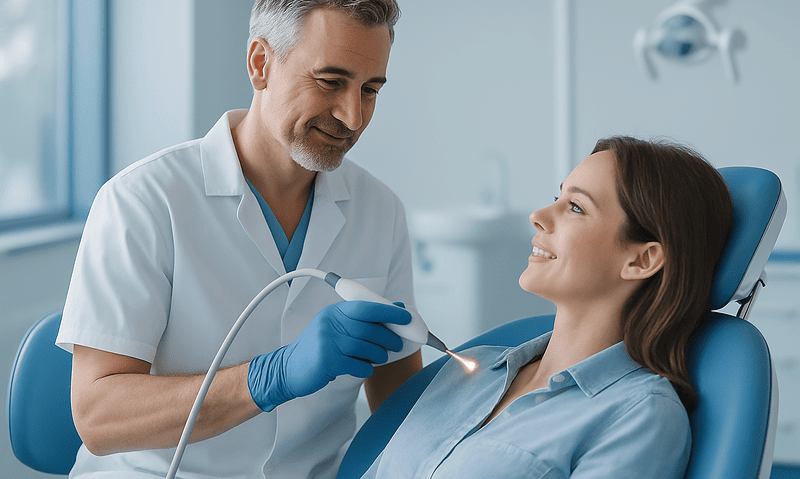
When Dentists Reach for a Laser: Gum Reshaping, Sensitivity and Small Cavity Repair
Dentists use lasers most often for soft-tissue work such as reshaping gum lines, trimming overgrown tissue and cleaning infected gum pockets, and less often…

Who Is a Candidate for Laser Dentistry? Gums, Small Cavities and Sensitivity Explained
Laser dentistry candidates are usually adults and older children who need gum treatment (deep-pocket cleaning, reshaping, small soft-tissue procedures), have small or early cavities…
Laser vs Drill in Dentistry: Where Lasers Help and Where Conventional Tools Still Win
Dental lasers and conventional drills are both accepted tools, and neither is better for every job. Lasers work well for soft-tissue procedures such as…