Nasal Reconstruction
Nasal reconstruction restores the nose’s shape, skin coverage and airway function after trauma, cancer surgery, burns or congenital deformity. Treatment is customized using grafts, flaps or staged repair techniques.

Quick answer
Nasal reconstruction is surgery that rebuilds the nose after tissue is lost to skin cancer surgery, trauma, burns, infection or a previous operation. Surgeons restore each missing layer, skin, cartilage and internal lining, using grafts and flaps, sometimes over more than one stage. Unlike cosmetic rhinoplasty, which reshapes an intact nose, reconstruction replaces missing tissue and aims to restore both appearance and breathing.
What Is Nasal Reconstruction, and Where Does Rhinoplasty Fit In?
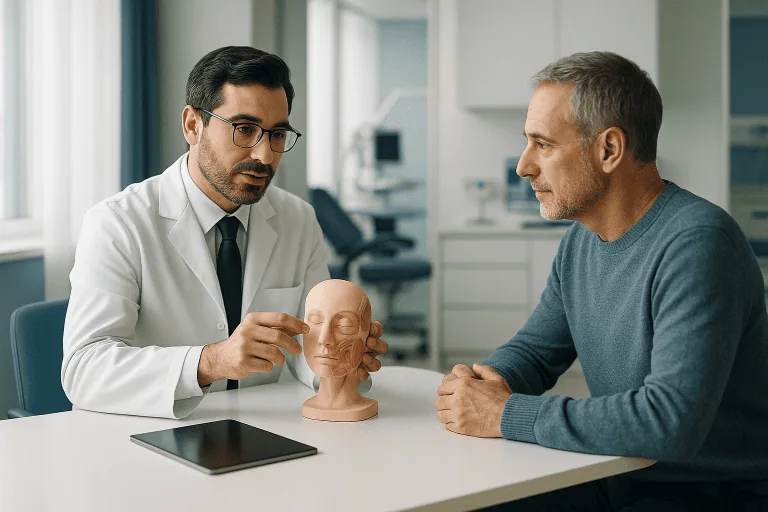
Nasal reconstruction is surgery that rebuilds the structure, coverage and function of the nose after tissue has been lost, removed, injured or underdeveloped. It replaces what is missing, skin, cartilage, bone or the internal lining, and restores the nose as both a facial feature and a working airway. It is closely related to rhinoplasty, and the two share many techniques, but they are not the same operation. If you are weighing up this kind of surgery, that distinction is the first thing worth understanding.
The nose sits at the centre of the face, and its importance goes well beyond appearance. It shapes facial identity, protects the airway, filters and humidifies the air you breathe, and supports your sense of smell. When it has been damaged, by trauma, skin cancer surgery, burns, infection, a previous operation or a congenital condition: you are usually carrying more than a visible injury. Concerns about breathing, scarring, social confidence and whether your face can ever feel like your own again tend to arrive together, and a serious surgical plan takes all of them seriously.
Nasal reconstruction is one of the most demanding areas of reconstructive surgery because the nose is built from several delicate layers: skin, cartilage, bone, soft-tissue lining and the internal airway structures. A sound repair has to account for all of them. Restore only the skin and the breathing may not improve. Rebuild only the cartilage and the contour may still look wrong. The most reliable results come from a plan that treats form and function as a single problem rather than two separate ones.
Is nasal reconstruction the same as a nose job?
No. What most people mean by a nose job is cosmetic rhinoplasty: reshaping a nose that is structurally intact, usually to change its size, profile or tip. Nasal reconstruction starts from a different position, tissue is missing or damaged, and the surgeon’s task is to replace it and re-establish normal anatomy as far as the injury or disease allows. The two overlap in technique. A reconstructive surgeon frequently borrows methods from rhinoplasty for nose reshaping when refining the contour of a rebuilt nose, and a functional airway repair may sit inside either operation. The aim of reconstruction, though, is a nose that looks proportionate to your face and works as an airway, within the medical realities of what was lost.
What does the operation actually involve?
Reconstruction may be completed in a single operation or deliberately spread across stages. Small defects can often be repaired by rearranging nearby tissue or applying a skin graft. Larger or deeper defects may need regional flaps, cartilage taken from the ear, septum or rib, bone grafting, reconstruction of the internal lining, or a staged flap that is divided and refined in a later procedure. When cancer treatment is involved, the reconstruction is coordinated with the oncological plan so that disease control and reconstructive timing are aligned rather than competing.
In practical terms, a nasal reconstruction may include:
- Skin grafts, where skin is transferred from another part of the body to cover a superficial defect.
- Local flaps, where nearby nasal or facial skin is moved into the defect while keeping its blood supply attached.
- Regional flaps, such as tissue from the forehead or cheek, for larger or more complex nasal defects.
- Cartilage grafts, used to restore the nasal bridge, tip support, nostril rim or the stability of the internal airway.
- Internal lining repair, essential when the inside layer of the nose has been lost or scarred.
- Staged reconstruction, where the repair is completed over more than one procedure to protect blood supply, contour and long-term stability.
The plan is designed around the location, depth and size of the defect, the availability of nearby tissue, your general health and the functional needs of your airway. A shallow wound on the nasal sidewall is a very different problem from a full-thickness defect involving the nostril rim, its lining and its cartilage. That is why a detailed assessment before surgery matters more here than in almost any other facial procedure.
Who May Need Nasal Reconstruction?
You may need nasal reconstruction when the nose has lost tissue, support, symmetry or airway function. Sometimes the need is immediate, as after a facial injury. In other cases the operation is planned once a skin cancer has been removed, once burns have matured, or once it is clear that an earlier operation has left deformity or obstruction behind. Some people are born with nasal differences that affect appearance or breathing and seek reconstruction later in childhood or adult life.
The concerns that typically bring people to a consultation include visible deformity, missing skin or cartilage, a collapsed nostril, nasal obstruction, whistling or crusting, asymmetry, widened scars, difficulty wearing glasses, changes in smell, or discomfort in social and professional settings. Patients who have undergone Mohs surgery or another form of cancer excision are often referred for reconstruction once the margins are clear and the character of the wound is known.
Diagnosis begins with a clinical examination. The surgeon assesses the external nose, the thickness and quality of the skin, the position of existing scars, the strength of the cartilage framework, the shape of the nostrils and the internal airway. Endoscopic examination may be used to look at the nasal passages, the septum and the internal lining. When trauma, cancer extension or deeper structural damage is suspected, imaging such as a CT scan helps define bone, sinus or cartilage involvement.
If you have a history of skin cancer, the pathology report matters. The reconstructive team needs to know the cancer type, its location, the margins and whether further treatment is planned. For trauma, timing depends on the wound condition, swelling, infection risk, fractures and your overall stability. For revision cases, previous operative reports and photographs help the surgeon understand which tissues remain and which grafts have already been used, information that directly shapes what is still possible.
You may be a candidate for nasal reconstruction if you have:
- Loss of nasal skin after skin cancer surgery or tumour removal.
- A traumatic nasal injury with missing tissue, fractures or scarring.
- Burn-related contracture, deformity or nostril narrowing.
- Collapse of the nasal tip, bridge or nostril rim.
- Breathing difficulty caused by structural weakness or scar tissue.
- A congenital nasal deformity affecting shape or airway function.
- Unfavourable scarring or deformity after previous nasal surgery.
- A combined cosmetic and functional problem after injury or disease.
A reconstruction plan is most reliable when expectations are discussed openly at the start. Some people need a subtle repair of a small defect. Others need a staged process that runs over several months. The goal in every case is the most natural and durable result possible within the limits of the tissue, the diagnosis and your capacity to heal.
Conditions Treated With Nasal Reconstruction
The indication determines not only the technique but also the timing, the specialists involved and the follow-up plan. These are the situations in which reconstruction is most often recommended.
Skin cancer surgery defects are among the most common reasons for nasal reconstruction. Basal cell carcinoma, squamous cell carcinoma and melanoma occur on the nose because of lifelong sun exposure. After the tumour is removed, the remaining wound may be small and superficial or may involve cartilage and lining. Reconstruction has to provide coverage while respecting the contours of the nasal subunits, the tip, ala, dorsum, sidewall and columella, because a repair that ignores subunit borders tends to draw the eye. You can read more about this pathway on our page on reconstruction after skin disease.
Traumatic injuries follow accidents, falls, sport, workplace incidents or violence. They often combine skin loss, cartilage fracture, bone fracture, septal injury and contamination in a single wound. Some can be repaired urgently; others are better managed in stages once swelling settles and the wound is clean. The broader principles are covered on our page on reconstruction after trauma.
Burns and scar contractures can distort the nostrils, shorten the nose, pull the tip upward or narrow the airway. Burn reconstruction usually involves releasing the scar, replacing skin, restoring cartilage support and committing to careful long-term scar management, because burned skin behaves differently from healthy skin for years.
Congenital nasal differences may occur alone or as part of facial clefting or a craniofacial condition. Reconstruction can improve symmetry, nostril shape, nasal projection and breathing. In younger patients, timing has to be balanced against facial growth, which is why these decisions are made jointly with teams experienced in developmental anatomy.
Revision after previous surgery is needed when an earlier operation has left collapse, asymmetry, excessive scarring, poor graft support or breathing problems. Revision reconstruction is usually harder than the first attempt: scar tissue reduces blood supply, distorts planes and limits the local tissue still available for repair.
Infection, inflammatory disease and tissue loss can also destroy nasal structures. In these cases, reconstruction is planned only after the underlying condition is controlled, because operating into active inflammation or infection puts flaps and grafts at risk.
How Nasal Reconstruction Is Performed
The operation begins long before the day of surgery. The first stage is a detailed consultation focused on diagnosis, anatomy, function, expectations and safety. Your surgeon examines the nose from the outside and the inside, assesses facial proportions, and reviews your medical history, medicines, allergies, smoking status and prior operations. Where records exist, photographs, pathology reports, imaging and operative notes, they are usually reviewed before the first appointment, so that the likely plan and the number of stages can be estimated honestly rather than guessed.
Preparation before surgery
Preparation depends on the cause of the reconstruction. If the defect follows cancer excision, the reconstructive plan is coordinated with the dermatologist, oncological surgeon or tumour board where needed. If trauma is involved, imaging clarifies fractures and deeper injury. If breathing is a concern, nasal endoscopy and functional assessment identify septal deviation, valve collapse, turbinate enlargement or internal scarring, problems that should be fixed during the reconstruction, not discovered after it.
You will usually be asked to stop smoking and avoid nicotine, because nicotine narrows the small blood vessels that keep flaps and grafts alive. Bring a complete list of everything you take, including supplements; decisions about pausing or adjusting any medicine belong to your treating doctor, and the process is explained in our guide to how medicines are managed before and after treatment. If general anaesthesia is planned, preoperative blood tests, heart evaluation or additional clearance may be required depending on your age and history. Before the operation, the team also walks you through incision placement, donor sites, expected scars, expected swelling and whether more than one stage is likely.
Can I vape after nasal reconstruction?
Surgeons generally ask you not to vape before or after nasal reconstruction, for the same reason they ask you not to smoke: most vaping liquids contain nicotine, and nicotine constricts the blood vessels that a healing flap or graft depends on. A flap that loses its blood supply can fail, and a graft that is poorly perfused heals badly. Switching from cigarettes to a vape does not remove this risk if nicotine is still being delivered. How long you need to avoid it, on either side of the operation, is your surgeon’s call and depends on the technique used: a forehead flap tolerates nicotine far less forgivingly than a small local repair.
How long does nasal reconstruction surgery take?
A limited repair may take less than two hours, while a complex reconstruction can take several hours. The main drivers of operating time are the depth of the defect, whether the internal lining needs rebuilding, whether cartilage has to be harvested and shaped, and how many layers must be reconstructed in the same sitting. Small superficial defects may be handled under local anaesthesia with sedation; larger full-thickness or staged procedures usually require general anaesthesia.
What happens during the operation?
Whatever the technique, the sequence follows a consistent logic: the nose is rebuilt layer by layer, from the inside out:
- The wound is prepared: edges are refined, non-viable tissue is removed, and the surgeon confirms exactly which layers need reconstruction.
- If the internal lining is missing, it is replaced or repositioned first, because a smooth inner surface is the foundation for everything above it.
- If cartilage support is absent or weak, grafts are shaped and secured to restore the bridge, tip, alar rim or nasal valve.
- Skin coverage is then achieved with the method best matched to the defect: a graft, a local flap or a regional flap.
- Any donor sites are closed and dressed.
- The repair is protected with dressings, splints or internal supports as required.
For small defects, a skin graft or local flap may be enough. A graft is simpler but can differ in colour and texture from surrounding nasal skin; a local flap uses nearby tissue and usually matches better, but demands careful design to avoid pulling the nose out of shape. For larger defects, particularly those involving the tip or nostril, a regional flap is often the better answer. A forehead-based flap is a frequent choice because it supplies well-vascularised tissue with a favourable colour and thickness for nasal resurfacing. This approach is typically staged, with a later procedure to divide the flap and refine its contour.
When cartilage is needed, the donor site depends on how much strength and volume the repair requires. Ear cartilage suits the nostril rim because of its natural curve. Septal cartilage is used when enough remains. Rib cartilage is reserved for larger structural work, especially in major reconstruction or revision. Each donor site has its own healing pattern, discomfort profile and scar, and all of this is discussed before you consent, not after.
Technology and surgical planning
Modern nasal reconstruction uses technology to sharpen planning rather than replace judgement. High-resolution photography documents the anatomy and guides the surgical design. CT imaging is used when bone, sinus, trauma or complex structural involvement is suspected. Nasal endoscopy gives a direct view of the airway and lining. In selected cases, digital planning, three-dimensional assessment or customised templates support the reconstruction of shape and symmetry. During the operation itself, magnification, refined instruments and disciplined tissue handling protect blood supply and the delicate structures around it. For you, the practical value is clearer explanations before surgery, better coordination between specialties, and a more predictable recovery pathway afterwards.
How painful is a rhinoplasty?
Most people describe the days after rhinoplasty or nasal reconstruction as uncomfortable rather than severely painful, pressure, congestion, tightness and a blocked-nose feeling dominate more than sharp pain. Discomfort is usually manageable with the medication you are prescribed. Two honest caveats: larger reconstructions tend to be more uncomfortable than limited repairs, and cartilage donor sites, the rib in particular, are often sorer than the nose itself in the first days. Your team will tell you what pattern of discomfort is expected for your specific procedure, so that you know what is normal and what is not.
What happens straight after the operation?
The nose is protected with dressings, splints or internal supports, and some patients have soft packing or silicone splints inside the nose for a short period. Swelling, bruising, mild bleeding and tightness are expected early on. You are monitored until stable after anaesthesia; some limited procedures are done as day surgery, while complex reconstructions require an overnight stay or longer observation. Before discharge, the team explains how to care for dressings, clean incision lines, protect the flap or graft, and sleep with your head elevated, and which changes in the wound or in how you feel should be reported. Typical instructions also cover keeping pressure off the nose, avoiding forceful nose-blowing in the early days, and attending every scheduled wound check, because graft and flap circulation is easiest to protect when it is reviewed early and often.
Staged reconstruction and refinement
Some nasal reconstructions are intentionally staged. The first operation restores coverage and support; a second divides a flap, refines thickness, improves contour, adjusts scars or enhances airway function. Staging does not mean the first operation failed. It is often the mark of careful reconstruction, because it lets the transferred tissue develop a reliable blood supply before final shaping. The interval between stages depends on the technique, your healing and the medical context. Plan for this possibility early: the first stage is often completed and the refinement scheduled some months later, once the transferred tissue has matured and its blood supply is secure. Your surgeon will tell you what is realistic for your case rather than what is convenient for your calendar.
How long is recovery from scar revision nasal reconstruction?
Scar revision after nasal reconstruction is usually a smaller procedure than the original repair, and the skin itself typically heals within weeks. The scar, however, keeps changing for much longer: it softens, flattens and fades over months, and final maturation can take a year or more. During that period, sun protection matters, because fresh scars darken with ultraviolet exposure, and your team may add scar massage, silicone-based treatments, steroid injections or laser-based scar management if the scar is thickening. Judging a revised scar too early is the most common mistake patients make, what you see at six weeks is not what you will see at a year.
Why Timing Matters
The timing of nasal reconstruction influences both the medical and the aesthetic outcome. Early evaluation lets the surgeon assess the tissue loss before scarring, contraction or distortion advances. For cancer-related defects, timely reconstruction protects exposed cartilage or bone and helps you return to ordinary life after tumour removal. For trauma, prompt assessment identifies fractures, septal haematoma, contaminated wounds or airway compromise while they are still straightforward to address.
Delay is not always harmful; in some situations waiting is the correct medical decision. Reconstruction may be deliberately postponed until an infection is controlled, burn scars mature, cancer margins are confirmed clear or swelling settles. Unplanned delay is a different matter. Scar contracture can pull a nostril out of position, narrow the airway or distort the surrounding tissue. Unsupported cartilage weakens over time. Skin loses flexibility, and secondary deformities become progressively harder to correct.
Problems such as exposed cartilage or bone, progressive nostril collapse, worsening obstruction and persistent non-healing wounds all tend to become more complex the longer they are left. Early evaluation does not commit anyone to early surgery; it clarifies the options, the safest timing and what needs protecting in the meantime: a much stronger position than deciding under pressure later.
Benefits of Nasal Reconstruction
What the operation can realistically offer depends on the type of defect and the complexity of the repair, but the intent is always the same: to improve appearance and function together.
| Benefit | What It Means for You |
|---|---|
| Restored nasal coverage | Missing or damaged skin can be replaced, protecting the deeper cartilage, bone and internal structures. |
| Improved facial balance | Reconstruction can help the nose look proportionate and natural within the face as a whole. |
| Better airway support | Cartilage grafts and internal repair may improve nostril stability and reduce obstruction where structural collapse is present. |
| Fewer wound-related problems | Proper coverage can lower the risk of chronic irritation, crusting, exposure or delayed healing. |
| Scar planning and refinement | Incisions can often be placed along natural contours or nasal subunit borders, so scars become less noticeable over time. |
| Psychological and social recovery | Restoring a central facial feature can help you feel more at ease in daily interactions, at work and in public. |
What to Expect After Nose Reconstruction: Recovery Timeline
Recovery varies with the size of the defect, the technique used, your general health and whether the reconstruction is staged. The pattern below describes a typical course, not a promise.
| Time Period | What You Can Expect |
|---|---|
| Day 1 | Dressings, swelling and mild bleeding are common. The nose may feel tight or blocked. Discomfort is managed with prescribed medication, and you receive detailed wound-care instructions. |
| First week | Follow-up visits check flap or graft circulation, clean the wound and adjust or remove dressings. Bruising and swelling often peak in this period. |
| First month | Most early healing happens now. Stitches and splints are removed on the schedule set for your procedure. Many normal activities resume, while trauma, heavy exercise and sun exposure are still avoided. |
| Three to six months | Swelling continues to fall, scars soften and the contour becomes more defined. Staged procedures or refinements may be planned during this window. |
| Longer term | Scar maturation and final nasal shape continue to evolve for a year or more, especially after complex reconstruction. Follow-up assesses breathing, contour and skin quality. |
When can you fly after nasal reconstruction?
Not until your surgeon has assessed the repair: the safe interval depends on the procedure, the state of the wound and whether internal splints or packing are still in place. Cabin pressure changes, dry air and congestion all interact with a healing nose, and a staged flap changes the calculation again. The practical considerations, and the questions to settle before booking a flight, are set out in our guide to flying after rhinoplasty or septoplasty.
What happens 20 years after rhinoplasty?
Noses change with age whether or not they have been operated on: cartilage softens, skin thins and the tip tends to drop slightly over decades. A rhinoplasty or reconstruction performed with sound structural support is designed to age with the face, and well-placed cartilage grafts generally keep doing their job over the long term. What can emerge over many years is gradual change in contour, in skin quality over grafts, or in breathing, which is why long-term follow-up, even if infrequent, has value. No surgeon can freeze a nose in time; the honest goal is a result that stays stable and natural as the face around it ages.
What Influences a Good Result?
A good result is measured in more than one way. Appearance matters, but so do breathing, durability, comfort, scar quality and long-term stability. Several factors shape the outcome, some belong to the defect, others to you.
Defect size and depth come first. A shallow skin-only defect is usually simpler to repair than a full-thickness wound involving skin, cartilage and lining. The nasal tip and nostril rim are especially unforgiving, because small changes there affect both symmetry and airflow.
Tissue quality matters just as much. Skin that has been burned, irradiated, scarred or previously operated on has less elasticity and a poorer blood supply. Reconstruction may then require more robust tissue transfer or a staged approach. In revision surgery, the surgeon works around scar tissue and existing grafts, which narrows the options.
Airway anatomy cannot be an afterthought. If obstruction comes from septal deviation, valve collapse, turbinate enlargement or internal scarring, those problems should be addressed as part of the reconstruction. A nose that looks acceptable but does not breathe well has not met your needs.
Health and lifestyle affect healing directly. Smoking and vaping, uncontrolled diabetes, blood-thinning medicines, immune suppression, poor nutrition and certain vascular conditions increase the risk of delayed healing or flap problems. Optimising medical conditions before surgery, under your treating doctor’s direction, makes recovery safer.
Surgical planning and technique sit at the centre. Nasal reconstruction demands precise judgement about subunits, skin match, cartilage strength, incision placement and blood supply. The best approach is not always the simplest, and the most complex approach is not always necessary. Good surgery is the discipline of matching technique to patient.
Follow-up care shapes the final result. Dressings must be managed correctly, scars protected from the sun, and the healing nose protected from pressure and knocks. Some patients benefit from scar treatments, massage, steroid injections, laser-based scar management or minor refinements once the main reconstruction has settled.
Realistic expectations complete the list. Reconstruction can achieve a great deal, but it cannot always recreate the exact original nose, particularly after major trauma, burns or cancer surgery. Nose job before and after photographs can show you what a surgeon’s work looks like, but another patient’s images are evidence of skill, not a preview of your own outcome: the tissue, the defect and the healing are yours alone. When you look at such images, ask how similar the starting defect was to yours, whether the photographs were taken under comparable lighting and angles, and how long after surgery they were captured: a nose at one year looks very different from a nose at six weeks. The honest goal is a nose that is stable, functional and in harmony with your face, with scars that mature as favourably as possible.
Is rhinoplasty completely safe?
No operation is completely free of risk, and rhinoplasty and nasal reconstruction are no exception. Possible problems include bleeding, infection, delayed healing, partial or complete loss of a graft or flap, asymmetry, unfavourable scarring, changes in breathing or sensation, anaesthetic complications and the need for revision. What a serious team does is manage that risk honestly: thorough assessment before surgery, technique matched to the defect rather than to habit, careful monitoring afterwards, and a frank conversation about what could go wrong and what would be done about it. If a surgeon tells you there is no risk at all, that is a reason for caution, not comfort.
How Much Does Nasal Reconstruction Surgery Cost?
There is no single honest number, because the operation itself varies so widely from patient to patient. What drives the cost of nasal reconstruction is the complexity of your specific repair: how many stages are needed, whether local or general anaesthesia is used, how long you stay in hospital, whether cartilage must be harvested from the ear or rib, what imaging and endoscopy the workup requires, and how much follow-up the technique demands. A one-stage repair of a small sidewall defect and a staged forehead-flap reconstruction with rib cartilage are entirely different undertakings, and their costs reflect that. A meaningful quote can only follow a review of your records, photographs and history, any figure offered before that review is a guess.
How much is nose reshaping?
Cosmetic nose reshaping is priced differently from reconstruction, and the typical cost of a rhinoplasty varies so widely, by surgeon, technique and facility, that a single figure would mislead more than it informs. One distinction worth knowing: in many health systems, reconstruction after cancer, trauma or a functional airway problem is classed as medical rather than cosmetic, which can affect how the treatment is assessed and funded. If your case combines reconstructive and aesthetic elements, ask the surgical team to spell out which parts of the plan fall on which side of that line before you commit.
How Nasal Reconstruction Is Organised at Acibadem
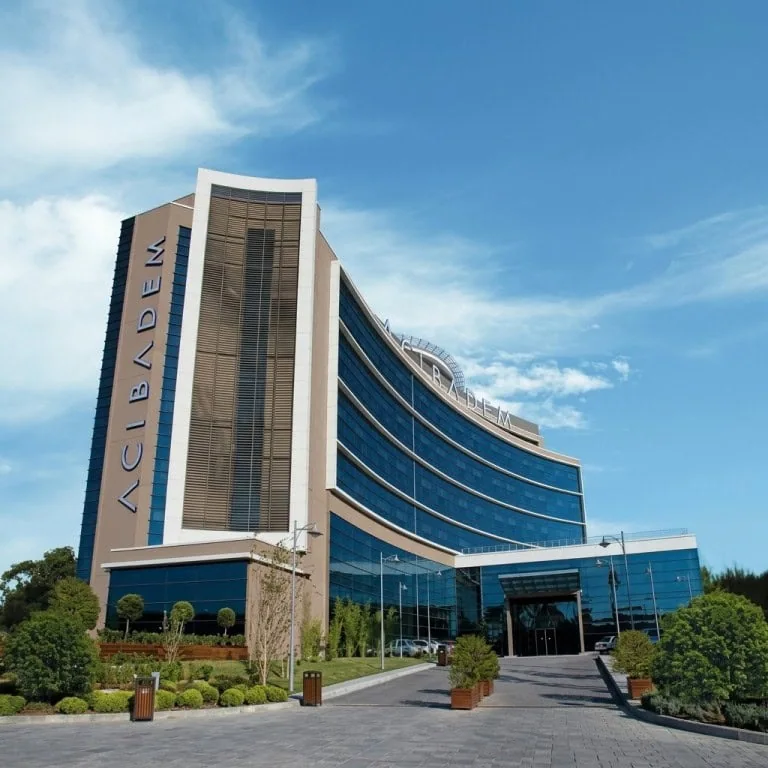
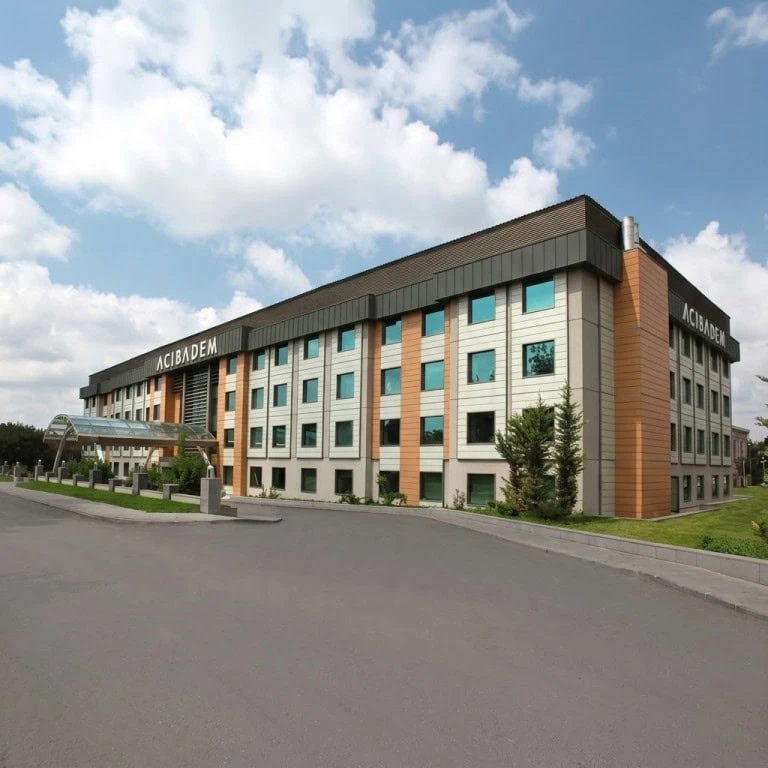
Complex nasal reconstruction is rarely a single-specialty exercise, and at Acibadem it is not treated as one. Depending on the cause and complexity of your defect, care may involve plastic and reconstructive surgeons, otolaryngology specialists, dermatology, oncology teams, radiology, anaesthesiology and rehabilitation support. A patient with a cancer-related defect may need input from dermatology, surgical oncology, pathology and plastic surgery. A trauma patient may need radiology, otolaryngology and maxillofacial expertise. A patient with airway obstruction benefits from combined functional and reconstructive planning from the outset.
Multidisciplinary evaluation keeps the reconstruction from being considered in isolation. Where cancer is involved, appropriate tumour treatment and surveillance come first. Where breathing is affected, the internal anatomy is assessed alongside the external repair. Where previous surgery has failed, the team reviews what tissue remains and which grafts and flaps are still available. For complex and revision cases, collaborative case discussion is particularly valuable when timing and sequencing decisions are finely balanced.
Coordination is treated as part of the clinical work rather than an afterthought: medical records, pathology and imaging are reviewed before the first consultation, appointments and stages are scheduled in a logical sequence, and the recovery plan is agreed before surgery rather than improvised afterwards. Advanced diagnostics and surgical technology are used where clinically appropriate, imaging to clarify trauma patterns, endoscopy to evaluate the airway, digital documentation to support planning and follow-up. None of it replaces clinical judgement; its role is to support an individualised plan. One limit stated plainly: whatever is estimated from records and photographs, the definitive plan is confirmed only after in-person examination, because skin quality, cartilage strength and internal anatomy cannot be fully judged remotely. When a second stage or refinement is anticipated, planning it from the beginning lets you make informed decisions about time off work and recovery support, rather than discovering the need mid-course.
Deciding Well
Nasal reconstruction is among the most individualised operations in surgery, and the quality of your decision depends on the quality of the answers you get. Whatever team you are evaluating, they should be able to tell you clearly: which layers of your nose are missing or damaged; how many stages your repair is likely to need; where the incisions and donor-site scars will sit; how your breathing will be assessed and addressed; what would happen if a flap or graft struggled; and how follow-up will work if you live far from the hospital. A team that answers those questions specifically, for your nose, your history and your tissue, is giving you a plan. A team that answers them generically is giving you a brochure. The difference will be visible in the mirror for the rest of your life, so take the time to hear it before you decide.
Preparation
- Before nasal reconstruction, the surgeon assesses nasal structure, breathing, skin quality and any prior operations or injuries. Imaging, photographs and medical tests may be requested to plan the repair. Patients may need to stop smoking and pause certain blood-thinning medicines before surgery.
Aftercare
- After surgery, swelling, bruising and nasal congestion are common and improve gradually. Patients should keep the head elevated, avoid impact to the nose and follow wound-care instructions closely. Follow-up visits are important, especially if staged reconstruction or graft monitoring is needed.
Frequently Asked Questions
What affects the cost of nasal reconstruction?
The final cost depends on the size and depth of the defect, whether the airway must be repaired, the technique used, the need for grafts or flaps, anaesthesia, hospital stay, tests, follow-up care and travel-related services.
How can I get a personalised quote?
A specialist needs to review your medical history, photographs, previous operation notes if available, pathology results when relevant, and any breathing concerns. Acibadem International can arrange a free consultation to prepare a personalised treatment plan and quote.
Is nasal reconstruction usually a single operation?
Some small defects may be repaired in a single surgical session, while larger or complex defects may need staged reconstruction and repeat follow-up. Your surgeon will explain the expected pathway after assessment.
What is typically included in an international patient package?
Packages may include medical consultation, preoperative tests, surgery, hospital services, nursing care, medications during admission, interpreter support and patient coordination. Items such as flights, hotel stays or extended follow-up may be handled separately depending on the plan.
Does a lower package price mean lower quality?
Not necessarily. Cost differences can reflect local healthcare economics, package structure, hospital category, surgeon expertise and what is included. Patients should compare accreditation, surgeon experience, safety standards and aftercare, not price alone.
Medically reviewed by the Acıbadem International Medical Board September 1, 2026
See our medical review board →
Update history
- PublishedJune 8, 2026
- Medical review approvedSeptember 1, 2026
- Last content updateSeptember 1, 2026
Trusted care for international patients
From the Acibadem Blog

What Recovery From Nasal Reconstruction Involves: Congestion, Flap Care and Stage Intervals
Recovery from nasal reconstruction usually unfolds in stages rather than as one healing period. Expect heavy congestion for the first one to two weeks…
Doctors Performing This Treatment


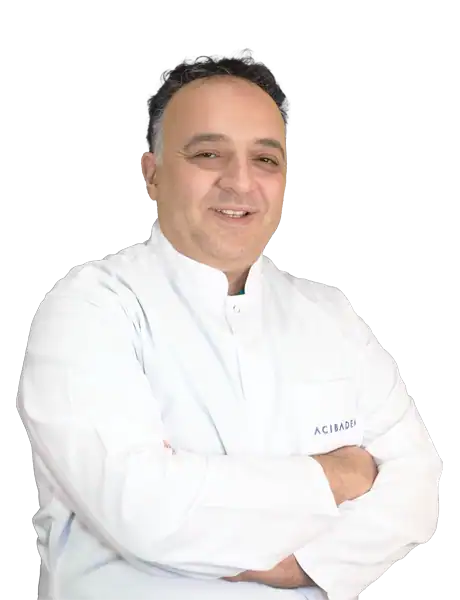
Aesthetic Plastic & Reconstructive Surgery
Prof. Mehmet Veli Karaaltın, MD

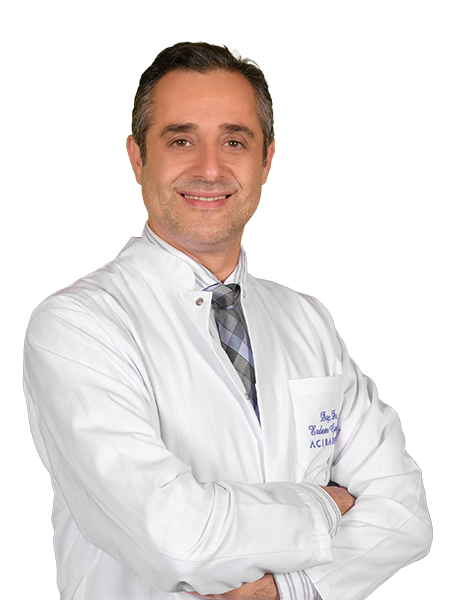
Aesthetic Plastic & Reconstructive Surgery
Assoc. Prof. Erdem Güven, MD

Aesthetic Plastic & Reconstructive Surgery
Assoc. Prof. Ahmet Küçükçelebi, MD
Aesthetic Plastic & Reconstructive Surgery
Assoc. Prof. Mehmet Altıparmak, MD

Aesthetic Plastic & Reconstructive Surgery