Premature Ejaculation Treatment
Premature ejaculation treatment addresses early ejaculation that causes distress or relationship difficulty through urologic evaluation, counseling, behavioral techniques, and selected medications tailored to each patient.

Quick answer
Premature ejaculation treatment is a structured medical pathway for men who ejaculate sooner than they intend, with limited control and distress. It begins with a urological evaluation to identify the type, lifelong, acquired or situational, and any contributing conditions, then combines education, behavioural techniques such as the stop-start method, counselling, and selected medications where appropriate. Most cases are managed without surgery.
Premature Ejaculation Treatment: A Clear, Respectful Look at a Common Condition
Premature ejaculation is one of the most common male sexual health conditions. It means ejaculation happens sooner than a man or his partner would like, usually with a sense of limited control, and it causes distress, frustration or avoidance of intimacy. Premature ejaculation treatment is not a single procedure or a single tablet. It is a structured medical pathway: a physician identifies the type of premature ejaculation, evaluates the factors contributing to it, and builds a plan from education, behavioural techniques, counselling, selected medications, or treatment of an underlying condition.
Talking about it is often the hardest part. Many men delay seeking help for years because they feel embarrassed, assume nothing will change, or have been told the problem is “just psychological”. Partners may feel confused, rejected or quietly frustrated, even in an otherwise strong relationship. Over time the concern can erode confidence and emotional closeness, and sex can start to feel like a test rather than a shared experience. None of this means the situation is fixed in place. It means the pattern has had time to reinforce itself, and a structured plan is more useful than another round of trial and error.
From a medical perspective, premature ejaculation is a recognised, common and treatable condition. It is not a sign of weakness, and it is not something a patient needs to manage alone. Effective care begins with a careful urological evaluation, a respectful conversation about symptoms and expectations, and a plan matched to the individual rather than a one-size-fits-all prescription.
What is premature ejaculation?
Premature ejaculation is ejaculation that occurs earlier than a man wants during sexual activity, together with a feeling that he cannot delay it and a negative consequence, distress, embarrassment, frustration or avoidance of intimacy. All three elements matter. Occasional early ejaculation happens to most men at some point and is not a disorder; it becomes a clinical condition when it is persistent, feels outside the man’s control, and affects his wellbeing or his relationship.
Physicians describe several patterns. Lifelong premature ejaculation begins with a man’s first sexual experiences and stays relatively consistent over time; in its classic form, ejaculation occurs within about one minute of penetration in nearly all encounters. Acquired premature ejaculation develops after a period of previously satisfactory control, often with ejaculation at around three minutes or less, and may be linked to erectile dysfunction, prostatitis, thyroid imbalance, stress, medication changes, relationship conflict or anxiety. Situational premature ejaculation occurs only with certain partners or in certain circumstances. Finally, some men have a subjective form: they perceive their control as inadequate even though their ejaculation time falls within a typical range. Their distress is real and clinically important, and it deserves the same careful discussion, sometimes what helps most is accurate information about what typical sexual response actually looks like.
What does it mean to ejaculate prematurely?
To ejaculate prematurely means to reach climax before you intend to, before you or your partner are ready, with little or no ability to hold back once arousal builds. The key word is control, not a stopwatch. Two men with identical ejaculation times can have completely different clinical pictures: one feels in control and content, the other feels ambushed by his own arousal every time. That is why a good evaluation asks about the sense of control, the level of distress and the effect on the relationship, rather than fixating on a single time target. It is also why the goal of treatment is framed as better control and less distress, not an arbitrary number of minutes.
Who May Need Premature Ejaculation Treatment
A man may consider evaluation if ejaculation regularly occurs earlier than desired, if there is a persistent sense of limited control, or if the issue creates anxiety, frustration, avoidance of sex or tension with a partner. Some men seek help when a new relationship begins and the pattern suddenly matters more. Others notice a change after a stressful life event, a new medical condition, or the onset of erection difficulties.
Common symptoms and concerns include:
- Ejaculation that occurs before or very soon after penetration, or earlier than desired during any sexual activity
- A persistent feeling of being unable to delay ejaculation once arousal builds
- Distress, embarrassment or reduced sexual confidence
- Avoidance of intimacy because of fear of disappointing a partner
- Conflict, misunderstanding or reduced closeness within a relationship
- Premature ejaculation occurring together with erectile dysfunction
- A sudden change in ejaculatory control after a period of normal function
Diagnosis usually begins with a detailed medical and sexual history. The physician will ask when the issue started, whether it happens in all situations or only some, how often it occurs, whether erections are firm enough for intercourse, and whether there is pain, urinary discomfort, pelvic symptoms, anxiety or relationship stress. The conversation also covers medications, alcohol use, smoking, exercise, sleep, chronic illness and any previous treatments, including creams, tablets or supplements bought without a prescription.
Most patients do not need complex testing. Targeted tests are used when the history points to a contributing medical problem: urine analysis, evaluation for prostate or urinary tract inflammation, hormone assessment in selected cases, or thyroid testing when symptoms suggest overactivity. If erectile dysfunction is present, the evaluation may extend to vascular, hormonal, neurological and metabolic factors such as diabetes or cardiovascular risk. An overview of how urologists investigate these questions is available in our guide to urology diagnostic methods.
What Causes Premature Ejaculation?
What are the main causes of premature ejaculation?
The main causes of premature ejaculation fall into two overlapping groups: biological factors and psychological or learned factors, and in most men both play a role. On the biological side, differences in serotonin signalling in the nervous system are thought to influence how quickly the ejaculatory reflex fires; heightened penile sensitivity, an overactive thyroid, prostate or urinary tract inflammation, and erectile dysfunction can all shorten the time to ejaculation. On the psychological side, performance anxiety is the most common driver: worry raises arousal, arousal shortens control, poor control feeds the next round of worry. Depression, stress, guilt about sex and unresolved relationship conflict can all contribute. Learned patterns matter too. Hurried, secretive early sexual experiences, a kind of premature education in speed rather than control, can condition the body to reach climax quickly, a habit that persists long after the original reason for rushing is gone. Medication changes, stimulant use and alcohol can also shift ejaculatory timing, which is one reason a full medication review belongs in every evaluation.
Understanding which factors dominate in your case is the entire point of diagnosis. A man with lifelong premature ejaculation and high sensitivity needs a different plan from a man whose control changed after prostatitis, and both need a different plan from a man whose main problem is a fear of losing his erection.
Can you get pregnant from premature ejaculation?
Yes. Premature ejaculation does not reduce fertility: the timing of ejaculation changes, not the sperm. If ejaculation occurs inside the vagina, or close enough to it, pregnancy is possible regardless of how quickly climax was reached. The only fertility-related complication arises when ejaculation consistently happens before penetration, which can make conception mechanically difficult for couples trying to have a child; in that situation the condition itself becomes a reason to seek treatment. Pre-ejaculate fluid can also carry sperm, which is why withdrawal is an unreliable form of contraception whether or not premature ejaculation is present.
Pre ejaculate treatment: what that search usually means
Pre ejaculate treatment is a phrase many men type into a search engine, but pre-ejaculate itself, the clear fluid released during arousal, before ejaculation, is a normal physiological secretion and does not need treating. In almost every case, the concern behind the search is actually early ejaculation: climax arriving too soon, sometimes almost as soon as arousal begins. If that describes your situation, the condition being discussed on this page is the relevant one, and the evaluation and treatment options below apply. If the concern is genuinely about the fluid itself, unusual volume, colour or discomfort, that is a separate question a urologist can assess during the same consultation.
Timing, volume and the “how to cum more” question
Men searching for how to cum more are usually asking about ejaculate volume, which is a different concern from ejaculation timing. Volume varies naturally with age, hydration, frequency of ejaculation and hormone levels, and a perceived decrease has its own list of possible causes, some trivial, some worth investigating. Premature ejaculation treatment does not aim to change volume, and treatments marketed to increase volume do not improve control. If both concerns are present, mention both at the consultation: they are evaluated differently, and lumping them together is one of the ways unregulated online products mislead buyers.
Conditions and Indications Premature Ejaculation Treatment Addresses
Treatment of rapid ejaculation, an older clinical name for the same condition, is appropriate across a wide range of situations, because the same symptom can have different causes in different men. Some patients need practical guidance and short-term therapy; others need a broader medical work-up because a change in ejaculation can be the first visible sign of another condition.
Indications for treatment include:
- Lifelong premature ejaculation: early ejaculation present since the beginning of sexual activity, typically addressed with education, behavioural training and selected medication options.
- Acquired premature ejaculation: new or worsening loss of control, especially when associated with erectile dysfunction, prostatitis, thyroid disease, stress or other medical changes.
- Premature ejaculation with erectile dysfunction: a common combination in which men rush sexual activity because they fear losing the erection; improving erection reliability often improves ejaculatory control as well.
- Performance anxiety and confidence concerns: anxiety accelerates arousal and shortens control, creating a self-reinforcing cycle that structured treatment can interrupt.
- Relationship-related sexual distress: communication difficulties, fear of disappointing a partner or mismatched expectations can maintain the problem even when the original trigger has passed.
- Inflammatory or urinary symptoms: pelvic discomfort, burning urination, frequent urination or prostate inflammation may be associated with changes in ejaculation and deserve targeted assessment.
- Medication or substance-related changes: some medications, stimulant use and lifestyle factors influence sexual response and should be reviewed carefully by the treating physician.
Not every patient needs the same treatment, and not every case needs medication. For some men, reassurance, accurate information and structured exercises are enough. For others, medical therapy is an important part of restoring control and reducing distress. The skill lies in matching the plan to the man’s history, health profile, priorities and relationship context.
How Premature Ejaculation Treatment Is Performed Step by Step
How to stop premature ejaculation?
There is no single switch that stops premature ejaculation; effective treatment combines several elements, chosen after diagnosis rather than guessed at in advance. In practice this means a confidential consultation, a focused evaluation, education about how arousal and the ejaculatory reflex work, behavioural training, counselling where anxiety or relationship strain is significant, medication where appropriate, and treatment of any underlying condition. The same question applies whether you phrase it as how to stop early ejaculation or how to delay it: the answer is a structured plan with follow-up, not a single product. The steps below describe how that plan is built.
Step 1: Initial Preparation and Confidential Consultation
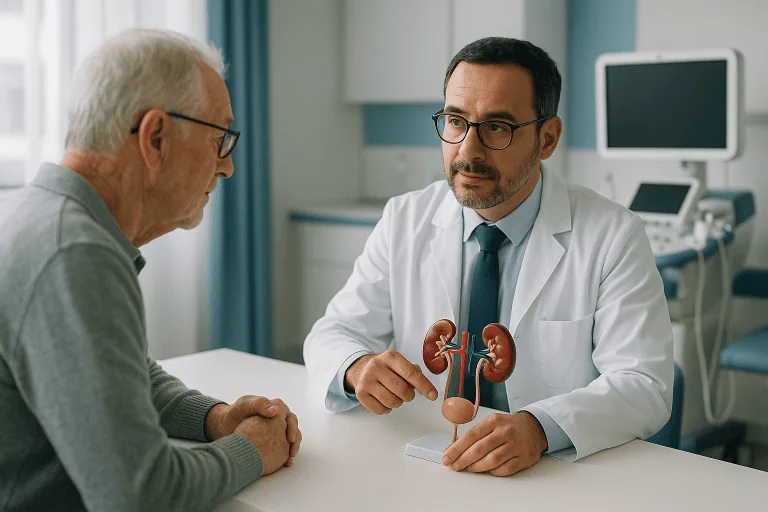
The first step is a private consultation with a urologist: an evaluation of the kind carried out in any specialist urology department. You will be encouraged to describe the problem in practical terms: when ejaculation occurs, how much control you feel you have, whether the pattern is lifelong or new, and how it affects your life. It helps to mention whether the problem occurs during intercourse, masturbation, oral sex or all sexual situations, because a purely situational pattern points the evaluation in a different direction. If a partner is involved and you are comfortable, partner input can add useful context, but it is never required, and the consultation belongs to you.
Before the appointment, it is useful to gather a brief medical history, a current medication list, previous test results and information about chronic conditions such as diabetes, heart disease, thyroid disease, depression or anxiety. Mention any prior treatments honestly, including topical creams, tablets, supplements or medications bought online. This matters because some products marketed for sexual performance are unregulated and may interact with prescribed medicines: the physician can only account for what they know about.
Step 2: Medical Evaluation and Diagnosis
The physician classifies the condition, lifelong, acquired, generalised or situational, because the classification shapes the treatment. A focused physical examination is performed when indicated, particularly if there is pain, urinary symptoms, testicular concerns, changes in penile sensitivity or erectile dysfunction. In selected cases, laboratory testing evaluates thyroid function, hormones, glucose control, inflammation or infection.
A modern evaluation also weighs psychological and relational factors, and this deserves saying plainly: it does not mean the problem is “only in the mind”. Sexual response is shaped by the nervous system, hormones, blood flow, pelvic floor muscles, emotional state and learned patterns of arousal, all at once. A high-quality assessment respects that complexity without making the patient feel judged, and it resists the temptation to order tests that the history does not justify.
Step 3: Education and Behavioural Techniques
Most treatment plans begin with education about sexual response and arousal control. You learn to recognise the point of ejaculatory inevitability, the moment after which ejaculation cannot be stopped, and to work with the window of control that exists before it. Common approaches include the stop-start method, modified squeeze techniques, pacing strategies, breathing and attention control, and planned pauses during sexual activity. These methods require practice and patience, and they work best when treated as training rather than as a test to pass on the first attempt.
How does the stop start method for premature ejaculation work?
The stop start method for premature ejaculation trains you to recognise rising arousal and deliberately interrupt stimulation before the point of no return, so that control is learned rather than hoped for. In its basic form it works like this:
- Stimulation begins, alone at first, later with a partner, and you pay close attention to your level of arousal rather than distracting yourself from it.
- As arousal approaches the point where ejaculation feels imminent, stimulation stops completely.
- You wait until the urge subsides noticeably, usually a short pause, while keeping attention on the body rather than on anxious thoughts.
- Stimulation resumes, and the cycle repeats several times before ejaculation is finally allowed.
- Over repeated sessions, the pauses become shorter and the recognisable “window” before inevitability becomes wider, which is the skill the technique is building.
The squeeze technique adds gentle pressure at the head of the penis during the pause to further reduce arousal. Both methods are more effective when a clinician explains them properly and when progress is reviewed at follow-up, because small errors in timing or technique are the most common reason they “don’t work”.
How can I fix premature ejaculation naturally?
Natural, non-drug approaches centre on behavioural training, pelvic floor work and lifestyle: the stop-start and squeeze techniques described above, pelvic floor muscle training, reducing alcohol before sex, managing stress and sleep, slowing the pace of sexual activity, and improving communication with a partner so that intimacy stops feeling like an exam. Pelvic floor training deserves a specific note: the goal is not simply stronger muscles but better awareness and coordination. Some men carry excessive pelvic floor tension, others have poor voluntary control, and guidance from an appropriately trained clinician helps you practise the correct technique rather than accidentally worsening tension. Natural approaches are genuinely effective for many men, particularly when anxiety and rapid arousal escalation drive the problem, but they have honest limits, and when symptoms are persistent they are often combined with medical therapy rather than pitted against it.
Step 4: Counselling and Psychosexual Support
When anxiety, relationship strain, low confidence, a trauma history or communication difficulties contribute to the problem, counselling or psychosexual therapy may be recommended, either individually or as a couple. The work typically focuses on reducing performance pressure, challenging negative expectations, improving communication and helping couples rebuild intimacy without turning every encounter into a measurement. Cultural background matters here too: discussions about sexuality can feel intensely private, and a respectful clinical environment with clear confidentiality makes the process easier. The aim is never to assign blame: it is to identify patterns that can be changed.
What is the best medicine for premature ejaculation?
There is no single best medicine for premature ejaculation; the appropriate option depends on the type of premature ejaculation, your overall health, other medications you take and whether erectile dysfunction is also present. The main categories a physician may consider are: topical anaesthetic preparations applied to reduce penile sensitivity; certain oral medications that influence ejaculation timing through their effect on serotonin signalling; a short-acting, on-demand medication developed specifically for premature ejaculation, which is available in some regions and not in others; and treatments for associated erectile dysfunction, which can be central to the plan when fear of losing the erection is driving the rush.
Each category has trade-offs that belong in a medical conversation, not a checkout page. Topical treatments can help men with high penile sensitivity, but correct use matters: excess product can blunt pleasure or transfer numbness to a partner. Oral options require a careful review of medical history, other prescriptions, mood disorders, bleeding risk and potential side effects. Where an on-demand medication is not available, physicians may use selected medications off-label based on established clinical experience and individual suitability. What no physician recommends is self-medicating with tablets bought online or stacking sexual performance products without guidance, unregulated products may contain undisclosed ingredients and can interact with heart medicines, antidepressants, blood pressure treatments or alcohol.
Step 5: Treating Underlying Medical Contributors
When premature ejaculation is acquired, the physician looks for treatable contributors rather than treating the symptom in isolation. Prostate or urinary tract inflammation, including prostatitis, may need targeted therapy. Thyroid overactivity, when present, should be managed appropriately. Hormonal imbalance, chronic pelvic pain, diabetes, depression, anxiety and medication effects can all influence sexual function, and addressing them improves overall sexual health, not just ejaculation timing. This is precisely why a urological evaluation is preferable to cycling through over-the-counter products: a symptom that looks straightforward may have a medical context that deserves attention.
Step 6: Typical Duration and Follow-Up
The first consultation usually produces a working diagnosis and an initial plan, and some patients begin education and behavioural strategies the same day. If testing is needed, results are reviewed before medical treatment is finalised. Follow-up is not an afterthought, premature ejaculation treatment routinely needs adjustment. A medication dose may need refining, instructions for a topical product may need revising, or anxiety patterns may call for more structured support. Improvement can begin quickly for some men, particularly when medication or topical therapy suits their situation; behavioural and confidence-based gains typically build over several weeks of consistent practice.
Why Acting Early Matters and the Risks of Delay
Premature ejaculation is not usually dangerous in itself, but delay gives the emotional and relational effects room to grow. What begins as occasional anxiety becomes a repeated pattern; the man starts avoiding sex, the partner reads avoidance as disinterest, and both become more guarded. That cycle is much easier to interrupt early than to unwind after years.
Early evaluation matters most when premature ejaculation appears suddenly after a period of normal control. Acquired premature ejaculation can accompany erectile dysfunction, prostatitis, thyroid imbalance, chronic pelvic pain, medication changes or psychological stress, and identifying those factors early makes treatment more precise and spares the patient months of misdirected effort.
Delay also pushes men toward unsafe or ineffective remedies. Products advertised online promise rapid results but may contain undisclosed ingredients or interact badly with heart medications, antidepressants, blood pressure medicines or alcohol. A physician-guided plan is safer and far more likely to address the actual cause.
Seeking help early does not commit you to long-term medication. It means understanding the problem accurately and choosing from appropriate options with full information. For many men, a clear explanation and a structured plan reduce anxiety on their own, and reduced anxiety is itself part of the treatment.
Benefits of Premature Ejaculation Treatment
When treatment is tailored to the individual, the benefits reach beyond ejaculation timing into confidence, communication and overall sexual wellbeing.
| Benefit | What It Means for You |
|---|---|
| Improved ejaculatory control | You may gain more ability to slow arousal, delay ejaculation and take part in sexual activity with less urgency. |
| Reduced performance anxiety | A structured plan can break the cycle of worry, rapid arousal and disappointment that keeps the problem going. |
| Better relationship communication | Where appropriate, partner-inclusive guidance reduces misunderstanding and helps couples discuss intimacy constructively. |
| Identification of underlying causes | Evaluation may detect erectile dysfunction, inflammation, thyroid issues, medication effects or other treatable factors. |
| Safer use of medication | Physician guidance selects appropriate therapies and avoids the risks of unregulated online products and unsuitable combinations. |
| Personalised sexual health care | The plan is adjusted to your symptoms, health profile, relationship context and preferences rather than following a template. |
Recovery and Progress Timeline
Because premature ejaculation treatment is usually non-surgical, “recovery” here means how patients adjust to therapy, practise techniques and experience improvement over time. The timeline below describes a typical progression, not a promise, individual pace varies with the type of premature ejaculation and the consistency of practice.
| Time Period | What Patients Can Expect |
|---|---|
| Day 1 | The physician takes a detailed history, performs any necessary examination, discusses likely causes and begins an initial plan. Some patients receive behavioural instructions or medication guidance immediately. |
| First week | Practice of stop-start techniques, arousal awareness and pelvic floor exercises begins, along with any prescribed topical or oral therapy as instructed. Early changes may appear, but consistency matters more than speed. |
| First month | Most patients develop a clearer sense of which strategies help. Follow-up is used to adjust medication, refine technique, address side effects, or add counselling if anxiety or relationship strain remains significant. |
| Longer term | Progress typically stabilises as confidence grows and new patterns become familiar. Some patients continue occasional medication; others rely mainly on behavioural control and communication strategies. |
Factors That Influence Outcomes and What a Good Result Looks Like
Outcomes vary because the condition itself varies. A man with lifelong premature ejaculation and high sensitivity needs a different plan, and will progress differently, from someone whose symptoms began after erectile dysfunction or a stressful life event. A good result is measured by improved control, reduced distress and better sexual satisfaction, not by hitting a single exact time target.
The factors that matter most are the type of premature ejaculation, how long symptoms have lasted, whether erectile dysfunction is present, anxiety level, relationship dynamics, medication use, chronic health conditions and willingness to practise behavioural techniques. Partner response counts too: supportive communication tends to accelerate progress, while blame or pressure heightens anxiety and undermines control.
Consistency is the single most controllable element. Behavioural exercises work when practised regularly and without harsh self-criticism. Medication works when used exactly as prescribed. Follow-up exists so the physician can adjust the plan: the first approach is a starting point, not a verdict.
Expectations should stay realistic. Some patients improve quickly; others need several adjustments before finding the right combination of technique, counselling and medical therapy. Be equally realistic about personal success stories online: an account of what worked for one man describes one man’s pattern and causes, which may have nothing in common with yours. The aim of proper treatment is sustainable improvement in real-life sexual situations, not temporary change under ideal conditions.
Finally, be cautious about procedures. Premature ejaculation is managed with medical, behavioural and psychosexual approaches; surgical interventions are not standard treatment for most men and carry risk without strong evidence of benefit. A careful urological opinion is the best protection against treatments you do not need.
Common Myths About Premature Ejaculation
Because premature ejaculation is rarely discussed openly, myths fill the silence, and several of them actively delay proper care. Correcting them is part of treatment itself.
“It’s all in your head.” Sexual response is produced by the nervous system, hormones, blood flow, pelvic floor muscles and psychology working together. Anxiety often plays a role, but so can serotonin signalling, thyroid function, prostate inflammation and penile sensitivity. Telling a man the problem is purely mental is both inaccurate and unhelpful, and it steers him away from an evaluation that might find a treatable medical contributor.
“It will go away on its own with more experience.” Occasional early ejaculation often does settle. A persistent pattern usually does not, because the anxiety it creates reinforces the very arousal spike that causes it. Lifelong premature ejaculation in particular tends to remain stable over the years without structured treatment.
“Distraction is the answer.” Thinking about something unrelated during sex is probably the most widely shared piece of informal advice, and it usually backfires. Control is built by paying closer attention to arousal, learning to recognise it early and modulate it, not by disconnecting from the experience. Distraction also drains pleasure and intimacy from sex, which adds a new problem without solving the old one.
“There is a normal duration every man should reach.” Clinicians use time as one signal among several, but diagnosis rests on control, distress and consistency, not on a stopwatch. Chasing a number seen online is a reliable way to manufacture anxiety, and anxiety is precisely what shortens control.
“Only young or inexperienced men are affected.” Premature ejaculation occurs across adult life. In older men it more often appears in its acquired form, sometimes alongside erectile dysfunction or prostate conditions, which is exactly when a medical evaluation is most valuable, because the change in ejaculation may be the first visible sign of something else worth treating.
“Sprays and supplements sold online are basically the same as medical treatment.” Regulated topical anaesthetics used under medical guidance are a legitimate option; unregulated products are not the same thing. They may contain undisclosed ingredients, interact with other medicines and be dosed unpredictably. The difference is not the format of the product but the presence of a diagnosis and supervision behind it.
“A partner’s satisfaction depends only on duration.” Couples who communicate about intimacy consistently find that closeness, attention and variety matter alongside timing. Treating premature ejaculation helps, but so does taking the pressure of a single measurement off the encounter, which is why counselling and partner communication form part of many treatment plans rather than being an optional extra.
Moving Forward with Accurate Information
Premature ejaculation can feel isolating, but it is a recognised medical condition with multiple credible treatment options and a well-understood diagnostic path. The most effective care starts with an honest conversation, a careful evaluation, and a plan matched to the type of premature ejaculation and the man’s overall health. For some men, improvement comes through education and behavioural practice. For others, medication, counselling, treatment of erectile dysfunction or management of an underlying medical issue does the heavier lifting. What almost never works is silence, guesswork and unregulated products: the three things most men try first. Understanding the condition accurately is the step that makes every other step easier.
Preparation
- A urologist reviews sexual history, medical conditions, medications, and relationship factors in a confidential consultation. Patients may be asked to complete questionnaires or undergo basic tests if infection, hormone issues, erectile dysfunction, or prostate problems are suspected. Avoid starting over-the-counter medications or sprays before evaluation unless advised by a doctor.
Aftercare
- Treatment may include behavioral exercises, counseling, topical anesthetic products, or prescription medication with follow-up to adjust the plan. Patients should use medicines exactly as prescribed and report side effects, mood changes, or persistent symptoms. Partner communication and consistency with exercises often improve results over several weeks.
Frequently Asked Questions
What affects the cost of premature ejaculation treatment?
Cost depends on the complexity of the evaluation, whether tests are needed, the involvement of counseling or sex therapy, the medication plan, follow-up needs, and any related condition such as erectile dysfunction, anxiety, or urinary symptoms.
How can I get a personalised quote?
You can request a free consultation by sharing your symptoms, previous treatments, medical history, current medicines, and any relevant test results. A specialist team can then suggest an appropriate pathway and provide a personalised quote.
Is treatment usually a single visit or ongoing care?
It depends on the cause and chosen treatment. Some patients need assessment and medication guidance, while others benefit from follow-up, behavioral coaching, or counseling. Your specialist will explain the expected care plan.
Are tests always required before treatment?
Not always. Testing is recommended only when the history or examination suggests a possible medical contributor, such as hormonal concerns, infection, prostate symptoms, or another urologic issue.
Can international patients receive discreet support?
Yes. International patient services can help coordinate appointments, interpreter support, and communication with the medical team while maintaining confidentiality. This information is general and not medical or financial advice; a consultation is needed for individual recommendations.
Medically reviewed by the Acıbadem International Medical Board September 1, 2026
See our medical review board →
Update history
- PublishedJune 8, 2026
- Medical review approvedSeptember 1, 2026
- Last content updateSeptember 8, 2026
References1
- Ejaculation problems nhs.uk