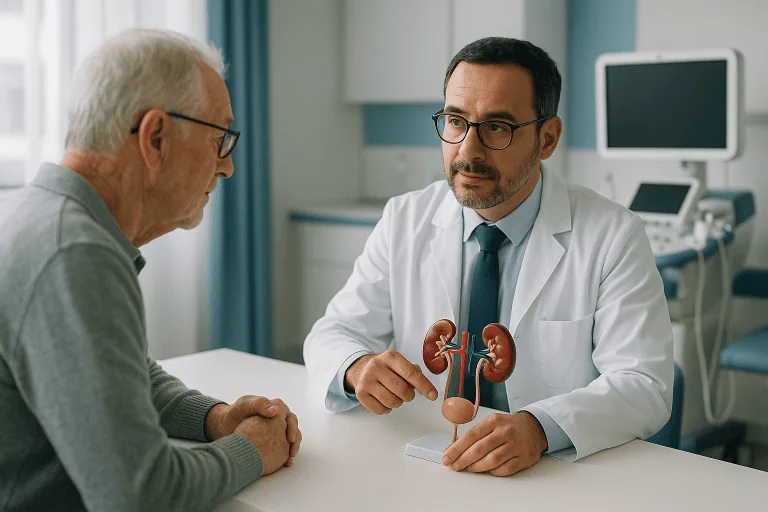
Prostatitis Treatment
Prostatitis is inflammation or infection of the prostate that can cause pelvic pain, urinary symptoms and fever. Treatment depends on the cause and may include antibiotics, pain relief and supportive care.

Quick answer
Prostatitis is inflammation of the prostate gland, with or without a bacterial infection. It causes urinary burning, frequency, pelvic pain and discomfort after ejaculation. Treatment depends on the type: acute and chronic bacterial prostatitis are treated with culture-guided antibiotics, while chronic pelvic pain syndrome usually needs a combination of medication, pelvic floor therapy and lifestyle adjustment, with follow-up to confirm improvement.
Prostatitis: What It Is and Why It Matters
Prostatitis is inflammation of the prostate gland. Sometimes a bacterial infection causes it; more often, no infection is ever found. Either way, it produces a recognisable cluster of problems: burning when you urinate, a frequent or urgent need to go, pain in the pelvis, lower back or genitals, and discomfort during or after ejaculation. Some men become suddenly unwell with fever, chills and severe urinary symptoms. Others live with a low-grade ache for months and struggle to get a clear answer about what is wrong.
Prostatitis is not one single disease. It is a group of conditions that can involve infection, inflammation, pelvic floor muscle dysfunction, urinary tract irritation, immune factors, or several of these at the same time. That is why treatment should never rest on symptoms alone. Two men with almost identical complaints may need entirely different care, and the only way to tell them apart is a careful, structured evaluation.
A note on the word itself. In many languages the gland is written prostata, and you may see that spelling in medical records from Germany, the Netherlands and elsewhere. It is the same organ and the same condition; only the spelling differs. The suffix -itis simply means inflammation, so prostatitis is, literally, an inflamed prostate.
Because the gland sits deep in the pelvis and wraps around the urethra, even a modest amount of swelling can change how you urinate, how you sleep and how comfortable intimacy feels. Prostatitis can be physically painful, emotionally frustrating and, at times, frightening, particularly when repeated courses of medication have not brought lasting relief, or when you are unsure whether the cause is infection, an enlarged prostate, a urinary condition, a sexually transmitted infection or something more serious. Understanding the anatomy is the first step towards understanding the condition.
What is a prostate?
The prostate is a small gland, roughly the size and shape of a walnut, that forms part of the male reproductive system. It is made of glandular tissue, which produces fluid, and smooth muscle, which contracts during ejaculation. The gland grows during puberty under the influence of male hormones and often continues to enlarge slowly in later adult life. It is not essential for urination, but its position means that anything that inflames or enlarges it can interfere with the flow of urine.
Where is the prostate located?
The prostate is located just below the bladder and directly in front of the rectum, deep in the male pelvis. The urethra, the tube that carries urine from the bladder out through the penis, passes straight through the middle of the gland. This location explains two practical facts. First, it is why a swollen or inflamed prostate so quickly causes urinary symptoms: the tube it surrounds has very little room to spare. Second, it is why a doctor can examine the gland through the rectal wall with a gloved finger, an examination known as a digital rectal examination.
What does the prostate do?
The prostate produces part of the fluid in semen. Prostatic fluid is slightly alkaline, nourishes sperm and helps them survive after ejaculation. During orgasm, the muscle within the gland contracts and pushes this fluid into the urethra, where it mixes with sperm from the testicles and fluid from the seminal vesicles. The gland also plays a small role in closing off the bladder outlet during ejaculation, so that semen travels forwards rather than backwards into the bladder. When the prostate is inflamed, any of these functions can become uncomfortable, which is why painful ejaculation is such a common prostatitis complaint.
Do women have a prostate?
No. Women do not have a prostate gland, and prostatitis is a condition that affects men. Women do have small glands near the urethra, known as Skene’s glands, which are sometimes informally called the “female prostate” because they develop from similar embryonic tissue. These glands can occasionally become inflamed, but that is a separate condition with its own name and management. If a woman has burning urination, pelvic pain or urinary frequency, the explanation lies elsewhere, most commonly in the bladder or urinary tract, not in a prostate.
The Four Types of Prostatitis
Doctors classify prostatitis into four main categories, and the classification matters because each type is treated differently. Getting the category right is often the single most important step in the whole care pathway.
Acute bacterial prostatitis is a sudden bacterial infection of the gland. It typically causes fever, chills, body aches, pelvic pain and intense urinary symptoms, and it can make a previously healthy man feel severely unwell within a day or two. Clinicians treat it as an urgent condition, because bacteria can enter the bloodstream, the bladder can become unable to empty, and an abscess can form in the gland. Some patients are treated at home with oral medication; others need hospital admission, particularly if they cannot urinate, cannot keep fluids down or show signs of systemic infection.
Chronic bacterial prostatitis is a persistent or recurring bacterial infection. The same organism keeps returning, often causing repeated urinary infections with quieter periods in between. Symptoms tend to come and go rather than arrive as a single dramatic illness. This form usually needs a longer course of antibiotics and a search for the reason bacteria keep surviving, prostate stones, incomplete bladder emptying or a structural abnormality in the urinary tract.
Chronic prostatitis, also called chronic pelvic pain syndrome, is the most common form by a wide margin. Standard urine cultures often show no infection at all. Symptoms may involve pelvic pain, urinary irritation, pelvic floor muscle spasm, nerve sensitivity and flares linked to stress, sitting or activity. Because there is usually no single cause, there is usually no single fix: management is multimodal, combining medication, pelvic floor therapy, lifestyle change and time.
Asymptomatic inflammatory prostatitis is inflammation discovered incidentally, for example, in a semen analysis during fertility testing or in tissue removed for another reason. The man has no symptoms. It usually needs no treatment in itself, but it can temporarily raise PSA levels and therefore sometimes complicates the interpretation of other tests.
Prostatitis Symptoms
Prostatitis symptoms fall into four broad groups: urinary symptoms, pain, sexual symptoms and, in acute infection, whole-body illness. Most men experience some combination rather than a single complaint, and the pattern often gives the first clue to which type of prostatitis is present.
Urinary symptoms include burning or stinging during urination, needing to urinate frequently, sudden urgency, difficulty starting the stream, a weak or interrupted stream, waking at night to urinate and the sense that the bladder never fully empties. Pain symptoms include aching or pressure in the perineum, the area between the scrotum and the anus, as well as pain in the lower abdomen, lower back, penis or testicles. Sexual symptoms include pain during or after ejaculation and, in some men, blood in the semen. Blood in the urine can also occur. In acute bacterial prostatitis, symptoms develop quickly and are joined by fever, chills, nausea, weakness and a general feeling of being seriously unwell.
The pattern of onset matters as much as the list. A sudden feverish illness with severe urinary discomfort points towards acute infection, which doctors treat urgently. Symptoms that wax and wane over months, with repeated urinary infections in between, suggest a chronic bacterial process. Pelvic pain lasting three months or longer with clean urine cultures fits the chronic pelvic pain syndrome picture. Age plays a role too: younger men more often present with pelvic pain, painful ejaculation or urinary burning, while older men may have overlapping symptoms from prostate enlargement and bladder emptying difficulty.
Which conditions can mimic prostatitis?
Several conditions produce symptoms very similar to prostatitis, which is one reason careful testing matters more than pattern-matching. A urinary tract infection can cause the same burning, frequency and urgency without the prostate being involved at all. A bladder infection may add lower abdominal discomfort that feels much like pelvic pain. Benign prostate enlargement, one of the most common prostate diseases in men over fifty, slows the urinary stream and leaves the bladder feeling incompletely emptied, mimicking chronic prostatitis in older patients. Kidney stones, urethral narrowing, bladder pain syndrome and sexually transmitted infections can each produce overlapping symptoms as well. None of these responds to prostatitis treatment, which is precisely why diagnosis comes first.
What is prostate cancer, and is it linked to prostatitis?
Prostate cancer is a malignant growth of prostate cells and is a separate condition from prostatitis. In its early stages it usually causes no symptoms at all, which is almost the opposite of prostatitis, a condition defined by discomfort. Its main risk factors are increasing age, family history and genetics rather than infection, and current evidence does not show that having prostatitis causes prostate cancer. The two conditions do intersect in one practical way: prostatitis can temporarily raise the PSA blood test, which is also used in prostate cancer assessment. A raised PSA during a prostatitis episode does not mean cancer, but it does mean the test needs careful interpretation, usually by postponing it or repeating it after the inflammation has settled. In older men with abnormal PSA or examination findings, follow-up after the inflammation improves is the sensible path.
What Causes a Prostate Infection?
A prostate infection develops when bacteria reach the gland, usually by travelling up the urethra or spilling back into the prostatic ducts from infected urine. The organisms involved are most often the same gut bacteria that cause urinary infections, with E. coli the most familiar example. Less commonly, sexually transmitted organisms are responsible, particularly in younger, sexually active men.
Certain circumstances make infection more likely. A urinary catheter gives bacteria a direct route into the urinary tract. A recent prostate biopsy or other urological procedure can introduce organisms into the gland. Incomplete bladder emptying, often caused by prostate enlargement, leaves a reservoir of urine in which bacteria multiply. Urethral narrowing, bladder or prostate stones, recurrent urinary infections, diabetes and a suppressed immune system all raise the risk or make an established infection harder to clear.
Chronic pelvic pain syndrome, the non-bacterial form, has a less tidy explanation. Research points to several contributing mechanisms rather than one cause: a previous infection that triggered lasting inflammation, overactive and tender pelvic floor muscles, sensitised nerves that continue to signal pain after the original irritation has gone, and stress physiology that amplifies flares. This is not “imaginary” pain, the muscles, nerves and tissues involved are real and examinable, but it does explain why antibiotics alone so often fail in this group, and why treatment has to address more than bacteria.
How Prostatitis Is Diagnosed
Diagnosis begins with a conversation, not a scan. The urologist asks about symptom duration, fever, urinary patterns, sexual history, previous urinary infections, prior antibiotic use, prostate procedures, catheter use, travel, current medications and existing conditions such as diabetes or immune disorders. This history is doing real diagnostic work: it separates acute from chronic presentations, flags the conditions that mimic prostatitis and reveals whether earlier treatments were ever guided by culture results.
A physical examination usually follows, including abdominal and genital assessment and, when appropriate, a digital rectal examination to judge whether the prostate is tender, enlarged or otherwise abnormal. In acute prostatitis the gland can be exquisitely tender, and the examination is performed gently; vigorous prostate massage is avoided in acute infection because it can worsen symptoms or spread bacteria.
A typical diagnostic pathway then proceeds in stages:
- Urine tests. Urinalysis and urine culture detect infection and identify which antibiotics the organism is sensitive to. Where possible, samples are taken before antibiotics begin, because a culture taken afterwards may be falsely negative.
- Blood tests. These are added when there is fever, severe illness or concern that infection has spread, and they assess inflammation, kidney function and signs of systemic infection. Blood cultures may be taken in seriously unwell patients.
- Targeted tests. Testing for sexually transmitted infections is appropriate in selected cases. PSA may be measured, but a raised result during inflammation is interpreted with caution and often rechecked later.
- Imaging and functional studies. For persistent, recurrent or severe symptoms, ultrasound can assess the prostate, urinary tract and the amount of urine left after voiding; uroflowmetry measures the strength of the urinary stream; cross-sectional imaging is used when an abscess, stones or complex pelvic pathology is suspected.
- Cystoscopy. A camera examination of the urethra and bladder is considered when there is blood in the urine, obstruction, recurrent infection or concern for urethral or bladder disease.
Not every patient needs every test. The purpose of this technology is not to run more investigations than necessary, but to replace guesswork with information: laboratory systems identify the organism and its antibiotic sensitivities, imaging finds complications and contributing anatomy, and functional tests show how well the bladder is actually emptying. Together they allow treatment to be chosen for the condition the patient actually has.
Prostatitis Treatment: How It Works
Prostatitis treatment is matched to the type of prostatitis, the severity of symptoms and the test results, not to the symptoms alone. For bacterial forms, the core of treatment is culture-guided antibiotics, sometimes with hospital care. For chronic pelvic pain syndrome, treatment is a combination: medication for urinary symptoms and pain, pelvic floor therapy where muscles are involved, and practical lifestyle adjustments. A good plan is evidence-based but also realistic, taking into account how unwell you are, what has already been tried and whether complications such as urinary retention are present.
Initial assessment and preparation
Treatment starts with a structured urology consultation. The physician reviews symptoms, previous results, medications, allergies, antibiotic history and any prior prostate or urinary procedures. A consultation is far more productive when earlier culture reports, imaging studies, PSA results and a list of medications already used are available, because they show what has and has not worked and spare you unnecessary repetition of tests.
If acute infection is suspected, the assessment is prioritised: vital signs, fever, pain level and the ability to urinate are checked, and urine samples are collected before treatment begins wherever possible. For chronic symptoms, preparation often includes symptom questionnaires, a urinary diary and a record of triggers, prolonged sitting, cycling, stress, constipation, sexual activity, or particular foods and drinks. This kind of self-observation feels mundane, but it frequently shapes the long-term plan more than any single test.
Antibiotics for prostatitis
Antibiotics for prostatitis are chosen on evidence, not habit: the likely organism, the culture result, local resistance patterns, your allergies and your kidney function all influence the selection. For acute bacterial prostatitis, treatment usually starts promptly, often before final culture results are back, and is then adjusted once the laboratory identifies the organism and its sensitivities. Some patients are treated with oral antibiotics at home; others need intravenous antibiotics in hospital, particularly with high fever, vomiting, low blood pressure, severe pain, urinary retention or significant medical risk factors.
Two features distinguish prostatitis from a simple bladder infection. First, the course is usually longer, because antibiotics penetrate prostate tissue less easily than they reach urine, and undertreatment contributes to recurrence. Second, the choice of drug matters more, because not every antibiotic reaches useful concentrations inside the gland. Doctors generally ask patients to complete the prescribed course and to report side effects early rather than adjusting doses themselves; any change to the regimen belongs with the treating physician.
For chronic bacterial prostatitis, an extended antibiotic course guided by culture findings is common. If infections keep returning, the question shifts from “which antibiotic” to “why do bacteria persist”, and the urologist looks for incomplete bladder emptying, prostatic stones or calcifications, structural narrowing or other harbouring factors. Treating those factors is often what finally breaks the cycle.
Pain relief and urinary symptom management
Not all prostatitis is bacterial, and not every patient benefits from yet another antibiotic course. For chronic prostatitis and chronic pelvic pain syndrome, treatment commonly includes anti-inflammatory medication when appropriate, structured pain management, and alpha-blockers, drugs that relax the smooth muscle around the prostate and bladder neck to improve urinary flow and reduce the sensation of obstruction. In selected patients, medications that target nerve-related pain are added when the pain pattern suggests sensitised nerves rather than ongoing tissue damage. The goal at this stage is honest and modest: reduce symptom intensity, lengthen the gaps between flares and restore normal daily function.
Pelvic floor physical therapy and lifestyle measures
Pelvic floor physical therapy is recommended when examination and symptoms point to muscle tension, spasm or trigger points in the pelvic floor. This is not general exercise, and it is emphatically not about strengthening; overactive pelvic muscles need the opposite. Therapy focuses on relaxation, coordination, breathing, posture and reducing muscle overactivity, and for many men with chronic pelvic pain it is the component that finally moves symptoms.
Lifestyle measures support everything else. Useful adjustments often include managing constipation and bowel habits, modifying sitting pressure, reducing bladder irritants such as caffeine and alcohol, pacing activities that trigger pain, and maintaining adequate hydration. During acute symptoms, supportive care means fluids, fever control, rest and avoiding substances that irritate the bladder; warm baths or local heat ease pelvic discomfort for some men. Sexual activity may need temporary adjustment depending on pain and clinical advice: a subject worth raising openly with the doctor rather than guessing at.
Hospital care, drainage and management of complications
Hospital treatment becomes necessary when prostatitis is severe or complicated. It can include intravenous fluids and antibiotics, close monitoring and structured pain control. If the bladder cannot empty, drainage is required; in acute prostatitis a suprapubic catheter, placed through the lower abdomen directly into the bladder, is sometimes preferred, because it avoids passing a tube through an inflamed prostate and urethra.
Rarely, an abscess forms in or around the gland. If imaging shows an abscess that is large or not responding to antibiotics, drainage is needed, with the approach chosen according to its size, position and the patient’s condition. The principle throughout is to control the infection while causing as little trauma as possible to already inflamed tissue.
Why do so many men search for “how I cured my prostatitis”?
Because the chronic form is exhausting, and personal stories promise what statistics cannot: a specific ending. Accounts titled “how I cured my prostatitis” describe one man’s experience: his type of prostatitis, his contributing factors, his response to a particular combination of measures. Read carefully, they can be genuinely encouraging, and they often mention strategies (pelvic floor work, sitting changes, stress management) that have real evidence behind them. Read as instructions, they mislead: what resolved one man’s bacterial infection is irrelevant to another man’s pelvic floor spasm, and vice versa. Bacterial prostatitis frequently clears completely with correct, culture-guided treatment; chronic pelvic pain syndrome more often improves gradually through a combination of approaches. Use recovery stories for morale. Use diagnosis for decisions.
How Long Does Recovery Take?
Recovery depends on whether the prostatitis is acute or chronic, bacterial or non-bacterial, but most patients follow a broadly predictable pattern with appropriate care. Acute cases often begin improving within days of effective treatment, though pelvic soreness settles more slowly. Chronic pelvic pain syndrome improves gradually rather than suddenly, over weeks to months of adjusted treatment.
| Time Period | What Patients Can Expect |
|---|---|
| Day 1 | Assessment focuses on identifying infection, pain severity and urinary function. Antibiotics, pain relief, fever control or hospital care may begin if acute prostatitis is suspected. |
| First week | Fever and severe urinary discomfort often begin to improve with effective treatment. Culture results may lead to antibiotic adjustments. Patients with chronic symptoms typically begin medication and lifestyle measures. |
| First month | Many acute cases continue to improve, although mild pelvic or urinary symptoms may persist. Chronic cases may need ongoing therapy, pelvic floor treatment or further diagnostic review. |
| Longer term | Follow-up focuses on preventing recurrence, managing flares, addressing contributing urinary problems and confirming that symptoms are resolving as expected. |
Follow-up is not an optional extra; it is part of the treatment. The physician may repeat urine testing, review culture results, assess how the medication is working, reconsider the diagnosis if symptoms persist and decide whether further imaging or specialist input is needed. Follow-up planning also means clear documentation and medication instructions that any doctor involved in ongoing care can pick up without gaps.
Why Acting Early Matters
Some forms of prostatitis worsen quickly. Acute bacterial prostatitis, left untreated, can allow infection to spread into the bloodstream, cause sepsis, block urination entirely or produce a prostate abscess, complications that require hospitalisation and considerably more complex care than the original infection would have. This is why clinicians treat feverish prostatitis presentations, inability to urinate and post-procedure infections as urgent rather than routine.
Even when nothing urgent is happening, delay carries its own cost. Men cycle through antibiotics without ever having a culture taken. They assume the symptoms are stress and wait. They avoid mentioning pelvic and sexual symptoms out of embarrassment. Meanwhile, pain pathways become more sensitive, pelvic floor muscles more reactive, and anxiety around urination and intimacy grows, all of which make the eventual treatment harder than it needed to be.
Early evaluation also catches the impostors. Kidney stones, urethral narrowing, bladder disorders, sexually transmitted infections and benign prostatic enlargement can each masquerade as prostatitis while requiring different treatment. And although prostate cancer is not usually the cause of prostatitis-like pain, an abnormal PSA or examination finding deserves proper follow-up once the inflammation has settled rather than indefinite postponement.
Acting early does not mean aggressive treatment for everyone. It means the right level of care gets chosen at the right time: urgent antibiotics and monitoring for acute infection, targeted therapy for confirmed bacterial disease, or a structured multimodal plan for chronic pelvic pain. It replaces uncertainty with a plan, and prevents small problems from becoming stubborn ones.
Benefits of Prostatitis Treatment
What treatment can achieve depends on the type of prostatitis, but appropriate, well-targeted care delivers concrete gains.
| Benefit | What It Means for You |
|---|---|
| Control of infection | When bacteria are present, targeted antibiotics help clear the infection and reduce the risk of spread to the bloodstream or urinary tract complications. |
| Relief of urinary symptoms | Treatment may reduce burning, urgency, frequency, weak stream and the feeling of incomplete bladder emptying. |
| Reduction in pelvic pain | Medication, pelvic floor therapy and supportive care can decrease pain in the perineum, lower abdomen, genitals or lower back. |
| Confidence in the diagnosis | Testing distinguishes prostatitis from stones, bladder disease, obstruction and sexually transmitted infections, so you stop treating the wrong thing. |
| Lower risk of recurrence | Identifying contributing factors, such as incomplete bladder emptying or a persistent bacterial source, helps reduce repeated episodes. |
| Better long-term symptom control | For chronic prostatitis, a personalised plan may reduce flares and support a return to work, travel, exercise and intimacy. |
Factors That Influence Outcomes
The strongest predictor of a good result is accurate classification. Acute bacterial prostatitis, chronic bacterial prostatitis and chronic pelvic pain syndrome can feel similar from the inside, but they need different strategies, and the more precisely the cause is understood, the more rational the plan becomes.
Culture-guided antibiotic selection matters wherever infection is present. Antibiotic resistance is a global problem, and previous antibiotic exposure changes which drugs are likely to work for you specifically. Taking antibiotics without appropriate testing can suppress symptoms temporarily while leaving the underlying problem unresolved, and it can make future infections harder to treat. A culture taken before treatment costs a day; a wrong antibiotic costs weeks.
Severity and general health shape the pathway too. Fever, systemic symptoms, diabetes, immune suppression, urinary retention and recent prostate procedures all call for closer monitoring, and prompt treatment in these situations improves the chance of controlling infection before complications develop.
For chronic prostatitis, outcomes depend on more than medication. Pelvic floor tension, stress physiology, sleep quality, bowel habits, prolonged sitting, activity patterns and bladder irritants can all feed the symptom cycle. Men who understand their own triggers and follow a structured plan generally manage flares far better over time than men who rely on prescriptions alone.
Adherence is unglamorous and decisive. Completing prescribed courses, attending follow-up, reporting side effects early and avoiding self-directed changes to medication give the physician a clean read on whether treatment is working. When symptoms do not improve as expected, the correct response is to reconsider the plan, not to repeat it automatically.
Underlying urinary conditions can hold recovery back. Benign prostate enlargement, urethral narrowing, bladder stones, high residual urine and recurrent urinary infections may each need their own management, and in those cases prostatitis treatment is one part of a broader urological plan rather than the whole of it.
Finally, emotional wellbeing deserves explicit attention. Chronic pelvic pain drains people. It breeds anxiety, avoidance of intimacy and the quiet fear that the symptoms signal something dangerous. Clear communication, careful testing and a physician who takes the symptoms seriously keep patients engaged with treatment, and engagement, over months, is what chronic prostatitis management runs on.
How Prostatitis Care Is Organised at Acibadem
At Acibadem, prostatitis care is built around structured urological assessment rather than reflex prescribing. Evaluation can be coordinated across urology, infectious diseases, radiology, laboratory medicine and pain management when a case needs it, and complex or unclear presentations may be discussed across specialties, useful when symptoms overlap with recurrent infection, chronic pelvic pain, urinary obstruction or other pelvic conditions.
The team does not assume every case needs the same medication. The type of prostatitis, culture findings, previous antibiotic use, symptom pattern, imaging results and general health all feed into the plan. A patient with fever and acute infection needs urgent antibiotics and monitoring. A patient with repeatedly positive cultures needs targeted therapy and a search for the persistent source. A patient with long-standing pain and negative cultures needs a multimodal plan built around urinary symptom control, pelvic floor therapy and pain-focused strategies, not another empirical antibiotic course.
Clear documentation matters throughout the pathway. Existing medical records are reviewed rather than repeated where possible, appointments and diagnostics are coordinated within a single pathway, and discharge notes, diagnosis, medications and follow-up steps, are written so that any physician continuing the plan can do so without gaps. For a condition as personal as prostatitis, where details are sensitive and precision matters, being able to describe symptoms accurately and be fully understood changes the quality of the assessment.
Moving Forward
Prostatitis can be a short, treatable infection or a longer-term condition that needs patient, structured management. In either case, the symptoms deserve attention. Pain, urinary changes, fever and recurrent infections are not things to push through, and chronic pelvic discomfort is not something a man simply has to accept as part of life.
The useful next step is always the same: a proper urological evaluation. With the right testing, physicians can determine whether infection is present, whether urgent treatment is needed and whether another urinary or pelvic condition is contributing. From there, treatment can be matched to the actual problem, antibiotics when bacteria are confirmed, symptom relief where it helps, and a broader multimodal strategy for chronic pain. That match between diagnosis and treatment, more than any single medication, is what separates men who recover steadily from men who cycle through remedies for years.
Preparation
- A urologist reviews symptoms, medical history, medications and previous urinary infections. Urine tests, blood tests, prostate examination and imaging may be requested to identify infection or other causes. Patients should report fever, severe pain or difficulty urinating promptly.
Aftercare
- Take prescribed antibiotics or other medicines exactly as directed, even if symptoms improve. Drink adequate fluids, avoid bladder irritants such as alcohol and caffeine, and follow pain-relief advice. Attend follow-up visits to confirm recovery and reassess persistent or recurrent symptoms.
Frequently Asked Questions
What affects the cost of prostatitis treatment?
Cost depends on the suspected type of prostatitis, the tests needed, whether care is outpatient or urgent, the medicines prescribed, and whether additional urological problems are found. Travel support, translation, accommodation, and follow-up planning can also affect the overall budget.
How can I get a personalised quote?
A personalised quote can usually be prepared after you share your symptoms, previous test results, medication history, and any imaging or culture reports. Acibadem International can arrange a free consultation to review your case and explain the likely care pathway.
Are diagnostic tests included in a prostatitis treatment package?
This varies by package and by medical need. A package may include urology consultation and selected basic tests, while urine culture, blood tests, ultrasound, MRI, cystoscopy, prescriptions, or hospital care may be quoted separately.
Will I need to stay in hospital?
Many patients with prostatitis are managed as outpatients, but hospital care may be needed if there is severe infection, high fever, inability to pass urine, significant pain, dehydration, or suspected complications. The urologist decides this after assessment.
Can I travel after starting prostatitis treatment?
Travel advice depends on symptom severity, fever, urine flow, test results, and the treatment plan. Patients with acute infection or significant symptoms should receive medical clearance before travelling.
Medically reviewed by the Acıbadem International Medical Board September 1, 2026
See our medical review board →
Update history
- PublishedJune 8, 2026
- Medical review approvedSeptember 1, 2026
- Last content updateSeptember 8, 2026
References2
- Prostatitis nhs.uk
- Prostatitis my.clevelandclinic.org
Trusted care for international patients
From the Acibadem Blog

Chronic Prostatitis Day to Day: Fluids, Bladder Irritants and Sticking With the Plan
Living with chronic prostatitis usually means managing symptoms that have lasted three months or more rather than waiting for a single fix. Day to…

How Prostatitis Is Diagnosed: Urine Tests, Prostate Examination and When Imaging Is Added
Prostatitis is diagnosed mainly through a detailed history, a urine test with culture, and a digital rectal examination of the prostate. Blood tests may…