SRP
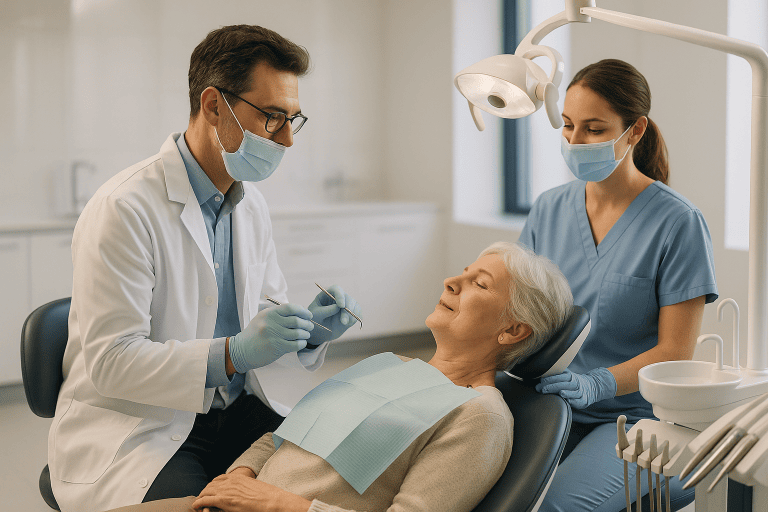
SRP, or scaling and root planing, is a deep dental cleaning used to remove plaque and tartar below the gumline and support periodontal health.
Quick answer
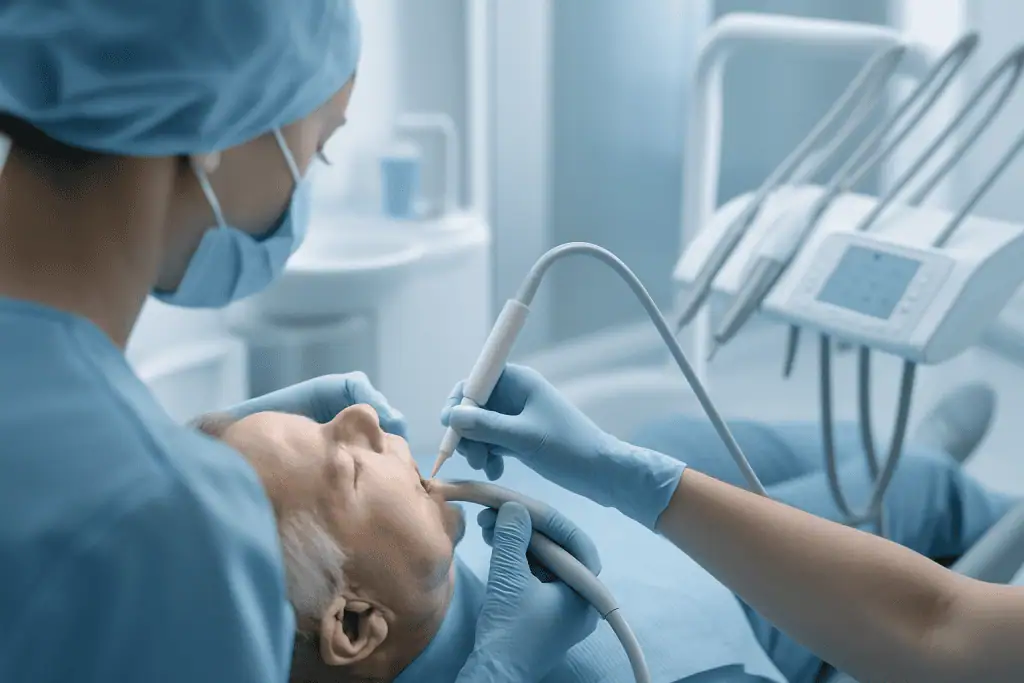
Scaling and root planing (SRP) is a non-surgical deep cleaning for gum disease. A dentist or periodontist removes plaque, tartar and bacterial deposits from below the gumline, then smooths the tooth roots so the gums can heal and tighten around the teeth. It is usually performed under local anaesthesia, in one or more visits, and is followed by regular periodontal maintenance.
Understanding SRP: When Gum Health Needs More Than a Routine Cleaning
SRP stands for scaling and root planing, a non-surgical periodontal treatment that cleans the tooth and root surfaces below the gumline. It removes the plaque, hardened tartar and bacterial deposits that drive gum disease, then smooths the root surfaces so the gums can heal and tighten around the teeth. It is recommended for people whose gum inflammation has progressed beyond simple gingivitis, typically when periodontal pockets, bleeding on probing or early bone changes show that the structures supporting the teeth are under strain.
Being told you need scaling and root planing can raise understandable questions. Many patients reach this point after hearing that a routine dental cleaning is no longer enough. Others notice the warning signs themselves: gums that bleed when brushing, persistent bad breath, sensitivity near the gumline, or a sense that certain teeth feel less secure than they used to. Some patients have none of these symptoms and only learn during an examination that plaque and tartar have moved below the gumline, where they quietly damage the tissues that hold teeth in place.
That quiet progression is the central problem with periodontal disease. Once bacteria establish themselves below the gumline, the condition rarely improves on its own. The body responds to the bacterial deposits with chronic inflammation, and over time that inflammation can damage the gum attachment, the periodontal ligament and the bone around the teeth. You cannot reach these deposits with a toothbrush or floss, and a standard hygiene appointment does not clean deeply enough to remove them. SRP exists to close exactly that gap.
It helps to be clear about what SRP is and what it is not. It is not a cosmetic polish, and it is not a routine scale performed a little more thoroughly. It is a therapeutic periodontal procedure with a specific aim: to control infection, reduce inflammation and help preserve natural teeth for as long as realistically possible. It has genuine limits, which this page explains plainly, and it works best as the first stage of an ongoing care plan rather than as a one-off fix.
If you are weighing up periodontal treatment as part of a wider dental plan, implants, crowns, orthodontics or a broader smile rehabilitation, the state of your gums matters more than almost anything else. Periodontal health is the foundation on which every other dental treatment rests. Understanding what SRP involves, how many appointments it may take, what recovery feels like and what maintenance follows will help you plan sensibly and set realistic expectations from the start.
What Is Scaling and Root Planing (SRP)?
Scaling and root planing is a two-part deep cleaning of the teeth and their roots, performed below the gumline where daily brushing cannot reach. The goal is to remove plaque, tartar and bacterial toxins from periodontal pockets, and to leave the root surfaces clean and smooth so that bacteria find it harder to reattach. As the source of infection is removed and inflammation settles, the gum tissue can tighten around the tooth and the pockets between gum and tooth may become shallower. Shallower pockets are easier for you to keep clean at home, which is what slows or stops the disease in the long run.
What is the difference between scaling and root planing?
Scaling removes the deposits; root planing treats the root surface they were attached to. During scaling, the clinician removes plaque and calculus, the hardened bacterial deposit commonly called tartar, from the visible tooth surfaces and from beneath the gums. Plaque is a sticky bacterial film that forms on teeth every day. When it is not removed thoroughly, it mineralises into tartar, which cannot be removed by brushing or flossing and requires professional instruments. Root planing then follows: the clinician carefully cleans and smooths the root surfaces themselves, removing bacterial byproducts embedded in the outer layer and creating a surface that is less favourable for new plaque to accumulate. The two steps are performed together in the same treatment, which is why the procedure is usually described as a single therapy.
Is SRP the same as a regular dental cleaning?
No. A regular dental cleaning, often called a scale and polish or prophylaxis, works above and just at the gumline and is designed to maintain already healthy gums. SRP is a periodontal treatment for gums that are already diseased. It reaches into periodontal pockets, cleans root surfaces that a routine cleaning never touches, and is typically performed under local anaesthesia. It also takes longer, may be divided across several appointments, and is followed by a formal reassessment of gum healing. The popular phrase deep cleaning captures the difference reasonably well, though it understates the therapeutic purpose: SRP is treatment for an infection, not an upgraded polish.
Is scaling and root planing a surgical procedure?
No. SRP is classed as non-surgical periodontal therapy. No incisions are made and no tissue is cut away; the clinician works through the natural opening of the periodontal pocket. That said, it is a genuine medical dental procedure rather than a hygiene visit. It should be supported by an accurate diagnosis, careful measurement of gum pockets, radiographic evaluation where needed, and a structured maintenance plan afterwards. For some patients with advanced disease, SRP is the first stage before surgical periodontal treatment is considered; for many others, it is the only active treatment needed, provided maintenance continues.
Depending on the extent of disease, treatment may be completed in one visit or divided into sections of the mouth across more than one appointment. Some patients need SRP in all four quadrants of the mouth; others require treatment only in specific areas where pockets have formed. The long-term value of the procedure depends not only on the treatment itself, but on the follow-up care and daily oral hygiene that come after it. That is worth hearing clearly at the outset, because it shapes what a good result actually requires from you.
Who May Need Scaling and Root Planing?
SRP may be recommended for anyone showing signs of periodontal disease, especially when bacteria and tartar are present below the gumline. Some people seek help because of symptoms; others are diagnosed during a routine examination with no complaints at all. Periodontal disease can remain quiet for years, which is why professional evaluation, rather than waiting for pain, is what usually identifies the need for treatment.
What are the signs of gum disease?
The most common signs of gum disease are gums that bleed when you brush or floss, redness or swelling along the gumline, tenderness, gum recession, persistent bad breath or a bad taste in the mouth, and tooth sensitivity near the gum margin. Spaces may develop between teeth as tissues change. In more advanced cases, teeth may loosen, the bite may feel different, or chewing may become uncomfortable. None of these signs on its own confirms periodontitis, and their absence does not rule it out, smokers in particular may show little bleeding even with active disease. What the signs do is justify a proper periodontal examination.
What are periodontal pockets?
Periodontal pockets are deepened spaces between the gum and the tooth that form when inflammation damages the gum attachment. In health, the gum fits closely around each tooth with only a shallow crevice, which you can keep clean with normal brushing and interdental cleaning. When plaque and tartar accumulate below the gumline, the attachment breaks down and the crevice deepens into a pocket. Deep pockets trap bacteria, are impossible to clean at home, and allow the disease to progress towards the bone. Pocket depth is therefore the central measurement in periodontal diagnosis: it tells the clinician where disease is active, how far it has advanced, and where SRP needs to concentrate.
How is gum disease diagnosed before SRP?
Diagnosis begins with a comprehensive dental and periodontal examination. The dentist or periodontist measures the depth of the spaces between gums and teeth at multiple points around each tooth using a fine periodontal probe, recording the results in a periodontal chart. Bleeding on probing, plaque levels, gum recession and tooth mobility are assessed at the same time. Dental X-rays are used to evaluate the bone supporting the teeth, because bone loss is the key sign that gingivitis has progressed to periodontitis. The clinician also weighs risk factors: smoking, diabetes, immune conditions, pregnancy-related changes, certain medications, existing restorations, bite forces and family history of periodontal disease. Together, these findings determine whether SRP is appropriate, how extensive it needs to be, and how closely healing should be monitored.
Patients arrive at SRP from several directions. Some are referred after a routine cleaning reveals heavy tartar below the gums. Others are preparing for dental implants or restorative work and need periodontal infection brought under control first. Some have been told they risk losing teeth if the disease continues unchecked. In each case, the logic is the same: reduce the bacterial burden below the gumline, give the tissues a chance to heal, and reassess before deciding what, if anything, comes next.
Conditions and Indications SRP Addresses
Periodontitis is the main condition scaling and root planing treats. Periodontitis is a chronic inflammatory disease affecting the gums and the supporting bone around teeth, and SRP is the standard first-line therapy for it. The procedure may also be recommended for patients with persistent gingival inflammation and risk factors that make progression likely. The clearest indications are periodontal pockets, tartar below the gumline, bleeding on probing, and early to moderate bone changes seen on X-rays.
SRP can be appropriate for localised disease affecting only a few teeth or for generalised disease involving much of the mouth. The extent of treatment follows the clinical findings, not a fixed formula. A patient with isolated deep pockets around the molars may need focused therapy in that region only; a patient with widespread inflammation may need full-mouth treatment across multiple appointments. Your periodontal chart, not a standard package, should determine the plan.
Does SRP help before dental implants and other treatment?
Yes, controlling periodontal infection first is often a prerequisite for dental implants, crowns, bridges, veneers, orthodontic treatment or full-mouth rehabilitation. Healthy gums are essential for durable restorative and implant outcomes. Placing advanced dental work in a mouth with active periodontal infection increases the risk of complications, poor gum response around margins, and long-term instability. Inflamed gums bleed, swell and behave unpredictably, which undermines both the fit and the appearance of restorative work. For implant candidates the point is sharper still: people with a history of periodontitis carry a raised likelihood of inflammation developing around implants later, so the periodontal foundation is treated and stabilised before implant planning proceeds.
When is SRP not enough on its own?
SRP cannot resolve every form of periodontal disease, and it is honest to say so before treatment rather than after. Where bone loss is advanced, pockets are very deep, or root anatomy is complex, deep cleaning may reduce inflammation without bringing the disease fully under control. After the initial healing period, the dental team reassesses pocket depths, bleeding, plaque control and comfort. If the pockets have become manageable, ongoing periodontal maintenance may be all that is needed. If deep pockets persist, further options are discussed, localised antimicrobial treatment, periodontal surgery to gain access to the roots, or regenerative procedures in selected defects. SRP also does not replace daily brushing, interdental cleaning or regular maintenance visits; it makes them effective again, which is different. For most patients with early to moderate disease, however, SRP is the key step that brings the infection under control.
How Scaling and Root Planing Is Performed
The process begins before any instrument touches a tooth. A careful consultation covers your oral health, medical history, medications, allergies and previous dental treatment. Conditions such as diabetes, heart valve disease, anticoagulant use, immune suppression or a history of joint replacement may influence planning. Most patients proceed safely with standard precautions, but coordination with your physicians may be arranged in selected cases, and any decisions about your medication remain with your treating doctors.
The clinical examination typically includes full periodontal charting, assessment of gum bleeding, evaluation of plaque and tartar deposits, mobility testing where indicated, and radiographs to review bone levels. Photographs or digital scans may be taken where documentation or planning requires them. The findings should be explained to you in plain terms, so you understand which areas need treatment and why, and, just as importantly, which areas do not.
Before treatment, your dentist or periodontist will usually discuss home care: brushing technique, interdental brushes, floss or water-based cleaning aids. Improving daily hygiene before and after SRP supports healing and protects the result. If the gums are severely inflamed, a staged approach may be recommended so that comfort and effectiveness are both maintained.
A typical treatment visit follows this sequence:
- Local anaesthesia. The areas being treated are numbed, particularly where pockets are deeper or roots are sensitive. Some patients need only topical or minimal numbing; others benefit from local anaesthetic in each treated quadrant. The approach is matched to the extent of disease and your sensitivity.
- Scaling. The clinician removes plaque and tartar from above and below the gumline. Ultrasonic instruments break up hardened deposits with controlled vibration and water irrigation; fine hand instruments then follow the detailed root anatomy to remove what remains. Roots have grooves, curves and concavities, so the combination of technology and hand skill matters.
- Root planing. The exposed root surfaces are cleaned and smoothed to reduce bacterial contamination and help the gum tissue heal against them.
- Irrigation and, where indicated, antimicrobials. The pockets are flushed to remove loosened debris. In selected cases, antimicrobial agents are placed locally or prescribed, based on the depth of the pockets and clinical judgement.
- Instructions and scheduling. You receive specific after-care guidance and, where treatment is staged, the next quadrant or section is booked.
Does scaling and root planing hurt?
The treated areas are numbed with local anaesthesia, so most patients feel pressure and vibration rather than pain during the procedure itself. Afterwards, once the anaesthetic wears off, it is normal for the gums to feel tender for a few days and for teeth to be sensitive to cold, particularly where inflamed tissue has shrunk back and exposed part of the root. This early discomfort is generally manageable with the after-care measures your clinician recommends, and it settles as the tissues heal. If you are anxious about dental treatment, say so at the consultation: the pace, staging and anaesthesia can all be adjusted around you.
How long does SRP take, and how many visits are needed?
A session may take less than an hour for a limited area, or longer when several quadrants need careful instrumentation. SRP can be organised by quadrant, by half-mouth or as a full-mouth approach in a single extended visit, depending on how widespread the disease is, your comfort, and scheduling practicalities. Many patients complete treatment in one or two visits; more extensive disease may need additional appointments. The number of visits and the timing of the reassessment appointment are the two things to build your schedule around, and they should be confirmed with you before treatment begins rather than discovered along the way.
Are antibiotics used with SRP?
Sometimes, but not routinely. Antibiotics or locally placed antimicrobials may support SRP when specific bacterial concerns or deeper pockets are present, and the decision rests on clinical judgement and evidence-based indications rather than habit. They are not necessary for every patient, and they are never a substitute for the mechanical removal of deposits, medication cannot dissolve tartar. Whether any antimicrobial is appropriate in your case, and how it should be used, is a decision for your treating dentist or periodontist.
Modern periodontal care draws on diagnostic and treatment technology that improves precision and helps you see what is being treated. Digital radiography evaluates bone levels with reduced radiation compared with older film systems. Intraoral imaging documents inflammation, recession and calculus deposits, so changes can be tracked honestly over time. Ultrasonic scalers make removal of hardened deposits efficient; magnification and illumination help the clinician see fine root detail. Digital records allow pocket measurements to be compared visit by visit, which is how healing, or the lack of it, is actually judged. None of this replaces the clinician’s hands and judgement; it supports them.
Recovery After SRP: What to Expect
Recovery after scaling and root planing is usually straightforward to manage, but the exact course depends on how extensive the treatment was, how inflamed the gums were beforehand, your individual sensitivity and your general health. Most patients return to normal daily activities the same day or the next. The table below sets out a typical pattern.
| Time Period | What Patients Can Expect |
|---|---|
| Day 1 | Numbness wears off over several hours. Mild tenderness, minor bleeding or sensitivity may occur. Soft foods and gentle brushing are often recommended. |
| First week | Gums may feel sore but should gradually become calmer. Cold sensitivity can occur, especially where roots were exposed. Following home care instructions matters most in this period. |
| First month | Inflammation usually continues to settle. Many patients notice less bleeding and fresher breath. A follow-up visit is typically scheduled to assess healing. |
| Longer term | Periodontal maintenance sustains the result. The dental team monitors pocket depths, gum health, plaque control and any areas needing additional care. |
How long does it take gums to heal after SRP?
Gum tissue begins settling within days, but the meaningful healing, the tightening of the gum against the root and the reduction of pocket depths, takes several weeks. That is why the formal reassessment is not booked for the day after treatment: the tissues need time to respond before pocket measurements mean anything. At the reassessment visit, pocket depths, bleeding, plaque control and your own comfort are reviewed and compared against the pre-treatment chart. This appointment is not an optional extra. It is the point at which the outcome of SRP is actually judged, and it determines whether maintenance alone will suffice or whether specific areas need further attention.
What can you eat after scaling and root planing?
Wait until the anaesthetic has fully worn off before eating, so you do not bite your cheek or tongue without feeling it. For the first day or two, softer foods are more comfortable if the gums feel sore, and it is sensible to avoid very hot, very hard, spicy or sharp-edged foods while the tissues are tender. Cold sensitivity may make iced drinks briefly unpleasant. There is no long restrictive diet after SRP; most patients eat normally within a few days, guided simply by comfort.
How should you clean your teeth after SRP?
Keep brushing, gently, from the first day, unless your clinician tells you otherwise. It can feel counter-intuitive to brush tender gums, but plaque control during healing is precisely what allows the gums to tighten rather than re-inflame. Your dental team may recommend a soft brush initially, a specific brushing technique, interdental brushes sized for your spaces, and in some cases an antiseptic or desensitising product for a limited period. Slight bleeding during cleaning in the first days is common and usually settles as the tissue heals. The tools should be matched to your mouth: if recession has opened larger spaces between teeth, interdental brushes often work better than floss, and your clinician should show you which sizes fit where rather than offering generic advice.
Benefits of Scaling and Root Planing
The benefits of SRP are best understood as improvements in inflammation control, periodontal stability and the long-term foundation of your oral health, rather than as a visible cosmetic change.
| Benefit | What It Means for You |
|---|---|
| Reduced bacterial deposits below the gumline | Professional removal of plaque and tartar from periodontal pockets addresses the source of gum infection and inflammation. |
| Less bleeding and swelling | As the gums heal, brushing and interdental cleaning typically become more comfortable and bleeding decreases. |
| Shallower periodontal pockets | When inflammation resolves, gum tissue may tighten around the teeth, making daily cleaning genuinely effective again. |
| Better foundation for future dental treatment | Controlled periodontal disease supports reliable planning for implants, crowns, bridges, orthodontics and cosmetic dentistry. |
| Support for long-term tooth preservation | By slowing or stopping periodontal progression, SRP helps protect the bone and tissues that keep natural teeth stable. |
Notice what is absent from that list: SRP does not whiten teeth, does not regrow bone that has already been lost, and does not remove the need for daily cleaning. Its value lies in stopping an ongoing destructive process, which, for a chronic disease, is the benefit that matters.
Why Acting Early Matters
Periodontal disease is progressive in many patients. While bacteria remain below the gumline, the body’s inflammatory response gradually damages the gum attachment and the supporting bone. The process may be slow, but its direction is one way: towards recession, deeper pockets, tooth mobility and eventual tooth loss. Acting early gives the dental team a real chance to control inflammation while conservative treatment is still enough.
Delaying SRP when it is clinically indicated allows tartar to become more established on the root surfaces. As pockets deepen, they become harder to clean at home and harder to treat without surgery. Advanced disease may require surgical access, regenerative therapy, extraction or implant planning. Each of those can be the right treatment when it is needed, but preserving your natural teeth and their supporting tissues is usually preferable whenever it remains realistic, and early deep cleaning is what keeps it realistic.
Untreated gum inflammation also compromises other dental plans. Crowns, bridges, veneers, aligners or implants placed into a mouth with active infection sit on an unstable foundation: the gums bleed, swell, recede and respond unpredictably around restorative margins. For implant patients, a history of untreated periodontitis raises the likelihood of inflammatory problems developing around implants later. Sequencing matters, and periodontal control comes first.
Timing matters even more for patients whose general health influences healing. Diabetes, smoking, immune conditions and certain medications increase periodontal risk and can blunt the response to treatment. For these patients, coordinated care and early intervention are especially valuable, and SRP is often the first practical step in reducing the bacterial load and creating a healthier environment for everything that follows.
What Influences a Good Result?
The severity of disease at the time of treatment is the first factor. Patients with early or moderate periodontitis often respond well to non-surgical therapy, particularly when they maintain excellent daily plaque control afterwards. When bone loss is advanced or pockets are very deep, SRP may reduce inflammation without eliminating the need for further periodontal treatment. A candid clinician will tell you which category you fall into before you commit.
Home care is the single influence most within your control. SRP removes what you cannot reach, but plaque begins forming again within hours of any cleaning. Brushing technique, interdental cleaning and daily consistency determine whether the pockets stay clean or recolonise. Some patients need to swap standard floss for interdental brushes or other aids where recession has widened the spaces between teeth. The right tools for your mouth, demonstrated in your mouth, are worth more than any general instruction sheet.
General health plays its part. Diabetes control, tobacco use, stress, immune function, nutrition, hormonal changes and certain medications all influence how gum tissue heals. Smoking deserves particular honesty: it is strongly associated with periodontal progression and it suppresses bleeding, which can make the disease look less active than it is. Patients who smoke can still benefit from SRP, but the response tends to be less favourable, and support for stopping smoking belongs in the treatment conversation, as guidance from your care team, not as a footnote.
Anatomy and bite forces matter too. Teeth with difficult root shapes, furcation involvement between molar roots, overhanging fillings, poorly fitting crowns, crowding or heavy clenching are harder to keep clean and harder to instrument. In these situations SRP may be combined with restorative correction, night guard therapy, orthodontic planning or, where appropriate, periodontal surgery. Treating the pockets while ignoring the reasons they trap plaque gives away part of the result.
How often do you need periodontal maintenance after SRP?
More often than a standard twice-yearly cleaning, in most cases. Patients with a history of periodontitis usually need structured maintenance at intervals set by their individual risk, because bacteria can recolonise periodontal pockets if professional care is delayed too long. Maintenance visits are where new deposits are removed, pocket depths are re-measured, early recurrence is caught while it is still easy to treat, and home care is adjusted. Skipping maintenance is the most common way a good SRP result is lost. The interval is not fixed for life either: it can lengthen as your gums prove stable, or tighten if inflammation returns.
Finally, be clear about how success is measured. A good result is not how the gums look the week after treatment. It is reduced bleeding, improved pocket measurements at reassessment, greater comfort, better plaque control, stable bone levels over time, and your ability to maintain all of that at home. Judged by those measures, SRP controls periodontal inflammation effectively for many patients, as the opening stage of an ongoing plan, not as a single event.
SRP as Part of Coordinated Care at Acibadem
Patients considering periodontal treatment as part of a wider plan usually need more than a single appointment: a clear diagnosis, honest guidance about what is urgent and what can wait, and coordination with other dental or medical needs. At Acibadem, SRP is approached as one component of a broader oral health plan, particularly for patients who are also considering implants, restorative dentistry or orthodontics, or who have medical conditions that affect gum healing.
Where a patient’s health history is relevant, diabetes, cardiovascular history, previous cancer treatment, immune suppression or medication-related concerns, periodontal care can be coordinated between dental specialists and medical physicians within the same hospital group. For complex dental goals, that coordination extends across periodontists, restorative dentists, oral and maxillofacial surgeons, implant teams, orthodontists and radiology services, with case discussion where treatment sequencing matters. A common example: SRP is completed and gum stability confirmed before implant planning or long-term restorative work begins, so that later stages are built on healthy tissue.
Diagnostic pathways support that planning. Digital radiographs, full periodontal charting, intraoral imaging and, where indicated, three-dimensional imaging help the team understand bone support, root anatomy and areas of concern. The technology is not the point in itself; it exists to answer practical questions. Which teeth are stable? Which areas need deep cleaning? Are there defects that may need additional care? Is the mouth ready for implants or crowns? During treatment, ultrasonic instrumentation, fine hand instruments, enhanced visualisation and careful local anaesthesia make the work precise and efficient, but the clinician’s experience, technique and follow-up remain the decisive factors.
Practical coordination matters as much as clinical planning, because SRP visits, the healing period and the reassessment appointment each have their own timing, and the sequence only works when it is organised deliberately. Some patients complete active treatment and then continue maintenance with their own general dentist; others carry a broader dental plan forward across further visits. Neither path is inherently better: the plan should fit your mouth, your health and your schedule, and it should be explained to you clearly enough that you can compare it with any recommendation you have received elsewhere.
What a Periodontal Evaluation Should Tell You
A high-quality periodontal consultation should leave you knowing five things: what is urgent, what is optional, what can be staged, what should simply be monitored, and what the limits of the proposed treatment are. For SRP, the honest framing is this: deep cleaning can control infection and markedly improve periodontal health, but it cannot rebuild bone in every case or reverse all the effects of advanced disease. Clear expectations, set before treatment, are what allow you to decide confidently and without pressure.
Scaling and root planing is a well-established, conservative, non-surgical treatment, and for many patients it is the point at which gum health begins to stabilise and every future dental decision becomes more predictable. The evaluation that precedes it matters as much as the procedure itself, especially if implants, crowns, veneers, orthodontics or a comprehensive restoration are part of your plans, because all of them depend on the foundation SRP is designed to protect. With careful diagnosis, skilled treatment and a maintenance plan you can actually keep, SRP does the quiet, unglamorous work that keeps natural teeth where they belong.
Preparation
- A dentist evaluates gum health, reviews dental X-rays if needed, and checks medical history, medications, and bleeding risks. Patients may be advised to eat beforehand if local anesthesia is planned and to follow any antibiotic instructions when prescribed.
Aftercare
- Mild gum tenderness, sensitivity, or slight bleeding can occur for a few days. Patients should maintain gentle brushing, flossing as advised, use prescribed rinses or medicines, and attend follow-up visits to monitor gum healing.
Frequently Asked Questions
What affects the cost of SRP?
The main factors are the severity of gum disease, how many areas require treatment, the need for X-rays or periodontal charting, the provider’s expertise, anesthesia needs, adjunctive therapy, and follow-up maintenance.
How can I get a personalised SRP quote?
A personalised quote usually requires a dental examination, periodontal measurements, and sometimes dental imaging. You can request a free consultation so the clinical team can review your needs and explain what is included.
Is SRP usually included in a dental package in Turkey?
For international patients, SRP may be planned as part of a coordinated dental care package that can include consultation, diagnostics, treatment scheduling, aftercare instructions, and language support. The exact inclusions should be confirmed before treatment.
Will I need more than SRP?
Some patients only need SRP and maintenance, while others may need antimicrobial support, restorative dental work, or specialist periodontal treatment. Suitability is decided after a clinical assessment.
Does insurance or public healthcare affect SRP cost abroad?
Yes, coverage rules vary by country, provider, and insurance plan. International patients should check whether periodontal care, imaging, and follow-up visits are covered or paid privately.
Is this comparison medical or financial advice?
No. It is general information only. A dentist or periodontist should assess your gum health and provide a personalised treatment plan and quote.
Medically reviewed by the Acıbadem International Medical Board August 31, 2026
See our medical review board →
Update history
- PublishedJune 8, 2026
- Medical review approvedAugust 31, 2026
- Last content updateAugust 31, 2026
References2
- Gum Disease medlineplus.gov
- Gum disease nhs.uk
Trusted care for international patients
From the Acibadem Blog
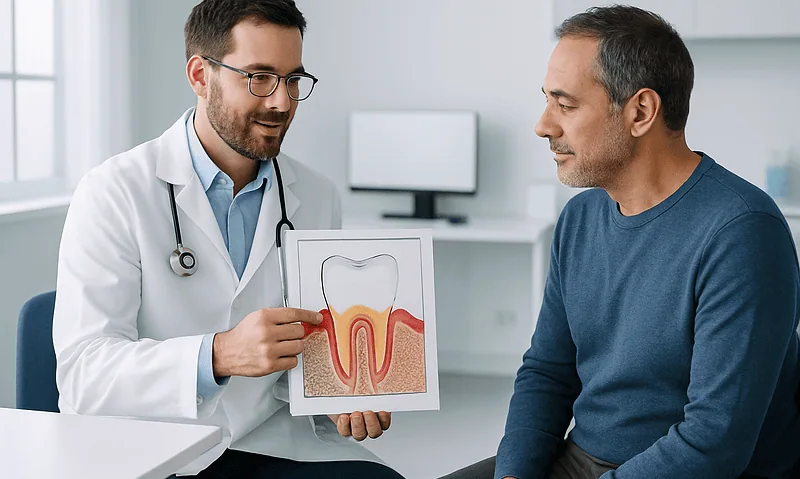
How Periodontal Disease Develops Below the Gumline and Why SRP Deep Cleaning Is Planned
Periodontal disease begins when bacterial plaque collects along the gumline, inflames the gums (gingivitis) and, if it persists, spreads below the gum to destroy…

Regular Cleaning vs SRP Deep Cleaning: What Below-the-Gumline Treatment Adds
A regular cleaning removes plaque and tartar from tooth surfaces above and just at the gumline, and is for people with healthy gums or…

Does Scaling and Root Planing Hurt? Local Anesthesia and Sensitivity Afterwards
Scaling and root planing is usually not painful during the appointment, because dentists typically numb the treated area with a local anesthetic and can…