

Radiation Therapy
Radiation therapy uses precisely planned high-energy beams to destroy cancer cells or shrink tumors while protecting healthy tissue. It may be used alone or with surgery, chemotherapy, or immunotherapy.
Quick answer
Radiation therapy is a cancer treatment that uses carefully targeted high-energy beams to destroy cancer cells or shrink tumors while limiting damage to nearby healthy tissue. At Acibadem in Turkey, it is planned and delivered by a multidisciplinary team using imaging-guided techniques, and it may be used on its own or combined with surgery, chemotherapy, or immunotherapy.
Radiation Therapy: Precise Cancer Treatment With a Carefully Planned Approach
A recommendation for radiation therapy can bring both relief and concern. Many patients are relieved to know that their cancer can be treated with a focused, non-surgical method, yet they may also worry about side effects, treatment duration, fatigue, or the idea of receiving radiation at all. For international patients considering care abroad, there are additional questions: How will the diagnosis be reviewed? Will the treatment plan be personalized? How are healthy tissues protected? Who coordinates care if radiation is combined with surgery, chemotherapy, immunotherapy, or targeted therapy?
Radiation therapy is one of the most widely used cancer treatments worldwide. It may be used to cure cancer, reduce the risk of recurrence after surgery, shrink tumors before an operation, control disease when cure is not possible, or relieve symptoms such as pain, bleeding, or pressure. The purpose is always the same: to deliver a carefully calculated dose of radiation to cancer cells while limiting exposure to surrounding healthy organs.
Modern radiation therapy is far more individualized than many patients expect. Treatment is planned using advanced imaging, computer-based dose calculations, and specialist review. The radiation oncology team considers the type of cancer, tumor location, stage, prior treatments, general health, and the sensitivity of nearby tissues. In many cases, the plan is also reviewed in a multidisciplinary setting, where radiation oncologists, medical oncologists, surgeons, radiologists, pathologists, nuclear medicine physicians, and other specialists discuss the safest and most effective strategy.
At Acibadem, radiation therapy is delivered within JCI-accredited hospitals and integrated oncology programs, with diagnostic imaging, pathology review, medical oncology, surgical oncology, nuclear medicine, interventional radiology, rehabilitation, nutrition, and supportive care available when needed. For patients traveling from abroad, Acibadem International provides coordination in more than 20 languages, helping patients and families move through evaluation, treatment, accommodation, and follow-up with clarity.
What Is Radiation Therapy?
Radiation therapy is a cancer treatment that uses high-energy radiation to damage the DNA of cancer cells. When the DNA damage is significant enough, cancer cells lose their ability to divide and eventually die. Healthy cells can also be affected by radiation, but they generally have better repair mechanisms than cancer cells. This difference allows radiation oncologists to design treatments that target tumors while allowing normal tissues time to recover.
Radiation therapy can be delivered in several ways. The most common form is external beam radiation therapy, in which a machine directs radiation beams from outside the body toward the tumor. The patient does not feel the radiation during treatment, and the procedure is usually performed on an outpatient basis.
Some patients may be treated with stereotactic radiation techniques, which deliver highly focused radiation to small or well-defined tumors in fewer treatment sessions. Depending on the location, this may be called stereotactic radiosurgery when used for certain brain or spine lesions, or stereotactic body radiation therapy when used elsewhere in the body. Despite the word “surgery,” stereotactic radiosurgery does not involve an incision.
Another method is brachytherapy, also known as internal radiation therapy. In brachytherapy, a radiation source is placed inside the body, either within or very close to the tumor. This can be useful for selected cancers, including certain gynecologic, prostate, breast, and other tumors. The source may be temporary or permanent, depending on the diagnosis and treatment plan.
Radiation therapy may be used alone or as part of a broader cancer treatment plan. It can be combined with surgery to improve local control, with chemotherapy to make cancer cells more sensitive to radiation, or with newer systemic treatments such as immunotherapy or targeted therapies in carefully selected situations. The sequence matters, and it is planned according to international evidence-based protocols, the patient’s condition, and the biological behavior of the cancer.
Who May Need Radiation Therapy?
Patients may be referred for radiation therapy at different points in their cancer journey. Some are newly diagnosed and need radiation as the main treatment. Others have had surgery and are advised to receive radiation to reduce the risk of cancer returning in the same area. Some patients need radiation before surgery to shrink a tumor and make an operation more effective or less extensive. Others may need radiation because cancer has returned or spread to a specific site causing symptoms.
Radiation therapy may be considered when cancer is located in an area where precise local treatment can improve control, preserve organ function, or relieve symptoms. It is commonly used in breast cancer, prostate cancer, lung cancer, brain tumors, head and neck cancers, rectal cancer, gynecologic cancers, lymphomas, pediatric cancers, bone metastases, and many other conditions. Whether it is appropriate depends on the diagnosis and the patient’s full clinical picture.
Symptoms that eventually lead to radiation treatment vary widely. A patient with breast cancer may feel no symptoms at all but require radiation after lumpectomy. A person with prostate cancer may be diagnosed after an elevated prostate-specific antigen test. A patient with a brain tumor may have headaches, seizures, weakness, or vision changes. Someone with a tumor pressing on bone or nerves may experience pain or reduced mobility. Radiation can be part of the plan in each of these situations, but the intent and schedule may be different.
Diagnosis usually begins with imaging and tissue confirmation. Imaging may include ultrasound, mammography, computed tomography, magnetic resonance imaging, positron emission tomography combined with computed tomography, bone scans, or other specialized tests. A biopsy is often needed to confirm the cancer type and provide information about tumor grade, molecular markers, hormone receptors, or other features that guide treatment. Pathology review is especially important for international patients seeking a second opinion, as treatment recommendations depend on accurate diagnosis.
Before radiation therapy begins, the radiation oncology team reviews the patient’s prior treatments, surgical reports, pathology results, imaging studies, blood tests, medications, implanted devices, and general health. In complex cases, the recommendation may be discussed at a tumor board or specialist board. This helps determine whether radiation should be used, what area should be treated, what dose is appropriate, and how radiation fits with surgery, chemotherapy, immunotherapy, or other therapies.
Conditions and Indications Treated With Radiation Therapy
Radiation therapy is not a single-purpose treatment. It can be used with different goals depending on the cancer type, stage, tumor location, and patient priorities. A well-designed radiation plan clarifies the intent from the beginning so that patients understand what the treatment is expected to do.
- Curative treatment: Radiation may be used with the goal of eliminating cancer, either alone or with other treatments. This is common in selected prostate cancers, head and neck cancers, cervical cancer, certain lymphomas, lung cancer cases, and other tumors.
- Adjuvant treatment after surgery: Radiation may be recommended after an operation to lower the chance of local recurrence, especially when microscopic cancer cells may remain near the surgical site.
- Neoadjuvant treatment before surgery: Radiation may be used before surgery to shrink a tumor, improve the chance of complete removal, or preserve organ function. This approach is often used in selected rectal cancers and soft tissue sarcomas.
- Organ-preserving treatment: In some cancers, radiation combined with chemotherapy or other treatments may help avoid or reduce the extent of surgery while maintaining cancer control.
- Palliative treatment: Radiation may relieve symptoms caused by advanced cancer, such as bone pain, spinal cord compression, bleeding, airway obstruction, or pressure on nerves or organs.
- Treatment of metastases: Radiation may be used for cancer that has spread to limited areas, including bone, brain, lung, liver, adrenal gland, or lymph nodes, depending on the overall disease pattern.
- Prevention of complications: In selected cases, radiation may be used to reduce the risk of serious complications, such as fracture from a weakened bone or neurologic decline from tumor pressure.
Because radiation therapy affects a specific treatment area, it is often described as local or regional therapy. This is different from systemic treatments such as chemotherapy, hormone therapy, targeted therapy, or immunotherapy, which travel through the bloodstream. Many cancer plans combine local and systemic treatments to address both visible tumors and microscopic disease that may not be seen on imaging.
How Radiation Therapy Is Performed
Radiation therapy is a planned process rather than a single appointment. The preparation phase is as important as the treatment itself because the quality of planning directly affects how accurately the tumor is targeted and how well nearby organs are protected.
Consultation and Treatment Decision
The process begins with a consultation with a radiation oncologist. The physician reviews the diagnosis, stage, imaging, pathology, prior treatments, medical history, medications, symptoms, and patient goals. For international patients, this step may also include review of medical records from the home country and discussion of whether additional imaging, laboratory tests, or pathology review is needed before finalizing the treatment plan.
The radiation oncologist explains why radiation is being considered, whether the intent is curative or palliative, how many sessions may be needed, what side effects are expected, and how radiation may interact with other treatments. If chemotherapy or immunotherapy is part of the plan, the schedule is coordinated with medical oncology. If surgery is planned before or after radiation, surgical oncology is involved in timing and decision-making.
Simulation and Mapping
Before treatment begins, most patients undergo a planning session called simulation. During simulation, the patient is positioned in the same way they will be positioned for daily treatments. Immobilization devices may be used to help the patient remain still and ensure reproducible positioning. These may include customized masks for head and neck or brain treatments, body molds, cushions, or other supports depending on the treatment area.
Planning imaging is then performed, usually with computed tomography. In many cases, magnetic resonance imaging, positron emission tomography, ultrasound, or previous diagnostic scans are fused with the planning scan to better define the tumor and nearby organs. This imaging allows the team to map the area requiring treatment and identify structures that should receive as little radiation as possible, such as the spinal cord, heart, lungs, kidneys, bowel, bladder, salivary glands, optic nerves, or reproductive organs.
Computer-Based Planning
After simulation, the radiation oncologist outlines the tumor, surgical bed, lymph node regions, and organs at risk on the planning images. Medical physicists and dosimetrists then develop a computer-based treatment plan. The plan determines beam angles, dose distribution, treatment depth, and the way the radiation dose will conform to the target.
Modern techniques may include intensity-modulated radiation therapy, image-guided radiation therapy, volumetric arc-based approaches, stereotactic techniques, electron therapy, brachytherapy, or other methods chosen for the individual case. These techniques help shape the dose around the tumor and reduce unnecessary exposure to healthy tissues. For certain cancers, respiratory motion management may be used so that treatment accounts for tumor movement during breathing. For some patients, surface imaging or internal markers may help verify positioning.
Before the first treatment, the plan is checked for safety and accuracy. Quality assurance includes verification by the radiation oncology team and medical physics specialists. This step is essential because radiation therapy requires precise dose delivery over one session or many sessions.
The Treatment Sessions
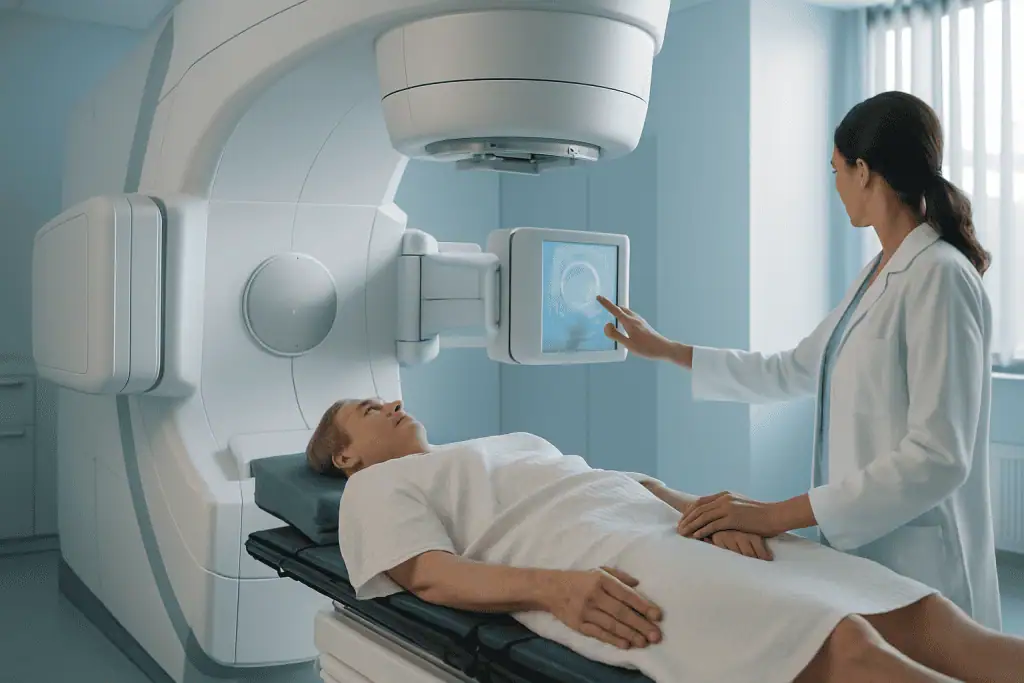
External beam radiation therapy is usually delivered in a treatment room while the patient lies on a treatment table. The team positions the patient using the setup created during simulation. Imaging may be performed immediately before treatment to confirm alignment. The staff leaves the room during radiation delivery but monitors the patient continuously by camera and audio connection.
The radiation beam is delivered from outside the body. Patients do not see or feel the radiation itself. The machine may move around the body to deliver treatment from different angles. A typical session may take several minutes for radiation delivery, while the full appointment often takes longer because of positioning and verification. Many treatment courses are given five days per week over several weeks, although some treatments are completed in fewer sessions, and palliative treatments may sometimes be much shorter.
For stereotactic treatments, sessions may be longer because positioning and imaging checks are especially detailed. For brachytherapy, the procedure depends on the cancer type and whether the radiation source is placed temporarily or permanently. Some brachytherapy procedures are performed in an operating room or procedure suite, sometimes with anesthesia or sedation, and may require imaging guidance.
Typical Duration of Treatment
The total duration of radiation therapy depends on the diagnosis, treatment goal, dose, technique, and whether radiation is combined with other therapies. Some palliative courses may be completed in one to several sessions. Stereotactic treatments may be completed over a small number of visits. Curative courses for many cancers may last several weeks. Breast, prostate, head and neck, pelvic, brain, and lung cancer treatments each have different standard schedules, and modern evidence has allowed shorter courses for some patients when appropriate.
International patients often ask how long they need to stay in Turkey. The answer depends on the treatment plan and whether additional evaluation is required before radiation begins. A patient may need time for consultation, imaging, simulation, treatment planning, quality checks, the treatment course itself, and a short follow-up period before returning home. Acibadem International helps coordinate this timeline so patients understand the expected length of stay before making travel arrangements.
Recovery and Side Effect Management
Radiation therapy does not make most patients radioactive after external beam treatment. Patients can generally be around family members, including children, unless they are receiving certain forms of internal radiation where temporary safety instructions may apply. The care team will explain any restrictions clearly if they are needed.
Side effects depend on the treated area, total dose, number of sessions, and individual sensitivity. Fatigue is common, particularly as treatment progresses. Skin changes may occur in the treatment area, similar to sunburn or dryness. Head and neck radiation may cause mouth soreness, taste changes, dry mouth, or swallowing difficulty. Chest radiation may cause temporary throat irritation or cough. Abdominal or pelvic radiation may affect appetite, bowel habits, bladder comfort, or fertility depending on the area treated. Brain radiation may cause hair loss in the treated area, scalp irritation, headaches, or temporary swelling that requires medication.
Supportive care is part of radiation treatment, not an afterthought. The team may recommend skin care, nutrition support, pain control, anti-nausea medication, swallowing therapy, dental evaluation, physical therapy, fertility counseling, or psychological support. Side effects are monitored throughout treatment, and the plan may be adjusted if medically necessary.
Why Acting Early Matters
Timing can influence cancer outcomes. In some cancers, a delay in radiation therapy may allow the tumor to grow, spread locally, or become more difficult to treat. After surgery, waiting too long to begin recommended radiation may reduce the benefit of adjuvant treatment in certain situations. When radiation is intended to shrink a tumor before surgery, postponement may affect surgical timing. When radiation is needed to relieve symptoms, delay can lead to avoidable pain, bleeding, neurologic decline, fracture risk, or organ obstruction.
Early evaluation does not always mean immediate treatment. Sometimes the best decision is careful planning, additional imaging, pathology review, or coordination with chemotherapy or surgery. However, a timely consultation allows the oncology team to determine the safest sequence. For patients seeking a second opinion abroad, sharing medical records early can help avoid unnecessary repetition of tests and clarify whether travel for radiation therapy is appropriate.
Urgent situations require particular attention. Symptoms such as new weakness, difficulty walking, loss of bladder or bowel control, severe back pain in a patient with known cancer, sudden neurologic changes, uncontrolled bleeding, or breathing difficulty should be evaluated immediately. In these situations, radiation therapy may be part of emergency or expedited treatment, but rapid diagnosis is essential.
Benefits of Radiation Therapy
The benefits of radiation therapy depend on the diagnosis and treatment goal, but the table below summarizes what patients may experience when radiation is appropriately indicated.
| Benefit | What It Means for You |
|---|---|
| Local tumor control | Radiation can target cancer in a defined area, helping destroy cancer cells or reduce the risk of cancer returning in that region. |
| Non-surgical treatment option | For some cancers, radiation may treat the tumor without an incision, which may be important for patients who are not candidates for surgery or who wish to preserve function. |
| Combination with other therapies | Radiation can be integrated with surgery, chemotherapy, immunotherapy, hormone therapy, or targeted therapy when evidence supports a combined approach. |
| Symptom relief | Palliative radiation can often reduce pain, bleeding, pressure, or other symptoms caused by tumors, improving comfort and daily function. |
| Organ and function preservation | In selected cancers, radiation may help preserve organs or reduce the extent of surgery while maintaining appropriate cancer control. |
| Personalized planning | Imaging-based planning helps shape the radiation dose around the tumor and limit exposure to nearby healthy tissues. |
Radiation Therapy Recovery Timeline
Recovery varies by treatment area and total dose, but many patients follow a general pattern during and after radiation therapy.
| Time Period | What Patients Can Expect |
|---|---|
| Day 1 | The first session usually includes careful positioning and imaging verification. Treatment itself is typically painless. Most patients can leave shortly afterward. |
| First Week | Many patients feel well enough to continue normal routines. Mild fatigue or early skin sensitivity may begin depending on the treatment area. |
| During Treatment | Side effects may gradually increase. The care team monitors symptoms, adjusts supportive medications, and provides guidance on nutrition, skin care, hydration, and activity. |
| First Month After Treatment | Some side effects may peak shortly after treatment ends and then begin to improve. Fatigue may persist for several weeks, especially after longer treatment courses. |
| Longer Term | Follow-up visits and imaging help assess response and monitor late effects. Many patients return to usual activities, although recovery depends on cancer type and combined treatments. |
What Influences Radiation Therapy Outcomes?
Radiation therapy outcomes depend on many medical and technical factors. The type and stage of cancer are among the most important. Some tumors are highly sensitive to radiation, while others require higher doses or combined treatment. Tumor size, location, involvement of lymph nodes, molecular features, prior treatments, surgical margins, and the presence or absence of metastatic disease all affect the treatment goal and expected response.
Accurate diagnosis is fundamental. Pathology review can confirm the cancer type and identify markers that influence therapy. High-quality imaging helps define the true extent of disease. If the tumor is not fully mapped, radiation may miss areas that need treatment or expose unnecessary tissue. This is why simulation, image fusion, target contouring, and quality assurance are central parts of radiation oncology.
The patient’s general health also matters. Nutrition, smoking status, diabetes, cardiovascular disease, immune function, prior radiation, connective tissue disorders, and current medications may affect tolerance and healing. For example, patients receiving head and neck radiation may need dental assessment and swallowing support. Patients receiving pelvic radiation may need bowel and bladder preparation instructions. Patients receiving radiation near the heart or lungs may need careful evaluation of baseline function.
Consistency is another important factor. Radiation therapy is often delivered in repeated sessions, and missed treatments can affect the planned biological dose. If a patient must pause treatment because of side effects or illness, the oncology team determines whether adjustments are needed. International patients should plan accommodations and travel in a way that supports regular attendance throughout the course.
A good result is not defined only by tumor response. It also includes preserving function, minimizing side effects, maintaining nutrition and strength, managing pain, and coordinating follow-up. For some patients, the best outcome is long-term cancer control. For others, it is relief of symptoms and improved quality of life. Clear communication at the beginning of treatment helps align the plan with the patient’s medical situation and personal priorities.
Why International Patients Choose Acibadem for Radiation Therapy
Choosing radiation therapy abroad requires trust in both the medical program and the patient experience. International patients need more than access to treatment equipment. They need a complete oncology pathway: accurate diagnosis, experienced physicians, coordinated treatment decisions, careful planning, supportive care, clear communication, and reliable follow-up instructions for when they return home.
Acibadem provides radiation therapy within an integrated cancer care environment. Cases may be reviewed by multidisciplinary tumor boards or specialist boards, particularly when treatment decisions are complex. This approach helps ensure that radiation is not considered in isolation but as part of a complete cancer strategy. A patient with rectal cancer, for example, may need coordination between radiation oncology, medical oncology, colorectal surgery, radiology, pathology, and nutrition. A patient with a brain tumor may require neurosurgery, neuroradiology, radiation oncology, medical oncology, pathology, and rehabilitation. This collaboration helps personalize the sequence and intensity of care.
Technology plays an important role, but its value lies in how it is used. Modern radiation therapy relies on high-resolution imaging, computerized treatment planning, image guidance, motion management when needed, immobilization systems, and physics-based quality checks. These tools help the team define the target, shape the dose, verify positioning, and protect sensitive organs. The specific technique is selected according to the tumor and patient, rather than applying one method to every case.
Acibadem’s JCI-accredited hospitals follow structured quality and safety processes, which are especially important in radiation oncology. Dose calculation, patient identification, imaging verification, equipment checks, and treatment plan review require disciplined systems. Medical physicists, radiation oncologists, radiation therapists, nurses, and support teams work together to deliver the prescribed treatment accurately.
For patients traveling from the United States, Europe, the Middle East, Africa, or other regions, Acibadem International helps coordinate the non-medical details that can otherwise feel overwhelming. Services may include appointment scheduling, medical record transfer, interpreter support, travel and accommodation guidance, hospital admission procedures, and communication with the clinical team. Multilingual support helps patients ask detailed questions, understand consent discussions, follow treatment instructions, and involve family members in decision-making.
Personalized treatment planning is central to the process. Some patients benefit from a shorter radiation course; others require a longer course for safety and effectiveness. Some need radiation alone, while others need concurrent chemotherapy or treatment before or after surgery. Some require urgent symptom control, while others are seeking a second opinion on whether radiation is necessary at all. Acibadem’s oncology teams evaluate these differences carefully and recommend a plan based on the patient’s diagnosis, health status, prior treatment, and goals.
International patients also value continuity after treatment. Radiation therapy follow-up may include physical examination, laboratory tests, imaging, symptom assessment, and coordination with the patient’s doctors at home. Before departure, patients should understand what side effects may continue, which symptoms require urgent attention, when imaging should be repeated, and who will receive the treatment summary. A clear treatment report is important for ongoing care in the home country.
Taking the Next Step
If radiation therapy has been recommended, or if you are unsure whether it belongs in your cancer treatment plan, a specialist review can help clarify your options. The most useful consultation includes pathology reports, imaging files, surgical notes if applicable, prior chemotherapy or immunotherapy details, blood tests, and a summary of current symptoms and medications. With this information, the radiation oncology team can assess whether radiation is appropriate, what technique may be suitable, how long treatment may take, and how it should be coordinated with other therapies.
For many patients, the hardest part is not only understanding the science of radiation therapy but making decisions under pressure. A careful, evidence-based discussion can reduce uncertainty. It can also help distinguish between treatment that is urgent, treatment that can be planned over time, and treatment that may not be necessary. Whether your goal is cure, cancer control, symptom relief, or a second opinion, the right plan begins with an accurate diagnosis and a team that considers the whole treatment pathway.
Acibadem offers international patients access to coordinated oncology evaluation, radiation therapy planning, multidisciplinary input, and multilingual patient services. To learn more, you may request a consultation or second opinion and share your medical records for review by the appropriate oncology specialists.
This information is general and is not a substitute for professional medical advice, diagnosis, or treatment. Always consult a qualified physician about your individual condition and treatment options.
Preparation
- Before radiation therapy, patients usually have a consultation, imaging scans, and a simulation session to map the exact treatment area. The care team reviews diagnosis, prior treatments, medications, and general health. Patients may receive instructions about skin care, eating, hydration, and whether to arrive with a full or empty bladder depending on the treatment site.
Aftercare
- Most patients can return home after each session and continue many daily activities. The care team monitors fatigue, skin irritation, swallowing, bowel, or urinary symptoms depending on the treated area. Follow-up visits and imaging are scheduled to assess response and manage any delayed side effects.
Turkey vs UK, Germany & USA
Radiation therapy costs vary because treatment must be planned around the cancer type, tumor location, technology used, and whether it is combined with other treatments. Comparing destinations can help patients understand cost drivers as well as practical factors such as accreditation, waiting time, travel, and language support.
The overall experience and final cost of radiation therapy depend on the hospital, the treatment technique, the planning process, and how much care coordination is included.
| Factor | Turkey | UK | Germany | USA |
|---|---|---|---|---|
| Cost structure | Often offered with bundled international patient coordination and transparent package discussions. | Private care may involve separate billing for consultations, imaging, planning, and treatment sessions. | Costs may vary by clinic type, technology, planning complexity, and insurance status. | Costs can vary widely by provider network, facility fees, insurance arrangements, and technology used. |
| Hospital and accreditation | International hospitals may hold JCI accreditation and provide multidisciplinary oncology services. | Quality standards are established, with access routes differing between public and private pathways. | Strong oncology infrastructure, with differences between university hospitals and private centers. | Wide range of cancer centers, with cost and access influenced by hospital status and insurance contracts. |
| Radiation technology | Availability of advanced planning and delivery techniques may affect both suitability and cost. | Access to advanced techniques depends on provider, referral pathway, and clinical indication. | Advanced techniques are available in many centers, with costs linked to equipment and planning demands. | Advanced and highly specialized techniques may be available, often with significant billing variation. |
| Waiting time | International patient teams may help coordinate appointments and treatment planning efficiently. | Waiting time can depend on public versus private access and urgency of the diagnosis. | Waiting time varies by center, specialty availability, and treatment complexity. | Waiting time may depend on insurance approval, provider availability, and treatment authorization. |
| Travel and language logistics | Hospitals serving international patients often provide interpreter support and travel coordination guidance. | Usually easier for English-speaking patients, but travel and accommodation remain separate considerations. | Interpreter services may be needed depending on the center and patient language. | English-language care is standard, while long-distance travel and accommodation can add complexity. |
| Package inclusions | Packages may include specialist consultation, treatment planning, selected imaging review, radiation sessions, and care coordination. | Private packages may be available, but inclusions should be checked carefully. | Inclusions vary; planning, imaging, and specialist reviews may be billed separately. | Packages are less common, and separate facility, physician, imaging, and planning charges may apply. |
- What affects your final cost
- Cancer type, stage, and tumor location.
- Radiation technique and planning complexity.
- Session count and overall treatment schedule.
- Need for imaging, immobilization devices, anesthesia, or supportive medicines.
- Whether radiation is combined with surgery, chemotherapy, immunotherapy, or targeted therapy.
- Hospital accreditation, radiation oncology team experience, and multidisciplinary tumor board review.
- Travel, accommodation, interpreter support, and follow-up arrangements.
Compare your options
Radiation therapy can be delivered in different ways depending on the tumor, treatment goal, previous therapies, and the patient’s overall health. Suitability is decided by a radiation oncology specialist after clinical assessment and imaging review.
| Option | What it is | Typical use | Key considerations |
|---|---|---|---|
| External beam radiation therapy | High-energy beams are directed from outside the body toward the tumor area. | Commonly used for many solid tumors, either alone or with other cancer treatments. | Requires careful planning to target the tumor while protecting nearby healthy tissue. |
| IMRT or VMAT | Advanced external beam techniques that shape radiation dose around the tumor. | Often used when the tumor is close to sensitive organs or has an irregular shape. | Planning is more complex and may influence treatment cost and preparation time. |
| Stereotactic radiotherapy | Highly focused radiation delivered with very precise targeting. | May be used for selected small tumors or limited metastatic disease in certain body areas. | Requires strict patient positioning, detailed imaging, and careful specialist selection. |
| Stereotactic radiosurgery | A non-surgical form of very focused radiation, most often associated with brain or spine targets. | May be considered for selected brain tumors, brain metastases, or specific vascular or nerve-related conditions. | Despite the name, it is not an operation; suitability depends on size, location, and prior treatment. |
| Brachytherapy | Radioactive material is placed inside or near the tumor area for targeted treatment. | Used in selected cancers such as gynecologic, prostate, breast, or certain head and neck cancers. | May involve a procedure room, anesthesia, applicators, and specialized safety protocols. |
| Proton therapy | A specialized form of radiation using proton beams rather than conventional photon beams. | May be considered for selected tumors where reducing dose to surrounding tissue is especially important. | Availability, indication, and cost vary significantly; not every patient needs or benefits from it. |
Trusted care for international patients
General information only — not medical or financial advice. Final costs depend on the factors above and your individual case; request a free, personalised quote.
Doctors Performing This Treatment

Prof. Dr. Abdullah Büyükçelik
Medical Oncology
Prof. Dr. Ahmet Öztürk
Hematology
Prof. Dr. Ali Arican
Medical Oncology
Prof. Dr. Ayşen Timurağaoğlu
Hematology
Prof. Dr. Aziz Yazar
Medical Oncology
Prof. Dr. Banu Atalar
Radiation Oncology
Prof. Dr. Başak Oyan Uluç
Medical Oncology
Prof. Dr. Bülent Karabulut
Medical Oncology
Prof. Dr. Bülent Orhan
Medical Oncology
Prof. Dr. Bünyamin Kaplan
Radiation Oncology
Prof. Dr. Enis Özyar
Radiation Oncology
Prof. Dr. Eren Erken
Hematology
Prof. Dr. Ersin Özaslan
Medical Oncology
Prof. Dr. Evrim Kadriye Tezcanlı
Radiation Oncology
Prof. Dr. Faysal Dane
Medical Oncology
Prof. Dr. Fulya Ağaoğlu
Radiation Oncology
Prof. Dr. Gamze Uğurluer Sümer
Radiation Oncology
Prof. Dr. Gökhan Demir
Medical Oncology
Prof. Dr. Gül Başaran
Medical Oncology
Prof. Dr. Gülsan Sucak
Hematology
Prof. Dr. H. Armağan Arıcan
Radiation Oncology
Prof. Dr. Handan Onur Topuzlu
Medical Oncology
Prof. Dr. Hüseyin Engin
Medical Oncology
Prof. Dr. Işık Aslay
Radiation OncologyMedical Units
Available at These Hospitals












Frequently Asked Questions
What affects the cost of radiation therapy?
The main cost drivers are the cancer type and location, treatment technique, planning complexity, session count, imaging needs, supportive care, and whether radiation is combined with surgery, chemotherapy, immunotherapy, or other treatments.
How can I get a personalised quote for radiation therapy in Turkey?
You can request a free consultation by sharing your diagnosis, pathology report, imaging results, previous treatment records, and current medical summary. A radiation oncology team can then review your case and prepare a personalised treatment plan and quote.
Does a radiation therapy package usually include everything?
Package contents vary by hospital and case. A package may include specialist consultation, treatment planning, selected imaging review, radiation sessions, and international patient coordination, while additional imaging, medicines, procedures, or unexpected care may be billed separately.
Why can the same diagnosis have different radiation therapy costs?
Patients with the same cancer type may need different techniques, treatment fields, imaging, immobilization devices, or combined therapies. Previous treatments and the distance between the tumor and sensitive organs can also change planning complexity.
Is the cheapest radiation therapy option always appropriate?
No. The appropriate option depends on clinical suitability, safety, technology requirements, and the specialist’s assessment. Patients should compare what is included, the hospital’s accreditation, the oncology team’s experience, and follow-up support, not only the quoted cost.