

Invasive Cardiology
Invasive cardiology uses catheter-based techniques to diagnose and treat heart and blood vessel conditions, often avoiding open surgery. It may include coronary angiography, balloon angioplasty, or stent placement.
Quick answer
Invasive cardiology is the diagnosis and treatment of heart and blood vessel conditions using catheter-based procedures performed through a blood vessel, often avoiding open-heart surgery. At Acibadem in Turkey, this care may include coronary angiography to assess blocked arteries and minimally invasive treatments such as balloon angioplasty or stent placement to restore blood flow.
When a Heart Procedure Becomes a Careful Decision
Being told you may need an invasive cardiology procedure can be unsettling. Many patients hear words such as angiography, angioplasty, or stent for the first time during a stressful moment: after chest pain, an abnormal stress test, shortness of breath, or a family doctor’s concern about blocked heart arteries. For international patients, the decision can feel even more complex. You may be comparing hospitals across countries, trying to understand whether you need treatment soon, and asking whether a catheter-based procedure can help you avoid open heart surgery.
Invasive cardiology is a specialized field of cardiovascular medicine that uses thin, flexible tubes called catheters to evaluate and treat diseases of the heart and blood vessels. These procedures are performed through a small puncture, commonly in the wrist or groin, rather than through a large surgical incision. For many patients, invasive cardiology offers a highly effective way to diagnose coronary artery disease, open narrowed arteries, restore blood flow, relieve symptoms, and reduce the risk of serious cardiac events when treatment is medically indicated.
The central question is not simply whether a procedure can be performed, but whether it is the right procedure for your condition, your anatomy, your symptoms, and your overall health. At Acibadem, invasive cardiology care is planned through evidence-based diagnostic pathways, experienced cardiology teams, and multidisciplinary collaboration when needed. The goal is to define the problem precisely, explain the options clearly, and recommend treatment only when the expected benefit justifies the intervention.
What Is Invasive Cardiology?
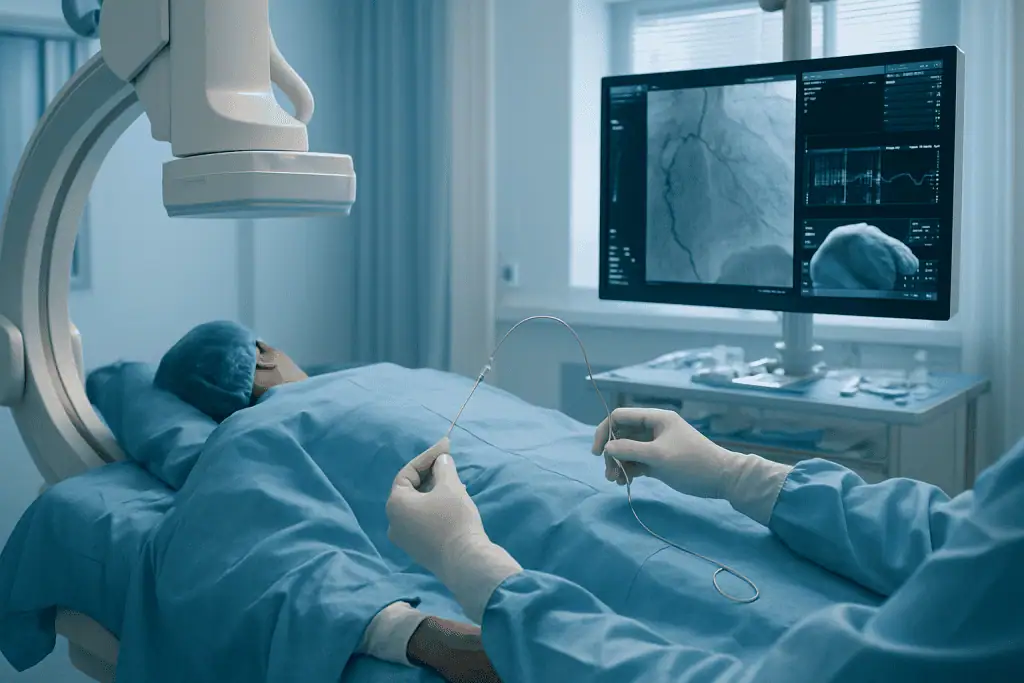
Invasive cardiology refers to catheter-based procedures used to diagnose and treat heart and vascular conditions. Despite the word invasive, these procedures are usually less invasive than traditional open surgery. Instead of opening the chest, the cardiologist inserts a catheter into a blood vessel and carefully guides it to the heart or affected artery using real-time imaging.
One of the most common diagnostic procedures is coronary angiography. During angiography, contrast dye is injected through the catheter, and X-ray imaging shows how blood flows through the coronary arteries. This allows the cardiologist to see whether arteries are narrowed, blocked, or structurally abnormal. Angiography can provide information that noninvasive tests cannot always show in sufficient detail.
If a significant narrowing is found and treatment is appropriate, the same session may include balloon angioplasty or stent placement. In balloon angioplasty, a small balloon is expanded inside the narrowed artery to improve the passage of blood. A stent, which is a tiny mesh tube, may then be placed to help keep the artery open. In many cases, stents are coated with medication designed to reduce the chance of re-narrowing.
Invasive cardiology also includes a range of other procedures, depending on the patient’s diagnosis. These may involve assessment of pressure and blood flow inside the heart, treatment of selected structural heart problems, management of peripheral vascular disease, or catheter-based evaluation in complex cardiac cases. The exact approach depends on clinical findings, imaging results, and the patient’s risk profile.
The value of invasive cardiology lies in its ability to combine diagnosis and treatment. For a patient with significant chest pain and a high-risk coronary blockage, the same pathway may identify the problem and correct it without the need for open surgery. For another patient, angiography may show that medication is the safest and most appropriate treatment. In both situations, precise information helps guide better decisions.
Who May Need Invasive Cardiology?
Patients may be referred to invasive cardiology after symptoms, test results, or emergency findings suggest that blood flow to the heart may be reduced. The most familiar symptom is chest pain or pressure, often described as tightness, heaviness, burning, or squeezing. It may occur during physical activity, emotional stress, or after meals, and may improve with rest. Some patients feel discomfort in the arm, shoulder, jaw, back, or upper abdomen rather than classic chest pain.
Shortness of breath can also be a sign of heart disease, especially if it occurs with exertion or has become more noticeable over time. Other symptoms include unexplained fatigue, dizziness, palpitations, nausea, sweating, or reduced exercise tolerance. In some people, particularly older adults, women, and patients with diabetes, coronary artery disease may cause subtle or atypical symptoms. This is one reason careful evaluation is important.
Invasive cardiology may be considered when noninvasive testing suggests a significant problem. These tests may include electrocardiography, echocardiography, exercise stress testing, stress imaging, coronary computed tomography angiography, cardiac blood tests, or rhythm monitoring. If results suggest a high likelihood of a serious narrowing, coronary angiography may be recommended to define the anatomy and plan treatment.
Some patients require invasive cardiology urgently. A person with a suspected heart attack may need rapid angiography and, if a blocked artery is found, immediate angioplasty and stent placement. In such cases, time is heart muscle. Restoring blood flow quickly can limit damage and improve the chance of recovery. Other patients are evaluated electively because of stable symptoms, abnormal test results, or known cardiovascular risk factors.
Risk factors that may lead to referral include high blood pressure, high cholesterol, smoking, diabetes, chronic kidney disease, obesity, a sedentary lifestyle, and a family history of early heart disease. Prior heart attack, previous bypass surgery, prior stent placement, or recurrent symptoms after earlier treatment may also prompt further assessment.
Diagnosis is not based on one finding alone. A cardiologist considers symptoms, physical examination, medical history, blood tests, imaging, and overall risk. For international patients, it is especially helpful to gather previous test results, medication lists, procedure reports, stent information if applicable, and recent imaging before traveling. This allows the receiving team to review your case efficiently and avoid unnecessary repetition when possible.
Conditions and Indications Treated With Invasive Cardiology
Invasive cardiology is most often associated with coronary artery disease, a condition in which fatty plaque builds up inside the arteries that supply the heart muscle. When these arteries narrow, the heart may not receive enough oxygen-rich blood, especially during exertion. This can cause angina, shortness of breath, or fatigue. If a plaque ruptures and a clot forms, it can suddenly block blood flow and cause a heart attack.
Common indications for invasive cardiology include stable angina that continues despite medical therapy, high-risk findings on stress testing, suspected or confirmed heart attack, unstable angina, and evaluation of complex coronary anatomy. Patients with previous stents or bypass surgery may also need angiography if symptoms return or if testing suggests reduced blood flow.
Invasive cardiology may also help evaluate or manage selected conditions beyond coronary artery disease. These include peripheral artery disease, certain congenital or structural heart conditions, unexplained chest pain with concerning features, and assessment of pressures within the heart and lungs in selected cases. Some catheter-based procedures are performed in collaboration with cardiac surgeons, electrophysiologists, imaging specialists, or vascular teams, depending on the complexity of the condition.
Not every narrowed artery requires a stent. Some blockages are best managed with medication and lifestyle modification, particularly if they are not limiting blood flow significantly or if the risks of intervention outweigh the benefits. Other patients may be better served by coronary artery bypass surgery, especially when disease is extensive or involves certain high-risk patterns. The strength of a comprehensive cardiology program lies in matching each patient to the treatment that best fits the medical evidence and individual circumstances.
How Invasive Cardiology Procedures Are Performed
The invasive cardiology process begins with a detailed clinical review. Your cardiologist examines your symptoms, previous tests, medications, allergies, kidney function, bleeding risk, and history of heart procedures. If you take blood thinners, diabetes medications, or kidney-related medications, you may receive specific instructions before the procedure. Patients are usually asked not to eat or drink for a defined period beforehand, although exact instructions depend on the planned procedure and your medical status.
Before angiography or angioplasty, the care team checks vital signs, places an intravenous line, and may perform blood tests and an electrocardiogram. The procedure is usually done in a catheterization laboratory, a specialized environment equipped for real-time imaging and immediate cardiac care. Most patients receive local anesthesia at the access site and medication to help them relax. General anesthesia is not usually needed for standard coronary angiography or stent placement, although more complex procedures may require a different anesthesia plan.
The cardiologist accesses an artery through the wrist, known as radial access, or through the groin, known as femoral access. The choice depends on your anatomy, the complexity of the procedure, previous procedures, vascular health, and operator judgment. A small tube is placed into the artery, and catheters are guided toward the heart. Using live X-ray imaging, the physician positions the catheter at the opening of the coronary arteries.
During coronary angiography, contrast dye is injected while images are recorded from several angles. You may feel a brief warm sensation when the dye is injected, but the imaging itself is not painful. The cardiologist evaluates the location, severity, and pattern of any narrowing. In some cases, additional measurements are used to determine whether a blockage is actually reducing blood flow enough to require treatment. These may include pressure-wire assessment, intravascular imaging, or other physiological evaluations.
If angioplasty is needed, a very thin guidewire is passed across the narrowed area. A balloon catheter is then advanced to the blockage and briefly inflated. This compresses plaque and widens the artery. A stent may be delivered on the balloon and expanded into place, where it remains as a scaffold inside the artery. The balloon and catheters are removed, but the stent stays permanently. Further imaging or measurements may be used to confirm that the result is satisfactory and blood flow has improved.
The technology used in invasive cardiology is designed to improve precision and safety. High-resolution fluoroscopic imaging helps the cardiologist see the arteries in real time. Digital angiography allows careful review of vessel anatomy. Intravascular ultrasound or optical imaging, when indicated, can show the inside of the artery and help guide stent sizing and placement. Pressure-based tools can help determine whether a narrowing is functionally significant. Monitoring systems track heart rhythm, blood pressure, oxygen levels, and other parameters throughout the procedure.
A diagnostic coronary angiogram may take less than an hour, although preparation and recovery add to the total time in the hospital. Angioplasty and stent placement may take longer, especially if the artery is complex, calcified, previously treated, or difficult to access. Some procedures are planned as day cases, while others require overnight observation. Emergency procedures, complex interventions, or patients with additional medical conditions may need a longer hospital stay.
After the procedure, the catheter is removed and pressure or a closure method is used to prevent bleeding at the access site. If the wrist was used, a compression band is commonly applied. If the groin was used, you may need to lie flat for a period. Nurses monitor your heart rhythm, blood pressure, access site, comfort level, and circulation in the affected limb. You will be encouraged to drink fluids if appropriate, helping your body clear the contrast dye.
Discharge instructions typically include information about medications, activity limits, wound care, hydration, and warning signs. If a stent has been placed, antiplatelet medication is especially important. These medicines help prevent clot formation inside the stent. Patients should not stop them without medical guidance, even if they feel well. Follow-up care may include cardiology review, medication adjustment, cardiac rehabilitation, lifestyle counseling, and ongoing risk-factor control.
Why Acting Early Matters
Heart disease can progress quietly. A person may adapt to reduced exercise capacity, attribute chest discomfort to indigestion, or delay care because symptoms come and go. Yet reduced blood flow to the heart is not something to ignore. Early evaluation can distinguish low-risk symptoms from warning signs that require urgent treatment.
Delaying care may allow coronary artery disease to worsen. A stable narrowing can become more severe, symptoms may increase, and the heart muscle may be exposed to repeated episodes of oxygen deprivation. In some cases, plaque rupture can lead to a sudden clot and heart attack. When heart muscle is damaged, recovery may be incomplete, and long-term complications such as heart failure or rhythm problems may develop.
Timely assessment does not always mean immediate stent placement. It means obtaining the right information early enough to choose the safest path. For some patients, early action leads to optimized medication and monitoring. For others, it identifies a serious blockage that should be treated promptly. In an emergency setting, rapid invasive cardiology can be lifesaving because restoring blood flow quickly can limit the extent of heart damage.
Benefits of Invasive Cardiology Treatment
When appropriately indicated, invasive cardiology can provide important diagnostic and therapeutic benefits for patients with heart and vascular disease.
| Benefit | What It Means for You |
|---|---|
| Precise diagnosis | Angiography allows the cardiologist to see the coronary arteries directly and understand the location and severity of narrowing. |
| Treatment without open surgery in many cases | Balloon angioplasty and stent placement can restore blood flow through a small access point, often avoiding a chest incision. |
| Symptom relief | For patients with flow-limiting blockages, treatment may reduce angina, shortness of breath, and exercise-related limitations. |
| Rapid care during heart attack | Emergency catheter-based treatment can reopen a blocked artery and help limit damage to the heart muscle. |
| Shorter recovery than many surgical procedures | Many patients return to light activities within days, depending on the procedure, access site, and overall condition. |
| Personalized treatment planning | Results help determine whether medication, stenting, bypass surgery, or continued observation is the most appropriate option. |
Recovery Timeline After Invasive Cardiology
Recovery varies according to whether the procedure was diagnostic or therapeutic, whether it was elective or urgent, and whether the wrist or groin was used for access.
| Time Period | What Patients Can Expect |
|---|---|
| Day 1 | You are monitored after the procedure for bleeding, heart rhythm changes, blood pressure, and comfort. Some patients go home the same day; others stay overnight. |
| First Week | Mild bruising or tenderness at the access site is common. Most patients avoid heavy lifting and strenuous activity while gradually resuming daily routines. |
| First Month | Follow-up focuses on medications, symptom improvement, blood pressure and cholesterol control, and whether cardiac rehabilitation is recommended. |
| Longer Term | Long-term success depends on taking prescribed medicines, controlling risk factors, attending follow-up visits, and maintaining heart-healthy habits. |
What Influences Outcomes and a Good Result?
Outcomes after invasive cardiology depend on several factors. One of the most important is the underlying condition being treated. A straightforward narrowing in one artery is different from extensive disease involving multiple vessels, the left main coronary artery, chronic total occlusions, or arteries that are heavily calcified. The urgency of the procedure also matters. Patients treated during a heart attack may have different risks and recovery needs than patients undergoing elective angiography for stable symptoms.
Your overall health plays a significant role. Diabetes, kidney disease, anemia, bleeding disorders, previous stroke, heart failure, lung disease, and advanced age can affect procedural planning and recovery. Kidney function is particularly important because contrast dye is used during angiography. The team may adjust hydration, medication timing, contrast volume, or monitoring when kidney risk is present.
The quality of the diagnostic assessment also influences outcomes. A good result begins with the right indication for the procedure. If a blockage is not responsible for symptoms or does not significantly limit blood flow, stenting may not improve how a patient feels. Conversely, when a narrowing is severe and clinically relevant, revascularization may offer meaningful benefit. This is why modern invasive cardiology often uses both anatomical imaging and functional assessment when the decision is not obvious.
Technical execution is another factor. Careful access-site selection, accurate stent sizing, complete expansion of the stent, and confirmation of blood flow all contribute to procedural quality. Intravascular imaging and pressure measurements may be used in selected cases to refine decisions. These tools are not necessary for every patient, but they can be valuable in complex anatomy or when the severity of disease is uncertain.
Medication adherence after the procedure is essential, especially after stent placement. Antiplatelet therapy reduces the risk of clotting inside the stent. Cholesterol-lowering therapy, blood pressure control, diabetes management, and smoking cessation help slow the progression of atherosclerosis. A stent treats a specific narrowed segment; it does not remove the tendency to develop plaque elsewhere. Long-term care is therefore as important as the procedure itself.
Lifestyle changes strongly influence future cardiovascular health. A heart-healthy diet, regular physical activity approved by your physician, weight management, adequate sleep, and stress reduction can all support recovery and reduce risk. Cardiac rehabilitation may be recommended because it provides supervised exercise, education, and structured support after heart events or interventions.
A good result also depends on communication. Patients should understand why the procedure is recommended, what alternatives exist, what medicines must be continued, and which symptoms require urgent medical attention. For international patients, written reports, imaging copies, medication plans, and clear follow-up instructions are especially important because ongoing care may continue in another country after returning home.
Why International Patients Choose Acibadem for Invasive Cardiology
International patients considering invasive cardiology abroad often want more than technical capability. They want a careful diagnosis, transparent decision-making, experienced physicians, and a hospital environment that can manage both routine and complex cardiac needs. Acibadem provides invasive cardiology services within JCI-accredited hospitals, supported by established cardiovascular programs and coordinated international patient services.
Care begins before arrival whenever possible. International patients may share medical records, angiography reports, imaging, laboratory results, and physician notes for preliminary review. This helps the cardiology team understand the clinical question and advise whether travel for evaluation or treatment is reasonable. When urgent symptoms are present, patients are guided to seek emergency care locally rather than delay treatment for travel.
At Acibadem, invasive cardiology is integrated with broader cardiovascular care. Cardiologists, interventional cardiologists, cardiovascular surgeons, cardiac imaging specialists, anesthesiology teams, intensive care physicians, and rehabilitation professionals may collaborate when cases are complex. Multidisciplinary boards or specialist discussions are particularly relevant when the best option is not obvious, such as in multivessel coronary artery disease, recurrent symptoms after prior procedures, or patients who may need either stenting or bypass surgery.
Diagnostic pathways are based on international medical practice and individualized assessment. Depending on your condition, evaluation may include electrocardiography, echocardiography, advanced cardiac imaging, laboratory testing, stress testing, coronary angiography, and functional or intravascular assessment during catheterization. The aim is to avoid both undertreatment and unnecessary intervention.
Technology in the catheterization laboratory supports accurate imaging, careful device placement, continuous monitoring, and rapid response if a patient’s condition changes. Modern imaging systems help physicians visualize coronary anatomy from multiple angles. Physiological assessment tools can help determine whether a narrowing is significant. Intravascular imaging can assist in complex stent planning. Digital systems support documentation and communication of findings, which is particularly helpful for patients who will continue follow-up in their home country.
Experienced physicians are important not only during the procedure but also in deciding when not to intervene. Invasive cardiology requires judgment: understanding which lesions benefit from stenting, when medication is preferable, when surgical consultation is needed, and how to manage patients with multiple medical conditions. At Acibadem, treatment plans are shaped around the patient’s anatomy, symptoms, risk factors, personal priorities, and future follow-up needs.
For patients traveling from the United States or other countries, Acibadem International offers coordination in more than 20 languages. Services may include appointment planning, medical record transfer, hospital admission guidance, interpretation support, travel-related coordination, and assistance with discharge documents. This support is designed to help patients navigate care in another country while staying focused on medical decisions.
International patients also value continuity. After an invasive cardiology procedure, discharge planning includes medication instructions, activity recommendations, warning signs, and follow-up guidance. Reports and imaging can be prepared for your physicians at home. If a stent is placed, the type of stent, antiplatelet plan, and recommended duration of therapy should be clearly documented so that your local cardiologist can continue care safely.
Choosing a hospital abroad for heart care is a significant decision. The strongest programs combine procedural expertise with careful patient selection, emergency readiness, cardiac surgery access when needed, intensive care support, and structured follow-up. This comprehensive environment is especially important for patients with complex coronary disease, previous heart procedures, or multiple health conditions.
Moving Forward With Clarity
If you have been advised to consider coronary angiography, angioplasty, or stent placement, it is natural to feel concerned. The most important next step is to understand your diagnosis and the reason the procedure is being recommended. Invasive cardiology can be a powerful tool, but it is most valuable when used for the right patient, at the right time, with a clear plan for long-term heart health.
Acibadem’s cardiology teams can review your medical history, current symptoms, and previous test results to help determine whether invasive evaluation or treatment may be appropriate. For many international patients, a second opinion provides clarity before making travel or treatment decisions. Whether your case is urgent, elective, straightforward, or complex, the goal is the same: to identify the safest and most effective path forward based on sound medical evidence and your individual needs.
To learn more, you may request a consultation or submit your records for review by the international patient team. A clear diagnosis and a well-planned treatment strategy can help you make decisions with confidence and prepare for the next stage of care.
This information is general and is not a substitute for professional medical advice. Diagnosis and treatment decisions should always be made with a qualified physician who can evaluate your individual medical condition.
Preparation
- Before invasive cardiology procedures, patients usually have blood tests, ECG, echocardiography, and imaging as needed. Blood thinners, diabetes medications, and allergies to contrast dye should be reviewed with the cardiology team. Fasting is commonly required for several hours before the procedure.
Aftercare
- After the procedure, the catheter access site is monitored for bleeding or swelling, and heart rhythm and vital signs are checked. Patients should avoid strenuous activity and heavy lifting for a few days. Medication instructions, follow-up visits, and warning signs such as chest pain or shortness of breath are explained before discharge.
Turkey vs UK, Germany & USA
Invasive cardiology costs and patient experience vary depending on whether the procedure is diagnostic or therapeutic, the complexity of the heart condition, and the hospital pathway. International patients usually compare access time, accreditation, specialist experience, package inclusions, and travel support before deciding where to receive care.
The comparison below focuses on practical factors that may influence the overall cost and experience of catheter-based cardiology care, such as coronary angiography, balloon angioplasty, or stent placement.
| Factor | Turkey | UK | Germany | USA |
|---|---|---|---|---|
| Cost structure | Often offered through international patient packages, with costs influenced by procedure type, stent choice, hospital category, and length of stay. | Private care costs vary by consultant, hospital, diagnostics, and device use; public pathways depend on referral and clinical prioritisation. | Costs depend on hospital type, cardiology unit, diagnostics, device selection, and inpatient care pathway. | Costs can vary widely by facility, physician fees, imaging, devices, anaesthesia, and insurer arrangements. |
| Hospital quality and accreditation | International patients may choose JCI-accredited hospitals with dedicated international services and multidisciplinary cardiac teams. | Quality indicators are linked to regulated hospitals, consultant credentials, and established cardiac networks. | Patients often consider certified cardiac centres, hospital reputation, and specialist unit experience. | Patients may compare major cardiac centres, hospital accreditation, physician credentials, and network status. |
| Interventional cardiology team | Cost and planning may be affected by the cardiologist’s experience, case complexity, and availability of advanced catheter laboratory technology. | Consultant selection, private hospital access, and the need for additional diagnostic review can affect the care pathway. | Specialist expertise, use of advanced imaging, and hospital protocols can influence the total pathway. | Physician fees, facility charges, imaging protocols, and device choice are important cost drivers. |
| Waiting time and scheduling | International patient departments may help coordinate appointments, tests, procedure dates, and follow-up in a planned itinerary. | Private appointments may be scheduled directly; public care timing depends on referral urgency and local capacity. | Scheduling depends on hospital availability, referral documentation, and whether the case is elective or urgent. | Access depends on provider availability, insurance authorisation, and hospital scheduling processes. |
| Package inclusions | Packages may include cardiology consultation, core tests, hospital stay, standard nursing care, interpreter support, and airport or hotel coordination where available. | Private quotes may separate consultation, diagnostics, procedure, hospital stay, and follow-up. | Quotes may be itemised by hospital services, physician services, diagnostics, devices, and inpatient care. | Billing is often itemised across physician, facility, diagnostics, devices, medications, and insurance-related elements. |
| Travel and language logistics | International patient teams can support medical records review, translation, accommodation planning, and post-discharge communication. | Travel is simpler for residents; international patients may need to arrange records, accommodation, and aftercare independently. | International patients may need translated records and coordination with the receiving hospital and home cardiologist. | Travel planning, insurance authorisation, medical records transfer, and follow-up arrangements can add complexity. |
What affects your final cost
- Whether the procedure is diagnostic, therapeutic, or combined.
- The number and type of tests needed before catheterisation.
- The need for balloon angioplasty, stent placement, or advanced imaging.
- The type of stent or other device selected by the cardiology team.
- The complexity of coronary artery disease or other vascular findings.
- The hospital category, catheter laboratory resources, and specialist team involved.
- Length of hospital stay, medications, monitoring, and follow-up needs.
- Travel, accommodation, translation, and coordination services for international patients.
Compare your options
Invasive cardiology includes several catheter-based diagnostic and treatment options. Suitability is decided by a cardiology specialist after reviewing symptoms, test results, medical history, and risk factors.
| Option | What it is | Typical use | Key considerations |
|---|---|---|---|
| Coronary angiography | A catheter-based imaging test that uses contrast dye to visualise the coronary arteries. | Used to investigate suspected coronary artery disease, chest pain, abnormal stress tests, or unclear cardiac symptoms. | It is mainly diagnostic, but findings may lead to a treatment plan such as medication, angioplasty, stenting, or surgery depending on specialist assessment. |
| Balloon angioplasty | A catheter with a small balloon is used to widen a narrowed artery. | Used when a narrowed coronary artery is suitable for catheter-based widening. | It may be performed with stent placement, and suitability depends on artery anatomy, plaque pattern, symptoms, and overall cardiac risk. |
| Stent placement | A small expandable scaffold is placed inside an artery to help keep it open. | Commonly used during percutaneous coronary intervention when a narrowed artery requires support after widening. | Stent type, medication needs, bleeding risk, and long-term follow-up are discussed by the cardiology team. |
| Intravascular imaging | Special catheter-based imaging is used inside the blood vessel to assess plaque and stent placement. | Used in selected complex cases to guide treatment planning and optimise stent positioning. | It may add detail for complex anatomy, but it is not required for every patient. |
| Physiology-guided assessment | Catheter-based measurements evaluate whether a narrowing is significantly affecting blood flow. | Used when angiography alone does not clearly show whether treatment is necessary. | It can help avoid unnecessary intervention or guide targeted treatment, depending on specialist interpretation. |
| Medical management after catheterisation | Medication and lifestyle-focused care following diagnosis or intervention. | Used for many patients, either alone or after angioplasty or stent placement. | Medication adherence, risk factor control, and follow-up with a cardiologist are important parts of long-term care. |
Trusted care for international patients
General information only — not medical or financial advice. Final costs depend on the factors above and your individual case; request a free, personalised quote.
Doctors Performing This Treatment

Prof. Dr. Ahmet Akyol
Cardiology
Prof. Dr. Ahmet Karabulut
Cardiology
Prof. Dr. Ahmet Kaya Bilge
Cardiology
Prof. Dr. Ahmet Oytun Baykan
Cardiology
Prof. Dr. Aleks Değirmencioğlu
Cardiology
Prof. Dr. Ali Aydınlar
Cardiology
Prof. Dr. Alpay Turan Sezgin
Cardiology
Prof. Dr. Alper Özkan
Cardiology
Prof. Dr. Barış Kılıçaslan
Cardiology
Prof. Dr. Bekir Sıtkı Cebeci
Cardiology
Prof. Dr. Burak Pamukçu
Cardiology
Prof. Dr. Cahide Soydaş Çınar
Cardiology
Prof. Dr. Duhan Fatih Bayrak
Cardiology
Prof. Dr. Elif Eroğlu Büyüköner
Cardiology
Prof. Dr. Ender Semiz
Cardiology
Prof. Dr. Ercüment Yılmaz
Cardiology
Prof. Dr. Ergün Seyfeli
Cardiology
Prof. Dr. Ertuğrul Zencirci
Cardiology
Prof. Dr. Ethem Kumbay
Cardiology
Prof. Dr. Gültekin Karakuş
Cardiology
Prof. Dr. Haldun Akgöz
Cardiology
Prof. Dr. Mert İlker Hayıroğlu
Cardiology
Prof. Dr. Metin Gürsürer
Cardiology
Prof. Dr. Murat Sezer
CardiologyMedical Units
Available at These Hospitals












Frequently Asked Questions
What affects the cost of invasive cardiology treatment?
The final cost depends on the type of procedure, the tests required, the complexity of the coronary or vascular condition, device selection such as stents, hospital stay, medications, and follow-up needs. For international patients, travel coordination, translation, and accommodation support may also affect the overall plan.
How can I get a personalised quote?
A personalised quote usually requires a review of your medical records, recent test results, current medications, and any previous heart procedures. Acibadem International can arrange a free consultation to help determine the appropriate pathway and provide an individual estimate.
Is coronary angiography always followed by stent placement?
No. Coronary angiography is a diagnostic test, and treatment depends on the findings. Some patients may need medication only, while others may be suitable for angioplasty, stent placement, or referral for another cardiac treatment. The decision is made by a cardiology specialist.
What is usually included in an international patient package?
Package content varies, but it may include cardiology consultation, core diagnostic tests, the catheter-based procedure, standard hospital care, nursing services, interpreter support, and care coordination. The exact inclusions should be confirmed before travel.
Do I need to stay in Turkey after the procedure?
The recommended stay depends on your diagnosis, the procedure performed, recovery, medication plan, and the cardiologist’s advice. Your care team will explain when travel may be appropriate and what follow-up is needed with your local doctor.
Is this information medical or financial advice?
No. This is general educational information and cannot replace assessment by a qualified cardiologist or a formal financial quote. A free consultation can help clarify your clinical suitability and estimated care pathway.