

Structural Heart
Structural heart care focuses on heart valve and congenital structural problems using advanced imaging, catheter-based interventions, and surgery when needed. Treatment is tailored by cardiology and cardiovascular surgery teams.
Quick answer
Structural heart treatment addresses problems in the heart’s valves, walls, and chambers, including congenital defects, using imaging-guided catheter procedures or surgery when needed. At Acibadem in Turkey, cardiology and cardiovascular surgery teams evaluate each condition and plan personalized care with advanced diagnostics, minimally invasive options, and surgical treatment when appropriate.
When a Structural Heart Condition Becomes a Life Decision
Being told that you have a structural heart problem can feel unsettling, especially if you are considering treatment far from home. Many patients first hear terms such as aortic stenosis, mitral valve regurgitation, atrial septal defect, or patent foramen ovale after months of fatigue, shortness of breath, fainting episodes, palpitations, or an unexpected finding on a heart scan. Others have lived with a congenital heart condition since childhood and are now facing a decision about repair, monitoring, pregnancy planning, or repeat treatment as an adult.
Structural heart care is different from treating blocked coronary arteries. It focuses on the heart’s valves, chambers, walls, and related openings or defects that affect how blood moves through the heart. These conditions can place strain on the heart muscle, lungs, and circulation. Over time, they may limit daily activity, increase the risk of heart failure or rhythm problems, and, in some cases, become life-threatening if not addressed at the right time.
For international patients, the decision is not only medical. It is also practical and emotional: Which treatment is safest for my anatomy? Do I need open-heart surgery, or is a catheter-based procedure possible? How long will I be in the hospital? Can I travel after treatment? Will my doctors coordinate all tests and opinions before I arrive? A high-quality structural heart program answers these questions through careful diagnosis, multidisciplinary planning, and a treatment recommendation that is tailored to the patient rather than to a single procedure.
At Acibadem, structural heart care brings together cardiology, interventional cardiology, cardiovascular surgery, cardiac imaging, anesthesiology, intensive care, and rehabilitation teams. The aim is to understand the heart problem precisely, weigh the treatment options openly, and choose the approach that offers the best balance of effectiveness, safety, durability, and recovery for each individual patient.
What Structural Heart Treatment Is
Structural heart treatment refers to the diagnosis and treatment of abnormalities in the heart’s valves, chambers, walls, and supporting structures. These problems may be present from birth, develop with age, occur after infection or inflammation, or appear as a complication of other heart diseases. Treatment may involve careful medical follow-up, catheter-based intervention, minimally invasive surgery, or conventional cardiac surgery, depending on the condition and the patient’s overall risk profile.
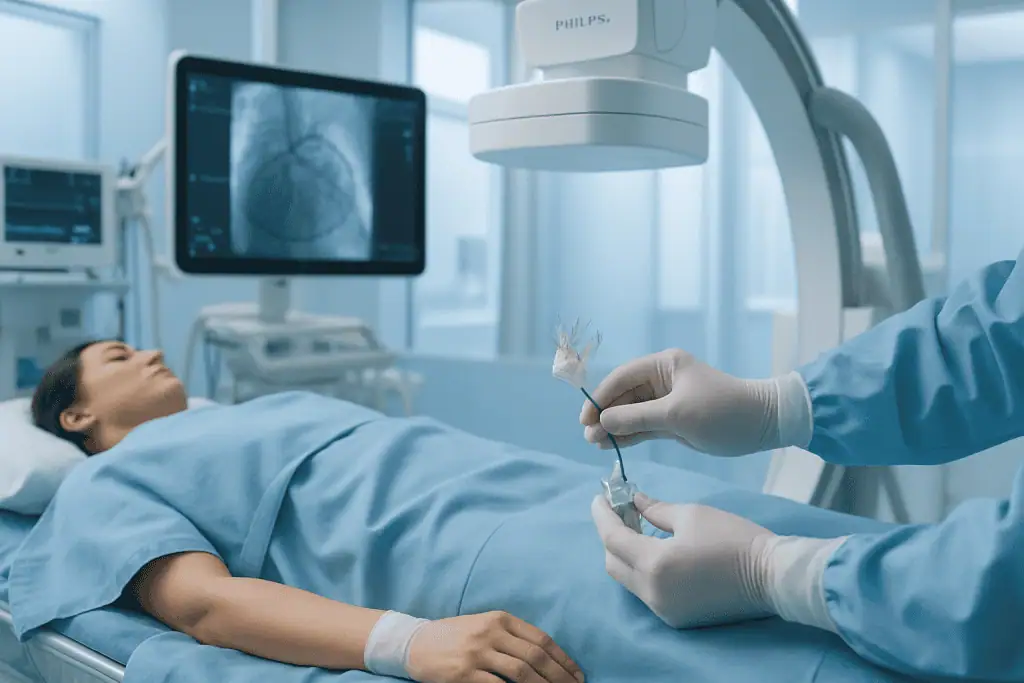
In recent years, structural heart care has changed significantly because many conditions that once required open-heart surgery can now be treated through catheter-based techniques in carefully selected patients. In these procedures, physicians guide thin tubes called catheters through blood vessels, usually from the groin, to reach the heart. Devices can then be placed to repair or replace a valve, close an abnormal opening, or reduce leakage. These procedures are typically guided by advanced imaging, such as echocardiography, fluoroscopy, computed tomography, and three-dimensional imaging, allowing the team to plan and perform treatment with high precision.
Not every patient is best served by a catheter-based procedure. Some structural heart conditions are more effectively treated with surgical repair or replacement, particularly when the anatomy is complex, the valve disease is advanced, or several heart problems need to be corrected during the same operation. For this reason, structural heart care is not simply a list of procedures. It is a decision-making pathway that combines imaging, clinical assessment, risk evaluation, and specialist discussion.
The most common structural heart treatments include valve repair or replacement, closure of holes or abnormal communications within the heart, treatment of valve leaks around prior prosthetic valves, and interventions for selected congenital heart conditions in adults. The approach may be preventive, symptom-relieving, or lifesaving, depending on the diagnosis and stage of disease.
Who May Need Structural Heart Care
Patients may be referred for structural heart evaluation after symptoms, an abnormal physical examination, a heart murmur, a previous diagnosis that has progressed, or an imaging test showing a valve or chamber problem. Some patients are referred after being told they are too high risk for conventional surgery and need a less invasive option. Others seek a second opinion to understand whether they should be treated now or monitored closely.
Typical symptoms of structural heart disease may include shortness of breath during activity or when lying flat, chest pressure, fatigue, reduced exercise capacity, swelling in the legs or abdomen, dizziness, fainting, irregular heartbeat, or unexplained decline in stamina. Symptoms can be subtle at first. A person may simply notice that climbing stairs, walking uphill, or carrying groceries has become more difficult. In older adults, symptoms may be mistaken for normal aging, lung disease, or general deconditioning. In younger adults with congenital conditions, symptoms may appear during exercise, pregnancy, or periods of increased physical stress.
Diagnosis usually begins with a detailed medical history, physical examination, electrocardiogram, blood tests when needed, and echocardiography. Echocardiography uses ultrasound to show how the heart valves open and close, how strongly the heart pumps, whether blood is leaking backward, and whether pressures inside the heart or lungs are elevated. More advanced tests may include transesophageal echocardiography, cardiac computed tomography, cardiac magnetic resonance imaging, exercise testing, rhythm monitoring, coronary angiography, or cardiac catheterization.
For international patients, diagnostic accuracy is especially important because the treatment plan may determine the length of stay, the type of procedure, and travel timing. Acibadem’s structural heart evaluation is designed to confirm the diagnosis, assess severity, identify associated risks, and compare available treatment options. When appropriate, cases are discussed in multidisciplinary boards so cardiologists, cardiovascular surgeons, imaging specialists, and anesthesiology teams can review the patient’s anatomy and clinical profile together.
Conditions and Indications Treated in Structural Heart Programs
Structural heart programs address a broad range of valve and congenital heart conditions. The specific indication determines whether treatment is urgent, elective, preventive, or part of long-term follow-up. The goal is to treat the heart problem before it causes irreversible strain on the heart muscle or other organs, while also avoiding unnecessary intervention when careful observation is still the safest choice.
Aortic valve stenosis is one of the most common structural heart conditions, particularly in older adults. The aortic valve becomes narrowed and does not open properly, forcing the heart to work harder to pump blood to the body. Severe aortic stenosis can cause chest pain, fainting, shortness of breath, heart failure, and sudden deterioration. Treatment may involve catheter-based aortic valve replacement for suitable patients or surgical valve replacement when surgery offers the better long-term solution.
Mitral valve regurgitation occurs when the mitral valve leaks, allowing blood to flow backward into the left atrium. It may result from valve degeneration, previous infection, heart enlargement, or damage related to heart muscle disease. Depending on the cause and anatomy, treatment may include surgical repair, valve replacement, or catheter-based repair in selected patients. Mitral valve repair, when feasible, can preserve the patient’s own valve structure and may offer durable symptom improvement.
Tricuspid valve disease involves the valve between the right atrium and right ventricle. It is often associated with heart rhythm disorders, pulmonary hypertension, previous heart surgery, or right-sided heart enlargement. Symptoms may include swelling, abdominal fullness, fatigue, and fluid retention. Treatment is evolving and may involve medication, surgery, or catheter-based approaches in selected cases.
Atrial septal defect and related congenital openings between the upper chambers of the heart can allow extra blood flow to the right side of the heart and lungs. Some defects are detected in childhood, while others are diagnosed in adults after shortness of breath, rhythm problems, or an enlarged right heart is found. Depending on size and location, closure may be performed with a catheter-delivered device or with surgery.
Patent foramen ovale is a small flap-like opening between the upper chambers that persists after birth in some people. In many individuals it causes no problem and requires no treatment. In selected patients, particularly those with certain types of unexplained stroke after careful evaluation, closure may be considered as part of a broader stroke-prevention strategy.
Paravalvular leak may occur around a previously implanted artificial valve. If significant, it can cause heart failure symptoms or blood cell breakdown. Catheter-based closure may be an option for selected patients, while surgery may be needed in others. Structural heart teams also evaluate complex or recurrent valve disease, prosthetic valve dysfunction, and combined valve problems requiring coordinated planning.
How Structural Heart Treatment Is Performed
Preparation and Pre-Treatment Assessment
The first step is a structured review of the patient’s diagnosis, symptoms, previous test results, medical history, medications, prior heart procedures, and surgical risk. International patients are often asked to share echocardiography images, CT or MRI scans, angiography reports, blood tests, discharge summaries, and medication lists before traveling. This allows the medical team to provide an initial opinion and identify which additional tests may be needed on arrival.
Once at the hospital, patients may undergo repeat or advanced imaging to confirm the anatomy and severity of disease. Imaging is central to structural heart care. Echocardiography shows valve motion, leakage, pressure changes, and heart function. Transesophageal echocardiography, performed with a probe placed in the esophagus under sedation or anesthesia, provides closer images of valves and defects. Computed tomography can help measure valve size, blood vessel access, calcium distribution, and the relationship of heart structures. Cardiac magnetic resonance imaging may be helpful for congenital conditions, chamber volumes, and certain forms of valve disease.
The team also evaluates general health, kidney function, lung function, bleeding risk, frailty, mobility, previous operations, and the presence of coronary artery disease. This is especially important in older patients and in those with multiple medical conditions. The objective is not only to decide whether a procedure is possible, but whether it is appropriate and likely to improve the patient’s quality of life and prognosis.
Planning the Best Approach
After diagnostic testing, the case is reviewed by the relevant specialists. In structural heart disease, the best decision often depends on details: the shape of the valve, the size of the annulus, the degree of calcification, the location of leakage, the patient’s age, expected durability of the treatment, and whether another heart condition should be treated at the same time. A younger patient with repairable valve disease may benefit from surgery that aims for long-term durability. An older patient with severe aortic stenosis and higher surgical risk may be a candidate for catheter-based valve replacement. A congenital defect may be closed through a catheter if the rims and size are suitable, but may require surgery if the anatomy is not favorable.
Patients are informed about the proposed procedure, alternatives, expected benefits, limitations, possible risks, anesthesia plan, likely hospital stay, recovery expectations, medication changes, and follow-up needs. For international patients, the treatment plan also considers travel dates, companion support, flight fitness, and coordination of records for physicians in the patient’s home country.
During Catheter-Based Structural Heart Procedures
Catheter-based structural heart procedures are performed in specialized cardiac procedure rooms or hybrid operating environments equipped for advanced imaging and immediate surgical support if needed. The patient may receive general anesthesia or conscious sedation depending on the procedure, anatomy, and team preference. Monitoring is continuous throughout the procedure.
The physician usually accesses the heart through a blood vessel in the groin, although other access routes may be used in selected cases. Imaging guides the catheter to the heart. For valve procedures, the team may place a replacement valve, repair a leaking valve, or close a leak around a previous valve. For congenital openings, a closure device may be positioned across the defect and released only after the team confirms proper placement and stable function. Imaging during the procedure helps verify blood flow, valve performance, and the absence of significant complications.
The duration varies widely. Some procedures may take a few hours, while more complex interventions may require longer. After the procedure, the catheters are removed and the access site is closed. Patients are monitored in a recovery area, coronary care unit, or intensive care unit depending on the procedure and clinical condition.
During Surgical Structural Heart Treatment
Surgical treatment may involve repairing or replacing a valve, closing a congenital defect, addressing multiple valves, removing diseased tissue, or correcting associated heart abnormalities. Some operations can be performed through smaller incisions, while others require a conventional chest incision, particularly when the anatomy is complex or multiple repairs are needed. The decision is based on safety, exposure, durability, and the patient’s overall condition.
During surgery, anesthesia and intensive monitoring are provided by a cardiac anesthesia team. Many valve operations use a heart-lung machine while the surgeon repairs or replaces the affected structure. In valve repair, the surgeon may reshape valve leaflets, support the valve ring, remove abnormal tissue, or correct supporting structures. In valve replacement, the diseased valve is replaced with a biological or mechanical prosthesis. Each prosthesis type has advantages and considerations, including durability and the need for blood-thinning medication.
After surgery, patients are cared for in a cardiac intensive care unit before moving to a regular cardiac ward. Pain control, breathing exercises, early mobilization, rhythm monitoring, wound care, and rehabilitation planning are important parts of recovery.
Recovery and Follow-Up
Recovery depends on the condition treated, the procedure performed, the patient’s age, and the presence of other medical problems. After catheter-based treatment, many patients are walking within a day and may leave the hospital after a short stay if there are no complications. Surgical recovery is longer and includes gradual return to daily activities, wound healing, and often a structured cardiac rehabilitation plan.
Follow-up imaging is essential. The team checks valve function, device position, heart pumping strength, heart rhythm, blood pressure, and medication needs. Patients may need antiplatelet or anticoagulant medication depending on the procedure and their personal risk factors. Before returning home, international patients receive discharge information, follow-up recommendations, medication instructions, and documentation that can be shared with their local cardiologist.
Why Acting Early Matters
Structural heart disease often progresses gradually. Because the heart can compensate for a long time, symptoms may appear only after the condition has become advanced. This is particularly true in severe valve disease. A patient may feel “mostly fine” while the heart muscle is thickening, enlarging, or weakening in response to abnormal pressure or volume load. Once the heart muscle has been damaged significantly, treatment can still help, but recovery may be less complete.
Delaying evaluation may increase the risk of heart failure, pulmonary hypertension, atrial fibrillation, blood clots, stroke, fainting episodes, repeated hospitalizations, and reduced exercise capacity. In severe aortic stenosis, the development of symptoms is an important warning sign and should be assessed promptly. In mitral or tricuspid valve disease, waiting too long may allow chambers to enlarge and rhythms to become more difficult to control. In congenital defects, prolonged extra blood flow can lead to irreversible changes in the lungs and right side of the heart.
Early action does not always mean immediate intervention. Sometimes it means establishing the correct diagnosis, defining severity, and setting a safe monitoring schedule. For many patients, the most valuable step is a timely specialist review that clarifies whether treatment is needed now, soon, or only if certain changes appear.
Potential Benefits of Structural Heart Treatment
The potential benefits depend on the diagnosis and procedure, but structural heart treatment is generally intended to improve heart function, reduce symptoms, and prevent progression when intervention is appropriate.
| Benefit | What It Means for You |
|---|---|
| Improved blood flow through the heart | Treating a narrowed valve or closing an abnormal opening can help the heart pump more efficiently and reduce strain on the circulation. |
| Reduction in symptoms | Many patients experience less shortness of breath, fatigue, chest discomfort, dizziness, or swelling after the underlying structural problem is corrected. |
| Lower risk of disease progression | Timely treatment may help prevent worsening heart enlargement, heart failure, rhythm problems, or lung pressure changes in selected conditions. |
| Less invasive options for suitable patients | Catheter-based procedures may allow treatment with smaller access sites, shorter hospital stays, and faster early recovery compared with open surgery. |
| Personalized long-term planning | A structural heart evaluation helps match the treatment to your anatomy, age, risk profile, lifestyle, and future medical needs. |
Recovery Timeline After Structural Heart Treatment
Recovery varies by procedure, but the following timeline gives a general sense of what many patients can expect after catheter-based or surgical structural heart care.
| Time Period | What Patients Can Expect |
|---|---|
| Day 1 | After catheter-based procedures, patients are closely monitored, begin gentle movement when safe, and may have imaging or blood tests. After surgery, care usually begins in a cardiac intensive care unit with continuous monitoring. |
| First Week | Catheter-based patients may be discharged within a short period if stable. Surgical patients typically focus on breathing exercises, walking, pain control, wound care, and transition from intensive care to the cardiac ward. |
| First Month | Energy gradually improves. Follow-up visits assess valve or device function, medications, rhythm, and activity level. Surgical patients continue incision healing and may begin or continue cardiac rehabilitation. |
| Longer Term | Patients need periodic cardiology follow-up, imaging, medication review, and lifestyle guidance. Some valve replacements require ongoing blood-thinner management or endocarditis-prevention precautions. |
What Influences Outcomes and a Good Result
Outcomes in structural heart care depend on several factors, beginning with the accuracy of the diagnosis. A good result requires a precise understanding of the anatomy, the severity of disease, and whether symptoms are truly caused by the structural problem. Advanced imaging and experienced interpretation are therefore central to planning.
The timing of treatment is another major factor. Patients treated before severe heart muscle damage, advanced pulmonary hypertension, or repeated hospitalizations may have a better chance of functional recovery. However, each condition has its own thresholds for intervention, and treatment too early may expose a patient to unnecessary procedural risk. This balance is why structural heart decisions are often made by specialist boards rather than by a single physician in isolation.
Anatomy strongly influences which approach is appropriate. Valve size, calcium burden, leaflet shape, blood vessel access, defect location, and previous implants can determine whether catheter-based treatment is feasible. In some cases, a less invasive option may not be the safest or most durable choice. In others, catheter-based treatment may offer important advantages for patients with higher surgical risk.
General health also matters. Kidney function, lung disease, diabetes, frailty, prior stroke, bleeding tendency, active infection, and other heart problems can affect procedural risk and recovery. For some patients, treatment planning includes optimizing medications, addressing dental or infection concerns, adjusting anticoagulation, improving nutrition, or managing anemia before intervention.
The experience of the team and the coordination between specialties are important. Structural heart procedures rely on collaboration among interventional cardiologists, cardiovascular surgeons, imaging cardiologists, anesthesiologists, intensive care teams, nurses, and rehabilitation specialists. A well-coordinated program can anticipate technical challenges, select the correct device or surgical strategy, manage complications if they occur, and guide recovery after discharge.
Finally, patient participation affects long-term success. Taking medications correctly, attending follow-up visits, managing blood pressure, maintaining dental hygiene when advised, participating in rehabilitation, and reporting new symptoms early all contribute to a safer and more durable result.
Why International Patients Choose Acibadem for Structural Heart Care
International patients considering structural heart treatment often want more than access to a procedure. They need a reliable medical opinion, coordinated diagnostics, a clear explanation of options, and a care environment that can manage both routine and complex scenarios. Acibadem’s structural heart services are organized around these needs, with cardiology and cardiovascular surgery teams working together to tailor care for each patient.
Acibadem hospitals are JCI-accredited, reflecting international standards in patient safety, quality systems, infection control, and clinical governance. For patients traveling from the United States, Europe, the Middle East, Africa, or other regions, this provides an important framework for care delivery. Accreditation is not a substitute for individualized medical judgment, but it supports consistent processes that matter in complex cardiovascular treatment.
Structural heart patients benefit from multidisciplinary evaluation. Cases may be reviewed by heart teams or specialist boards that include interventional cardiology, cardiovascular surgery, cardiac imaging, anesthesia, and intensive care expertise. This helps ensure that catheter-based and surgical options are considered together. The recommendation is based on the patient’s anatomy, symptoms, procedure risk, expected durability, and long-term follow-up needs.
Modern diagnostic pathways are a key part of care. Echocardiography, transesophageal echocardiography, CT-based planning, cardiac MRI when indicated, angiography, rhythm assessment, and laboratory evaluation can be combined to build a complete picture of the condition. These technologies help physicians measure the heart precisely, choose access routes, assess valve or defect suitability, and reduce avoidable uncertainty before treatment.
Acibadem’s cardiovascular teams use evidence-based international treatment protocols while individualizing decisions for each patient. This is particularly important in structural heart disease, where the best option may vary widely between two patients with the same diagnosis. For example, aortic stenosis treatment may require a different approach in a younger low-risk patient than in an older patient with previous surgery. Mitral valve leakage may call for repair, replacement, catheter-based therapy, or monitoring depending on its cause and anatomy.
For patients traveling from abroad, Acibadem International provides dedicated support in more than 20 languages. Services may include appointment coordination, medical record review, interpreter assistance, hospital admission guidance, travel-related planning, and communication with the care team. This support is especially valuable for cardiac patients, who may need several tests and consultations within a limited travel schedule.
The hospital experience also matters. Structural heart treatment may involve advanced imaging suites, cardiac catheterization laboratories, hybrid environments, operating rooms, intensive care units, and cardiac wards. The ability to coordinate these resources within an integrated hospital setting helps patients move through evaluation, treatment, and recovery with appropriate monitoring at each stage.
Many international patients also seek a second opinion before deciding on treatment. A second opinion can clarify whether a procedure is needed, whether a catheter-based option is suitable, whether surgery may offer a more durable repair, or whether continued monitoring is appropriate. For patients who have received different recommendations in different countries, a structured review can help them make a more informed decision.
Moving Forward With Confidence and Clarity
A structural heart diagnosis does not always mean immediate surgery, but it should be taken seriously. The right next step is a careful evaluation by a team that understands valve disease, congenital structural conditions, advanced imaging, catheter-based interventions, and surgical treatment. With precise diagnosis and thoughtful planning, many patients can reduce symptoms, protect heart function, and return to daily life with a clearer long-term care plan.
If you or a loved one has been diagnosed with a valve problem, congenital heart defect, unexplained heart murmur, severe aortic stenosis, mitral regurgitation, or another structural heart condition, you may request a consultation or second opinion from Acibadem. Sharing your medical records and imaging in advance can help the team review your case and advise on the most appropriate diagnostic and treatment pathway.
This information is general and is not a substitute for professional medical advice. Diagnosis and treatment decisions should always be made with a qualified physician who can evaluate your individual condition.
Preparation
- Before treatment, patients usually undergo echocardiography, CT angiography, blood tests, ECG, and cardiology evaluation. Blood-thinning medicines and other drugs may need adjustment. Fasting is typically required before the procedure, and the care team reviews anesthesia and imaging findings.
Aftercare
- Patients are monitored in a cardiac unit after the procedure, with checks of heart rhythm, blood pressure, and access sites. Medications such as antiplatelet or anticoagulant therapy may be prescribed. Follow-up echocardiography and cardiology visits help assess valve or device function.
Turkey vs UK, Germany & USA
Structural heart care can involve advanced imaging, catheter-based procedures, open or minimally invasive surgery, or a combination of approaches. Costs and patient experience vary depending on diagnosis, treatment method, hospital resources, and the level of multidisciplinary planning required.
For international patients, the overall experience is influenced not only by the medical fee, but also by assessment pathways, hospital accreditation, travel support, communication, and what is included in the care package.
| Factor | Turkey | UK | Germany | USA |
|---|---|---|---|---|
| Cost structure | Often offered as bundled international patient packages, depending on diagnostic workup, device choice, and hospital stay. | Private care costs depend on consultant, hospital, imaging, and device fees; public pathways may involve eligibility and waiting considerations. | Costs vary by hospital category, specialist team, device selection, and inpatient care model. | Costs can vary widely by hospital, physician group, device, insurance status, and facility billing structure. |
| Hospital and team factors | Care is typically coordinated by cardiology, interventional cardiology, imaging, anaesthesia, intensive care, and cardiovascular surgery teams; JCI accreditation may be relevant for international patients. | Access may be through private cardiac centres or public specialist units, with costs influenced by consultant and facility selection. | Specialist heart centres may offer advanced imaging and structural heart programmes; costs depend on the selected centre and clinical complexity. | Large cardiac centres may provide a wide range of structural interventions, with billing influenced by hospital system and specialist involvement. |
| Typical waiting and scheduling | International patient departments may help coordinate appointments, imaging, and procedure planning within a travel-focused schedule, subject to medical urgency. | Private scheduling may be faster than public pathways, while complex cases still require multidisciplinary review. | Scheduling depends on referral process, hospital capacity, and the need for specialist review or additional testing. | Timing depends on insurance approvals, specialist availability, hospital scheduling, and pre-procedure evaluation. |
| Travel and language logistics | Many hospitals serving international patients provide language assistance, airport or hotel coordination, and remote document review. | Travel logistics are generally arranged by the patient, with interpreter needs depending on provider availability. | International offices may be available at larger centres, but language and documentation support vary by hospital. | International patient services may be available at major centres, while travel, accommodation, and billing coordination can be complex. |
| Package inclusions | Packages may include consultations, core imaging, procedure, standard hospital stay, nursing care, and coordination support, depending on the case. | Inclusions vary by private provider and may separate consultant, hospital, imaging, device, and aftercare fees. | Packages or estimates may separate diagnostics, procedure, device, anaesthesia, hospital stay, and follow-up. | Billing may be itemised across hospital, physician, device, imaging, anaesthesia, and post-procedure care. |
What affects your final cost:
- Exact diagnosis, such as valve disease, septal defect, left atrial appendage issue, or other structural abnormality.
- Whether treatment is catheter-based, surgical, hybrid, or monitoring with medical therapy.
- Type and brand of device, valve, closure system, or surgical material required.
- Need for advanced imaging, such as echocardiography, cardiac CT, MRI, or catheterisation.
- Complexity of anaesthesia, intensive care, and hospital stay.
- Previous heart surgery, additional cardiac disease, kidney disease, lung disease, or other health conditions.
- Interpreter, transfer, accommodation, and international patient coordination services.
Compare your options
Structural heart treatment is highly individualised. Suitability for any option is decided by a specialist team after clinical examination, imaging, risk assessment, and discussion of patient goals.
| Option | What it is | Typical use | Key considerations |
|---|---|---|---|
| Advanced diagnostic assessment | Detailed evaluation with echocardiography, cardiac CT, MRI, catheterisation, and specialist consultation. | Used to confirm diagnosis, assess severity, plan treatment, and compare catheter-based versus surgical options. | Quality of imaging and multidisciplinary interpretation strongly influence treatment planning and cost. |
| Transcatheter valve therapy | Catheter-based repair or replacement of a heart valve without traditional open surgery. | May be considered for selected patients with aortic, mitral, tricuspid, or pulmonary valve disease. | Suitability depends on valve anatomy, symptom severity, surgical risk, device availability, and imaging findings. |
| Valve repair surgery | Surgical correction of a damaged valve while preserving the patient’s own valve where feasible. | Often considered for selected mitral or tricuspid valve problems and some congenital valve conditions. | Requires surgical expertise; recovery time, durability, and anatomy are important factors. |
| Valve replacement surgery | Surgical removal of a diseased valve and replacement with a mechanical or biological valve. | Used when repair is not suitable or when valve damage is advanced. | Choice of valve type affects future medication needs, follow-up, and long-term planning. |
| Septal defect or shunt closure | Closure of an abnormal opening or connection in the heart using a catheter device or surgery. | May be used for selected congenital structural problems such as atrial septal defects or related conditions. | Decision depends on anatomy, chamber size, pressures in the heart and lungs, and associated conditions. |
| Left atrial appendage closure | A catheter-based procedure that seals the left atrial appendage in selected patients. | May be considered for some patients with atrial fibrillation who are not ideal candidates for long-term blood-thinning medication. | Requires specialist assessment of stroke risk, bleeding risk, anatomy, and medication plan. |
Trusted care for international patients
General information only — not medical or financial advice. Final costs depend on the factors above and your individual case; request a free, personalised quote.
Doctors Performing This Treatment
Prof. Dr. Ahmet Akyol
Cardiology
Prof. Dr. Ahmet Karabulut
Cardiology
Prof. Dr. Ahmet Kaya Bilge
Cardiology
Prof. Dr. Ahmet Oytun Baykan
Cardiology
Prof. Dr. Aleks Değirmencioğlu
Cardiology
Prof. Dr. Ali Aydinlar
Cardiology
Prof. Dr. Alpay Turan Sezgin
Cardiology
Prof. Dr. Alper Özkan
Cardiology
Prof. Dr. Barış Kılıçaslan
Cardiology
Prof. Dr. Bekir Sıtki Cebeci
Cardiology
Prof. Dr. Burak Pamukçu
Cardiology
Prof. Dr. Cahide Soydaş Çınar
Cardiology
Prof. Dr. Duhan Fatih Bayrak
Cardiology
Prof. Dr. Elif Eroğlu Büyüköner
Cardiology
Prof. Dr. Ender Semiz
Cardiology
Prof. Dr. Ercüment Yılmaz
Cardiology
Prof. Dr. Ergün Seyfeli
Cardiology
Prof. Dr. Ertuğrul Zencirci
Cardiology
Prof. Dr. Ethem Kumbay
Cardiology
Prof. Dr. Gültekin Karakuş
Cardiology
Prof. Dr. Haldun Akgöz
Cardiology
Prof. Dr. Mert İlker Hayıroğlu
Cardiology
Prof. Dr. Metin Gürsürer
Cardiology
Prof. Dr. Murat Turfan
CardiologyMedical Units
Available at These Hospitals












Frequently Asked Questions
What affects the cost of structural heart treatment?
The main factors are the diagnosis, severity of disease, treatment method, device or valve choice, imaging requirements, anaesthesia, hospital stay, intensive care needs, and the patient’s general health. Travel support, interpreter services, and accommodation can also influence the total package.
How can I receive a personalised quote?
You can request a free consultation and share recent medical reports, imaging results, medication lists, and a summary of symptoms. A structural heart team can review the information and advise which tests or treatment options may be appropriate before preparing a personalised estimate.
Is catheter-based treatment always less costly than surgery?
Not always. Catheter-based procedures may involve specialised devices and advanced imaging, while surgery may require a different hospital stay and recovery pathway. The final cost depends on the individual anatomy, clinical risk, hospital resources, and selected treatment plan.
What is usually included in an international patient package?
Packages may include specialist consultations, standard pre-procedure tests, imaging, the procedure, standard hospital stay, nursing care, and coordination services. Inclusions vary by case, so it is important to confirm whether devices, additional tests, intensive care, follow-up, transfers, and accommodation are included.
Will I need to travel more than once?
Some patients can have assessment and treatment coordinated in a single planned visit, while others may need additional testing, staged treatment, or follow-up. The medical team will advise based on diagnosis, urgency, and recovery needs.
Is this information medical or financial advice?
No. This is general educational information. A specialist evaluation is required to determine suitability for treatment, and a personalised quote is needed to understand expected costs for your specific case.