

Dental Crystals
Dental crystals are small decorative gems bonded to the tooth surface to enhance the smile without drilling. The procedure is quick, painless, and typically reversible when performed by a dentist.
Quick answer
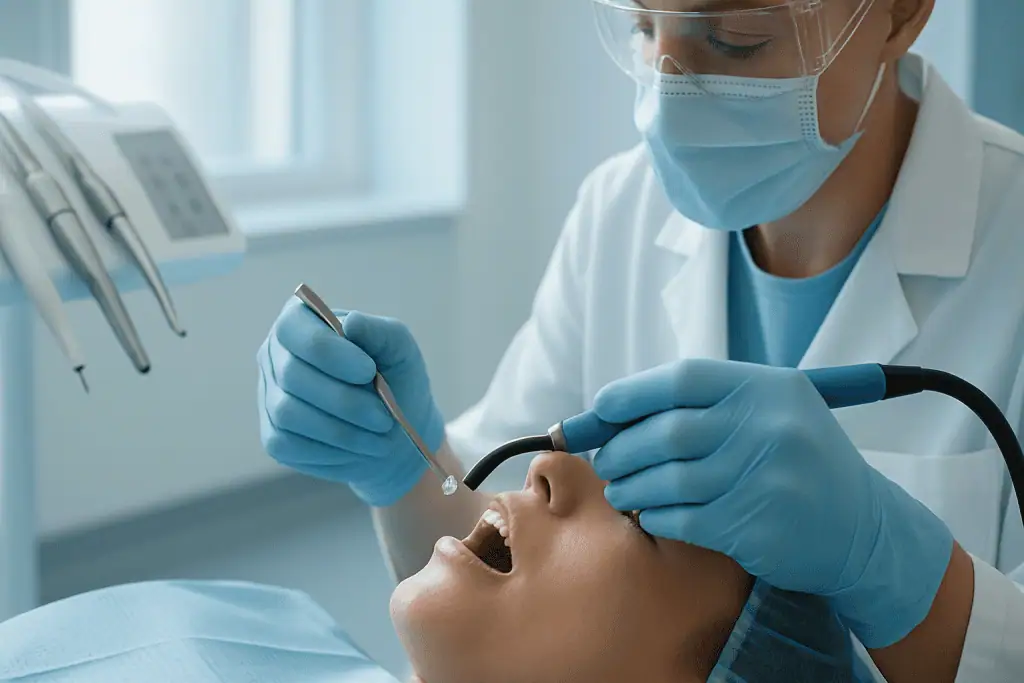
Dental crystals are small decorative gems bonded to the surface of a tooth to enhance the smile without drilling or damaging the enamel. At Acibadem in Turkey, they are applied by a dentist using dental adhesive after the tooth is cleaned and prepared, and they can usually be removed later with minimal effect on the tooth surface.
Choosing Dental Crystals: A Small Detail With a Visible Effect
For many people, a confident smile is not only about straight, healthy, well-colored teeth. It is also about personal expression. Dental crystals, sometimes called tooth gems or dental gems, are small decorative crystals or gems that are bonded to the surface of a tooth to add a subtle sparkle when you smile, speak, or laugh. The effect can be discreet or more noticeable depending on the size, color, and placement of the crystal.
If you are considering a dental crystal, it is natural to have practical questions. Will it hurt? Will it damage the enamel? Can it be removed later? Will it affect eating, brushing, or dental health? These questions matter because even a cosmetic choice should be planned with the same care used for any procedure involving the teeth. The tooth surface is living tissue supported by enamel, dentin, nerves, gums, and bone. A decorative accessory should never compromise oral health.
When dental crystals are placed by a qualified dentist using appropriate bonding materials, the procedure is typically quick, painless, and minimally invasive. In most cases, no drilling is needed. The crystal is attached to the enamel surface with a dental adhesive similar to the bonding systems used in restorative dentistry. It can often be removed later by a dentist, followed by polishing of the tooth surface.
The safest approach begins with a professional examination. A dentist checks that the selected tooth is healthy, the enamel is suitable for bonding, the gums are not inflamed, and the crystal will not interfere with the bite. This is especially important for international patients who may be combining aesthetic dental services with other treatments during a visit abroad. At Acibadem, dental crystal placement is approached as an elective cosmetic dental service within a broader commitment to oral health, hygiene, patient safety, and individualized planning.
What Are Dental Crystals?
Dental crystals are small decorative pieces, usually made from crystal, glass, or other dental-safe ornamental materials, that are bonded onto the visible surface of a tooth. They are most often placed on an upper front tooth, where they catch the light naturally without affecting chewing. The design may be clear, colored, metallic-looking, or shaped, depending on the patient’s preference and the material selected.
The key difference between professionally placed dental crystals and non-professional tooth jewelry is the method of application. A dentist bonds the crystal to the enamel using dental materials intended for the mouth. The tooth is cleaned, prepared with surface-conditioning agents, and the crystal is fixed with an adhesive that hardens under a curing light. The process does not usually require anesthesia because it does not involve cutting into the tooth or touching the nerve.
Dental crystals are considered a cosmetic dental enhancement rather than a medical treatment. Their purpose is to change the appearance of the smile, not to treat disease. However, the procedure still requires clinical judgment. A dentist must choose a location that is aesthetically pleasing, hygienic, and safe for the bite. A crystal placed too close to the gumline may be harder to clean. A crystal placed on a tooth that contacts the lower teeth during biting may loosen or cause irritation. A crystal placed on weak enamel, an untreated cavity, or an existing restoration may not bond well or may create avoidable risk.
In most cases, dental crystals are reversible. A dentist can remove the gem using dental instruments and then polish the enamel. The tooth surface may feel smooth again after removal, although the exact result depends on the condition of the enamel, how long the crystal was worn, the bonding material used, and whether the patient maintained good oral hygiene during that time. Professional placement and removal are important to minimize enamel roughness, discoloration around the adhesive, or gum irritation.
Patients should avoid do-it-yourself kits or non-dental application methods. Household glues, nail adhesives, or craft materials are not designed for the oral environment. They may contain substances unsuitable for the mouth, may damage enamel, or may create a choking hazard if the gem detaches. A dental clinic can provide a safer pathway by using appropriate materials and by assessing whether the tooth is suitable before placement.
Who May Consider Dental Crystals?
Dental crystals may be considered by adults and, in some cases, older adolescents with appropriate parental consent, who want a decorative enhancement to the smile without tooth reshaping or permanent alteration. The best candidates are patients with healthy teeth and gums, good oral hygiene, and realistic expectations about how the crystal will look and how long it may stay in place.
Many patients choose dental crystals before a special occasion, such as a celebration, photo session, wedding, performance, or important social event. Others see them as a form of personal style, similar to jewelry or makeup, but placed on the tooth. The decision is usually elective and aesthetic. Because the change is small but visible, careful planning of size and position matters. A very small crystal may be elegant and subtle; a larger or more reflective design may create a bolder appearance.
Before placing a dental crystal, the dentist examines the mouth. This may include a visual inspection, gum assessment, evaluation of the bite, and discussion of the patient’s dental history. If there is tooth sensitivity, enamel cracks, active cavities, gum inflammation, plaque accumulation, or existing restorations on the intended tooth, the dentist may recommend treating those issues first or selecting another tooth. In some cases, dental X-rays may be used if the dentist suspects an underlying dental problem, although imaging is not always needed for a simple cosmetic crystal placement.
Patients who grind or clench their teeth may need extra evaluation. Bruxism can place repeated force on the crystal and increase the chance of detachment. People who play contact sports, chew on hard objects, bite their nails, or use their teeth to open packages may also be at higher risk of loosening the gem. Patients with high decay risk or difficulty maintaining oral hygiene should discuss whether a dental crystal is appropriate, because plaque can collect around any bonded object if brushing is not meticulous.
Some patients seek dental crystals after orthodontic treatment, whitening, cosmetic bonding, or veneers. Timing is important. If a patient plans teeth whitening, it is usually preferable to whiten first and place the crystal afterward. If a patient has veneers or crowns, bonding behavior may differ from natural enamel, and the dentist will determine whether attachment is advisable. A dental crystal should not be placed in a way that compromises an existing restoration.
Indications and Smile Goals Addressed by Dental Crystals
Dental crystals address aesthetic goals rather than medical conditions. They are intended for patients who want a temporary or semi-permanent decorative element on the tooth surface. The most common indication is smile personalization: adding a small point of brightness or color that becomes visible during natural facial expression.
For some patients, the appeal is minimalism. A clear crystal on a lateral incisor or canine may create a subtle sparkle without changing the overall character of the smile. For others, the goal is a more fashion-forward look, using a colored gem or a more noticeable design. The dentist helps match the size and position to the patient’s tooth shape, smile line, lip movement, and overall dental aesthetics.
Dental crystals may also be considered when a patient wants a reversible alternative to more permanent cosmetic changes. Unlike veneers, crowns, enameloplasty, or tooth reshaping, a dental crystal does not usually require removal of tooth structure. It is not a substitute for treating discoloration, misalignment, cavities, chipped teeth, or gum disease, but it can be an accessory once the mouth is healthy.
There are also situations where dental crystals are not recommended, or should be postponed. These include untreated cavities, visible plaque or calculus around the intended tooth, active gum disease, severe enamel erosion, significant tooth sensitivity, unstable restorations, poor oral hygiene, or a bite pattern that would repeatedly strike the crystal. Patients with allergies or sensitivities to dental materials should inform the dentist during consultation so that suitable materials can be selected.
In professional dental care, the indication is not only “the patient wants a tooth gem.” The appropriate indication is a patient with a healthy mouth, a suitable tooth surface, a clear aesthetic preference, and an understanding of maintenance and removal. This is what helps keep the procedure simple, safe, and satisfying.
How Dental Crystal Placement Is Performed
Dental crystal placement is usually completed in a single dental visit. The appointment is generally brief, but it should not feel rushed. A careful dentist will take time to evaluate oral health, discuss placement options, explain aftercare, and confirm that the patient understands the temporary or semi-permanent nature of the result.
Consultation and Smile Assessment
The process begins with a consultation. The dentist asks what kind of look the patient wants: subtle, bright, colorful, symmetrical, or distinctive. The patient may be shown different crystal sizes or designs. The dentist then evaluates the teeth and gums, paying attention to enamel quality, tooth position, smile line, and bite. The selected tooth should be easy to clean and unlikely to contact opposing teeth in a way that could dislodge the crystal.
If the patient has dental concerns such as sensitivity, decay, gum bleeding, or a loose filling, those issues may need to be addressed before cosmetic placement. This is not to delay the aesthetic goal unnecessarily, but to protect the tooth and improve the durability of the bonding. Dental crystals are best placed on a clean, healthy enamel surface.
Preparation of the Tooth
Once the tooth and crystal are selected, the tooth surface is cleaned. This may involve polishing away plaque or surface debris. The area is then isolated to keep it dry, because saliva can interfere with bonding. Cotton rolls, suction, and other dental isolation methods may be used. In many cases, anesthesia is not needed because the procedure does not involve drilling or cutting.
The enamel surface is prepared using dental conditioning materials. This creates a microscopic surface texture that helps the adhesive bond to the tooth. The process is similar in concept to bonding used for small dental restorations or orthodontic brackets. It should be controlled and limited to the area where the crystal will be placed.
Bonding the Crystal
A small amount of dental adhesive or composite resin is applied to the prepared area. The crystal is positioned carefully with dental instruments. Placement is important because even a small decorative element can look different depending on its angle, distance from the gumline, and relationship to neighboring teeth. Once the dentist and patient are satisfied with the position, the adhesive is hardened, often using a dental curing light.
After curing, the dentist checks that the crystal is secure and that there are no sharp edges or excess bonding material. Any extra resin can be smoothed or polished. The patient is asked to close and move the teeth gently so the dentist can confirm that the crystal does not interfere with the bite. If it does, the position may need adjustment or another tooth may be more suitable.
Technology Used During the Procedure
Dental crystal placement typically uses familiar technologies from modern adhesive dentistry. These may include magnification for precise visualization, professional polishing instruments, moisture-control tools, dental bonding systems, tooth-colored composite materials, and curing lights that harden the adhesive. The purpose of these technologies is not to make the procedure complex; it is to make a small cosmetic detail safer, cleaner, and more predictable.
In some cases, intraoral photography may be used to document placement or help the patient decide on the ideal position. Digital smile assessment may also support planning when dental crystals are part of a broader cosmetic dental visit. For patients who are also considering whitening, orthodontic refinement, bonding, or veneers, dentists may coordinate the sequence of care so that the crystal is placed at the appropriate time.
Typical Duration and Comfort
The active placement of a dental crystal is usually quick, and many appointments can be completed in a short visit. The exact duration depends on whether cleaning, examination, photography, or other dental services are performed at the same appointment. Patients usually remain awake and comfortable throughout. Because the tooth is not drilled, the experience is generally painless. Some patients may notice a slightly raised feeling on the tooth at first, which often becomes less noticeable as the tongue adapts.
Recovery and Immediate Aftercare
There is usually no medical downtime after dental crystal placement. Patients can return to daily activities immediately. However, the dentist may advise avoiding very hard, sticky, or chewy foods for a short period after placement to allow the bond to stabilize. Patients should avoid touching the crystal repeatedly with the tongue or fingers, as this can place unnecessary force on the adhesive.
Oral hygiene remains essential. Patients should brush gently but thoroughly around the crystal and floss normally between the teeth. An electric toothbrush may be used if recommended by the dentist, but aggressive brushing directly over the gem should be avoided. Regular dental checkups help ensure that plaque is not accumulating around the crystal and that the tooth surface remains healthy.
If the crystal loosens or falls off, patients should not attempt to reattach it with non-dental glue. They should contact a dentist for evaluation. If the patient wants the crystal removed, professional removal is recommended. The dentist can detach the crystal, smooth any remaining adhesive, and polish the enamel.
Why Acting Early Matters and the Risks of Delay
Because dental crystals are elective, “acting early” has a different meaning than it would for a disease requiring urgent treatment. There is usually no medical harm in waiting to place a dental crystal. In fact, if the mouth is not healthy, postponing placement is often the safest choice. The important point is to seek professional dental evaluation before applying any tooth jewelry.
Delay becomes a concern when a patient tries to manage the process outside a dental setting. Non-professional placement may involve unsafe adhesives, poor positioning, rough edges, or inadequate cleaning of the tooth before bonding. These factors can increase the risk of enamel irritation, plaque retention, gum inflammation, discoloration around the gem, or accidental swallowing or inhalation if the object detaches. A tooth gem that is repeatedly pressed by the bite may also loosen quickly or damage adjacent soft tissues.
Another reason to consult early is to identify dental problems before cosmetic placement. A patient may not realize that the intended tooth has early decay, enamel erosion, or gum inflammation. Placing a crystal over or near an unhealthy area can make cleaning more difficult and may delay appropriate treatment. A short dental examination can prevent a small cosmetic choice from becoming a dental complication.
If a patient wants a dental crystal for an event, early planning also helps. Teeth whitening, cleaning, gum treatment, or restorative care may need to be completed first. Bonding a crystal immediately before a major occasion may be possible, but it is better to allow time for consultation, material selection, and any necessary dental preparation. For international patients, coordination is especially important when travel dates, other medical appointments, and recovery schedules must be considered together.
Benefits of Dental Crystal Placement
When performed by a dentist on a suitable tooth, dental crystal placement can offer several practical and aesthetic advantages.
| Benefit | What It Means for You |
|---|---|
| Minimally invasive cosmetic enhancement | The crystal is usually bonded to the enamel surface without drilling or reshaping the tooth. |
| Quick appointment | Many patients can complete placement in a single visit, often with little interruption to daily plans. |
| Typically painless | Anesthesia is usually not required because the procedure does not enter the deeper tooth structure. |
| Personalized smile detail | The size, color, and location can be selected to match your preferred level of visibility and style. |
| Often reversible | A dentist can usually remove the crystal and polish the tooth surface when you no longer want it. |
| Professional oral health screening | The appointment allows the dentist to confirm that the tooth and gums are healthy before placement. |
Recovery Timeline After Dental Crystal Placement
Most patients return to normal activities immediately, but the first days are important for comfort, hygiene, and protecting the bond.
| Time Period | What Patients Can Expect |
|---|---|
| Day 1 | The tooth may feel slightly different to the tongue. Patients are usually advised to avoid very hard, sticky, or chewy foods and not to touch the crystal repeatedly. |
| First Week | The crystal should feel more familiar. Careful brushing around the area helps prevent plaque buildup. Any sharpness, looseness, or irritation should be checked by a dentist. |
| First Month | Most patients have adapted to the feel of the crystal. Good hygiene and routine dental care remain important to protect the enamel and gums. |
| Longer Term | The crystal may remain in place for a variable period depending on bite forces, hygiene, material quality, and habits. Professional removal is recommended when desired. |
What Influences a Good Result?
A good result with dental crystals depends on more than the sparkle of the gem. It depends on appropriate patient selection, careful placement, proper materials, and ongoing oral hygiene. The most important factor is the health of the tooth. Enamel that is clean, intact, and free from decay provides a better surface for bonding. Healthy gums also reduce the risk of irritation and make the crystal easier to maintain.
Placement location is another major factor. A crystal placed on an upper front tooth often avoids heavy chewing forces, but every bite is different. Some patients have deep bites, edge-to-edge bites, or tooth positions that bring the upper and lower teeth into close contact. If the opposing tooth repeatedly strikes the crystal, the gem may detach or cause discomfort. A dentist evaluates these relationships before bonding.
The quality of bonding technique also matters. The tooth must be properly cleaned, isolated from saliva, conditioned, and cured. Too little adhesive may reduce retention; too much may create a bulky area that traps plaque or feels rough. The dentist’s ability to place and polish the crystal precisely can affect both appearance and comfort.
Patient habits play a practical role. Biting hard foods directly with the crystal-bearing tooth, chewing ice, using toothpicks aggressively, nail biting, or clenching may shorten the life of the bond. Smoking and poor oral hygiene may contribute to staining around the adhesive or gum irritation. Patients who maintain regular brushing, flossing, and dental checkups are more likely to keep the area healthy.
Expectations should also be realistic. Dental crystals are not permanent restorations. They may last for varying periods, and they may detach. Detachment does not necessarily mean the procedure was performed incorrectly; the mouth is a moist, active environment exposed to constant forces from speaking, eating, and cleaning. If a crystal falls off, the tooth should be examined and polished if needed. Reapplication may be possible if the enamel remains suitable.
Finally, the overall smile context matters. A crystal placed on stained teeth, inflamed gums, or uneven restorations may draw attention to issues the patient would rather minimize. In some cases, a professional cleaning or whitening treatment before placement can create a more refined result. The dentist may recommend sequencing cosmetic treatments so the final appearance feels balanced rather than improvised.
Why International Patients Choose Acibadem for Dental Crystals
For international patients, even a small cosmetic dental procedure can raise larger questions about safety, communication, scheduling, and clinical standards. Patients traveling from the United States, Europe, the Middle East, and other regions often want care that is efficient without feeling transactional. They may also want dental services coordinated around medical appointments, family travel, or a short stay in Turkey.
Acibadem approaches dental crystal placement within a professional healthcare environment where cosmetic preference and oral health are considered together. The procedure may be simple, but the evaluation should still be careful. Dentists assess the suitability of the tooth, discuss design and placement, and explain maintenance and removal. If a patient has untreated dental issues, the care plan can be adjusted so that oral health comes first.
Acibadem’s JCI-accredited hospitals and clinics operate with structured quality and safety processes that are particularly important for patients seeking care away from home. For dental and medical services alike, international patients benefit from organized pathways, clear communication, and access to experienced physicians and dental professionals. When needed, care can be coordinated with other specialties, such as periodontology for gum health, restorative dentistry for fillings or bonding, orthodontics for alignment concerns, or aesthetic dentistry for broader smile planning.
Technology supports this approach. Modern diagnostic tools, intraoral imaging, professional hygiene systems, adhesive dentistry materials, and curing technologies help clinicians plan and perform the procedure with precision. For patients considering additional dental treatments, digital assessment and clinical photography can help clarify options and sequence care. The goal is not to make a decorative procedure more complicated than it needs to be, but to ensure that even a small aesthetic choice is made responsibly.
Personalized treatment planning is especially valuable for dental crystals because the ideal result is subjective. Some patients want the gem to be nearly invisible until it catches the light. Others want a clearer fashion statement. The dentist can advise on tooth selection, crystal size, and placement based on the patient’s smile line, tooth shape, lip movement, oral hygiene, and bite. This individual planning helps the result look intentional and reduces avoidable problems.
Acibadem International provides dedicated support for patients traveling from abroad, with services in more than 20 languages. Assistance may include appointment coordination, medical document sharing, interpretation, travel-related guidance, and scheduling support across departments. For a patient arranging dental crystal placement alongside a checkup, whitening, or other treatment, this coordination can make the experience easier to manage.
Patients also value the ability to request a second opinion or consultation before deciding. A dental crystal is not urgent, and a thoughtful discussion can help determine whether it is appropriate now, should follow another dental treatment, or should be avoided because of enamel, gum, or bite concerns. This measured approach is often the safest and most satisfying path for cosmetic dental decisions.
Taking the Next Step
Dental crystals can be a simple, elegant way to personalize your smile when they are placed on a healthy tooth by a qualified dentist. The procedure is usually quick, painless, and does not require drilling, but it still deserves professional care. Proper assessment, safe materials, accurate placement, and clear aftercare help protect the enamel and gums while achieving the desired aesthetic effect.
If you are considering a dental crystal, the best first step is a dental consultation. Your dentist can evaluate your oral health, discuss your style preferences, advise on the most suitable tooth and crystal size, and explain how to care for it afterward. If you are traveling to Turkey for dental or medical care, Acibadem International can help coordinate your appointment and provide information in your preferred language.
You may request a consultation or second opinion to learn whether dental crystal placement is appropriate for you and how it can be planned within your broader dental care.
This information is general and is not a substitute for professional medical or dental advice. A qualified dentist should evaluate your individual oral health before any procedure.
Preparation
- A dentist examines the teeth and gums to confirm they are healthy enough for bonding. The selected tooth is cleaned and dried before the crystal is attached with dental adhesive. Patients should discuss crystal size, placement, and oral hygiene expectations beforehand.
Aftercare
- Avoid hard or sticky foods for the first 24 hours to protect the bond. Brush and floss normally but gently around the crystal, and attend routine dental check-ups. If the crystal loosens or causes irritation, contact the dental clinic rather than removing it yourself.
Turkey vs UK, Germany & USA
Dental crystals are a cosmetic smile enhancement, and the overall cost depends on the dentist, materials, clinic setting, and whether additional dental care is needed. Comparing destinations can help patients understand differences in access, logistics, and what is usually included in the treatment journey.
The experience and final cost of dental crystals can vary by country due to clinic pricing models, dentist expertise, appointment availability, and travel arrangements.
| Factor | Turkey | UK | Germany | USA |
|---|---|---|---|---|
| Price drivers | Often structured as private cosmetic dentistry, with costs influenced by clinic location, crystal type, and whether other dental treatments are combined. | Usually private cosmetic care, with fees shaped by practice location, dentist experience, and material choice. | Generally offered in private dental settings, with costs affected by clinic standards, materials, and any preparatory oral care. | Typically private cosmetic dentistry, with fees varying widely by city, practice profile, and dentist expertise. |
| Dentist and clinic factors | International clinics may offer cosmetic dentistry teams, multilingual coordinators, and package-based planning. | Care is commonly delivered in private dental practices, with strong emphasis on dentist credentials and local access. | Clinics may focus on detailed planning, regulated dental standards, and structured follow-up processes. | Practices may range from boutique cosmetic clinics to large dental centers, with cost linked to provider reputation and setting. |
| Accreditation and quality | Some hospitals and dental units serve international patients and may operate under international quality frameworks such as JCI where applicable. | Quality is guided by national professional regulation and clinic governance standards. | Care is shaped by national dental regulation, hygiene standards, and clinical documentation practices. | Quality oversight depends on state regulation, professional licensing, and individual clinic protocols. |
| Waiting times | Private cosmetic appointments may be arranged with flexible scheduling for international patients. | Private appointments may be available sooner than public pathways, but timing depends on the practice. | Private dental appointments are usually scheduled directly with the clinic, subject to local availability. | Availability varies by region and clinic demand, especially in popular cosmetic dentistry practices. |
| Travel and language logistics | International patient services may help with airport transfers, accommodation guidance, and interpretation. | Convenient for local patients; international visitors usually arrange travel and accommodation independently. | International patients may need to confirm language support and travel logistics before booking. | Travel planning can be more complex for overseas patients, with language support depending on the clinic. |
| Package inclusions | Packages may include consultation, dental assessment, crystal application, aftercare instructions, and coordinator support. | Quotes commonly include the clinical visit and application, while extras are often itemised separately. | Clinics may provide detailed treatment plans, with separate pricing for hygiene care or additional cosmetic treatments. | Quotes often separate consultation, procedure, materials, and any follow-up or maintenance visits. |
What affects your final cost
- Choice and quality of the crystal or decorative material.
- Whether one crystal, a small design, or a wider cosmetic plan is requested.
- The condition of the tooth surface and the need for cleaning or dental treatment first.
- Dentist experience, clinic location, and quality standards.
- Whether removal, replacement, or follow-up care is included.
- Travel, accommodation, translation, and international patient support needs.
Compare your options
Dental crystals can be applied in different ways depending on the tooth surface, aesthetic goal, and oral health status. Suitability is decided by a specialist after a dental assessment.
| Option | What it is | Typical use | Key considerations |
|---|---|---|---|
| Dentist-bonded dental crystal | A small decorative crystal is attached to the enamel using dental adhesive without drilling. | For patients who want a subtle decorative accent on a visible tooth. | Usually quick and painless when the tooth is healthy; professional placement helps reduce enamel or gum irritation risks. |
| Decorative crystal design | More than one crystal or a small pattern is bonded by the dentist. | For patients seeking a more noticeable cosmetic effect. | Placement should be planned to avoid bite interference and areas that are difficult to clean. |
| Crystal application after dental cleaning | The tooth surface is professionally cleaned before bonding the crystal. | Useful when plaque, staining, or surface deposits could affect bonding. | May improve adhesion and appearance, but the dentist must confirm the enamel is suitable. |
| Professional removal or replacement | The crystal is removed or replaced by a dentist, followed by polishing if needed. | For patients who want to change the design or return to the natural tooth appearance. | Attempting removal at home can damage enamel or irritate gums; professional care is recommended. |
| Alternative cosmetic dental treatments | Options such as whitening, composite bonding, or veneers may be considered instead of or alongside a crystal. | For patients who want broader changes to tooth colour, shape, or symmetry. | These treatments have different levels of preparation, maintenance, and reversibility, so a dentist should guide the choice. |
Trusted care for international patients
General information only — not medical or financial advice. Final costs depend on the factors above and your individual case; request a free, personalised quote.
Doctors Performing This Treatment

Assoc. Prof. Dr. Ferit Bayram
Oral & Dental HealthDr. Ali Riza Özdurmuş
Oral & Dental Health
Dr. Arzu Morçiçek
Oral & Dental Health
Dr. Bedii Ender Topçu
Oral & Dental HealthDr. Begüm Öykü Kesim
Oral & Dental Health
Dr. Ceyda Sabancı
Oral & Dental HealthDr. Deniz Turgut
Oral & Dental Health
Dr. Destina Suay Sarı
Oral & Dental Health
Dr. Emre Çengelli
Oral Dental & Maxillofacial Surgery
Dr. Eylül Türsen
Oral & Dental HealthDr. Ezgi Gülüm
Oral Dental & Maxillofacial Surgery
Dr. Halime Bayram
Oral & Dental Health
Dr. Havva Gölalan
Oral & Dental Health
Dr. Helin Kuşsever Topçu
Oral & Dental Health
Dr. Melike Zeynep Çapoğlu
Oral & Dental Health
Dr. Merve Ağartıoğlu
Oral & Dental Health
Dr. Metin Kınacı
Oral & Dental Health
Dr. Mücahit Güner
Oral & Dental Health
Dr. Pelin Açık
Oral & Dental Health
Dr. Sebiha Nihal Yılmaz
Oral Dental & Maxillofacial SurgeryDr. Seda Saygılı Özaydın
Oral & Dental Health
Dr. Uğur Önder
Oral & Dental Health
Dr. Zeynep Ekin Kılınç
Oral & Dental Health
Dr. Çağla Su Doğangün Ayduk
Oral & Dental HealthMedical Units
Available at These Hospitals












Guides for This Treatment
Frequently Asked Questions
What affects the cost of dental crystals?
The cost is influenced by the type of crystal, the complexity of the design, the dentist’s experience, the clinic setting, and whether cleaning, dental treatment, removal, or replacement is needed. Travel and language support can also affect the overall budget for international patients.
How can I get a personalised quote?
You can request a free consultation and share photos of your smile, your preferred design, and any dental concerns. A dentist can then confirm whether the tooth surface is suitable and provide a personalised treatment plan and quote.
Is a dental crystal usually included in a package?
Some clinics may offer a package that includes consultation, application, aftercare instructions, and international patient coordination. Other clinics may list each service separately, so it is important to ask what is included before booking.
Will insurance cover dental crystals?
Dental crystals are usually considered cosmetic, so they are commonly paid for privately. Coverage rules vary by policy and country, so patients should check directly with their insurer if they plan to claim any related costs.
Can the crystal be removed later?
In many cases, a dentist can remove the crystal and polish the tooth surface. Removal should be performed professionally, as home removal may damage enamel or irritate the gums.
Do I need other dental treatment before having a crystal applied?
A dentist may recommend cleaning or treatment for decay, gum inflammation, or enamel problems before applying a crystal. This protects oral health and may affect the final treatment plan and cost.