Eye Examination for Cataract Diagnosis and Care

A cataract examination combines a discussion of symptoms with vision testing and a detailed inspection of the eye. Pupil dilation and slit-lamp examination allow the specialist to examine the lens closely.
Key Takeaways
- A cataract examination combines a discussion of symptoms with vision testing and a detailed inspection of the eye.
- Pupil dilation and slit-lamp examination allow the specialist to examine the lens closely.
- Cataracts do not always require immediate surgery; the decision depends mainly on how vision affects everyday life.
- Additional measurements are needed if cataract surgery is being considered, including calculations for the replacement lens.
- Sudden vision loss, eye pain, marked redness, or flashes and a new shower of floaters require urgent eye assessment.
An eye examination for cataract is a comprehensive assessment that helps an eye specialist identify clouding of the natural lens, measure its effect on vision, and rule out other eye conditions. Most tests are painless and can usually be completed during an outpatient appointment.
Overview: What Is an Eye Examination for Cataract?
An eye examination for cataract is a set of tests performed by an ophthalmologist or optometrist to assess whether the eye’s natural lens has become cloudy. The lens sits behind the coloured part of the eye and normally focuses light onto the retina, the light-sensitive tissue at the back of the eye. When a cataract develops, light may be scattered or blocked, making vision less clear.
The appointment does more than confirm the presence of a cataract. It helps determine its type, location and severity, and whether it is likely to explain a person’s visual symptoms. The clinician also checks for other conditions that may affect sight, such as glaucoma, macular degeneration, diabetic eye disease or problems with the cornea.
Cataracts are common with ageing, but they can also occur after eye injury, inflammation, certain medicines, diabetes, radiation exposure or eye surgery. A careful examination provides an individual basis for deciding whether observation, updated glasses or cataract surgery is the most appropriate next step.
Symptoms That May Prompt a Cataract Check
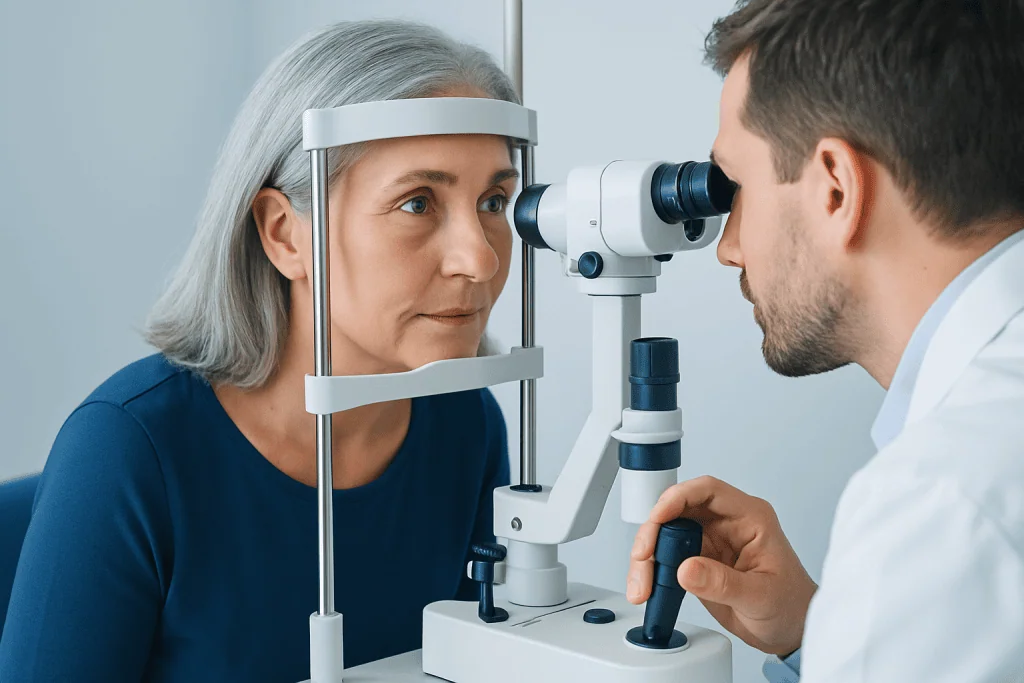
A cataract often develops gradually, so changes in vision may initially be subtle. People may notice blurred, dim or hazy vision, colours that seem less bright, or increasing difficulty reading in low light. Some find that their glasses prescription appears to change more often than expected.
Glare is another common concern. Headlights, bright sunlight and lamps may appear overly bright or surrounded by halos, making night driving uncomfortable. Double vision in one eye can also occur. These symptoms can have several possible causes, which is why an eye examination is important rather than assuming that cataract is responsible.
Vision changes should be discussed with an eye care professional, particularly when they interfere with driving, work, hobbies, reading, recognising faces or safe movement around the home. Cataracts usually do not cause pain, redness or sudden loss of vision. Such symptoms may point to another eye problem and should be assessed promptly.
- Blurred, cloudy or faded vision
- Greater sensitivity to glare or bright lights
- Difficulty seeing at night or in dim rooms
- Halos around lights or reduced contrast
- Frequent changes in glasses prescription
What Happens During the Eye Examination?
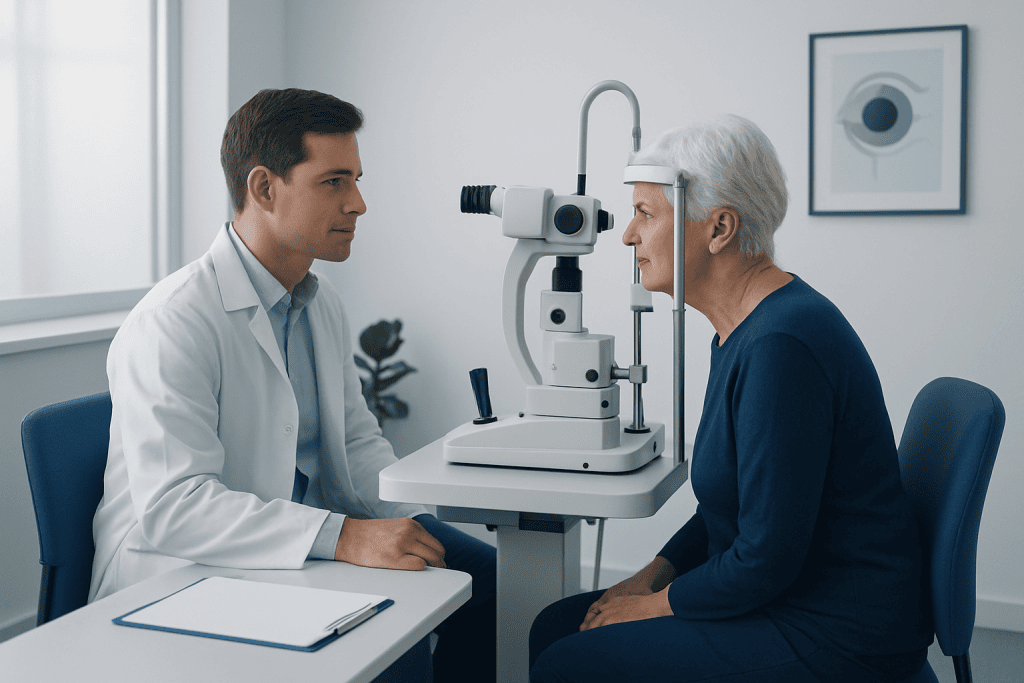
The visit typically starts with a discussion of symptoms, medical conditions, medicines, previous eye injuries or surgery, and family history of eye disease. The clinician may ask how vision affects daily activities, as this is central to decisions about cataract treatment. It is helpful for the patient to mention any difficulties with night driving, work tasks or reading.
A visual acuity test measures how clearly each eye sees at a distance, usually with a letter chart. Near-vision testing may also be used. Refraction testing then identifies whether glasses or contact lens correction could improve vision. In some early cataracts, an updated prescription can improve visual function for a time.
The specialist commonly measures eye pressure using tonometry. This is an important part of a comprehensive eye examination because raised pressure may indicate glaucoma, which requires its own evaluation and management. The front surface of the eye, eyelids and cornea are also examined for problems that could contribute to blurred vision.
Most tests are quick and non-invasive. Patients should feel comfortable asking what each test involves, why it is being done and what the results mean. If eye drops are planned, the clinic can advise whether someone should arrange transport home.
Key Tests Used to Diagnose Cataracts
The main diagnostic tool is a slit-lamp examination. A slit lamp is a microscope with a narrow, bright beam of light that allows the ophthalmologist to view the cornea, iris and lens in detail. It can show where clouding is located within the lens and help distinguish cataracts from other causes of reduced vision.
For a more complete assessment, dilating drops may be placed in the eyes. These widen the pupils so the clinician can inspect the lens more thoroughly and examine the retina and optic nerve. The drops may sting briefly. They can cause temporary blurred near vision and light sensitivity for several hours, so sunglasses can be useful afterward and driving may not be advisable until vision has returned to normal.
Other tests may be added when needed. Retinal imaging or optical coherence tomography can provide detailed views of the macula and optic nerve, especially if the cataract does not fully account for the visual symptoms. A visual field test may be used when glaucoma or a neurological cause of vision loss is a concern.
These tests also help establish whether another condition could limit vision after cataract removal. This information supports realistic planning and helps the patient and clinician make decisions together.
Assessment Before Cataract Surgery
If a cataract is affecting quality of life and surgery is being considered, the eye specialist performs additional measurements. Biometry measures the length and shape of the eye and the curvature of the cornea. These calculations help select the power of the intraocular lens, the clear artificial lens placed during cataract surgery.
Corneal measurements may identify astigmatism, an uneven corneal curve that can blur vision. Depending on the person’s eyes, goals and overall suitability, the surgeon may discuss lens options designed for distance vision, a range of distances or astigmatism correction. No lens choice can guarantee complete freedom from glasses, and the best option is individual.
The preoperative review also considers dry eye, eyelid conditions, retinal disease, glaucoma, diabetes and prior refractive laser surgery. These factors can influence measurements, surgical planning and visual expectations. Some people may need the ocular surface treated or measurements repeated before a final lens calculation is made.
Cataract surgery is generally considered when the cataract limits activities that matter to the patient or prevents adequate assessment or treatment of another eye condition. It is not based on the appearance of the cataract alone, and there is usually no need to wait until a cataract is described as “mature.”
Understanding Results and Choosing the Next Step
After the examination, the clinician explains whether a cataract is present and how much it is likely to contribute to symptoms. Cataracts may be described according to the part of the lens involved, such as nuclear, cortical or posterior subcapsular cataracts. The description helps the specialist document the finding, but the practical question is how vision affects the individual person.
When symptoms are mild, monitoring may be appropriate. Better lighting, anti-glare sunglasses, magnifiers and an updated glasses prescription may make day-to-day tasks easier. Regular eye examinations remain important because vision and eye health can change over time.
When vision problems become disruptive, surgery is the only treatment that removes the cloudy lens. The operation is commonly performed as an outpatient procedure, with an artificial intraocular lens inserted in its place. The eye surgeon will discuss the expected recovery, benefits, limitations and possible risks in relation to the patient’s health and eye findings.
At Acibadem International, multidisciplinary eye specialists in JCI-accredited hospitals assess cataracts and discuss diagnostic and treatment options with international patients. A personalised consultation is important because the right timing and lens plan depend on the individual eye and visual needs.
Preparing for the Appointment and When to Seek Urgent Care
Before an eye examination, patients can write down their symptoms, including when they began, whether they are worsening and which situations are most difficult. Bringing current glasses, a list of medicines and information about previous eye treatment can be helpful. People with diabetes, autoimmune disease or a history of eye trauma should mention this to the clinician.
If dilating drops are likely, arranging a companion or alternative transport may be sensible. Patients should ask whether they can drive after the visit, as this depends on the drops used and their vision. Contact lens wearers may be given specific instructions before certain measurements, particularly when surgery planning is underway.
Routine cataract symptoms can be assessed through a scheduled eye appointment. However, urgent medical assessment is needed for sudden or severe vision loss, new eye pain, significant redness, a curtain-like shadow across vision, new flashes of light, or a sudden increase in floaters. These symptoms are not typical of an uncomplicated cataract and may require timely treatment.
Routine eye examinations are also valuable for people with diabetes, glaucoma risk, a family history of serious eye disease or increasing age. They can detect cataracts and other eye conditions before symptoms significantly affect everyday activities.
Frequently asked questions
How is a cataract diagnosed?
A cataract is usually diagnosed during a comprehensive eye examination. The clinician checks vision, examines the lens with a slit lamp and often dilates the pupils to inspect the lens, retina and optic nerve in greater detail. Other tests may be used to rule out additional causes of reduced vision.
Is a cataract eye examination painful?
Most cataract tests are painless and non-invasive. Dilating drops can briefly sting, and bright examination lights may feel uncomfortable if the eyes are sensitive. The drops can cause temporary blurred vision and sensitivity to light afterward.
Do dilating eye drops affect driving?
Dilating drops can blur near vision and make eyes more sensitive to light for several hours. Because this may affect safe driving, patients should ask the clinic in advance and consider arranging transport home. The effect varies between individuals and types of drops.
Can an eye test show whether cataract surgery is needed?
Yes, the examination helps determine whether a cataract is likely to be causing symptoms and whether it is affecting daily life. Surgery is usually considered when vision problems interfere with important activities or when the cataract prevents management of another eye condition. The decision is made jointly by the patient and eye surgeon.
What tests are done before cataract surgery?
Before surgery, the eye team measures the eye’s length and corneal shape to calculate the power of the replacement intraocular lens. They also assess eye pressure, the cornea, retina and optic nerve, and review general health and previous eye procedures. These steps support safe planning and realistic visual expectations.
How often should someone with early cataracts have eye examinations?
The appropriate interval depends on symptoms, age, other eye conditions and the clinician’s findings. Many people with mild, stable cataracts are monitored at regular routine visits, while those with changing symptoms may need review sooner. The eye care professional can recommend a suitable follow-up schedule.
This article is for general information only and is not a substitute for professional medical advice. Please consult a qualified doctor about your individual situation.
Eye Examination in Turkey — costs, top hospitals & a free quote
JCI-accredited · board-certified surgeons · reply within 24h
Add us as a Preferred Source to see more of our trusted health content across Google Search, AI Overviews and Discover.

Ophthalmology
Comprehensive eye care from laser vision correction to retina, cornea and cataract surgery.
75 specialists in this unitRelated Treatments
More from the Health Library

Amblyopia Surgery: When Is an Operation Considered for Lazy Eye?

Diabetic Retinopathy Screening: Early Warning Signs and Treatment Choices
What Is an Eye Exam? Tests, Results, and When You Need One

Orbital Tumors: Symptoms, Imaging, and When Orbit Surgery Is Needed

Can You Wear Contacts After LASIK? What to Know