ERCP: Treating Bile Duct and Pancreatic Duct Problems

ERCP combines endoscopy with X-ray imaging to access the bile ducts and pancreatic duct through the mouth, stomach and small intestine. It is commonly used to treat bile duct stones, strictures, leaks, infections related to obstruction and selected pancreatic duct problems.
Key Takeaways
- ERCP combines endoscopy with X-ray imaging to access the bile ducts and pancreatic duct through the mouth, stomach and small intestine.
- It is commonly used to treat bile duct stones, strictures, leaks, infections related to obstruction and selected pancreatic duct problems.
- Modern ERCP is usually performed for treatment rather than diagnosis, because MRCP and endoscopic ultrasound can often provide imaging without entering the ducts.
- Potential risks include pancreatitis, bleeding, infection, perforation and reactions to sedation, so careful patient selection is important.
- After ERCP, patients should follow discharge instructions and seek medical advice for fever, worsening pain, vomiting, black stools or jaundice.
ERCP is a specialized endoscopic procedure used to diagnose and, more often, treat problems in the bile ducts and pancreatic duct. It can relieve blockages, remove stones, place stents and help manage leaks or narrowing without the need for open surgery in many cases.
Overview: What Is ERCP?
ERCP stands for endoscopic retrograde cholangiopancreatography. It is a procedure that allows a gastroenterologist to examine and treat the bile ducts and pancreatic duct. These small tubes carry bile from the liver and gallbladder, and digestive enzymes from the pancreas, into the first part of the small intestine, called the duodenum.
During ERCP, a flexible tube with a camera, called an endoscope, is passed through the mouth, down the esophagus and stomach, and into the duodenum. A tiny opening called the papilla is located there. Through this opening, the doctor can insert small instruments into the bile duct or pancreatic duct while using X-ray guidance and contrast dye to see the duct system.
Although ERCP can provide detailed images, it is now most often used as a treatment procedure. Non-invasive or less invasive tests such as magnetic resonance cholangiopancreatography, known as MRCP, and endoscopic ultrasound are often used first to confirm whether ERCP is needed. When a duct is blocked or narrowed, ERCP may relieve the problem during the same session.
Why ERCP Is Performed
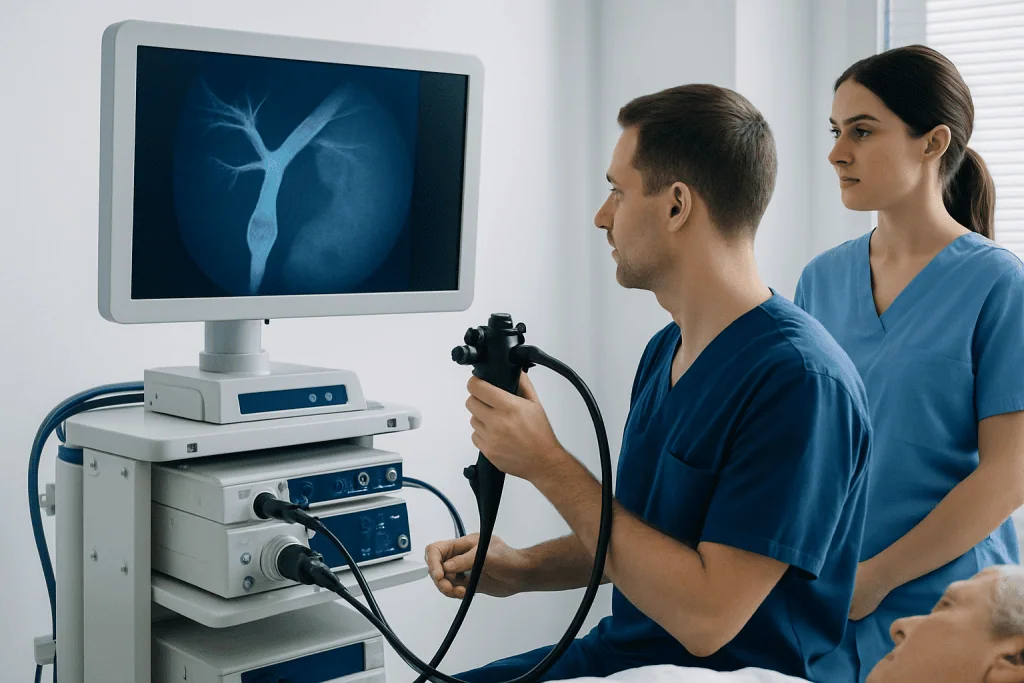
ERCP is recommended when a problem in the bile ducts or pancreatic duct needs direct treatment. One of the most common reasons is a stone that has moved from the gallbladder into the common bile duct. This can cause pain, jaundice, abnormal liver blood tests, infection of the bile ducts or inflammation of the pancreas.
ERCP may also be used when a duct has become narrowed, called a stricture. Narrowing may occur after surgery, due to inflammation, from chronic pancreatitis, or because of a tumor pressing on or growing into the duct. In these situations, ERCP can help drain bile or pancreatic fluid, collect samples when appropriate and place a stent to keep the duct open.
Common conditions managed with ERCP include:
- Common bile duct stones
- Bile duct infection related to obstruction, also called cholangitis
- Jaundice caused by blocked bile flow
- Bile leaks after gallbladder, liver or bile duct surgery
- Benign or malignant bile duct strictures
- Selected pancreatic duct stones, leaks or narrowings
The decision to perform ERCP depends on symptoms, blood test results, imaging findings and the patient’s overall health. The doctor balances the expected benefit against the possible risks before recommending the procedure.
How ERCP Works: Step by Step

Before ERCP, patients are usually asked not to eat or drink for several hours so the stomach is empty. The medical team reviews allergies, current medications, previous reactions to anesthesia or sedation, pregnancy status and medical conditions such as heart, lung, kidney or bleeding disorders. Blood thinners, diabetes medicines and certain supplements may need special instructions, but patients should not stop prescribed medicines unless their doctor advises it.
ERCP is typically performed in an endoscopy unit or hospital setting. Sedation or anesthesia is given to help the patient remain comfortable and still. The endoscope is gently guided through the upper digestive tract to the duodenum. The doctor identifies the papilla, passes a thin catheter into the duct opening and injects contrast dye so the ducts can be seen on X-ray images.
If treatment is needed, miniature instruments can be passed through the endoscope. The doctor may make a small cut in the muscle around the duct opening, known as a sphincterotomy, to help remove stones or improve drainage. Balloons and baskets can retrieve stones, and stents can be placed to bypass a narrowing or seal a leak.
The procedure time varies depending on the complexity of the condition. Afterward, patients are monitored while the sedation wears off. Many people go home the same day, but some need observation or admission, especially if there was an infection, significant blockage, complex treatment or other medical concerns.
What ERCP Can Treat
For bile duct stones, ERCP can often remove stones without making an external incision. After widening the duct opening when needed, the doctor may use a balloon or basket to pull stones into the intestine, where they pass naturally. If a stone is very large or difficult to remove, additional techniques may be required, and a temporary stent may be placed to maintain drainage until further treatment.
For strictures, ERCP can help by dilating the narrowed area and placing a plastic or metal stent. Stents are small tubes that keep the duct open and allow bile or pancreatic fluid to drain. Some stents are temporary and must be removed or exchanged later, while others are designed for longer-term drainage depending on the condition being treated.
For bile leaks, such as those that sometimes occur after gallbladder surgery or liver procedures, ERCP can reduce pressure in the bile duct and direct bile flow into the intestine. This helps the leak heal. A stent may be used for a period of time and removed once healing is confirmed.
In selected pancreatic duct problems, ERCP may be used to treat duct stones, leaks, or strictures, particularly in chronic pancreatitis or after injury. Pancreatic ERCP is technically demanding and is considered carefully, because manipulation of the pancreatic duct can increase the risk of post-procedure pancreatitis.
Benefits, Limitations and Possible Risks
The main benefit of ERCP is that it can diagnose and treat certain duct problems in one procedure. It can relieve obstruction, improve drainage, reduce infection risk when bile is blocked and, in many cases, avoid more invasive surgery. For urgent bile duct infection caused by obstruction, ERCP can be an important part of timely care.
ERCP also has limitations. It is not the preferred first test for many patients with suspected bile or pancreatic duct disease, because MRCP, ultrasound, CT or endoscopic ultrasound may provide important information with lower procedural risk. ERCP may not be successful if anatomy is altered by previous surgery, if the duct opening is difficult to access, or if a blockage cannot be crossed safely.
As with any medical procedure, ERCP has potential risks. These include inflammation of the pancreas, called pancreatitis; bleeding, especially after sphincterotomy; infection; perforation or a small tear in the digestive tract or duct; and reactions to sedation or anesthesia. Most complications are manageable when recognized early, but they may require observation, medications, drainage procedures, blood transfusion or surgery in uncommon cases.
Doctors reduce risk by selecting patients carefully, using preventive measures when appropriate and monitoring patients after the procedure. Patients can help by providing a complete medical history, following fasting and medication instructions, and reporting any new symptoms promptly after discharge.
Preparation and Recovery After ERCP
Good preparation helps the procedure go smoothly. Patients should follow the fasting instructions provided by the endoscopy team. They should also bring a list of all medicines, including prescription drugs, over-the-counter medicines, vitamins and herbal products. It is important to mention allergies to contrast dye, iodine, latex or medications, as well as any history of bleeding problems or previous pancreatitis after ERCP.
Because sedatives or anesthesia affect alertness and coordination, patients usually need an adult to take them home and stay with them for a period afterward. Driving, operating machinery, drinking alcohol or signing important documents should be avoided until the effects of sedation have fully worn off, according to the care team’s instructions.
Mild throat discomfort, bloating or gas can occur after the procedure because air or carbon dioxide is used during endoscopy. These symptoms usually improve. The doctor will explain when eating can restart, whether antibiotics or other medicines are needed, and whether follow-up is required for stent removal, stent exchange, laboratory tests or repeat imaging.
Recovery instructions vary depending on what was done during ERCP. A simple diagnostic procedure may require little more than rest, while stone removal, sphincterotomy or stent placement may require more careful monitoring. Patients should keep all follow-up appointments, especially if a temporary stent has been inserted.
When to See a Doctor
People should seek medical evaluation if they have symptoms that may suggest bile duct or pancreatic duct disease. These include yellowing of the skin or eyes, dark urine, pale stools, persistent upper abdominal pain, fever with chills, unexplained nausea or vomiting, or abnormal liver or pancreatic blood tests. A doctor can decide whether imaging, blood tests or referral to a gastroenterologist is needed.
After ERCP, patients should contact their doctor or seek urgent medical care if they develop severe or worsening abdominal pain, persistent vomiting, fever, chills, chest pain, shortness of breath, black or bloody stools, dizziness, fainting or increasing jaundice. These symptoms do not always mean a serious complication has occurred, but they should be assessed promptly.
Patients with known gallstones, previous bile duct stones, chronic pancreatitis, liver or bile duct surgery, or a history of stent placement should discuss follow-up planning with their healthcare team. The timing of repeat tests or procedures depends on the underlying condition and the type of treatment performed.
Acibadem International’s multidisciplinary gastroenterology, surgery, radiology and anesthesia teams provide diagnosis and treatment for bile duct and pancreatic duct disorders in JCI-accredited hospitals for international patients. As with any procedure, the best plan is individualized after specialist evaluation.
Frequently asked questions
Is ERCP painful?
ERCP is usually performed with sedation or anesthesia, so most patients do not feel pain during the procedure. Some people notice a sore throat, bloating or mild abdominal discomfort afterward. Severe or worsening pain after ERCP should be reported to a doctor.
Is ERCP a surgery?
ERCP is not open surgery. It is an endoscopic procedure performed through the mouth using a flexible tube and small instruments. However, it can treat problems that might otherwise require surgery, such as removing bile duct stones or placing a stent.
How long does ERCP take?
The procedure length depends on the complexity of the duct problem and the treatment needed. Some ERCP procedures are relatively short, while difficult stone removal, stenting or altered anatomy can take longer. Patients also need recovery time after sedation before they can leave.
What is the difference between ERCP and MRCP?
MRCP is a special MRI scan that shows the bile ducts and pancreatic duct without using an endoscope. It is often used to diagnose duct problems. ERCP is more invasive but can treat problems during the same session, such as removing stones or placing stents.
Can ERCP remove gallstones?
ERCP can remove stones from the common bile duct, which are sometimes called bile duct stones. It does not remove stones that remain inside the gallbladder itself. If gallbladder stones are the source of the problem, the doctor may discuss gallbladder surgery or other management after the duct has been treated.
Will a bile duct stent need to be removed?
Some bile duct stents are temporary and need removal or exchange after a planned interval. Others may be used for longer-term drainage depending on the diagnosis and the type of stent. Patients should follow their doctor’s instructions carefully because forgotten stents can lead to blockage or infection.
References
- American Society for Gastrointestinal Endoscopy
- European Society of Gastrointestinal Endoscopy
- National Institute of Diabetes and Digestive and Kidney Diseases
- Mayo Clinic
- British Society of Gastroenterology
This article is for general information only and is not a substitute for professional medical advice. Please consult a qualified doctor about your individual situation.
Persistent digestive symptoms? Get evaluated in Turkey
JCI-accredited · board-certified surgeons · reply within 24h
Add us as a Preferred Source to see more of our trusted health content across Google Search, AI Overviews and Discover.

Gastroenterology
Diagnosis and treatment of the digestive system and liver, with advanced endoscopy.
46 specialists in this unit