Femoroacetabular Impingement
Femoroacetabular Impingement is hip joint pinching that can cause groin pain, stiffness and labral injury. Learn symptoms, diagnosis and treatment.
Quick answer
Femoroacetabular impingement is a hip joint condition in which abnormal contact between the femoral head and the acetabulum causes pain, stiffness, and limited movement, and treatment aims to relieve symptoms and protect the joint. At Acibadem, evaluation typically includes orthopedic assessment and imaging, with care ranging from activity modification, medication, and physiotherapy to arthroscopic or other surgical options when needed.
Femoroacetabular Impingement, often called FAI or hip impingement, is a condition in which the ball and socket of the hip do not move smoothly because of extra bone shape or contact at the joint. This can cause hip or groin pain, stiffness, clicking, and sometimes damage to the labrum or cartilage over time.
Overview
Femoroacetabular Impingement is a hip condition in which the bones of the hip joint come into abnormal contact during movement. The hip is a ball-and-socket joint: the ball is the femoral head at the top of the thigh bone, and the socket is the acetabulum in the pelvis. In FAI, the shape of one or both parts of the joint can create pinching, especially when the hip bends, rotates, or moves toward the body.
There are two main patterns. In cam-type impingement, the ball or the area where the ball meets the neck of the thigh bone is not perfectly round, so it can rub against the socket. In pincer-type impingement, the socket covers too much of the ball or is shaped in a way that pinches the rim of the joint. Many people have a mixed pattern, with features of both cam and pincer impingement.
FAI can irritate the soft rim of cartilage around the socket, called the labrum, and may also affect the smooth joint cartilage. Not everyone with an FAI bone shape has pain or needs treatment. Symptoms and functional limitations are the main reasons to seek medical advice, and a specialist can help determine whether the hip shape is truly causing the person’s symptoms.
Symptoms
Femoroacetabular Impingement symptoms usually develop gradually, although some people first notice pain after a sports injury, a sudden twist, or an increase in training. The most typical symptom is pain in the front of the hip or groin. Some people describe a deep ache, a sharp pinch, or discomfort that is difficult to locate.
Symptoms are often triggered by positions that flex and rotate the hip. These may include squatting, lunging, sitting for long periods, getting in or out of a car, cycling, running, dancing, or kicking sports. Pain may also be felt on the outside of the hip, in the buttock, or down the thigh, although pain that travels below the knee may suggest another cause and should be assessed.
Other possible symptoms include:
- Hip stiffness or reduced range of motion, especially with rotation
- Clicking, catching, locking, or a sensation that the hip is not moving smoothly
- Pain after exercise rather than during the activity itself
- Difficulty with deep bending, pivoting, or prolonged sitting
- A feeling of weakness or reduced confidence when loading the hip
The severity of symptoms does not always match the appearance of imaging. A person may have clear impingement on X-ray with few symptoms, while another may have significant pain due to labral irritation, muscle overload, or associated cartilage changes. This is why diagnosis depends on the full clinical picture rather than imaging alone.
Causes & Risk Factors
Femoroacetabular Impingement is usually related to the shape and mechanics of the hip joint. The bone shape often develops during growth, especially in adolescence, and may become noticeable later when activity levels increase or joint demands change. It is not simply caused by poor posture or one episode of exercise, although certain activities may reveal or worsen symptoms.
Cam-type changes are often associated with repeated high-load hip motion during growth, while pincer-type changes relate more to socket shape and coverage. Genetics, childhood hip development, and individual anatomy can all contribute. A person may also have FAI together with other hip conditions, such as hip dysplasia, labral tears, cartilage injury, tendon pain, or early osteoarthritis, so careful assessment is important.
Risk factors and activity patterns that may be linked with symptomatic FAI include:
- Sports involving repeated hip flexion, rotation, pivoting, or kicking
- Activities such as football, hockey, martial arts, dance, gymnastics, or deep weight training
- A history of hip pain during adolescence or young adulthood
- Reduced hip mobility compared with the opposite side
- Previous hip injury or structural hip problems
FAI can increase stress on the labrum and joint cartilage over time, but it does not mean that every person will develop arthritis. Many people improve with non-surgical care, movement changes, and strength training. The goal of evaluation is to identify the source of symptoms and choose the safest approach for preserving hip function.
Diagnosis
Diagnosis of Femoroacetabular Impingement begins with a detailed medical history. The doctor asks where the pain is felt, which activities bring it on, how long it has been present, and whether there is clicking, locking, stiffness, or previous injury. Information about sports, work demands, sitting tolerance, and daily activities helps the specialist understand how the hip is functioning.
A physical examination checks walking pattern, hip range of motion, strength, flexibility, and areas of tenderness. Specific movement tests may gently place the hip into positions that reproduce impingement-type pain. These tests are useful, but they are not perfect; similar symptoms can occur with muscle-tendon problems, lower back conditions, sacroiliac joint pain, hernias, nerve irritation, or gynecological and urological causes.
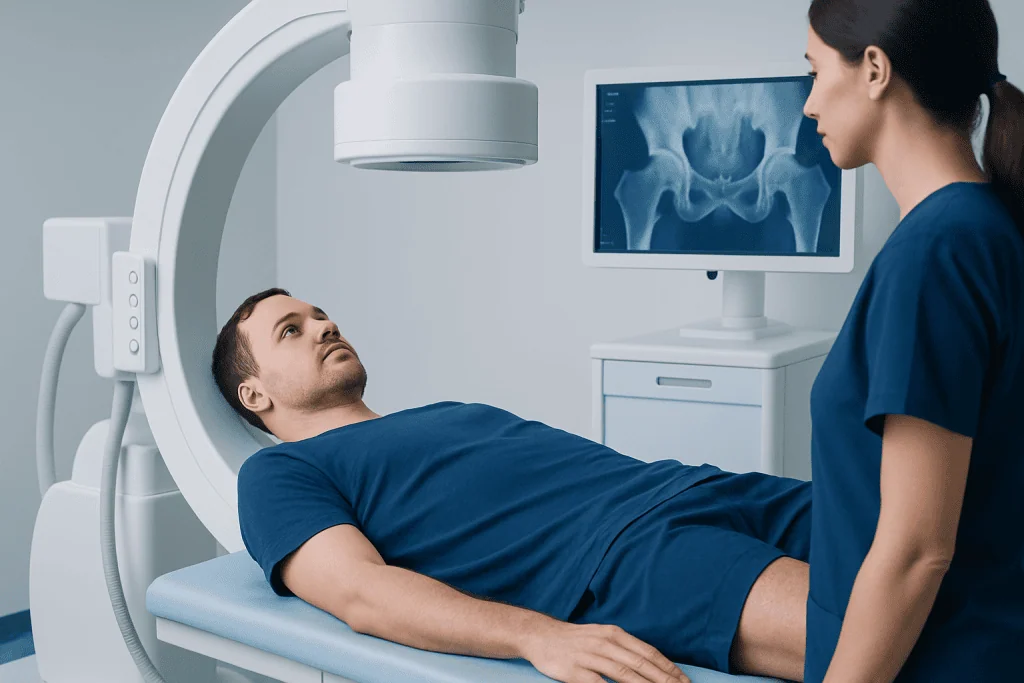
Imaging is often used to confirm the hip shape and assess associated injury. X-rays can show the bony structure of the hip, including cam or pincer features and joint space. MRI may be recommended to evaluate the labrum, cartilage, bone marrow, and surrounding soft tissues. In some cases, an MRI with contrast, CT scan, or diagnostic injection may be considered to clarify the source of pain.
A diagnosis of FAI is strongest when symptoms, examination findings, and imaging all fit together. Finding a cam or pincer shape on imaging alone does not automatically mean treatment is required. A specialist interprets the results in the context of the patient’s age, activity goals, pain pattern, and overall hip health.
Treatment Options
Treatment for Femoroacetabular Impingement depends on the severity of symptoms, the type of impingement, the condition of the labrum and cartilage, activity goals, and the presence of other hip problems. The right approach should be decided by an orthopedic specialist or sports medicine team after a full assessment. Treatment is usually stepwise, beginning with non-surgical options when appropriate.
Non-surgical treatment may include education, activity modification, physiotherapy, and short-term medication for symptom relief when suitable for the patient. Physiotherapy often focuses on improving hip and trunk strength, movement control, flexibility where appropriate, and safe technique for sport or daily activity. Activity modification does not always mean stopping exercise; it may mean temporarily reducing painful movements such as deep squats, aggressive pivoting, or prolonged hip flexion while strength and control improve.
In some cases, image-guided injections may be used as part of diagnosis or symptom management. An injection can help determine whether pain is coming from inside the hip joint and may reduce inflammation for a period of time. It is not usually considered a cure for the underlying bone mechanics, but it can be useful within a broader care plan.
Surgery may be considered when symptoms persist despite appropriate non-surgical care, when imaging shows treatable mechanical impingement, or when there is a labral tear or cartilage problem contributing to ongoing limitation. The most common surgical approach is hip arthroscopy, a minimally invasive procedure that may reshape bone, repair or treat the labrum, and address cartilage findings when possible. Recovery typically involves rehabilitation, gradual return to activity, and close follow-up; timelines vary by procedure, sport, and individual healing.
Living With / Prognosis
Many people with Femoroacetabular Impingement can manage symptoms and remain active with the right guidance. Helpful strategies may include learning which positions provoke pain, building strength around the hip and pelvis, improving movement patterns, and pacing activities during flare-ups. A rehabilitation plan should be individualized, because forcing painful ranges or returning too quickly to high-impact sport can prolong symptoms.
Daily life adjustments can make the hip more comfortable. People may benefit from changing sitting posture, taking breaks from long sitting, avoiding repeated deep hip flexion during painful periods, and modifying training volume. Low-impact conditioning may be appropriate for some patients, while others can continue sport with technique changes and careful load management.
The long-term outlook varies. Some people have mild symptoms that settle with conservative care, while others have persistent mechanical pain that may require surgical discussion. Factors that can influence prognosis include cartilage health, labral condition, hip shape, age, activity demands, and whether osteoarthritis is already present. Earlier evaluation can help identify these factors and guide realistic choices.
Patients should feel encouraged that FAI is a well-recognized and treatable hip condition. With coordinated orthopedic assessment, imaging when needed, and rehabilitation, many people improve pain, function, and confidence in movement. Acibadem International’s multidisciplinary specialists and JCI-accredited hospitals diagnose and treat hip impingement for international patients, with care plans tailored after specialist assessment.
When to See a Doctor
A person should seek medical advice if hip or groin pain persists for more than a short period, keeps returning with activity, limits sport or daily movement, or is associated with clicking, catching, locking, or stiffness. Early assessment is especially helpful for active adolescents and adults who notice pain with squatting, pivoting, running, dancing, or sitting for long periods.
Prompt evaluation is also important if pain follows an injury, causes limping, prevents weight-bearing, wakes the person at night, or is accompanied by fever, unexplained weight loss, numbness, significant back pain, or pain radiating below the knee. These features do not necessarily mean a serious problem, but they may point to conditions other than FAI that need timely attention.
People with known FAI should also return to a doctor if symptoms worsen despite physiotherapy, if function is not improving, or if they are considering a return to competitive sport. A specialist can review the diagnosis, check for labral or cartilage involvement, and discuss whether continued conservative care or another treatment pathway is most appropriate.
Frequently asked questions
What is Femoroacetabular Impingement?
Femoroacetabular Impingement is a mechanical problem of the hip joint where the ball and socket make abnormal contact during movement. This can pinch the labrum and cartilage, leading to groin pain, stiffness, clicking, or reduced motion.
Is hip impingement the same as a labral tear?
No. Hip impingement describes the abnormal bone contact, while a labral tear is damage to the soft cartilage rim around the socket. They often occur together because repeated impingement can place stress on the labrum.
Can Femoroacetabular Impingement improve without surgery?
Yes, many people improve with non-surgical care such as activity modification, physiotherapy, strengthening, and symptom control. Surgery is considered only for selected patients after specialist assessment, especially when symptoms persist or imaging shows a treatable mechanical problem.
What activities make FAI symptoms worse?
Symptoms are commonly aggravated by deep squatting, lunging, pivoting, kicking, running, cycling, or sitting with the hip flexed for long periods. The exact triggers vary, so a physiotherapist or doctor can help identify safer movement patterns.
How is Femoroacetabular Impingement diagnosed?
Diagnosis is based on the combination of symptoms, physical examination, and imaging. X-rays show the bony shape of the hip, while MRI may be used to assess the labrum, cartilage, and surrounding soft tissues.
Does FAI always lead to hip arthritis?
No, FAI does not always lead to arthritis. It can increase stress on the labrum and cartilage in some people, but the long-term risk depends on many factors, including hip shape, cartilage health, activity demands, and timely management.
When can someone return to sport after FAI treatment?
Return to sport depends on the treatment used, symptom control, strength, hip movement, and the demands of the sport. After either conservative care or surgery, return should be gradual and guided by the treating specialist and rehabilitation team.
References
- American Academy of Orthopaedic Surgeons
- British Orthopaedic Association
- European Society of Sports Traumatology, Knee Surgery and Arthroscopy
- Mayo Clinic
- National Institute for Health and Care Excellence
This article is for general information only and is not a substitute for professional medical advice. Please consult a qualified doctor about your individual situation.
Treatments for This Condition
Doctors Who Treat This Condition

Prof. Dr. Ahmet Alanay
Orthopedic Surgery & Traumatology
Prof. Dr. Alper Kaya
Orthopedic Surgery & Traumatology
Prof. Dr. Arel Gereli
Orthopedic Surgery & Traumatology
Prof. Dr. Ata Can Atalar
Orthopedic Surgery & Traumatology
Prof. Dr. Aziz Kaya Alturfan
Orthopedic Surgery & Traumatology
Prof. Dr. Barış Kocaoğlu
Orthopedic Surgery & Traumatology
Prof. Dr. Burak Akan
Orthopedic Surgery & Traumatology
Prof. Dr. Cihangir Tetik
Orthopedic Surgery & Traumatology
Prof. Dr. Emre Toğrul
Orthopedic Surgery & Traumatology
Prof. Dr. Erhan Serin
Orthopedic Surgery & Traumatology
Prof. Dr. Fatih Dikici
Orthopedic Surgery & Traumatology