Knee Osteoarthritis
Knee Osteoarthritis causes knee pain, stiffness and reduced mobility. Learn symptoms, diagnosis, treatment options and when to see a specialist.

Quick answer
Knee osteoarthritis is a degenerative joint condition in which the cartilage in the knee gradually wears down, causing pain, stiffness, swelling, and reduced movement. Treatment depends on symptoms and stage, and may include lifestyle measures, medication, physical therapy, injections, or surgery such as knee replacement when conservative options no longer provide relief.
Knee osteoarthritis is a long-term joint condition in which the smooth cartilage and other tissues of the knee gradually become damaged, causing pain, stiffness and reduced movement. It is common with aging, but symptoms and function can often be improved with the right assessment, exercise, weight management, pain control and, for advanced cases, surgery.
Overview
Knee osteoarthritis is a degenerative joint disease that affects the knee, one of the body’s main weight-bearing joints. In osteoarthritis, the protective cartilage that helps the bones glide smoothly can become thinner and less resilient. The underlying bone, joint lining, ligaments and surrounding muscles may also change, which can lead to pain, stiffness, swelling and reduced mobility.
The condition usually develops gradually over months or years. Some people have mild symptoms that come and go, while others experience persistent discomfort that affects walking, climbing stairs, standing from a chair or participating in work and social activities. Symptoms do not always match the appearance of the joint on an X-ray; some people with significant X-ray changes have little pain, while others with milder changes can feel substantial discomfort.
Knee osteoarthritis is common in adults, particularly with increasing age, but it is not an unavoidable part of aging. Previous knee injury, excess body weight, repetitive joint stress, reduced muscle strength and family tendency can all contribute. With a structured care plan, many people can reduce pain, improve movement and remain active for many years.
Symptoms
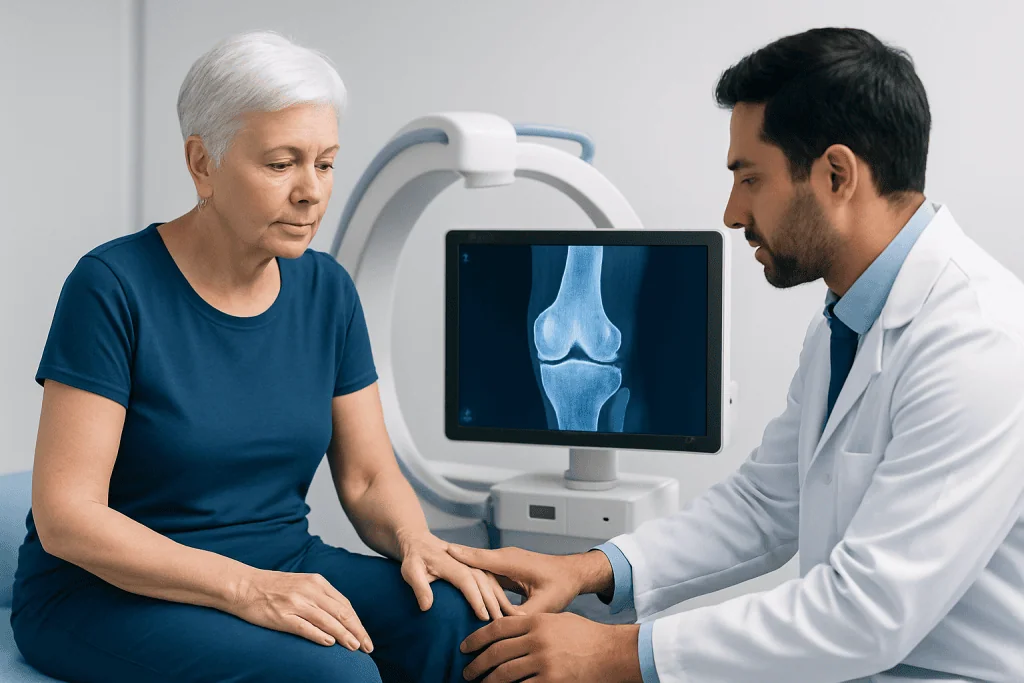
The main symptom of knee osteoarthritis is knee pain, often felt at the front, inner side or around the whole joint. Pain may be worse with weight-bearing activities such as walking, using stairs, squatting, kneeling or standing for long periods. In the early stages, symptoms may improve with rest; as the condition progresses, pain can become more frequent and may occur even after light activity.
Stiffness is also common, especially after waking in the morning or after sitting for a while. In knee osteoarthritis, morning stiffness is usually brief and improves as the joint starts moving. Some people notice swelling, warmth without infection, a feeling of tightness, or a reduced ability to fully bend or straighten the knee.
Other symptoms can include:
- Creaking, clicking or grinding sensations during movement
- Difficulty getting up from low chairs or in and out of a car
- Reduced confidence on uneven ground
- A feeling that the knee may give way, often related to pain or muscle weakness
- Changes in leg alignment, such as bowing in more advanced disease
Symptoms often fluctuate. Weather changes, increased activity, minor strains or long periods of inactivity can trigger flare-ups. A healthcare professional can help distinguish osteoarthritis from other causes of knee pain, such as inflammatory arthritis, meniscus injury, ligament problems, tendon conditions or referred pain from the hip or spine.
Causes & Risk Factors
Knee osteoarthritis occurs when the repair and breakdown processes inside the joint become imbalanced over time. Cartilage may lose its smooth surface and cushioning ability, while the bone beneath it can become denser and form bony enlargements. The joint lining may produce excess fluid, and surrounding muscles may weaken if pain leads to reduced activity.
Several factors can increase the risk of developing osteoarthritis of the knee. Age is an important factor because joint tissues change over time, but age alone does not explain every case. Previous knee injury, such as a ligament tear, meniscus injury or fracture involving the joint, can raise the risk even years later. Repetitive heavy kneeling, squatting or lifting may also contribute in some occupations or sports.
Excess body weight is a major modifiable risk factor because it increases mechanical load through the knee and may also influence inflammation in the body. Muscle weakness around the hip and thigh can increase stress on the knee joint. Other risk factors include family history, certain leg alignment patterns, reduced physical activity, and some metabolic or joint conditions.
Having risk factors does not mean knee osteoarthritis is inevitable, and having the condition does not mean a person has done something wrong. The aim of medical care is to identify the factors that can be improved, reduce pain, support joint function and help the person stay as active and independent as possible.
Diagnosis
Knee osteoarthritis is diagnosed through a combination of medical history, physical examination and, when needed, imaging tests. The doctor will ask about the location of pain, stiffness, swelling, previous injuries, daily activities, work demands, sports history, other medical conditions and current medicines. Understanding how symptoms affect daily life is important when planning treatment.
During the physical examination, the specialist may assess walking pattern, leg alignment, swelling, tenderness, range of motion and knee stability. Muscle strength, hip movement and foot posture may also be checked because these can influence knee symptoms. The doctor may compare both knees and look for signs suggesting another diagnosis, such as marked redness, fever, severe sudden swelling or inflammatory joint disease.
X-rays are commonly used to look for features of knee osteoarthritis, including narrowing of the joint space, changes in bone shape and bony outgrowths. Magnetic resonance imaging or other advanced scans are not needed for every patient, but they may be useful when symptoms are unusual, when soft-tissue injury is suspected, or when surgery is being considered. Blood tests are not used to confirm osteoarthritis, but they may help rule out inflammatory arthritis, infection or other medical causes of joint pain.
Treatment Options
Treatment for knee osteoarthritis is individualized. The right approach depends on symptom severity, X-ray findings, age, activity goals, general health, body weight, previous treatments and the person’s expectations. A specialist should assess the knee before recommending a plan, because pain can come from several structures and not every painful knee needs the same treatment.
Non-surgical treatment is usually the first step. Education helps patients understand how to pace activities, manage flare-ups and protect the joint without avoiding movement completely. Physiotherapy and structured exercise can improve muscle strength, flexibility, balance and confidence. Low-impact activities, such as walking at a suitable pace, cycling, swimming or water-based exercise, may help many people maintain fitness while limiting joint irritation. Weight management, when relevant, can reduce load through the knee and improve function.
Supportive measures may include appropriate footwear, insoles, braces, walking aids or activity modification. Pain-relieving or anti-inflammatory medicines may be considered when suitable, taking into account other health conditions and possible side effects. In selected cases, image-guided or clinic-based joint injections may be discussed to reduce symptoms for a period of time. These options should be decided with a qualified doctor, especially for people with stomach, kidney, heart, blood pressure or bleeding-related conditions.
If knee osteoarthritis is advanced and daily life remains significantly limited despite well-planned non-surgical care, surgery may be considered. Surgical options can include joint-preserving procedures in selected patients or partial or total knee replacement when the joint damage is severe. Rehabilitation after surgery is an important part of recovery, helping restore movement, strength and walking ability. The choice of surgery, implant type and timing is made by an orthopedic specialist after a full assessment.
Living With / Prognosis
Many people live well with knee osteoarthritis by combining medical guidance with practical self-management. The condition may progress slowly, and symptoms often vary from week to week. A flare-up does not always mean permanent worsening; it may reflect temporary irritation after increased activity, a minor strain or a period of inactivity.
Staying active is usually better for the knee than complete rest. The key is to choose activities that are tolerable and to build up gradually. Strengthening the muscles around the knee and hip can improve joint support, while balance training may reduce the feeling of instability. Shorter, more frequent activity sessions may be easier than long periods of walking or standing, particularly during painful phases.
Daily strategies can make a meaningful difference. These may include using handrails on stairs, avoiding prolonged deep kneeling or squatting, planning rest breaks, maintaining a healthy body weight, and choosing supportive shoes. Heat may ease stiffness for some people, while cold packs may help swelling after activity. Any home measure should be used safely, especially in people with reduced skin sensation or circulation problems.
The outlook depends on the severity of joint changes, overall health and how well symptoms respond to treatment. Some people need only lifestyle measures and periodic medical review, while others may eventually benefit from surgery. Regular follow-up helps adjust the care plan as needs change and supports long-term mobility.
When to See a Doctor
A person should see a doctor if knee pain lasts more than a few weeks, keeps returning, limits walking or stairs, causes swelling, or interferes with sleep, work or daily activities. Medical assessment is also important if the knee feels unstable, movement becomes restricted, or self-care measures are no longer enough.
More urgent medical advice is needed if knee pain follows a significant injury, if the person cannot bear weight, or if the joint becomes very swollen, red, hot or associated with fever. These features may suggest conditions other than osteoarthritis, such as fracture, infection, gout or inflammatory arthritis, and should be evaluated promptly.
Patients should also seek specialist advice before starting new medicines or injections, especially if they have chronic medical conditions or take blood-thinning, heart, kidney, stomach or blood pressure medicines. An orthopedic or rheumatology assessment can help confirm the diagnosis and match treatment to the person’s goals and health profile.
Acibadem International’s multidisciplinary specialists and JCI-accredited hospitals diagnose and treat knee osteoarthritis for international patients, using individualized assessment and coordinated orthopedic, rehabilitation and pain-management care when appropriate.
Frequently asked questions
What is knee osteoarthritis?
Knee osteoarthritis is a chronic joint condition in which cartilage and other tissues in the knee gradually change and become damaged. It can cause pain, stiffness, swelling and difficulty with walking, stairs or standing from a chair. It is common, but many people improve with a tailored treatment plan.
What are the early symptoms of knee osteoarthritis?
Early symptoms often include mild knee pain during or after activity, brief stiffness after rest, and discomfort when using stairs or squatting. Some people notice clicking or a feeling of tightness. Symptoms may come and go at first, which can make early diagnosis important.
Can knee osteoarthritis be cured?
There is no simple cure that restores the knee to a completely normal joint, but symptoms can often be controlled. Exercise therapy, weight management, supportive devices, medicines, injections and surgery for advanced cases can all help selected patients. The goal is to reduce pain, improve function and maintain independence.
Is walking good for knee osteoarthritis?
Walking is often helpful when it is done at a comfortable level and increased gradually. It can support joint movement, muscle strength and general health. If walking causes significant pain or swelling, a physiotherapist or doctor can suggest modifications or alternative low-impact exercise.
When is knee replacement considered for osteoarthritis?
Knee replacement may be considered when osteoarthritis is advanced and pain or stiffness severely limits daily life despite appropriate non-surgical treatment. The decision depends on symptoms, examination findings, imaging, general health and personal goals. An orthopedic specialist can explain the benefits, risks and rehabilitation process.
Does an X-ray always show how painful knee osteoarthritis is?
No. X-rays can show structural changes in the knee, but pain levels vary from person to person. Some people with marked X-ray changes have mild symptoms, while others with less visible change may have significant pain. Doctors interpret imaging together with the patient’s symptoms and examination.
References
- American Academy of Orthopaedic Surgeons
- National Institute for Health and Care Excellence
- European League Against Rheumatism
- Mayo Clinic
- Arthritis Foundation
This article is for general information only and is not a substitute for professional medical advice. Please consult a qualified doctor about your individual situation.
Treatments for This Condition
Doctors Who Treat This Condition

Prof. Dr. Ahmet Alanay
Orthopedic Surgery & Traumatology
Prof. Dr. Alper Kaya
Orthopedic Surgery & Traumatology
Prof. Dr. Arel Gereli
Orthopedic Surgery & Traumatology
Prof. Dr. Ata Can Atalar
Orthopedic Surgery & Traumatology
Prof. Dr. Aziz Kaya Alturfan
Orthopedic Surgery & Traumatology
Prof. Dr. Barış Kocaoğlu
Orthopedic Surgery & Traumatology
Prof. Dr. Burak Akan
Orthopedic Surgery & Traumatology
Prof. Dr. Cihangir Tetik
Orthopedic Surgery & Traumatology
Prof. Dr. Emre Toğrul
Orthopedic Surgery & Traumatology
Prof. Dr. Erhan Serin
Orthopedic Surgery & Traumatology
Prof. Dr. Fatih Dikici
Orthopedic Surgery & Traumatology