Trigeminal Neuralgia
Trigeminal Neuralgia is a nerve pain condition causing sudden facial pain. Learn symptoms, causes, diagnosis and treatment options.

Quick answer
Trigeminal neuralgia is a chronic nerve pain disorder that causes sudden, severe facial pain when the trigeminal nerve is irritated or compressed. Treatment depends on the cause and severity and may include medication, image-guided evaluation, and procedures such as nerve blocks or surgery; at Acibadem in Turkey, care is provided through multidisciplinary assessment and personalized treatment planning.
Trigeminal Neuralgia is a chronic nerve pain condition that causes sudden, brief, electric shock-like pain on one side of the face. It occurs when the trigeminal nerve, which carries sensation from the face to the brain, becomes irritated or compressed.
Overview
Trigeminal Neuralgia is a neurological pain disorder affecting the trigeminal nerve, the main sensory nerve of the face. It is known for sudden, sharp, electric shock-like episodes of facial pain that usually last from a few seconds to a couple of minutes. The pain often appears on one side of the face and can recur in clusters over days, weeks or longer periods.
The trigeminal nerve has three main branches: one serving the forehead and eye area, one serving the cheek and upper jaw, and one serving the lower jaw. Trigeminal Neuralgia most commonly affects the cheek, teeth, gums or jaw area, although any branch may be involved. Because the pain can feel like it comes from the teeth, some people first seek dental care before a neurological cause is suspected.
The condition is considered a form of neuropathic pain, meaning pain caused by irritation or dysfunction of a nerve. In many people, a nearby blood vessel presses on the trigeminal nerve close to where it enters the brainstem. This pressure can disturb the nerve’s protective covering and make it overreact to normal facial sensations, such as a light touch or movement.
Trigeminal Neuralgia is not the same as ordinary headache, sinus pain or dental pain, although it can be confused with these conditions. A careful assessment by a neurologist, neurosurgeon or pain specialist helps confirm the diagnosis and identify the most appropriate treatment options.
Symptoms
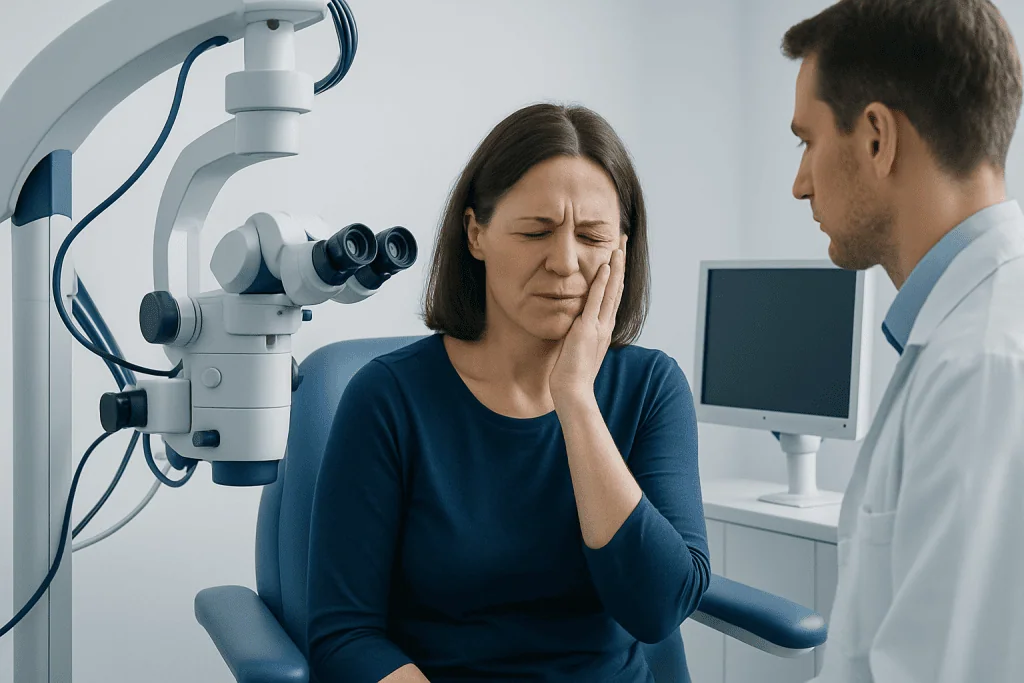
The main symptom of Trigeminal Neuralgia is sudden facial pain that is often described as stabbing, shooting, burning or electric shock-like. Pain attacks are usually brief, but they can be intense and may occur many times in a day. Between attacks, some people have no pain, while others may have a dull ache or lingering sensitivity in the affected area.
Symptoms usually occur on one side of the face. The pain may affect the cheek, jaw, teeth, gums, lips, nose, forehead or the area around the eye, depending on which branch of the trigeminal nerve is involved. In typical Trigeminal Neuralgia, the pain does not usually cross to the other side of the face during the same attack.
Common triggers include everyday actions that lightly stimulate the face. These may include:
- Touching the face, shaving or applying makeup
- Brushing the teeth or flossing
- Chewing, swallowing, speaking or smiling
- Washing the face or feeling a breeze on the skin
- Drinking hot or cold liquids
Symptoms can vary over time. Some people have periods of frequent attacks followed by weeks or months with fewer symptoms. Others may develop longer-lasting background pain alongside the brief shock-like episodes. Any new, persistent or unexplained facial pain should be medically assessed, especially when it affects daily activities.
Causes & Risk Factors
Trigeminal Neuralgia most often develops when the trigeminal nerve is compressed or irritated near the brainstem. A small artery or vein may rest against the nerve and create repeated pulsating pressure. Over time, this can affect the nerve’s insulation, making it more sensitive and capable of producing pain signals in response to normal, non-painful stimulation.
In some cases, Trigeminal Neuralgia is associated with another neurological condition. For example, diseases that affect the protective covering of nerves can increase the risk of trigeminal nerve irritation. Less commonly, a tumor, vascular malformation, previous facial trauma or surgical changes may contribute to symptoms. Sometimes no clear structural cause is found, even after appropriate imaging.
Risk factors can include age, as the condition is more often diagnosed in adults and older adults, and certain neurological disorders. It may also be seen more often in people with known nerve demyelination. However, Trigeminal Neuralgia can occur in different age groups, and the presence or absence of risk factors does not by itself confirm the diagnosis.
It is important to distinguish Trigeminal Neuralgia from other causes of facial pain, such as dental disease, temporomandibular joint problems, sinus disease, migraine, cluster headache or post-herpetic nerve pain. These conditions can overlap in location but usually have different patterns, triggers and treatment approaches.
Diagnosis
Diagnosis begins with a detailed medical history. The doctor asks about the location of pain, how long each attack lasts, what the pain feels like, whether there are triggers and whether symptoms occur on one or both sides of the face. The classic pattern of brief, shock-like, triggerable pain is often highly suggestive of Trigeminal Neuralgia.
A neurological examination is used to check facial sensation, reflexes, muscle strength, coordination and other signs that may point to an underlying condition. The doctor may gently test different areas of the face to understand which trigeminal nerve branches are involved. The examination also helps identify features that are not typical and may require additional evaluation.
Magnetic resonance imaging, commonly known as MRI, is often recommended to look for possible causes such as nerve compression, demyelination, tumors or other structural changes. Specialized MRI techniques may help show the relationship between blood vessels and the trigeminal nerve. Imaging is especially important when symptoms are unusual, occur at a younger age, affect both sides or are accompanied by numbness or other neurological signs.
Dental, ear, nose and throat, or eye evaluations may be needed when symptoms overlap with other conditions. A correct diagnosis helps avoid unnecessary procedures and supports a focused treatment plan. The right diagnostic pathway is decided by a qualified specialist after reviewing the person’s symptoms, examination findings and medical history.
Treatment Options
Treatment for Trigeminal Neuralgia aims to reduce pain attacks, improve daily function and address any identifiable underlying cause. The right approach is individualized and should be decided by a neurologist, neurosurgeon or pain specialist after assessment. Factors such as age, general health, symptom pattern, imaging findings, previous treatments and personal preferences all matter.
Medication is often the first category of treatment. Doctors may use medicines that calm overactive nerve signaling, including certain anti-seizure or neuropathic pain medications. These medicines require medical supervision because dose adjustments, side effect monitoring and interactions with other medicines need to be considered. People should not stop or change prescribed treatment without speaking with their doctor.
If medication does not provide enough relief, causes troublesome side effects or becomes less effective over time, interventional or surgical options may be discussed. Depending on the individual case, these may include procedures that reduce abnormal pain signaling in the trigeminal nerve or surgery to relieve pressure from a blood vessel when nerve compression is identified. Options can differ in recovery time, suitability and potential risks, so they require careful specialist counseling.
Supportive care may include pain management strategies, dental review when needed, attention to nutrition if chewing is difficult, and management of anxiety or sleep disruption related to pain. Rehabilitation or psychological support can help some people cope with the impact of chronic pain. Acibadem International’s multidisciplinary specialists and JCI-accredited hospitals diagnose and treat Trigeminal Neuralgia for international patients, with care planned according to individual clinical assessment.
Living With / Prognosis
Living with Trigeminal Neuralgia can be challenging because pain attacks may be unpredictable and triggered by normal activities. With appropriate specialist care, many people can reduce the frequency and severity of attacks and regain confidence in daily routines. The outlook varies, and ongoing follow-up is important because symptoms may change over time.
Practical self-care focuses on reducing avoidable triggers without becoming overly restricted. Some people find it helpful to use gentle face washing techniques, avoid very hot or cold drinks if they trigger pain, choose softer foods during flare-ups and protect the face from cold wind. These measures do not replace medical treatment, but they may reduce discomfort while a treatment plan is being optimized.
Good communication with the healthcare team is important. Keeping a symptom diary can help identify triggers, track medication effects and show whether attacks are becoming more frequent or changing in character. The diary may include the date, pain location, duration, suspected trigger, severity and any medicine taken as advised by the doctor.
Emotional wellbeing also deserves attention. Recurrent facial pain can affect eating, speaking, sleep and social confidence. Support from family, patient education and, when needed, professional counseling can help people manage stress related to chronic pain. A reassuring point is that Trigeminal Neuralgia is a recognized neurological condition with established diagnostic and treatment pathways.
When to See a Doctor
A person should see a doctor if they experience sudden, repeated episodes of sharp or electric shock-like facial pain, especially when the pain is triggered by light touch, chewing, speaking or brushing the teeth. Medical assessment is also recommended when facial pain is severe, recurring, unexplained or different from previous headaches, sinus symptoms or dental problems.
Prompt evaluation is particularly important if facial pain is accompanied by numbness, weakness, hearing changes, vision changes, balance problems, persistent headache, fever, rash or pain on both sides of the face. These features do not necessarily mean a serious condition is present, but they may suggest that additional testing is needed.
People who have already been diagnosed with Trigeminal Neuralgia should seek follow-up if attacks become more frequent, medication becomes less effective, side effects occur or pain changes in quality or location. Treatment plans often need adjustment over time, and specialist review helps ensure that therapy remains safe and appropriate.
Emergency care should be sought for sudden neurological symptoms such as facial drooping, arm or leg weakness, difficulty speaking, confusion or sudden loss of vision. These symptoms require urgent assessment because they may indicate a different neurological emergency rather than Trigeminal Neuralgia.
Frequently asked questions
What is Trigeminal Neuralgia?
Trigeminal Neuralgia is a nerve pain disorder that affects the trigeminal nerve, which carries facial sensation to the brain. It causes sudden, brief, electric shock-like pain, usually on one side of the face. The pain may be triggered by normal activities such as chewing, speaking or touching the face.
What does Trigeminal Neuralgia pain feel like?
The pain is commonly described as stabbing, shooting, burning or like an electric shock. Attacks usually last seconds to a few minutes and may happen repeatedly. Some people also have a dull ache or sensitivity between attacks.
Is Trigeminal Neuralgia caused by dental problems?
Trigeminal Neuralgia is not usually caused by dental disease, although the pain can feel as if it comes from the teeth or gums. Because symptoms can overlap, a dental evaluation may be useful in some cases. If dental treatment does not explain the pain pattern, neurological assessment is important.
How is Trigeminal Neuralgia diagnosed?
Diagnosis is based on the characteristic pain pattern, a neurological examination and often MRI imaging. MRI can help identify nerve compression or rule out other causes of facial pain. A specialist may also consider dental, sinus, eye or jaw conditions when symptoms are not typical.
Can Trigeminal Neuralgia be treated?
Yes, Trigeminal Neuralgia can often be managed with specialist treatment. Options may include medication to reduce nerve overactivity, procedures or surgery in selected cases, and supportive pain management. The most suitable approach depends on the person’s symptoms, imaging findings and overall health.
Does Trigeminal Neuralgia go away on its own?
Some people have periods when symptoms improve or temporarily disappear, but the condition can return. Because attacks may change over time, medical follow-up is recommended even after symptom-free periods. Early specialist assessment can help confirm the diagnosis and guide safe treatment.
When is facial pain a medical emergency?
Typical Trigeminal Neuralgia causes brief facial pain without weakness, confusion or loss of speech. Emergency care is needed if facial pain occurs with facial drooping, arm or leg weakness, difficulty speaking, sudden vision loss, confusion or severe sudden headache. These symptoms may indicate another urgent neurological condition.
References
- National Institute of Neurological Disorders and Stroke
- International Headache Society
- American Association of Neurological Surgeons
- Mayo Clinic
- NHS
This article is for general information only and is not a substitute for professional medical advice. Please consult a qualified doctor about your individual situation.
Treatments for This Condition
Doctors Who Treat This Condition

Prof. Dr. Akin Sabanci
Neurosurgery
Prof. Dr. Ali Kurtsoy
Neurosurgery
Prof. Dr. Altay Bedük
Neurosurgery
Prof. Dr. Deniz Konya (m)
Neurosurgery
Prof. Dr. Gökhan Bozkurt
Neurosurgery
Prof. Dr. Hakan Seçkin
Neurosurgery
Prof. Dr. Halit Çavuşoğlu
Neurosurgery
Prof. Dr. Kağan Tun
Neurosurgery
Prof. Dr. Kenan Koç
Neurosurgery
Prof. Dr. Koray Özduman
Neurosurgery
Prof. Dr. Mehmet Zafer Berkman
Neurosurgery
Prof. Dr. Memet Özek
NeurosurgeryRelated Articles

Nerve Compression Symptoms: When Peripheral Nerve Treatment May Help

Unexplained Fainting: When Heart Rhythm and Neurology Tests Are Both Needed

Swallowing Problems in Neurological Disease: When Dysphagia Needs Specialist Care

When Dizziness Is Neurological: Signs You May Need a Neuro-Otology Assessment

Motor Neuron Disease: When Speech or Swallowing Problems Are the First Clues

Tourette Syndrome in Children and Adults: Symptoms and Treatment Options

Swallowing Problems in Motor Neuron Disease: Early Warning Signs and Supportive Care

Narcolepsy Testing: How to Prepare for an MSLT and Sleep Lab Evaluation

What Is a Neuro-Ophthalmology Exam? Step by Step for Patients With Vision and Nerve Symptoms

Pediatric Epilepsy Surgery: Who May Be a Candidate and How Evaluation Works

Cerebral Angiography vs MR Angiography: Which Brain Vessel Test Is Right?