Sleep Paralysis and Vivid Hallucinations: When to Suspect Narcolepsy

Sleep paralysis is a temporary inability to move while falling asleep or waking, and it can occur with vivid sights, sounds, or sensations. Narcolepsy is more likely when sleep paralysis occurs alongside excessive daytime sleepiness, cataplexy, sleep attacks, or fragmented nighttime sleep.
Key Takeaways
- Sleep paralysis is a temporary inability to move while falling asleep or waking, and it can occur with vivid sights, sounds, or sensations.
- Narcolepsy is more likely when sleep paralysis occurs alongside excessive daytime sleepiness, cataplexy, sleep attacks, or fragmented nighttime sleep.
- Hallucinations related to sleep transitions are not the same as psychosis, although medical evaluation is important when symptoms are new, distressing, or frequent.
- Diagnosis usually involves a careful sleep history, overnight polysomnography, and a multiple sleep latency test performed in a sleep laboratory.
- Treatment can reduce symptoms through regular sleep habits, planned naps, safety strategies, and medications selected by a qualified sleep specialist.
Sleep paralysis and vivid dream-like hallucinations can be frightening, but they are often explainable sleep phenomena. When they happen repeatedly and are paired with overwhelming daytime sleepiness, sudden muscle weakness, or disrupted nighttime sleep, a doctor may consider narcolepsy.
Overview
Sleep paralysis is a brief episode in which a person is awake or partly awake but cannot move or speak. It usually happens during the transition into sleep or out of sleep. Many people also report vivid hallucinations, such as seeing a figure in the room, hearing footsteps, feeling pressure on the chest, or sensing movement. These experiences can feel intensely real, but they are usually short-lived and are related to how the brain moves between rapid eye movement, or REM, sleep and wakefulness.
In REM sleep, the brain is active and dreaming is common, while most voluntary muscles are temporarily switched off. This normal muscle “atonia” helps prevent people from acting out dreams. Sleep paralysis can occur when the mind becomes aware before this REM muscle inhibition has fully ended. The result is a mismatch: the person feels awake, but the body is still in a REM-like state.
One isolated episode does not necessarily mean a person has narcolepsy. Sleep deprivation, irregular schedules, stress, jet lag, and sleeping on the back can all contribute. However, repeated sleep paralysis with vivid hallucinations deserves attention when it occurs with persistent daytime sleepiness or other features of narcolepsy, a neurological sleep-wake disorder that affects the brain’s ability to regulate sleep and alertness.
Symptoms: What Sleep Paralysis and Narcolepsy Can Feel Like
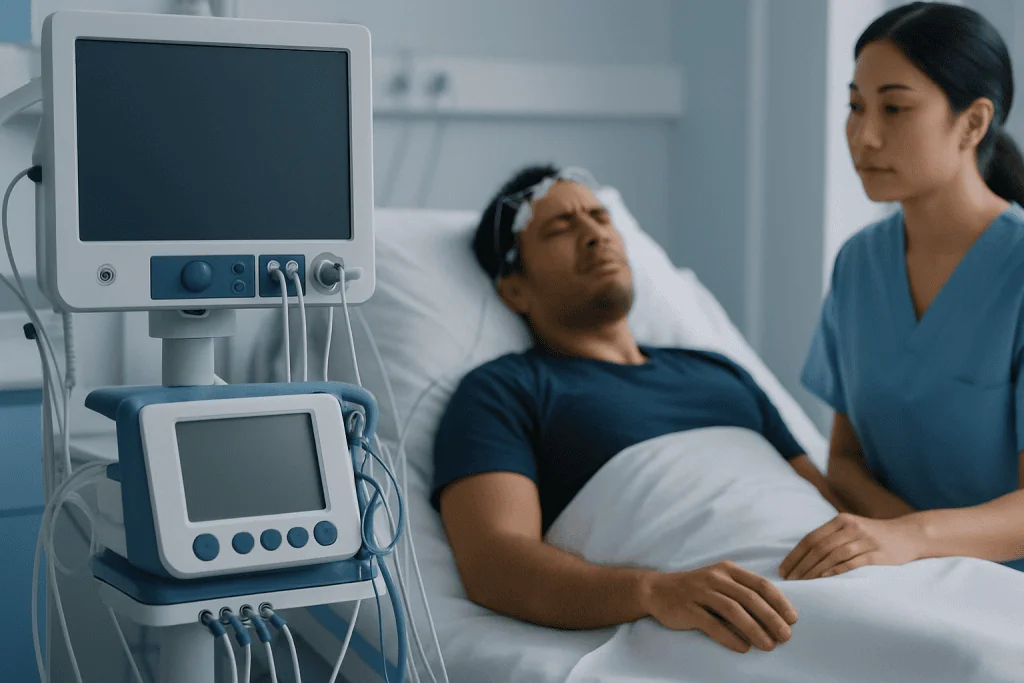
During sleep paralysis, the person is typically aware of the surroundings but cannot move the arms, legs, head, or body for several seconds to a few minutes. Breathing continues, but the episode may feel uncomfortable because chest muscles are partly affected by REM physiology and anxiety can make the sensation more noticeable. Some people can end the episode by focusing on small movements, such as wiggling a finger or changing the breathing rhythm.
Hallucinations associated with sleep paralysis are called hypnagogic when they occur while falling asleep and hypnopompic when they occur while waking. They may involve visual images, voices, buzzing sounds, a sense of floating, or the feeling that someone is nearby. Because these experiences happen at the border of sleep and wakefulness, they can be unusually vivid and emotionally powerful, even when the person later recognizes that they were sleep-related.
Narcolepsy may include sleep paralysis and hallucinations, but its central symptom is excessive daytime sleepiness that persists despite enough time in bed. People may feel an irresistible need to sleep during quiet activities, conversations, meals, classes, meetings, or while traveling as a passenger. Short naps may feel refreshing, but sleepiness often returns later.
Another important symptom is cataplexy, which is sudden, brief muscle weakness triggered by emotions such as laughter, surprise, excitement, or anger. It can involve drooping eyelids, slack jaw, head nodding, buckling knees, or, less commonly, collapse while consciousness is preserved. Cataplexy is strongly associated with narcolepsy type 1 and should be discussed with a sleep specialist.
When Sleep Paralysis Raises Suspicion for Narcolepsy

Sleep paralysis becomes more suggestive of narcolepsy when it is recurrent and appears as part of a broader pattern. The most important clue is excessive daytime sleepiness that affects daily functioning, school or work performance, attention, mood, or safety. A person may describe “sleep attacks,” automatic behaviors during drowsiness, or a need to nap even after what seemed like a full night’s sleep.
Doctors may suspect narcolepsy when sleep paralysis and hallucinations occur together with cataplexy, fragmented nighttime sleep, vivid dreams during short naps, or rapid entry into dreaming. Symptoms often develop gradually, so people may adapt by increasing caffeine, avoiding quiet situations, or blaming themselves for being tired. A careful history can reveal that the sleepiness is not simply fatigue but an abnormal tendency to fall asleep.
There are also many other explanations for sleep paralysis-like episodes, so evaluation is important rather than self-diagnosis. Irregular sleep schedules, shift work, obstructive sleep apnea, anxiety disorders, certain medications, substance use, and sleep deprivation can all worsen sleep-wake instability. Some conditions, such as seizures or fainting episodes, may mimic aspects of narcolepsy and require different testing.
A helpful first step is to keep a sleep diary for one to two weeks, noting bedtimes, wake times, naps, awakenings, episodes of paralysis, hallucinations, emotional triggers, and daytime sleepiness. If possible, input from a bed partner or family member can add details about snoring, breathing pauses, movements, or unusual behaviors during sleep.
Causes and Risk Factors
Sleep paralysis reflects a temporary overlap between REM sleep and wakefulness. It is more likely when sleep is fragmented, irregular, or insufficient. People who work changing shifts, travel across time zones, stay up late repeatedly, or sleep at inconsistent hours may be more vulnerable. Stress and anxiety can also make episodes more frequent or more distressing, although they are not the same as the neurological basis of narcolepsy.
Narcolepsy is a disorder of sleep-wake regulation. In narcolepsy type 1, many patients have low levels of hypocretin, also called orexin, a brain chemical that helps maintain wakefulness and stabilize REM sleep. This is thought to be related to an autoimmune process in susceptible individuals, although the exact pathway is still being studied. Narcolepsy type 2 has similar daytime sleepiness but does not include cataplexy and usually does not show the same low hypocretin pattern.
Risk may be influenced by genetic susceptibility, immune factors, and environmental triggers, but narcolepsy is not usually inherited in a simple predictable pattern. It can begin in childhood, adolescence, or adulthood. In children and teenagers, symptoms may be mistaken for lack of motivation, attention difficulties, depression, or behavioral problems, so a sleep-focused assessment can be especially valuable.
Sleep paralysis can also occur in people without narcolepsy. This is often called isolated sleep paralysis, particularly when episodes are infrequent and there is no significant daytime sleepiness or cataplexy. Even then, medical advice is appropriate if the episodes are causing fear, avoidance of sleep, insomnia, or impairment during the day.
Diagnosis: How Doctors Evaluate These Symptoms
Diagnosis begins with a detailed clinical interview. A doctor or sleep specialist asks about the timing and frequency of sleep paralysis, the content of hallucinations, daytime sleepiness, naps, cataplexy-like episodes, nighttime sleep quality, snoring, medications, mental health history, work schedule, and substance use. Standard questionnaires may help measure sleepiness, but they do not replace a medical evaluation.
Testing for suspected narcolepsy commonly includes overnight polysomnography followed by a multiple sleep latency test the next day. Polysomnography records brain waves, breathing, oxygen levels, heart rhythm, eye movements, and muscle activity during sleep. It helps identify other sleep disorders, such as obstructive sleep apnea or periodic limb movements, that can cause daytime sleepiness or disrupt REM sleep.
The multiple sleep latency test measures how quickly a person falls asleep during several scheduled nap opportunities and whether REM sleep appears unusually quickly. For accurate results, patients are usually asked to follow a regular sleep schedule beforehand and may need to adjust certain medications under medical supervision. A sleep diary or actigraphy device may be used to confirm adequate sleep before testing.
In selected cases, additional evaluation may be needed. This can include neurological examination, laboratory tests, or specialized assessments through neurological sleep medicine and neurophysiology services. Cerebrospinal fluid hypocretin testing is not needed for everyone, but it may be considered in particular situations, especially when cataplexy is present and the diagnosis remains uncertain.
Treatment Options
Treatment is individualized and aims to improve alertness, reduce REM-related symptoms, support safe daily functioning, and protect quality of life. For isolated sleep paralysis, education and sleep regularity may be enough. Understanding that the episode is temporary and sleep-related often reduces fear, which can make future episodes easier to manage.
For narcolepsy, behavioral strategies are an important foundation. A consistent sleep-wake schedule, sufficient nighttime sleep, planned short naps, regular physical activity, and avoiding heavy meals or alcohol before important activities may help reduce sleepiness. Patients are often advised to plan demanding tasks for times of better alertness and to avoid driving or operating machinery when sleepy.
Medication may be recommended when symptoms interfere with life. Wake-promoting medicines or stimulants can be used to improve daytime alertness, while other medications may help reduce cataplexy, sleep paralysis, hallucinations, or fragmented sleep. The best choice depends on symptoms, age, medical history, pregnancy considerations, other medications, and possible side effects. Patients should not start, stop, or combine these treatments without a qualified clinician.
Support at school, work, and home can also make a major difference. Flexible scheduling, planned nap breaks, safe transportation planning, and education for family members or teachers may reduce misunderstanding. At Acibadem International, multidisciplinary specialists in JCI-accredited hospitals evaluate and treat sleep-related neurological conditions for international patients, including those needing coordinated assessment for narcolepsy and related disorders.
Prevention, Self-care, and When to See a Doctor
Not all sleep paralysis can be prevented, but several habits may lower the risk. Keeping a regular bedtime and wake time, allowing enough sleep, limiting late-night screen exposure, managing stress, and reducing sleep disruption can help stabilize REM sleep. Some people notice fewer episodes when they avoid sleeping on the back, although this varies from person to person.
During an episode, reassurance is important. The person can try to remind themselves that the event is temporary, focus on slow breathing, and attempt a small movement such as moving the eyes, tongue, finger, or toe. Afterward, writing down the episode can help identify patterns, but repeatedly checking or worrying about sleep may increase anxiety, so balance is helpful.
A doctor should be consulted if sleep paralysis is frequent, frightening, or associated with daytime sleepiness, sudden muscle weakness, vivid hallucinations during sleep transitions, unexplained falls, or disrupted nighttime sleep. Medical advice is also important if sleepiness affects driving, work, learning, mood, or relationships. Urgent care is appropriate for new neurological symptoms such as persistent weakness, confusion, severe headache, seizure-like activity, chest pain, or breathing difficulty.
People should also seek evaluation if others report loud snoring, pauses in breathing, gasping, unusual movements, or acting out dreams during sleep. These signs may point to other sleep disorders that are treatable but require different approaches. A timely assessment can help distinguish isolated sleep paralysis from narcolepsy and guide safe, practical treatment.
Frequently asked questions
Does sleep paralysis always mean narcolepsy?
No. Sleep paralysis can occur on its own, especially with sleep deprivation, irregular schedules, stress, or disrupted sleep. Narcolepsy is more likely when episodes happen repeatedly with excessive daytime sleepiness, cataplexy, or rapid dreaming during naps.
Are the hallucinations during sleep paralysis a sign of mental illness?
Sleep-related hallucinations can occur when the brain is partly in REM sleep and partly awake. They are not the same as psychosis, although they can feel very real and frightening. A medical evaluation is helpful if they are frequent, distressing, occur fully awake, or are accompanied by other concerning symptoms.
What is the difference between sleepiness and ordinary tiredness?
Tiredness can mean low energy, fatigue, or feeling worn out, but sleepiness is the tendency to fall asleep. In narcolepsy, sleepiness may feel irresistible and can occur during quiet activities or at inappropriate times. This pattern can persist even when the person spends enough time in bed.
What is cataplexy and why is it important?
Cataplexy is sudden, brief muscle weakness triggered by emotions such as laughter, surprise, or excitement. The person usually remains conscious, but the face, neck, knees, or whole body may lose tone. Its presence strongly supports narcolepsy type 1 and should be discussed with a sleep specialist.
How is narcolepsy diagnosed?
Diagnosis usually involves a detailed sleep history, an overnight sleep study, and a multiple sleep latency test performed the next day. Doctors may also review medications, sleep schedules, and other conditions that can cause sleepiness. Accurate testing often requires a stable sleep routine before the study.
Can lifestyle changes help sleep paralysis and narcolepsy symptoms?
Yes, regular sleep hours, adequate nighttime sleep, planned naps, stress management, and avoiding sleep deprivation can reduce symptom burden for many people. For narcolepsy, lifestyle measures are often combined with medication when symptoms affect daily life. A clinician can help tailor a safe plan.
Is it safe to drive with suspected narcolepsy?
People with untreated or poorly controlled daytime sleepiness should be cautious about driving and operating machinery. If a person has sleep attacks, near-misses, or difficulty staying awake while driving, they should avoid driving and seek medical advice promptly. Treatment and safety planning can reduce risk.
References
- American Academy of Sleep Medicine
- National Institute of Neurological Disorders and Stroke
- Mayo Clinic
- Sleep Foundation
- International Classification of Sleep Disorders
This article is for general information only and is not a substitute for professional medical advice. Please consult a qualified doctor about your individual situation.
Narcolepsy in Turkey — costs, top hospitals & a free quote
JCI-accredited · board-certified surgeons · reply within 24h
Add us as a Preferred Source to see more of our trusted health content across Google Search, AI Overviews and Discover.

Neurology
Diagnosis and treatment of disorders of the brain, spinal cord, nerves and muscles.
51 specialists in this unit