Migraine With Aura: Symptoms, Stroke Risk, and Treatment Planning

Migraine aura symptoms are usually temporary and may include flashing lights, zigzag lines, tingling, speech difficulty, or visual blind spots. Most people with migraine with aura do not have a stroke, but some factors such as smoking, high blood pressure, and estrogen-containing contraception may increase risk.
Key Takeaways
- Migraine aura symptoms are usually temporary and may include flashing lights, zigzag lines, tingling, speech difficulty, or visual blind spots.
- Most people with migraine with aura do not have a stroke, but some factors such as smoking, high blood pressure, and estrogen-containing contraception may increase risk.
- A first, unusual, prolonged, or sudden aura-like episode should be assessed promptly to rule out other neurological conditions.
- Treatment planning may include acute medicines, preventive therapies, trigger management, and lifestyle strategies.
- People with migraine with aura should discuss cardiovascular risk factors and medication choices with a qualified doctor.
Migraine with aura is a type of migraine in which temporary neurological symptoms, most often visual changes, occur before or during the headache phase. Careful diagnosis and personalized treatment planning can reduce attacks, improve daily life, and help address stroke-related risk factors safely.
Overview
Migraine with aura is a neurological condition that involves recurrent migraine attacks accompanied by short-lasting changes in vision, sensation, speech, or other brain functions. Aura symptoms usually develop gradually over several minutes and often resolve within an hour. They may appear before the headache, during the headache, or, less commonly, without a headache.
The most common aura is visual. A person may see flashing lights, shimmering lines, zigzag patterns, blind spots, or areas of blurred vision. Others may experience tingling that travels from the hand to the face, temporary difficulty finding words, or mild weakness. Because these symptoms can resemble other neurological events, a clear medical assessment is important, especially when symptoms are new or different.
Migraine with aura is not simply a headache. It is a brain-based disorder involving changes in nerve signaling, blood vessel regulation, and pain pathways. With appropriate diagnosis and a plan tailored to the person, many patients can reduce attack frequency, treat attacks earlier, and make informed choices about stroke risk and preventive care.
Migraine Aura Symptoms
Aura symptoms are usually reversible and build gradually, which helps distinguish them from some emergency conditions that tend to begin suddenly. Visual aura may start as a small bright spot or shimmering edge that expands across the visual field. Some people notice a blind spot, tunnel-like vision, or patterns that remain visible even when the eyes are closed.
Sensory aura may cause pins and needles, numbness, or tingling, often spreading from one area to another. Language aura can cause trouble speaking, difficulty choosing words, or brief confusion about reading or naming objects. These symptoms can be unsettling, but in migraine they typically resolve completely.
After the aura, the headache phase may include throbbing pain on one or both sides of the head, nausea, sensitivity to light or sound, dizziness, fatigue, and difficulty concentrating. Some people also have a prodrome hours before the aura, with yawning, mood changes, food cravings, neck stiffness, or increased urination. A postdrome, sometimes called a migraine hangover, may last up to a day with tiredness and mental fog.
Medical evaluation is especially important if aura symptoms last longer than usual, occur for the first time after midlife, include fainting or persistent weakness, or are associated with a sudden severe headache. These features do not automatically mean a serious disorder is present, but they should be checked without delay.
Causes and Risk Factors

The exact cause of migraine with aura is not fully understood, but research suggests that aura is linked to a wave of altered electrical activity across the brain called cortical spreading depression. This process can temporarily change how visual, sensory, or language areas function. Migraine pain is also associated with activation of the trigeminal nerve system and release of inflammatory signaling molecules around blood vessels and pain pathways.
Genetics play an important role. People are more likely to develop migraine if close family members also have migraine. Hormonal shifts, irregular sleep, missed meals, stress changes, dehydration, alcohol, certain foods, bright or flickering light, weather changes, and strong odors may trigger attacks in susceptible individuals. Triggers vary widely, and not every suspected trigger is relevant for every patient.
Some risk factors are particularly important when planning care for migraine with aura. These include smoking, high blood pressure, diabetes, high cholesterol, obesity, sedentary lifestyle, and a personal or family history of cardiovascular disease. In women, pregnancy, menopause, and the use of estrogen-containing hormonal contraception may also influence migraine patterns and vascular risk.
Identifying patterns can be useful, but patients should avoid assuming that every attack has a single obvious cause. Migraine is often the result of several factors reaching a threshold. A diary that records sleep, meals, stress, menstrual cycle, medications, symptoms, and attack timing can help the clinician and patient build a practical treatment plan.
Migraine With Aura and Stroke Risk
Many people with migraine with aura worry about stroke. The reassuring point is that most people with migraine with aura never have a stroke. However, studies have shown an association between migraine with aura and a higher relative risk of ischemic stroke compared with people without migraine, particularly in younger women and in people with additional vascular risk factors.
The absolute risk for an individual is still usually low, but it is worth taking modifiable risk factors seriously. Stopping smoking, controlling blood pressure, treating diabetes and high cholesterol, maintaining regular physical activity, and discussing contraceptive choices with a doctor are practical steps that may reduce overall vascular risk. These actions support general health as well as migraine care.
Estrogen-containing combined hormonal contraceptives may not be suitable for some people with migraine with aura, especially if they smoke or have other stroke risk factors. Patients should not stop prescribed contraception suddenly without medical advice, but they should tell their gynecologist, neurologist, or primary care physician that they have aura. Progestin-only or non-hormonal options may be considered depending on the person’s medical profile.
It is also important to recognize that aura and transient ischemic attack can sometimes look similar. A typical migraine aura develops gradually and spreads over minutes, while stroke-like symptoms often begin suddenly. Because there can be overlap, any new, abrupt, severe, prolonged, or one-sided neurological symptom should be treated as urgent until a clinician confirms the cause.
Diagnosis
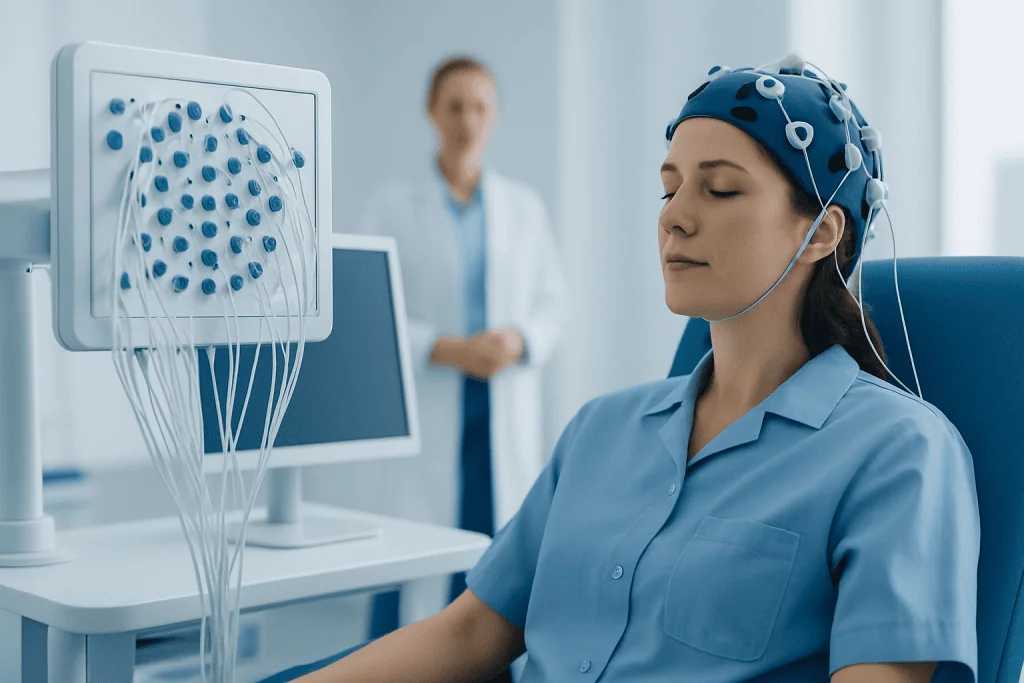
Diagnosis is based mainly on a detailed medical history and neurological examination. The doctor will ask about the timing of symptoms, how the aura starts and spreads, how long it lasts, whether headache follows, associated symptoms, medication use, family history, and possible triggers. The pattern over time is often the most helpful clue.
A typical diagnosis of migraine with aura is more likely when aura symptoms are fully reversible, develop gradually, last between several minutes and about one hour, and are followed by migraine features such as headache, nausea, or light sensitivity. The clinician may also assess vision, eye movements, reflexes, strength, sensation, coordination, and speech to look for signs that suggest another condition.
Tests are not always needed for long-standing, typical migraine with aura. However, brain imaging or vascular imaging may be recommended when symptoms are new, changing, unusually prolonged, associated with abnormal examination findings, or occur in a person with significant vascular risk factors. In these situations, neuroradiology imaging can help evaluate the brain and blood vessels when clinically indicated.
Specialist assessment may be helpful when visual symptoms are complex, when eye disease needs to be excluded, or when aura occurs without headache. Depending on symptoms, a patient may be referred for neuro-ophthalmology evaluation or to a neurologist experienced in headache disorders. The goal is to confirm the diagnosis, avoid unnecessary worry, and choose the safest treatment options.
Treatment Options and Planning
Treatment planning for migraine with aura usually has two parts: acute treatment for individual attacks and preventive treatment to reduce attack frequency or severity. Acute treatment works best when taken early in the migraine phase, but patients should follow their doctor’s instructions because some medicines may not be appropriate for people with certain cardiovascular conditions.
Acute options may include non-prescription pain relievers, anti-nausea medicines, migraine-specific medicines, or other prescribed therapies. Frequent use of pain medicines can lead to medication-overuse headache, so patients should tell their doctor how often they are treating attacks. A clear plan can specify what to take, when to take it, what to avoid, and when to seek help.
Preventive treatment may be considered when attacks are frequent, disabling, prolonged, difficult to treat, or associated with significant aura-related concern. Options can include certain blood pressure medicines, anti-seizure medicines, antidepressant-class medicines, botulinum toxin for chronic migraine, calcitonin gene-related peptide targeted therapies, and non-drug approaches. The best choice depends on age, pregnancy plans, other medical conditions, side effects, and patient preference.
Specialized headache medicine care can be valuable when the diagnosis is uncertain, attacks remain frequent, or multiple treatments have not worked well. Some patients benefit from a broader migraine care plan that includes medication review, lifestyle support, management of coexisting sleep or mood conditions, and follow-up to adjust treatment over time.
Prevention, Self-care, and When to See a Doctor
Self-care cannot always prevent migraine with aura, but it can lower the likelihood of attacks for many people. Regular sleep and wake times, consistent meals, hydration, moderate physical activity, and limiting sudden caffeine changes are often helpful. Stress management is not about eliminating stress completely; it is about building recovery time and predictable routines.
A practical prevention plan may include a migraine diary, attention to menstrual or hormonal patterns, reducing exposure to personal triggers, and creating a calm environment when aura begins. During an attack, resting in a dark quiet room, drinking fluids if tolerated, and taking prescribed medicine according to the plan may help. Patients should avoid driving during aura or when vision, concentration, or reaction time is impaired.
Patients should seek urgent medical care for sudden weakness, facial drooping, trouble speaking, confusion, loss of vision in one eye, a thunderclap headache, aura lasting much longer than usual, headache after head injury, fever with stiff neck, or a first severe headache. Prompt evaluation is also important for new aura during pregnancy or postpartum, or for symptoms that are distinctly different from the person’s usual migraine pattern.
For international patients, Acibadem International offers access to multidisciplinary neurology teams and JCI-accredited hospitals that diagnose and treat migraine with aura and related neurological conditions. A qualified doctor can review the patient’s history, assess stroke-related risk factors, and create a treatment plan that is both safe and practical for daily life.
Frequently asked questions
What does migraine with aura feel like?
Migraine with aura often begins with temporary visual symptoms such as flashing lights, zigzag lines, shimmering shapes, or blind spots. Some people have tingling, numbness, or difficulty finding words. The aura usually develops gradually and resolves before or during the headache phase.
Is migraine with aura dangerous?
Migraine with aura is usually not dangerous, and most people recover fully after each attack. However, because aura symptoms can resemble stroke or other neurological problems, new or unusual symptoms should be assessed by a doctor. Ongoing care also helps address factors that may influence stroke risk.
Does migraine with aura increase stroke risk?
Migraine with aura is associated with a higher relative risk of ischemic stroke in some groups, but the absolute risk for most individuals remains low. Risk is more important when combined with smoking, high blood pressure, diabetes, high cholesterol, or estrogen-containing contraception. A doctor can help assess personal risk and prevention steps.
Can aura happen without a headache?
Yes, some people experience aura without a headache, sometimes called silent migraine or acephalgic migraine. This is more common in people with a history of migraine but can also appear later in life. Because other conditions can look similar, a first episode should be medically evaluated.
What treatments help migraine with aura?
Treatment may include acute medicines for attacks and preventive therapies if attacks are frequent or disabling. Lifestyle regularity, trigger management, and treatment of related conditions such as sleep problems can also help. The best plan depends on the person’s symptoms, medical history, and cardiovascular risk profile.
Should people with migraine with aura avoid hormonal contraception?
Some estrogen-containing contraceptives may not be recommended for certain people with migraine with aura, especially those who smoke or have other vascular risk factors. This decision should be made with a clinician who can review the full medical history. Progestin-only or non-hormonal methods may be options for some patients.
When should aura symptoms be treated as an emergency?
Emergency evaluation is needed for sudden one-sided weakness, facial drooping, trouble speaking, confusion, severe sudden headache, vision loss in one eye, or symptoms that do not resolve as usual. A first aura-like episode or a major change in pattern should also be checked promptly. It is safer to rule out urgent causes than to assume it is migraine.
References
- International Headache Society
- American Migraine Foundation
- American Heart Association and American Stroke Association
- National Institute for Health and Care Excellence
- World Health Organization
This article is for general information only and is not a substitute for professional medical advice. Please consult a qualified doctor about your individual situation.
Migraine in Turkey — costs, top hospitals & a free quote
JCI-accredited · board-certified surgeons · reply within 24h
Add us as a Preferred Source to see more of our trusted health content across Google Search, AI Overviews and Discover.
Check your numbers in seconds
BMI, calories, due date, blood pressure and 30+ more clinical calculators — free, instant, doctor-reviewed ranges.

Neurology
Diagnosis and treatment of disorders of the brain, spinal cord, nerves and muscles.
51 specialists in this unit