IVF With Adenomyosis: Diagnosis, Treatment Planning, and Transfer Decisions

Adenomyosis is a condition in which tissue similar to the uterine lining grows within the muscle of the uterus, sometimes causing heavy periods, pain, or infertility. Diagnosis is usually based on expert transvaginal ultrasound and, when needed, pelvic MRI; symptoms alone are not enough to guide IVF planning.
Key Takeaways
- Adenomyosis is a condition in which tissue similar to the uterine lining grows within the muscle of the uterus, sometimes causing heavy periods, pain, or infertility.
- Diagnosis is usually based on expert transvaginal ultrasound and, when needed, pelvic MRI; symptoms alone are not enough to guide IVF planning.
- IVF treatment may include ovarian stimulation, embryo freezing, medical preparation of the uterus, and a personalized decision about fresh versus frozen embryo transfer.
- Treatment decisions depend on age, ovarian reserve, embryo quality, severity of adenomyosis, symptoms, and whether other conditions such as endometriosis or fibroids are present.
- Patients should discuss transfer timing, medication options, pregnancy monitoring, and realistic expectations with a reproductive medicine specialist.
Adenomyosis can affect fertility and IVF outcomes by changing the uterine muscle and, in some patients, the environment where an embryo implants. Careful diagnosis, individualized preparation, and thoughtful embryo transfer decisions help fertility teams plan treatment safely and realistically.
Overview: What Adenomyosis Means for IVF
Adenomyosis occurs when tissue similar to the endometrium, the lining of the uterus, is found within the muscular wall of the uterus. This can make the uterus enlarged, tender, or more reactive to hormonal changes. Some people have no symptoms, while others experience heavy menstrual bleeding, pelvic pain, painful periods, or difficulty becoming pregnant.
In fertility care, adenomyosis matters because embryo implantation depends not only on embryo quality but also on a receptive uterine environment. Adenomyosis may be associated with inflammation, altered uterine contractions, changes in blood flow, and changes in the normal structure of the uterine muscle. These factors can influence implantation, miscarriage risk, and pregnancy planning, although the effect varies from person to person.
IVF with adenomyosis is not a single fixed protocol. A patient with mild, focal adenomyosis and good-quality embryos may need a different plan from someone with a diffusely enlarged uterus, significant pain, coexisting endometriosis, or previous unsuccessful embryo transfers. The goal is to confirm the diagnosis, understand its severity, and choose the safest timing for embryo transfer.
Symptoms and When Adenomyosis Is Suspected

Adenomyosis is sometimes suspected because of symptoms. Common signs include heavy or prolonged menstrual bleeding, severe cramps, pelvic pressure, pain during intercourse, and spotting before periods. Some patients also describe a dull pelvic ache that worsens around menstruation. However, symptoms do not always match disease severity; mild imaging findings can be painful, while extensive adenomyosis can be silent.
In an IVF setting, adenomyosis may also be considered when there is a history of repeated implantation failure, miscarriage, difficult embryo transfer because of uterine anatomy, or an enlarged uterus found during pelvic examination or ultrasound. It may coexist with endometriosis, fibroids, or polyps, all of which can influence fertility planning. Because these conditions can overlap, a careful evaluation is important before assuming adenomyosis is the only factor.
Patients preparing for IVF treatment should tell their fertility team about menstrual pain, heavy bleeding, prior uterine surgery, pregnancy losses, previous embryo transfers, and any diagnosis of endometriosis or fibroids. This information helps the clinician decide whether more detailed imaging or a different transfer strategy is needed.
Diagnosis Before IVF: Ultrasound, MRI, and Uterine Assessment
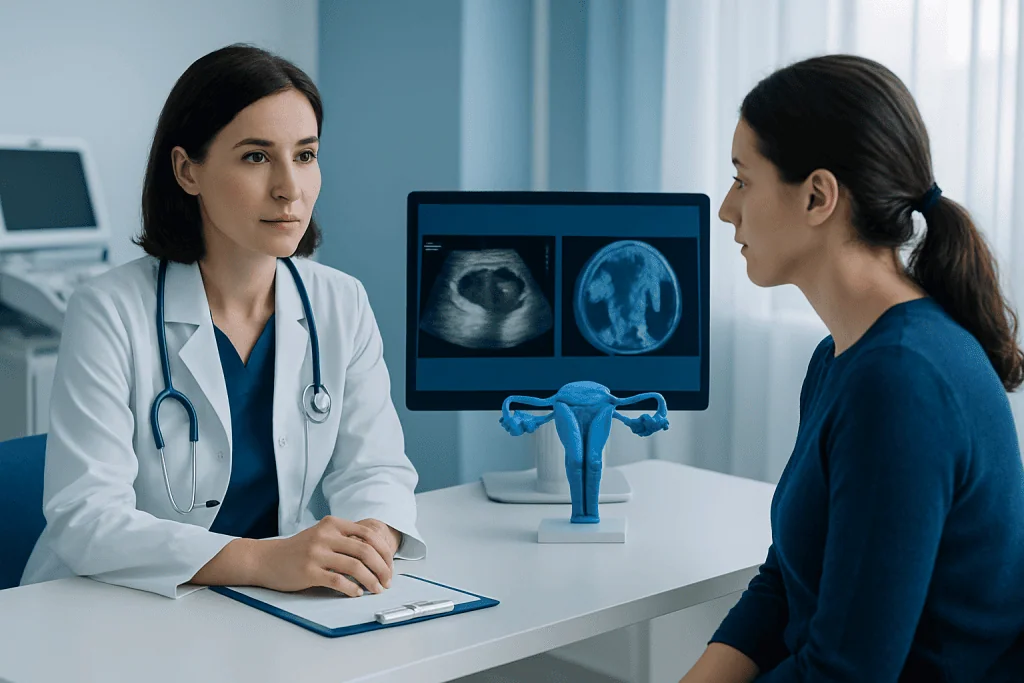
The first-line test for suspected adenomyosis is usually a high-quality transvaginal ultrasound performed by an experienced clinician. Ultrasound may show an enlarged uterus, asymmetrical thickening of the uterine wall, small cyst-like spaces in the muscle, fan-shaped shadowing, or an irregular junction between the lining and the muscle. These features help distinguish adenomyosis from fibroids, although the two can occur together.
Pelvic MRI can be useful when ultrasound findings are unclear, when the uterus is very enlarged, or when surgery or complex treatment planning is being considered. MRI provides detailed images of the junctional zone, which is the boundary between the endometrium and the uterine muscle. A thickened or irregular junctional zone can support the diagnosis, but imaging findings must be interpreted in the context of the patient’s symptoms and fertility history.
Additional assessment may include checking the uterine cavity with saline infusion ultrasound, hysteroscopy, or other tests if a polyp, submucosal fibroid, scar tissue, or congenital uterine difference is suspected. These tests do not diagnose adenomyosis directly, but they can identify treatable cavity problems that may interfere with embryo implantation. A complete fertility evaluation also reviews ovarian reserve, semen parameters, tubal history, thyroid or metabolic factors, and other causes of female infertility.
Treatment Planning: Balancing Uterine Preparation and Embryo Creation
Treatment planning for IVF with adenomyosis often separates two priorities: creating embryos and preparing the uterus. Ovarian stimulation is used to collect eggs and create embryos in the laboratory, while uterine preparation focuses on improving the conditions for implantation. In some patients, the fertility team may recommend collecting eggs first, freezing embryos, and delaying transfer until the uterus has been medically prepared.
Medical options may include hormonal suppression before embryo transfer, commonly using medications that temporarily reduce estrogen stimulation of adenomyosis. These approaches may reduce uterine size, inflammation, and symptoms in selected patients. The exact medication, duration, and timing should be individualized, especially for patients with low ovarian reserve, advanced reproductive age, migraine history, bone health concerns, or other medical conditions.
Surgery is not routine for adenomyosis before IVF. Unlike a fibroid that can sometimes be removed from a clear plane, adenomyosis is often spread through the uterine muscle, making surgery more complex and potentially risky for future pregnancy. Surgery may be considered only in selected cases, such as a well-defined focal adenomyoma causing severe symptoms or distortion, and should be discussed with a specialist experienced in fertility-preserving uterine surgery.
Laboratory strategy also matters. Depending on sperm parameters and previous fertilization history, intracytoplasmic sperm injection may be recommended as part of IVF; patients can discuss whether ICSI is appropriate for their situation. Embryo quality, blastocyst development, and whether genetic testing is being considered may all affect transfer planning, but none of these decisions should be based on adenomyosis alone.
Fresh or Frozen Embryo Transfer: How the Decision Is Made
One of the most important IVF decisions in adenomyosis is whether to proceed with a fresh embryo transfer after egg retrieval or freeze embryos and transfer later. A frozen embryo transfer may be preferred when the uterus needs additional preparation, when hormone levels after stimulation are high, when there is risk of ovarian hyperstimulation, or when symptoms and imaging suggest more active adenomyosis. Freezing embryos can give the team time to optimize the endometrium and uterine muscle environment.
A fresh transfer may still be reasonable in selected patients with mild disease, reassuring uterine assessment, good endometrial development, and no significant symptoms. The decision is individualized and should consider age, embryo number, previous IVF outcomes, response to stimulation, progesterone level, uterine size, and patient preference. There is no universal rule that all patients with adenomyosis must avoid fresh transfer.
For frozen embryo transfer, protocols may use a natural cycle, modified natural cycle, or hormone replacement cycle. In adenomyosis, some clinicians may add a period of hormonal suppression before the transfer cycle, particularly in diffuse or symptomatic disease. The aim is to reduce adenomyosis activity before exposing the uterus to the hormones needed for implantation support.
Single embryo transfer is often discussed to reduce the risks associated with twin pregnancy, especially when the uterus is affected by adenomyosis. Pregnancy in adenomyosis may require closer obstetric monitoring because some studies associate the condition with higher risks of miscarriage, preterm birth, abnormal placentation, or hypertensive disorders. These risks are not inevitable, but they should be part of informed counseling before transfer.
Personal Factors That Shape the IVF Plan
No two IVF plans are identical because adenomyosis exists within a broader fertility picture. A patient’s age is central because egg number and egg quality decline over time, and delaying embryo creation for long periods may not be advisable in some cases. For this reason, fertility teams may prioritize egg retrieval first and uterine preparation later, especially when ovarian reserve is reduced.
The pattern of adenomyosis also matters. Focal adenomyosis affects a limited area, while diffuse adenomyosis involves a broader portion of the uterine muscle. The uterus may be mildly affected or significantly enlarged. The location of disease, relationship to the uterine cavity, and presence of coexisting fibroids or endometriosis help determine whether medication, surgery, or transfer delay is worth considering.
Previous reproductive history is equally important. A patient with no prior embryo transfers may be managed differently from someone who has had repeated failed transfers using good-quality embryos. Miscarriage history, prior cesarean section, uterine procedures, pelvic infection, and endometriosis surgery may all influence both diagnosis and treatment planning. Male factor infertility, ovulation disorders, and conditions such as polycystic ovary syndrome should also be assessed rather than attributing every difficulty to adenomyosis.
Prevention, Self-Care, and Preparing for Treatment
There is no proven way to prevent adenomyosis, and it is not caused by anything a patient did wrong. Self-care cannot remove adenomyosis, but it can support overall fertility treatment readiness. Maintaining a healthy weight, avoiding smoking, moderating alcohol intake, managing chronic conditions, and following medical advice for thyroid disease, diabetes, anemia, or vitamin deficiencies can help prepare the body for treatment and pregnancy.
Patients with heavy bleeding should ask whether blood count and iron levels need evaluation, because anemia can affect energy, wellbeing, and pregnancy preparation. Pain should also be addressed; persistent severe menstrual pain is not something a patient has to simply tolerate. Safe pain control, hormonal options, and treatment timing should be discussed with a clinician, especially when an IVF cycle is planned.
Emotional preparation is also part of care. IVF with adenomyosis can involve waiting periods, changed transfer dates, or difficult decisions about embryo freezing and uterine preparation. Clear communication with the fertility team can reduce uncertainty. Patients may wish to ask what the imaging showed, how severe the adenomyosis appears, whether transfer should be delayed, what medication is being recommended, and how success and risks will be reviewed.
When to See a Fertility Specialist
A person should seek fertility evaluation if pregnancy has not occurred after 12 months of regular unprotected intercourse, or after 6 months if the woman is 35 or older. Earlier consultation is appropriate when there are severe menstrual cramps, heavy bleeding, known endometriosis, previous uterine surgery, recurrent miscarriage, or a previous diagnosis of adenomyosis. Timely evaluation helps avoid unnecessary delays, especially when age or ovarian reserve is a concern.
Patients already in IVF care should ask for reassessment if imaging suggests adenomyosis, if the uterus appears enlarged, if symptoms are worsening, or if there have been unsuccessful transfers with good-quality embryos. Reassessment does not always mean major treatment changes, but it may clarify whether the embryo transfer plan should be adjusted.
Acibadem International’s multidisciplinary fertility, gynecology, imaging, and maternal-fetal medicine specialists evaluate and treat adenomyosis and infertility in JCI-accredited hospitals for international patients. Care plans may include advanced imaging, individualized infertility evaluation, IVF laboratory support, and coordinated pregnancy monitoring when needed.
Frequently asked questions
Can a person with adenomyosis still have successful IVF?
Yes. Many people with adenomyosis can become pregnant through IVF, especially when embryo quality and uterine preparation are carefully assessed. The condition may reduce the chance of implantation or increase miscarriage risk in some patients, but the effect varies widely. A fertility specialist can explain the likely impact based on imaging, symptoms, age, and previous treatment history.
Is frozen embryo transfer better than fresh transfer for adenomyosis?
Frozen embryo transfer is often considered when the uterus needs time for medical preparation or when adenomyosis appears active or extensive. It allows the care team to separate ovarian stimulation from embryo transfer. However, fresh transfer may still be appropriate for selected patients with mild findings and a reassuring cycle.
How is adenomyosis diagnosed before IVF?
Diagnosis is usually based on expert transvaginal ultrasound, which can identify characteristic changes in the uterine muscle. MRI may be used when ultrasound is unclear or when disease mapping is important for treatment planning. A uterine cavity assessment may also be recommended to check for polyps, fibroids, or scar tissue.
Does adenomyosis need to be treated before every embryo transfer?
Not always. Treatment depends on the severity of imaging findings, symptoms, uterine size, previous transfer outcomes, and the number and quality of embryos available. Some patients proceed without specific suppression, while others benefit from delaying transfer for medical preparation.
Can surgery improve IVF outcomes in adenomyosis?
Surgery is not routinely recommended because adenomyosis is often spread within the uterine muscle and can be difficult to remove safely. It may be considered in selected cases of focal disease or severe symptoms after careful specialist review. The potential benefits must be balanced against risks such as scarring, uterine weakening, and future pregnancy considerations.
What questions should patients ask before embryo transfer?
Patients can ask how severe the adenomyosis appears, whether the uterine cavity is normal, and whether a fresh or frozen transfer is recommended. They may also ask whether hormonal suppression is advised, how long preparation may take, and what pregnancy monitoring will be needed. Written notes can help patients compare options and make informed decisions.
References
- European Society of Human Reproduction and Embryology
- American Society for Reproductive Medicine
- Royal College of Obstetricians and Gynaecologists
- International Society of Ultrasound in Obstetrics and Gynecology
- World Health Organization
This article is for general information only and is not a substitute for professional medical advice. Please consult a qualified doctor about your individual situation.
IVF & fertility treatment in Turkey — success rates and costs
JCI-accredited · board-certified surgeons · reply within 24h
Add us as a Preferred Source to see more of our trusted health content across Google Search, AI Overviews and Discover.

Related Treatments
Related Conditions
More from the Health Library



Related Specialists

Prof. Dr. Bülent Tıraş
Gynecology & Obstetrics
Prof. Dr. Mete Güngör
Gynecology & Obstetrics
Prof. Dr. Faruk Suat Dede
Gynecology & Obstetrics
Prof. Dr. Tansu Küçük
Gynecology & Obstetrics