IVF Success Rates: What Affects Your Chances of Pregnancy

Age is one of the strongest factors affecting IVF success rates, especially egg quality and embryo potential. Embryo quality, uterine health, sperm factors, and the cause of infertility all play important roles.
Key Takeaways
- Age is one of the strongest factors affecting IVF success rates, especially egg quality and embryo potential.
- Embryo quality, uterine health, sperm factors, and the cause of infertility all play important roles.
- A thorough fertility evaluation can identify treatable issues before IVF begins.
- Healthy lifestyle habits may support treatment outcomes, although they cannot guarantee pregnancy.
- IVF often involves more than one cycle, and success is best discussed with an experienced fertility specialist.
IVF success rates vary from person to person and are influenced by several medical and lifestyle factors. Understanding what affects pregnancy chances can help patients prepare for treatment, ask informed questions, and make decisions with greater confidence.
Overview: What IVF Success Rates Mean
IVF success rates describe the likelihood that in vitro fertilization will lead to pregnancy or live birth. These rates are usually discussed per treatment cycle, per egg retrieval, or per embryo transfer. Because clinics may report outcomes in different ways, it is important for patients to understand exactly what is being measured.
Success in IVF is not determined by one factor alone. It reflects a combination of egg quality, sperm health, embryo development, the condition of the uterus, underlying medical issues, and the treatment plan used. Even when all test results seem reassuring, IVF still involves biology that cannot be fully controlled.
For this reason, doctors usually talk about chances rather than promises. A couple may have a good prognosis and still need more than one cycle, while another may become pregnant on the first attempt. Individual assessment is the best way to estimate likely outcomes and to decide whether IVF treatment is the most suitable option.
The Main Factors That Affect IVF Success Rates

Female age is one of the most important influences on IVF success rates. As age increases, both the number and quality of eggs tend to decline. This can affect fertilization, embryo development, implantation, and miscarriage risk. Younger patients generally have higher chances of pregnancy with their own eggs, while people of advanced reproductive age may need more detailed counseling about expected outcomes.
Embryo quality also matters greatly. Embryos that divide and develop normally are more likely to implant. In some cases, additional laboratory techniques such as ICSI may be used when there is a significant male factor or a prior fertilization problem, but the overall benefit depends on the couple’s specific diagnosis rather than the technique alone.
Uterine and endometrial factors can influence whether an embryo can implant successfully. Conditions such as fibroids, scar tissue, or structural differences may reduce success in some patients. Certain findings, such as uterine septum or endometrial polyps, may need investigation or treatment before embryo transfer.
Male fertility factors are equally important. Sperm count, movement, and shape may affect fertilization and embryo quality. A fertility workup often evaluates both partners together because fertility is a shared process, and treatment planning for infertility is usually most effective when all contributing factors are considered.
How the Cause of Infertility Changes Pregnancy Chances
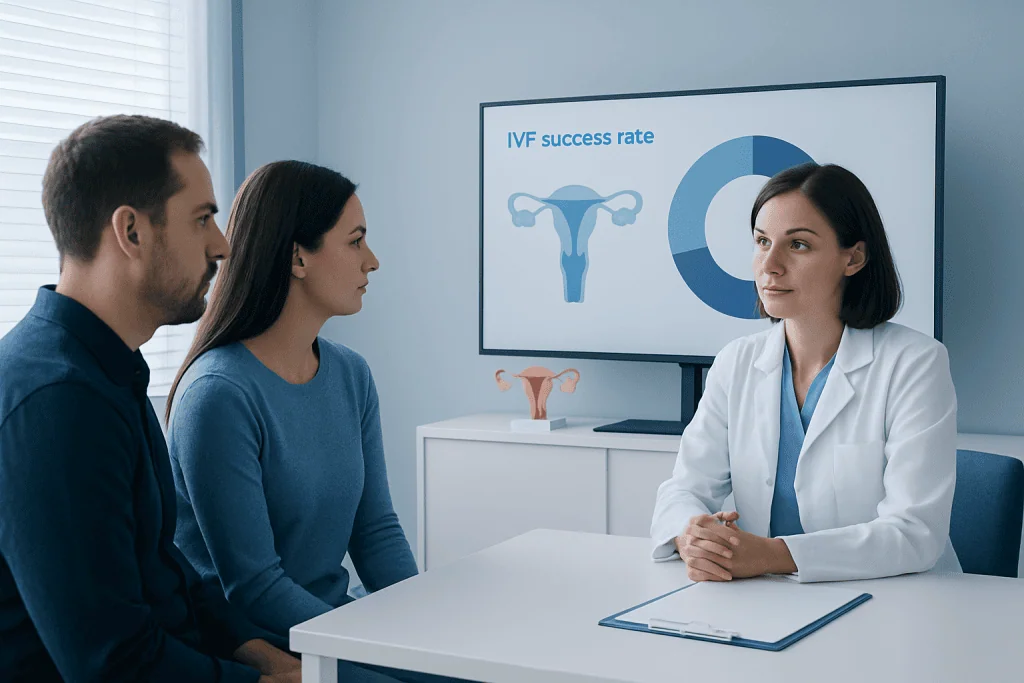
IVF success rates can differ depending on why pregnancy has been difficult. Some causes of infertility respond very well to IVF, while others require more complex planning. Tubal blockage, for example, is often a common reason IVF is recommended because the treatment can bypass the fallopian tubes entirely.
Ovulation disorders may also affect outcomes, but many are manageable. Patients with polycystic ovary syndrome may respond well to treatment, though medication dosing and monitoring need careful adjustment to reduce the risk of overstimulation. Other conditions, such as severe endometriosis or reduced ovarian reserve, may present additional challenges and may influence expectations for the number of eggs retrieved.
Uterine, cervical, or pelvic conditions may also contribute. A history of pelvic inflammatory disease can damage the fallopian tubes or affect pelvic anatomy. Prior pregnancy history matters too, including previous miscarriages or ectopic pregnancy, because these details can guide testing and embryo transfer planning.
When infertility remains unexplained, IVF may still be effective, but the path is less predictable. In these situations, clinicians rely on age, ovarian reserve testing, semen analysis, previous treatment response, and ultrasound findings to create the most suitable strategy.
Tests and Evaluation Before IVF
A detailed fertility evaluation helps estimate IVF success rates more accurately. This usually includes a review of medical history, menstrual patterns, previous pregnancies, surgeries, medications, and lifestyle factors. Blood tests may assess hormone levels related to ovarian reserve and ovulation, while ultrasound can help evaluate the ovaries and uterus.
Doctors often look at anti-Mullerian hormone, antral follicle count, and other indicators to estimate how the ovaries may respond to stimulation. These tests do not predict pregnancy perfectly, but they can help forecast how many eggs might be retrieved and whether a modified treatment protocol may be helpful.
Assessment of the uterus is also important before embryo transfer. Imaging or hysteroscopy may be used if there is a concern about polyps, fibroids, congenital uterine differences, or scarring. A semen analysis is a standard part of workup as well, because sperm factors can influence fertilization and embryo development.
Patients may also be screened for thyroid disease, diabetes risk, infectious diseases, and other medical conditions that could affect fertility or pregnancy. The goal is not only to improve the chance of conception, but also to support a safer and healthier pregnancy if IVF is successful.
Treatment Choices That May Influence Success
Not every IVF plan is the same. Medication protocols are tailored according to age, ovarian reserve, body response, and previous treatment history. Careful monitoring during stimulation helps doctors adjust medications and timing to support egg maturation while reducing unnecessary risks.
Laboratory quality is another important factor. The handling of eggs, sperm, and embryos requires strict standards and experienced embryology teams. Decisions about conventional IVF, ICSI, freezing all embryos, or timing of transfer are made according to the patient’s diagnosis and treatment response rather than a one-size-fits-all formula.
The stage of embryo transfer may also matter in some cases. Some patients may have a fresh transfer, while others may benefit from a frozen embryo transfer if hormone levels, endometrial preparation, or medical concerns suggest that waiting could be better. Single embryo transfer is often considered when appropriate to lower the chance of multiple pregnancy while still aiming for a healthy outcome.
If simpler fertility treatments have not worked, patients may move on from approaches such as insemination to IVF. In selected situations, fertility specialists may also discuss related assisted reproduction methods such as artificial fertilisation options more broadly, depending on the diagnosis and treatment goals.
Lifestyle, General Health, and Self-care During IVF
Healthy habits may support IVF success rates, although they cannot guarantee pregnancy. Doctors often advise maintaining a healthy body weight, eating a balanced diet, staying physically active, sleeping well, and avoiding smoking. Limiting alcohol and discussing caffeine use with a doctor may also be recommended.
Chronic medical conditions should be well managed before starting treatment. Blood pressure problems, thyroid disorders, diabetes, and other health issues can influence fertility or pregnancy outcomes if left untreated. Medicines and supplements should also be reviewed, since some may affect treatment or early pregnancy.
Emotional wellbeing matters too. IVF can be physically and mentally demanding, especially when results are uncertain or more than one cycle is needed. Counseling, support groups, or stress-management techniques may help patients cope with the process and stay engaged with their care plan.
Patients should also follow practical clinic advice closely, including medication timing, monitoring appointments, and instructions after egg retrieval or embryo transfer. Good communication with the fertility team can help reduce confusion and support safer treatment.
When to Speak With a Fertility Specialist
It may be time to seek specialist advice if pregnancy has not occurred after 12 months of regular unprotected intercourse, or after 6 months if the woman is age 35 or older. Earlier evaluation is also sensible when there are known issues such as irregular periods, previous pelvic infection, endometriosis, low sperm count, prior cancer treatment, or a history of recurrent pregnancy loss.
A consultation can help clarify whether IVF is likely to improve pregnancy chances and whether other treatments should be considered first. Even when IVF is recommended, many factors can be assessed and sometimes treated before a cycle begins, which may improve the likelihood of a better outcome.
Patients should contact their doctor promptly if they develop severe pelvic pain, heavy bleeding, fever, shortness of breath, or significant swelling during treatment, as these symptoms need medical attention. Anyone with a positive pregnancy test after IVF should also attend early follow-up, since early monitoring helps confirm the pregnancy location and progress.
Near the end of the decision-making process, some patients choose care in specialized centers with multidisciplinary fertility teams. Acibadem International’s JCI-accredited hospitals support international patients with diagnosis and treatment planning for fertility conditions in coordination with experienced specialists.
Frequently asked questions
What is the biggest factor affecting IVF success rates?
Age is one of the strongest factors because it influences egg number and egg quality. However, embryo quality, sperm health, uterine conditions, and the underlying cause of infertility are also very important.
Do IVF success rates mean the same thing at every clinic?
No. Some clinics report pregnancy rates per cycle started, while others report rates per egg retrieval, embryo transfer, or live birth. Patients should ask how outcomes are measured so comparisons are fair and meaningful.
Can lifestyle changes improve IVF pregnancy chances?
Healthy habits may support overall fertility and treatment readiness. Stopping smoking, maintaining a healthy weight, managing stress, and controlling chronic health conditions can all be helpful, but they do not guarantee success.
Does having more eggs retrieved always mean better IVF success?
Not necessarily. While a higher egg number can provide more opportunities for fertilization and embryo development, egg quality is just as important. The goal is a safe, well-monitored response rather than simply the highest number of eggs.
Is IVF successful on the first try for most people?
Some patients do become pregnant in the first cycle, but many need more than one attempt. IVF is often a process rather than a single event, and expected outcomes depend on individual medical factors.
When should someone consider IVF instead of other fertility treatments?
IVF may be considered when other treatments have not worked or when there are factors such as blocked fallopian tubes, severe male factor infertility, reduced ovarian reserve, or a need for advanced laboratory support. A fertility specialist can explain whether simpler options are still reasonable or whether IVF is the better next step.
References
- World Health Organization
- American Society for Reproductive Medicine
- European Society of Human Reproduction and Embryology
- Centers for Disease Control and Prevention
- National Institute for Health and Care Excellence
This article is for general information only and is not a substitute for professional medical advice. Please consult a qualified doctor about your individual situation.
IVF & fertility treatment in Turkey — success rates and costs
JCI-accredited · board-certified surgeons · reply within 24h
Add us as a Preferred Source to see more of our trusted health content across Google Search, AI Overviews and Discover.
Check your numbers in seconds
BMI, calories, due date, blood pressure and 30+ more clinical calculators — free, instant, doctor-reviewed ranges.

Related Treatments
Related Conditions
More from the Health Library



Related Specialists

Prof. Dr. Mehmet Cihat Ünlü
Gynecology & Obstetrics
Prof. Dr. Mete Güngör
Gynecology & Obstetrics
Prof. Dr. Bülent Tıraş
Gynecology & Obstetrics
Prof. Dr. Tansu Küçük
Gynecology & Obstetrics