Coronary Angiography in Turkey: Cost, Safety, and What International Patients Should Expect

Coronary angiography is an imaging procedure that shows blood flow in the coronary arteries. It is often recommended for chest pain, abnormal heart test results, or suspected coronary artery disease.
Key Takeaways
- Coronary angiography is an imaging procedure that shows blood flow in the coronary arteries.
- It is often recommended for chest pain, abnormal heart test results, or suspected coronary artery disease.
- Safety depends on careful patient selection, experienced teams, and appropriate aftercare.
- Costs vary by hospital, whether treatment such as a stent is needed, and the patient’s overall health.
- Most patients go home the same day or after a short hospital stay, depending on the procedure and findings.
- International patients benefit from asking in advance about package details, follow-up, and medication planning.
Coronary angiography in Turkey helps doctors see narrowed or blocked heart arteries and guide the next step in care. For international patients, understanding cost, safety, preparation, and recovery can make the process clearer and less stressful.
Overview: What Coronary Angiography Is
Coronary angiography is a medical imaging procedure used to examine the arteries that supply blood to the heart muscle. A cardiologist guides a thin tube called a catheter through a blood vessel, usually from the wrist or groin, to the heart. Contrast dye is then injected so the coronary arteries can be seen clearly on X-ray images.
This test is often part of cardiac catheterization. It helps doctors identify narrowing, blockage, or other changes in the coronary arteries. The information can confirm or rule out coronary artery disease and can help explain symptoms such as chest discomfort, shortness of breath, or reduced exercise tolerance.
For international patients, coronary angiography in Turkey is commonly sought because it may combine specialist cardiac expertise, modern hospital infrastructure, and coordinated travel support. However, the procedure should always be chosen for medical reasons, not price alone. The most important factors are the patient’s clinical needs, the hospital’s experience, and the quality of pre-procedure and post-procedure care.
When It Is Recommended and What It Can Show
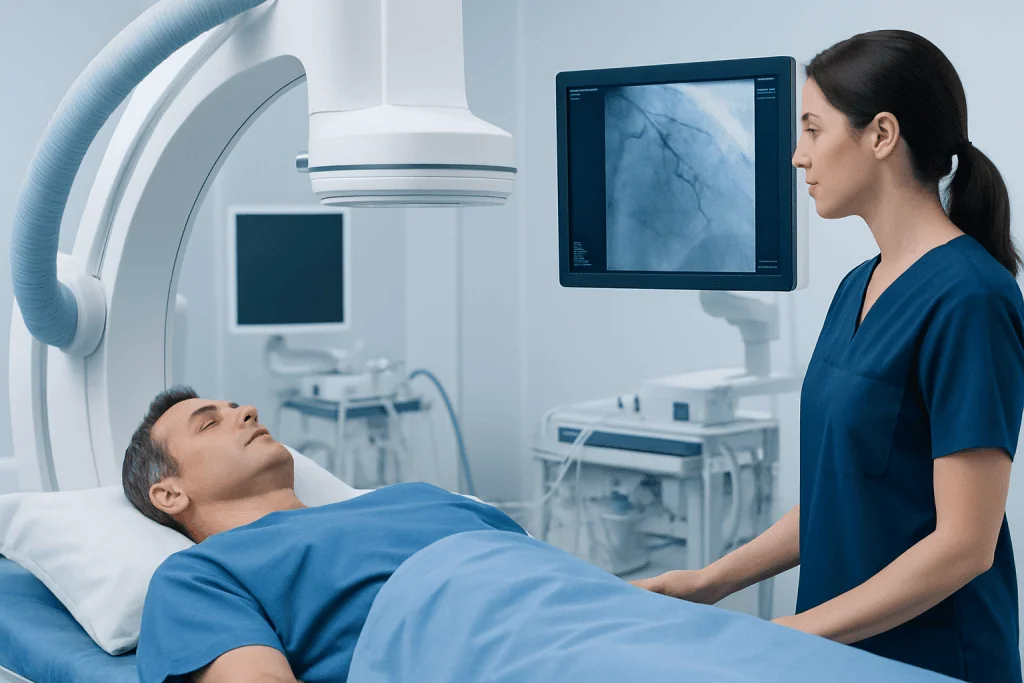
A doctor may recommend coronary angiography when symptoms or earlier tests suggest a problem with heart blood flow. Common reasons include ongoing or unexplained chest pain, suspected angina, abnormal stress test results, or concerns after a possible heart attack. It may also be used when noninvasive tests do not provide enough information.
The test can show whether a coronary artery is narrowed, how severe a blockage is, and which part of the artery is affected. This is important for planning treatment. Depending on the findings, the next step may be medicines, lifestyle changes, a stent procedure such as coronary stent treatment, or surgery such as coronary artery bypass surgery.
Coronary angiography can also help evaluate people with known heart conditions, including those with stable angina or after a heart attack. In some cases, it is used before certain heart surgeries or when symptoms continue despite treatment. Before recommending it, the care team usually reviews blood tests, kidney function, allergies, medications, and prior heart imaging such as echocardiography.
What International Patients Should Expect Before, During, and After

Before the procedure, patients usually have a consultation with a cardiologist and may undergo an electrocardiogram, blood tests, and other heart imaging. The team reviews current medications, especially blood thinners, diabetes medicines, and any history of allergy to contrast dye. Patients are often asked not to eat or drink for several hours before the procedure, depending on the hospital’s instructions.
During coronary angiography, the patient is awake but receives local anesthesia at the catheter entry site and may also receive medicine to help them relax. The procedure itself often takes less than an hour, although preparation and recovery take longer. Patients may feel pressure at the access site and a brief warm sensation when the dye is injected, but significant pain is not expected.
After the test, the patient is monitored while the access site is checked for bleeding and vital signs are observed. Recovery time depends partly on whether the wrist or groin was used and whether any additional treatment was performed. If only diagnostic angiography is done, many patients return to their accommodation the same day or after a short observation period. If a stent is placed or if the patient has other medical issues, a longer stay may be needed.
For international patients, it is helpful to ask who coordinates appointments, whether translation is available, how long to remain in Turkey after the procedure, and what follow-up plan is advised after returning home. Clear discharge instructions, a medication list, and procedure images or reports can make later care much easier.
Cost Factors and What May Affect the Total Price
The cost of coronary angiography in Turkey can vary widely. There is no single standard price because the final amount depends on several medical and practical factors. A basic diagnostic angiography is usually less costly than an angiography followed by an intervention such as balloon angioplasty or stent placement.
Other factors that may affect cost include the hospital, the cardiologist’s assessment, the type of room, required laboratory tests, contrast use, medications, and whether the patient has other medical conditions needing closer monitoring. Additional imaging or consultations may also change the total cost. Patients with kidney disease, diabetes, irregular heart rhythm, or complex symptoms may need a more individualized plan.
International patients should ask for a written breakdown of what is included. Helpful questions include whether the quote covers pre-procedure tests, physician fees, hospital stay, medications during admission, stent costs if needed, and emergency management if unexpected findings occur. Travel, accommodation, airport transfers, and post-discharge medicines are often separate from the medical bill unless clearly listed in a package.
Choosing care based only on the lowest quote can be misleading. A lower price may not include important services such as recovery monitoring or follow-up support. It is usually more useful to compare the scope of care, the experience of the cardiology team, and the hospital’s standards for patient safety.
Safety, Risks, and How Hospitals Reduce Complications
Coronary angiography is a commonly performed procedure and is generally considered safe when carried out by experienced teams in appropriately equipped hospitals. Even so, it is an invasive test, which means it has some risks. Doctors weigh these risks against the benefits of obtaining clear information about the heart’s arteries.
Possible complications include bruising or bleeding at the catheter site, allergic reaction to contrast dye, kidney strain from contrast, irregular heart rhythm, blood vessel injury, infection, or, rarely, more serious heart or circulation problems. The likelihood of complications depends on factors such as age, kidney function, bleeding risk, existing heart disease, and overall health status.
Hospitals reduce risk by checking kidney function, reviewing allergies, adjusting medications, using sterile technique, and monitoring the patient closely during and after the procedure. In many patients, wrist access is preferred because it may lower bleeding risk and can allow earlier walking and discharge. Careful hydration and medication review are also important, particularly in people with diabetes or heart failure.
Patients can improve safety by sharing complete health information, including all medicines, supplements, previous reactions to contrast, and any history of bleeding disorders. If the angiography shows a blockage that needs immediate treatment, the same session may sometimes continue with a therapeutic procedure. In selected patients, follow-up support such as cardiac rehabilitation may be part of recovery planning after treatment.
Diagnosis, Results, and Treatment Options After Angiography
The angiography images are reviewed by the cardiologist, who explains whether the coronary arteries look normal, mildly narrowed, or significantly blocked. The results help determine the urgency and type of treatment. In some cases, symptoms may be managed with medicines and risk-factor control alone. In others, a procedure is needed to restore blood flow.
If a short, suitable narrowing is found, a stent procedure may be recommended during the same session or as a planned next step. If there are multiple blockages, disease in major arteries, or complex anatomy, surgery such as bypass may be safer or more effective. Decisions are individualized and often consider symptoms, heart function, diabetes status, and how much heart muscle is at risk.
Treatment after angiography may include medications to lower cholesterol, control blood pressure, reduce clotting risk, and ease angina symptoms. It may also involve evaluation with non-invasive cardiology tests to monitor progress or clarify borderline findings. Patients with related conditions such as hypertension are usually advised to manage those conditions carefully because they affect long-term heart health.
At experienced centers, decisions are often made by a multidisciplinary team. Acibadem International’s multidisciplinary specialists and JCI-accredited hospitals diagnose and treat heart conditions for international patients, with care plans tailored to the angiography findings and the patient’s wider medical needs.
Preparation, Recovery, and When to Seek Medical Advice
Preparation usually includes following fasting instructions, bringing a current medication list, and arranging support after discharge if sedation is used. Patients should ask whether to continue blood thinners, diabetes medicines, or blood pressure tablets on the day of the test. Comfortable clothing and a plan for a restful day after the procedure can be helpful.
Most patients are advised to drink fluids as recommended, avoid heavy lifting for a short period, and watch the catheter site for swelling or bleeding. Mild soreness or bruising can happen, especially around the wrist or groin. The care team will explain when showering, walking, flying, and returning to routine activity are appropriate.
Patients should seek medical advice promptly if they develop chest pain, shortness of breath, fainting, fever, increasing redness at the puncture site, heavy bleeding, severe swelling, or numbness in the limb used for access. These symptoms do not always mean a serious complication, but they should be assessed without delay.
Long-term prevention after angiography is just as important as the procedure itself. Stopping smoking, eating a heart-healthy diet, staying physically active within medical advice, maintaining a healthy weight, and taking medicines as prescribed can lower future cardiovascular risk. Regular follow-up with a cardiologist remains important after returning home.
Frequently asked questions
Is coronary angiography painful?
Coronary angiography is usually not described as painful, although there may be brief discomfort. Patients typically feel a small sting from the local anesthetic and some pressure where the catheter is inserted. A warm sensation can happen when contrast dye is injected.
How long does coronary angiography take?
The imaging part of the procedure often takes less than an hour, but the full visit is longer. Preparation, consent, recovery monitoring, and discharge instructions add extra time. If treatment such as a stent is performed, the total time may increase.
Is coronary angiography in Turkey safe for international patients?
It can be safe when it is performed in experienced hospitals with appropriate cardiac facilities and careful patient assessment. Safety depends on the person’s overall health, kidney function, medications, and the hospital’s monitoring standards. Patients should ask about the care team, emergency support, and follow-up planning.
How much does coronary angiography in Turkey cost?
The cost varies depending on whether the procedure is diagnostic only or includes treatment, as well as the hospital, tests, medications, and length of stay. A written quote is the best way to understand the likely total. Patients should also ask what is not included, such as travel, accommodation, and post-discharge medicines.
Can a stent be placed during the same procedure?
Yes, in some cases a stent can be placed during the same session if a suitable blockage is found and the patient has given consent. This depends on the angiography findings, the patient’s condition, and the treatment plan discussed with the cardiologist. Not every narrowing requires a stent.
How soon can a patient fly after coronary angiography?
The answer depends on whether the procedure was diagnostic only or included an intervention, and on the patient’s recovery. Some people may be cleared to travel after a short period, while others are advised to stay longer for observation. The treating cardiologist should give individualized guidance before travel.
This article is for general information only and is not a substitute for professional medical advice. Please consult a qualified doctor about your individual situation.
Coronary Angiography in Turkey — costs, top hospitals & a free quote
JCI-accredited · board-certified surgeons · reply within 24h
Add us as a Preferred Source to see more of our trusted health content across Google Search, AI Overviews and Discover.

Cardiology Department
Diagnosis and treatment of heart and vascular conditions, from prevention to advanced interventional procedures.
93 specialists in this unitRelated Treatments
Related Conditions
More from the Health Library

Coughing After Heart Bypass Surgery: Why It Happens and When to Call

Heart-Healthy Eating After CABG: Diet Goals for Long-Term Graft Protection

Coronary Bypass Surgery With Low Ejection Fraction: Benefits, Risks, and Planning

Cardiac Ablation: Who It Helps and What to Expect During Recovery
Cardiac Stress Test: Exercise, Imaging, and What Abnormal Results Mean

No-Touch Vein Harvesting in CABG: Potential Benefits and Limitations
Cardiology Specialists at Acibadem

Prof. Dr. Ahmet Oytun Baykan
Cardiology
Prof. Dr. Ahmet Tulga Ulus
Cardiovascular Surgery
Prof. Dr. Ahmet Ümit Güllü
Cardiovascular Surgery
Prof. Dr. Aleks Değirmencioğlu
Cardiology