Brain Vessel Disorders: When Interventional Neurology May Help

Brain vessel disorders include narrowed arteries, clots, aneurysms, and abnormal vessel connections in the brain. Symptoms can begin suddenly and may include weakness, speech difficulty, severe headache, vision changes, or dizziness.
Key Takeaways
- Brain vessel disorders include narrowed arteries, clots, aneurysms, and abnormal vessel connections in the brain.
- Symptoms can begin suddenly and may include weakness, speech difficulty, severe headache, vision changes, or dizziness.
- Interventional neurology uses catheter-based techniques to diagnose and treat certain cerebrovascular problems without open brain surgery.
- Fast medical attention is essential when stroke or bleeding is suspected.
- Long-term care often includes medicines, risk factor control, and follow-up imaging.
Brain vessel disorders are conditions that affect the arteries and veins supplying the brain. In selected cases, interventional neurology offers minimally invasive ways to diagnose blocked, narrowed, or abnormal vessels and to help prevent or treat serious complications such as stroke or bleeding.
Overview
Brain vessel disorders are a group of conditions that affect the blood vessels carrying blood to and from the brain. These vessels are essential because brain tissue depends on a steady supply of oxygen and nutrients. When a vessel becomes narrowed, blocked, weakened, or abnormally connected, brain function can be affected.
Doctors may also describe these conditions as cerebrovascular disorders. They include problems such as ischemic stroke, transient ischemic attack, brain aneurysms, arteriovenous malformations, narrowing of the carotid arteries, and bleeding around or inside the brain such as subarachnoid hemorrhage. Some develop gradually over time, while others happen suddenly and require emergency care.
Interventional neurology is a specialized field focused on diagnosing and treating certain brain and spinal blood vessel conditions using image-guided, minimally invasive techniques. Instead of making a large incision, a specialist guides very thin tubes called catheters through the blood vessels, often starting from the wrist or groin. These procedures may help reopen blocked arteries, seal aneurysms, or treat abnormal vessel connections.
Symptoms of Brain Vessel Disorders
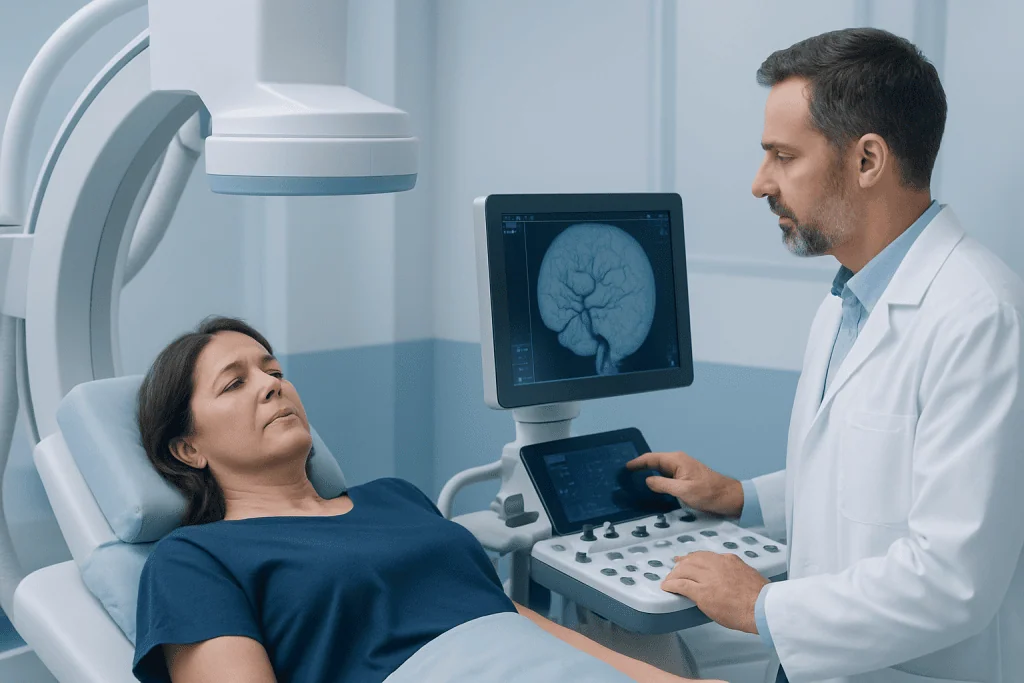
Symptoms vary depending on which vessel is involved, whether blood flow is reduced or a vessel has ruptured, and which part of the brain is affected. Some symptoms are sudden and dramatic, while others may be subtle or come and go.
Common warning signs can include sudden weakness or numbness on one side of the body, facial drooping, trouble speaking or understanding speech, confusion, vision loss or double vision, dizziness, balance problems, or difficulty walking. A very sudden, severe headache can be a sign of bleeding from an aneurysm or another urgent vascular problem. In some people, there may also be nausea, vomiting, or loss of consciousness.
Not every headache or dizzy spell is caused by a brain vessel disorder. For example, common headache conditions such as tension-type headache have different causes. Still, any sudden neurological symptom should be taken seriously, especially if it appears abruptly or is accompanied by weakness, speech changes, or altered awareness.
- Sudden one-sided weakness or numbness
- Trouble speaking, understanding, or swallowing
- Sudden vision changes
- Severe, unusual headache
- Loss of balance, fainting, or confusion
Causes and Risk Factors

Brain vessel disorders can happen for different reasons. Some are caused by atherosclerosis, a process in which fatty deposits build up in artery walls and reduce blood flow. This can affect the carotid arteries in the neck or blood vessels inside the brain. Other conditions involve blood clots that travel to the brain or form directly within a vessel.
Some vessel abnormalities are related to weak spots in the artery wall, which can lead to aneurysms. Others involve unusual tangles or direct connections between arteries and veins. Less commonly, inflammation, infection, trauma, blood clotting disorders, or inherited conditions can damage the vessels or change how blood flows through them.
Risk factors include high blood pressure, smoking, diabetes, high cholesterol, atrial fibrillation, obesity, older age, and a family history of vascular disease. Poorly controlled hypertension is especially important because it increases the risk of both ischemic stroke and bleeding in the brain. Identifying and managing these factors is a key part of prevention and long-term treatment.
How Doctors Diagnose These Conditions
Diagnosis begins with a medical history, a neurological examination, and a careful review of symptoms. Because time matters in many cerebrovascular emergencies, doctors may quickly move to imaging tests to understand whether there is a blockage, bleeding, or another vessel abnormality.
Common tests include CT scans, MRI scans, CT angiography, MR angiography, ultrasound of the carotid arteries, and cerebral angiography. Cerebral angiography is a detailed imaging procedure in which contrast dye is injected through a catheter to show the blood vessels clearly. This is often performed by specialists in neuroradiology or interventional neuroradiology when a precise map of the vessels is needed.
Doctors may also order blood tests, heart rhythm monitoring, and heart imaging to look for the source of a clot or to assess related medical conditions. The goal is not only to confirm the diagnosis but also to decide which treatment is safest and most effective for that individual person.
When Interventional Neurology May Help
Interventional neurology may help when a brain vessel disorder can be treated from inside the blood vessels using catheters and advanced imaging guidance. This approach is often considered for selected patients with acute ischemic stroke caused by a large vessel blockage, brain aneurysms, vascular malformations, certain narrowed arteries, or some causes of abnormal bleeding.
One of the best-known emergency procedures is mechanical thrombectomy, in which a specialist removes a clot from a blocked brain artery. In other situations, tiny coils, stents, balloons, or liquid embolic materials may be used to seal an aneurysm, support a narrowed vessel, or close an abnormal connection between vessels. These treatments are generally performed by experts in interventional neurology.
Interventional treatment is not right for every patient or every type of vessel disorder. The decision depends on the exact diagnosis, how quickly symptoms started, the person’s overall health, and what imaging shows. Some people benefit more from medicine alone, while others may need open surgery or a combination of approaches planned by a multidisciplinary team.
Treatment Options and Recovery
Treatment depends on the underlying problem. For reduced blood flow or clot-related events, doctors may use clot-dissolving medicine in carefully selected emergency cases, antiplatelet medicines, anticoagulants, cholesterol-lowering therapy, and blood pressure control. For aneurysms or abnormal vessels, treatment may include endovascular procedures, surgery, or observation with regular imaging if the risk of rupture is low.
Supportive care is also important. Some people need intensive monitoring in the hospital, rehabilitation for speech or movement problems, and follow-up with neurology, neurosurgery, cardiology, or vascular specialists. If headaches remain a concern after evaluation, care may also involve headache medicine when appropriate, since not all head pain is vascular in origin.
Recovery can be short in mild cases, but after a major stroke or bleeding event it may take weeks to months. Follow-up imaging is often needed to confirm that a treated vessel remains open, that an aneurysm has been fully sealed, or that there are no new changes. Long-term management aims to reduce the chance of another event and support the best possible quality of life.
Prevention, Self-Care, and When to See a Doctor
Many brain vessel disorders cannot be fully prevented, but healthy habits can lower risk. Patients are usually advised to keep blood pressure, blood sugar, and cholesterol within target ranges; avoid smoking; stay physically active; maintain a balanced diet; and take prescribed medicines consistently. Regular checkups are important, especially for people with vascular risk factors or a prior stroke or TIA.
Immediate emergency care is needed for stroke warning signs, sudden severe headache, new confusion, fainting, seizures, or sudden vision or speech changes. It is safest not to wait for symptoms to pass on their own. Early treatment can protect brain tissue and improve outcomes.
For planned evaluation of aneurysms, carotid narrowing, or unexplained neurological symptoms, patients may be referred to a center with specialists in vascular neurology, neurosurgery, and endovascular care. Acibadem International’s multidisciplinary specialists in JCI-accredited hospitals diagnose and treat brain vessel disorders for international patients, including assessment through minimally invasive endovascular techniques when appropriate.
Frequently asked questions
What are brain vessel disorders?
Brain vessel disorders are conditions that affect the arteries or veins supplying the brain. They can reduce blood flow, cause bleeding, or create abnormal connections between vessels, which may affect brain function.
Is interventional neurology the same as brain surgery?
No. Interventional neurology uses minimally invasive, image-guided techniques performed through blood vessels, usually with a catheter inserted through the wrist or groin. In some cases it can treat a problem without open surgery, although surgery may still be needed for certain patients.
Which symptoms should be treated as an emergency?
Sudden weakness, facial drooping, trouble speaking, sudden vision loss, severe unusual headache, collapse, or confusion should be treated as emergencies. These can be signs of stroke or bleeding in the brain and need urgent medical assessment.
Can brain vessel disorders be cured?
Some can be treated very effectively, especially when diagnosed early. The result depends on the type of disorder, how severe it is, and whether there has already been damage to the brain. Even when a condition cannot be fully cured, treatment can often lower risk and help prevent complications.
Who may be a candidate for interventional treatment?
Candidates are usually selected based on imaging results, symptoms, timing, and overall health. People with certain strokes, aneurysms, narrowed vessels, or vascular malformations may benefit, but the decision is individualized and made by a specialist team.
What is recovery like after an endovascular procedure?
Recovery is often shorter than with open surgery, but it still depends on the reason for treatment and the patient's condition beforehand. Some people go home quickly, while others need monitoring, rehabilitation, and follow-up scans.
References
- World Health Organization
- American Stroke Association
- National Institute of Neurological Disorders and Stroke
- Centers for Disease Control and Prevention
- European Stroke Organisation
This article is for general information only and is not a substitute for professional medical advice. Please consult a qualified doctor about your individual situation.
Interventional Neurology in Turkey — costs, top hospitals & a free quote
JCI-accredited · board-certified surgeons · reply within 24h
Add us as a Preferred Source to see more of our trusted health content across Google Search, AI Overviews and Discover.
Check your numbers in seconds
BMI, calories, due date, blood pressure and 30+ more clinical calculators — free, instant, doctor-reviewed ranges.

Neurology
Diagnosis and treatment of disorders of the brain, spinal cord, nerves and muscles.
51 specialists in this unit