Sleep Attacks, Cataplexy, and Vivid Dreams: Could It Be Narcolepsy?

Narcolepsy is a neurological sleep disorder, not simply tiredness or poor sleep habits. Common symptoms include excessive daytime sleepiness, sudden sleep attacks, vivid dream-like experiences, and sleep paralysis.
Key Takeaways
- Narcolepsy is a neurological sleep disorder, not simply tiredness or poor sleep habits.
- Common symptoms include excessive daytime sleepiness, sudden sleep attacks, vivid dream-like experiences, and sleep paralysis.
- Cataplexy is a brief loss of muscle tone triggered by emotions and strongly suggests narcolepsy type 1.
- Diagnosis usually involves a sleep history, overnight sleep testing, and a daytime nap study.
- Treatment often combines medication, scheduled naps, and healthy sleep routines to improve daily functioning.
- People with persistent daytime sleepiness should seek medical evaluation, especially if driving, school, or work are affected.
Narcolepsy is a long-term neurological sleep disorder that affects the brain’s control of sleep and wakefulness. It can cause overwhelming daytime sleepiness and, in some people, sudden muscle weakness called cataplexy, along with vivid dreams and disturbed nighttime sleep.
Overview: What Is Narcolepsy?
Narcolepsy is a chronic neurological disorder in which the brain has difficulty regulating sleep-wake cycles. A person with narcolepsy may feel very sleepy during the day even after what seems like a full night’s sleep. This sleepiness can become so strong that it leads to sudden episodes of falling asleep, sometimes called sleep attacks.
The condition is not caused by laziness, lack of motivation, or simply staying up too late. It is a medical disorder that can affect school, work, relationships, mood, and safety. Many people live with symptoms for years before receiving a diagnosis because the signs may be misunderstood or mistaken for stress, depression, or another sleep problem.
Narcolepsy is often divided into two main types. Type 1 includes cataplexy, which is a sudden, brief loss of muscle tone often triggered by strong emotions such as laughter or surprise. Type 2 does not involve cataplexy, but still causes marked daytime sleepiness. Learning more about narcolepsy care and neurological sleep medicine can help patients understand the condition and the path to diagnosis.
Symptoms of Narcolepsy
The most common symptom of narcolepsy is excessive daytime sleepiness. This is more than feeling a little tired. It is a persistent and often overwhelming urge to sleep during the day, even during conversations, meals, school lessons, or work tasks. Some people take short naps that feel refreshing, but the sleepiness usually returns.
Another key symptom is cataplexy. During a cataplexy episode, muscles may suddenly weaken while the person remains awake and aware. This can look like drooping eyelids, slurred speech, jaw weakness, knees buckling, or, less commonly, a complete collapse. Episodes are usually brief and may be triggered by laughter, excitement, anger, or surprise.
Many people with narcolepsy also have vivid dreams or dream-like hallucinations when falling asleep or waking up. These experiences can feel very real and may involve seeing, hearing, or sensing things that are not there. Sleep paralysis can happen as well, causing a temporary inability to move or speak for a few seconds or minutes during the transition between sleep and wakefulness.
Nighttime sleep may also be fragmented rather than restful. People may wake often, move during sleep, or have difficulty maintaining sleep through the night. Some may notice automatic behaviors, where they continue a simple activity while partially asleep and later have little memory of it. Because daytime fatigue can overlap with other neurological complaints, symptoms may sometimes be confused with conditions such as transient ischemic attack or other causes of sudden weakness, making proper evaluation important.
Causes and Risk Factors

Narcolepsy develops because the brain’s systems that regulate sleep and wakefulness are disrupted. In narcolepsy type 1, many patients have very low levels of a brain chemical called hypocretin, also known as orexin. This chemical helps maintain alertness and stabilizes the boundaries between waking and rapid eye movement (REM) sleep. When hypocretin-producing cells are lost, REM sleep features such as vivid dreaming or muscle weakness can appear at inappropriate times.
The exact reason this cell loss occurs is not always clear, but researchers believe the immune system may play a role in some cases. Genetic factors can increase susceptibility, although narcolepsy usually does not run strongly in families. In rare cases, brain injuries or disorders affecting the hypothalamus may lead to symptoms.
Risk factors may include a family history of narcolepsy, certain immune-related triggers, or damage to brain areas involved in sleep regulation. Symptoms often begin in childhood, adolescence, or young adulthood, but the condition can be identified at any age. Because tiredness is common in modern life, narcolepsy may be overlooked for a long time.
Other sleep disorders, medications, mental health concerns, and neurological conditions can also cause daytime sleepiness. For example, headaches, poor sleep quality, or sleep disruption from another disorder may contribute to fatigue, though they are not the same as narcolepsy. This is one reason a careful specialist assessment is needed rather than assuming symptoms are due to stress or a common problem such as tension-type headache.
How Narcolepsy Is Diagnosed
Diagnosis begins with a detailed medical and sleep history. A doctor will ask about daytime sleepiness, naps, episodes of weakness with emotion, nighttime sleep, medications, and mental health. A sleep diary or actigraphy device may be used for one to two weeks to track sleep patterns and rule out insufficient sleep as the main cause.
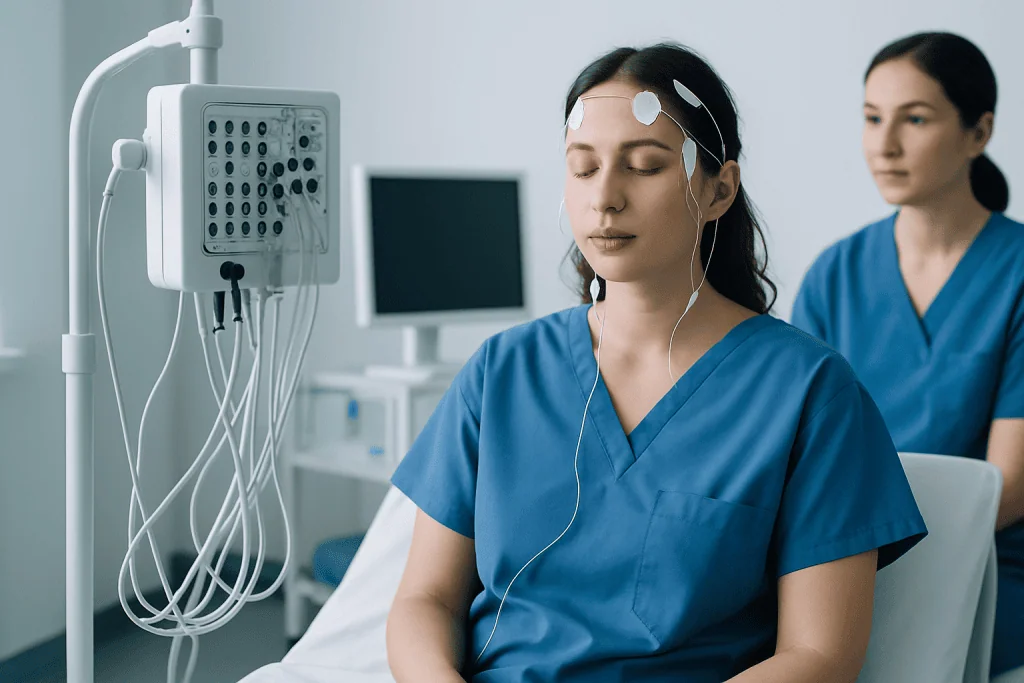
Formal sleep testing is usually an important next step. An overnight sleep study, called polysomnography, records brain activity, breathing, heart rate, oxygen levels, and movement during sleep. This helps doctors look for other conditions that can cause sleepiness, such as obstructive sleep apnea or periodic limb movement disorder.
The overnight test is often followed the next day by a multiple sleep latency test, or MSLT. In this study, the person is given several opportunities to nap during the day. Doctors measure how quickly sleep occurs and whether REM sleep begins unusually early. Falling asleep very quickly and entering REM sleep in naps can strongly support a diagnosis of narcolepsy.
In some situations, additional testing may be recommended, such as checking cerebrospinal fluid hypocretin levels or evaluating for other neurological conditions. Specialists may also use tools from neurophysiology or, if another brain disorder is suspected, neuroradiology. Because symptoms may overlap with seizures, syncope, or other disorders, accurate diagnosis is essential for proper treatment.
Treatment Options for Narcolepsy
There is no single cure for narcolepsy, but treatment can greatly improve symptoms and quality of life. Care is individualized and usually combines medication with lifestyle strategies. The treatment plan depends on which symptoms are most troublesome, such as daytime sleepiness, cataplexy, disturbed nighttime sleep, or hallucinations.
Doctors may prescribe medicines to help promote wakefulness during the day and reduce sudden sleep episodes. Other medications may be used to control cataplexy, vivid dream-related symptoms, or sleep paralysis. The choice of treatment depends on age, overall health, symptom pattern, and possible side effects, so regular follow-up is important.
Behavioral approaches are also a key part of care. Short scheduled naps during the day can be very helpful for some people. A consistent sleep schedule, avoiding sleep deprivation, and reviewing medications or substances that worsen drowsiness may also make symptoms easier to manage.
Narcolepsy can affect concentration, memory, mood, and social confidence, especially if symptoms have gone unrecognized for years. Support from sleep specialists, neurologists, and sometimes neuropsychology professionals can help patients adapt to school, work, and daily routines. Near the end of the care journey, some international patients may also choose evaluation at Acibadem International, where multidisciplinary specialists in JCI-accredited hospitals diagnose and treat narcolepsy and related neurological sleep disorders.
Prevention, Self-care, and Daily Living
Narcolepsy cannot usually be prevented, because it is related to the brain’s regulation of sleep rather than simple lifestyle choices. However, good self-care can reduce the impact of symptoms and support safer daily living. Keeping a regular bedtime and wake time, even on weekends, helps stabilize the body’s schedule.
Planned daytime naps can reduce sleepiness for some people, especially when scheduled before important activities such as classes, meetings, or driving. Limiting alcohol and discussing sedating medications with a doctor may also help, since both can worsen drowsiness. Caffeine may be useful for some people, but it should not replace medical treatment or disrupt nighttime sleep.
Safety deserves special attention. People with untreated or poorly controlled narcolepsy should be cautious with driving, operating machinery, swimming alone, or working at heights. Families, teachers, and employers may be more supportive once they understand that symptoms are medical and manageable rather than a sign of poor effort.
Emotional well-being matters too. Living with a chronic sleep disorder can be frustrating or isolating, particularly when symptoms are misunderstood. Support groups, counseling, and clear communication with loved ones can help. Children and teenagers may need extra guidance at school, and older adults may benefit from broader neurological assessment, including services such as geriatric neurology when age-related concerns are also present.
When to See a Doctor
A doctor should evaluate persistent daytime sleepiness that interferes with normal life, especially if a person falls asleep unintentionally during the day. Medical advice is also important if there are episodes of sudden muscle weakness with emotions, frightening sleep paralysis, or vivid dream-like experiences around sleep.
People should seek prompt assessment if sleepiness affects driving, work performance, school functioning, or personal safety. Narcolepsy can be treated, but the first step is recognizing that the symptoms are not normal and deserve medical attention. Early diagnosis may help reduce accidents, improve concentration, and ease emotional stress.
Urgent evaluation may be needed when symptoms do not fit the typical pattern of narcolepsy or when there are additional neurological warning signs, such as persistent one-sided weakness, new severe headache, confusion, trouble speaking, or loss of consciousness. These symptoms can point to other conditions, including stroke, and should not be attributed to sleepiness alone.
If there is uncertainty, a neurologist or sleep medicine specialist can guide the next steps. With the right diagnosis and a personalized treatment plan, many people with narcolepsy are able to manage symptoms well and lead active, productive lives.
Frequently asked questions
What are the first signs of narcolepsy?
The earliest sign is often excessive daytime sleepiness that does not improve enough with normal rest. Some people also notice vivid dreams, sleep paralysis, or sudden episodes of weakness with strong emotions. Symptoms may start gradually and be mistaken for stress, poor sleep, or depression.
Is cataplexy the same as a seizure?
No. Cataplexy is a sudden loss of muscle tone while the person stays conscious and aware, and it is often triggered by emotions such as laughter or surprise. Seizures usually have a different cause and may involve altered awareness, abnormal movements, or confusion afterward.
Can narcolepsy go away on its own?
Narcolepsy is usually a lifelong condition, but its symptoms can often be managed effectively. Treatment may reduce sleep attacks, improve alertness, and help control cataplexy. Ongoing follow-up is important because symptoms and treatment needs can change over time.
How is narcolepsy different from being very tired?
Ordinary tiredness often improves with enough sleep, rest, or changes in routine. Narcolepsy causes a stronger and more persistent daytime sleepiness related to how the brain regulates sleep and wakefulness. It may also include cataplexy, sleep paralysis, and vivid dream-like experiences.
Can children and teenagers have narcolepsy?
Yes. Narcolepsy can begin in childhood or adolescence, although it may be overlooked at first. In younger people, it can affect school performance, attention, mood, and behavior. A specialist evaluation is helpful when sleepiness is persistent or unusual.
What tests are used to confirm narcolepsy?
Doctors usually use a detailed sleep history, an overnight sleep study, and a multiple sleep latency test performed the next day. These tests help measure how quickly a person falls asleep and whether REM sleep starts unusually early. In selected cases, additional tests may be used to clarify the diagnosis.
References
- National Institute of Neurological Disorders and Stroke
- American Academy of Sleep Medicine
- National Heart, Lung, and Blood Institute
- Mayo Clinic
- MedlinePlus
This article is for general information only and is not a substitute for professional medical advice. Please consult a qualified doctor about your individual situation.
Narcolepsy in Turkey — costs, top hospitals & a free quote
JCI-accredited · board-certified surgeons · reply within 24h
Add us as a Preferred Source to see more of our trusted health content across Google Search, AI Overviews and Discover.

Neurology
Diagnosis and treatment of disorders of the brain, spinal cord, nerves and muscles.
51 specialists in this unit