Neurodegenerative Diseases: How Diagnosis Is Confirmed and Why It Can Take Time

Neurodegenerative diseases are usually diagnosed through a step-by-step process rather than a single test. Doctors combine medical history, neurological examination, imaging, cognitive testing, and laboratory studies.
Key Takeaways
- Neurodegenerative diseases are usually diagnosed through a step-by-step process rather than a single test.
- Doctors combine medical history, neurological examination, imaging, cognitive testing, and laboratory studies.
- Diagnosis may take time because early symptoms can be subtle and similar to those of other conditions.
- Follow-up visits are often important, since changes over time can help clarify the diagnosis.
- Some symptoms are treatable even when the underlying disease is chronic or progressive.
Neurodegenerative diseases are a group of conditions that gradually affect nerve cells in the brain, spinal cord, or peripheral nerves. Confirming the diagnosis often takes time because symptoms can overlap, evolve slowly, and require several tests to rule out other treatable causes.
Overview: What Neurodegenerative Diseases Are
Neurodegenerative diseases are disorders in which nerve cells gradually lose function over time. Depending on the condition, this may affect memory, thinking, language, balance, movement, strength, sensation, behavior, or swallowing. Common examples include Alzheimer’s disease, Parkinson’s disease, frontotemporal dementia, amyotrophic lateral sclerosis (ALS), and certain inherited disorders such as Huntington disease.
These conditions do not all behave in the same way. Some mainly affect memory and thinking, while others primarily cause tremor, stiffness, slowness, weakness, or coordination problems. In many people, symptoms begin gradually and may be mild at first, which is one reason the diagnosis is not always immediately clear.
Confirming a neurodegenerative disease usually means gathering evidence from several sources. A neurologist looks at the full pattern: what symptoms started first, how they are changing, what the examination shows, what imaging reveals, and whether another medical problem could explain the same changes. This careful approach helps doctors avoid missing more treatable conditions.
Why Diagnosis Can Take Time
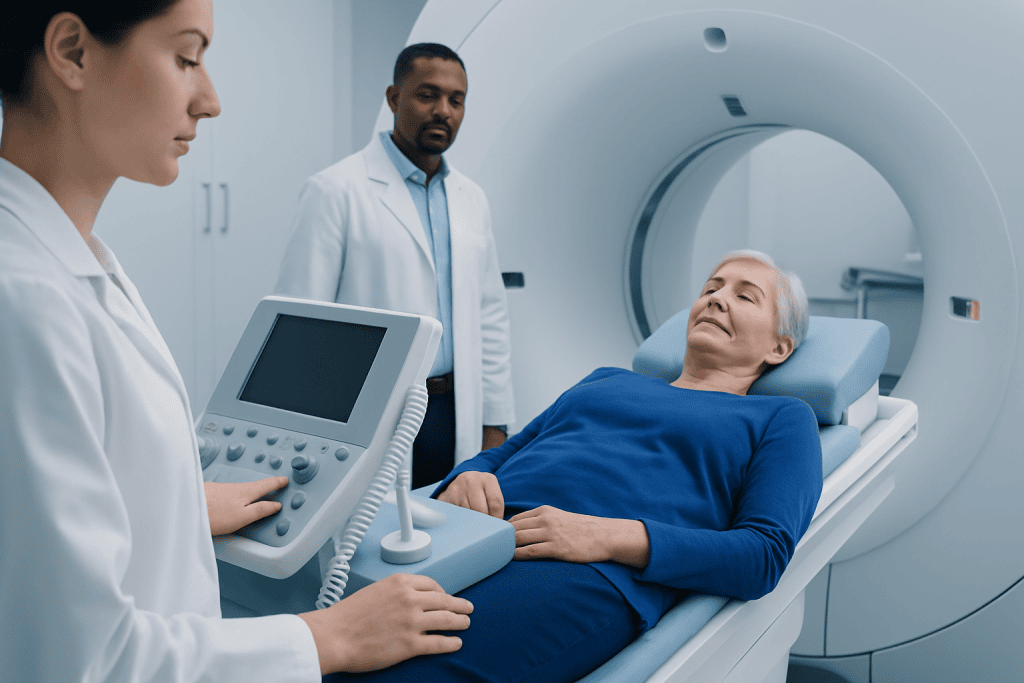
Many people expect a brain or nerve condition to be identified with one scan or one blood test. In reality, most neurodegenerative diseases are clinical diagnoses, meaning they are based on the overall picture rather than a single result. Tests are very useful, but they often support a diagnosis instead of proving it by themselves.
Another reason for delay is that symptoms overlap. For example, tremor may be caused by Parkinson’s disease, medication effects, anxiety, thyroid disease, or essential tremor. Memory problems can be linked to neurodegenerative disease, but also to sleep disorders, depression, vitamin deficiencies, medication side effects, or problems with blood vessels in the brain.
Time itself can be part of the diagnostic process. A specialist may need to observe how symptoms develop over months, whether the pattern changes, and how the person responds to treatment. Follow-up appointments often provide valuable clues that were not obvious at the first visit.
Doctors also aim to rule out conditions that can mimic degeneration but may need different treatment. These can include <a href="https://acibademinternational.com/diseases/normal-pressure-hydrocephalus/”>normal pressure hydrocephalus, infections, autoimmune disorders, thyroid disease, liver or kidney disease, vitamin B12 deficiency, or the after-effects of a stroke. This is why a diagnosis may feel slower than expected, even when care is moving in the right direction.
Symptoms That May Lead to Evaluation

The first signs depend on which parts of the nervous system are most affected. Some people notice forgetfulness, difficulty finding words, poor judgment, or getting lost in familiar places. Others develop tremor, slowed movement, muscle stiffness, changes in handwriting, unsteady walking, falls, or changes in facial expression. In motor neuron conditions, weakness, muscle twitching, speech changes, or swallowing difficulty may come first.
Family members are often the first to notice subtle changes. These may include repeated questions, unusual apathy, personality changes, loss of interest in daily activities, or difficulty managing finances and medications. Because these changes may appear gradually, they are sometimes mistaken for normal aging, stress, or poor sleep.
Symptoms that deserve medical attention include steady worsening over time, problems that affect independence, recurrent falls, new movement abnormalities, or changes in speech and swallowing. A specialist in movement disorders or geriatric neurology may be involved when symptoms mainly affect mobility, balance, memory, or daily function in older adults.
- Memory loss that disrupts everyday tasks
- Tremor, stiffness, or slowness of movement
- Unexplained weakness or muscle wasting
- Changes in mood, behavior, or judgment
- Frequent falls or balance problems
- Speech, swallowing, or vision-related changes
How Doctors Confirm the Diagnosis
The evaluation usually begins with a detailed medical history and neurological examination. The doctor asks when symptoms started, whether they are getting worse, what tasks have become harder, and whether there is a family history of similar conditions. The examination checks memory, speech, eye movements, coordination, reflexes, muscle tone, strength, gait, and other nervous system functions.
Cognitive and behavioral assessment may also be recommended. This can range from brief memory screening in the clinic to more detailed neuropsychology testing. These assessments help define which abilities are affected, such as attention, language, planning, visual-spatial skills, or recall, and whether the pattern fits a specific type of dementia or another neurological disorder.
Imaging studies are often used to support the diagnosis and rule out other causes. MRI is commonly preferred because it can show patterns of brain shrinkage, vascular injury, inflammation, tumors, or pressure-related changes. In some cases, CT, PET scans, or more specialized imaging may be recommended through services such as neuroradiology.
Additional tests depend on the symptoms. Blood tests may look for vitamin deficiencies, thyroid problems, infections, inflammation, or metabolic causes. Nerve conduction studies, electromyography, sleep studies, lumbar puncture, or genetic testing may be considered in selected cases. In some patients, care also involves dedicated programs for neurodegenerative diseases to bring together specialists from different fields.
Tests May Rule Out Other Conditions
One of the most important parts of diagnosis is excluding other disorders that can resemble neurodegeneration. This does not mean the doctor is uncertain without reason; it means the evaluation is thorough. Several treatable problems can cause memory loss, confusion, tremor, gait changes, or weakness.
For example, medication side effects can slow thinking or affect balance. Depression can reduce concentration and memory. Sleep apnea may cause fatigue and mental fog. Autoimmune or inflammatory conditions, infections, liver disease, thyroid disease, and low levels of certain vitamins may also contribute to neurological symptoms.
Structural problems in the brain can sometimes create similar signs. Imaging may be used to exclude tumors, bleeding, fluid buildup, or prior injury. If symptoms involve abnormal postures or twisting movements, doctors may also consider causes such as dystonia rather than a broader neurodegenerative disorder.
Because of these possibilities, a doctor may not label the condition at the first visit. Instead, they may explain that the current findings suggest a probable diagnosis while further tests and follow-up are still needed. This can be frustrating, but it is a careful and patient-centered approach.
Treatment After Diagnosis
Although many neurodegenerative diseases cannot yet be cured, treatment can still make a meaningful difference. The goals are to manage symptoms, maintain function, support safety, and improve quality of life. Treatment plans are personalized because symptoms vary widely from one condition to another and from one person to the next.
Medications may help with memory symptoms, tremor, stiffness, mood changes, sleep problems, drooling, bladder symptoms, pain, or muscle cramps, depending on the diagnosis. Rehabilitation is often just as important as medication. Physical therapy, occupational therapy, speech and swallowing therapy, and nutritional support can help people stay active and independent for longer.
Care usually works best when it is multidisciplinary. Neurologists may collaborate with rehabilitation specialists, neuropsychologists, psychiatrists, speech therapists, and social workers. Education for the patient and family is also essential, especially around driving, fall prevention, home safety, work adjustments, and advance care planning.
Near the end of the diagnostic and treatment journey, some families choose evaluation at specialized centers. Acibadem International’s multidisciplinary specialists and JCI-accredited hospitals diagnose and treat neurological conditions for international patients, including complex neurodegenerative disorders.
Living With Uncertainty While Waiting for Answers
Waiting for a diagnosis can be emotionally difficult. People may worry about the future, fear loss of independence, or feel confused by changing test results and appointments with several specialists. It often helps to remember that taking time does not necessarily mean the outlook is worse; it often means the team is being careful and accurate.
Practical steps during this period can make daily life easier. Keeping a symptom diary, bringing a family member to appointments, listing all medications, and noting changes in memory, walking, sleep, mood, or speech can help the medical team. If possible, collecting old scans or records from previous doctors can also speed up the process.
Healthy routines may support general brain and body health while evaluation continues. These include regular physical activity as tolerated, consistent sleep, balanced meals, staying socially engaged, avoiding smoking, and managing blood pressure, diabetes, and cholesterol. These steps are not a substitute for treatment, but they can support overall well-being.
Families may also benefit from discussing legal and practical planning early, especially if memory or judgment is changing. Even when the exact diagnosis is still being clarified, support services, counseling, and rehabilitation can begin when symptoms are affecting day-to-day life.
When to See a Doctor Urgently
A gradual change in memory or movement should be evaluated by a doctor, especially if it is affecting safety, work, driving, or daily tasks. A planned neurology appointment is appropriate for many slowly progressive symptoms, but some situations need more urgent assessment.
Medical attention should be sought promptly for sudden confusion, sudden weakness, new facial droop, abrupt trouble speaking, severe new headache, seizure, fainting, or sudden vision loss. These symptoms are not typical of a slowly developing neurodegenerative process and may point to emergencies such as stroke, bleeding, or infection.
Urgent review is also important for repeated falls, choking, rapid decline over weeks, severe dehydration, or major behavior changes that put the person or others at risk. If there is doubt about whether symptoms are urgent, it is safest to contact a qualified healthcare professional or emergency services for guidance.
Frequently asked questions
Can one test confirm neurodegenerative diseases?
Usually not. Most neurodegenerative diseases are confirmed by combining the medical history, neurological examination, imaging, cognitive assessment, and other tests to rule out similar conditions. In some cases, follow-up over time is part of confirmation.
Why can early diagnosis be difficult?
Early symptoms may be subtle, develop slowly, or overlap with more common problems such as stress, depression, sleep disorders, medication effects, or vitamin deficiencies. A clearer pattern often appears only after careful testing and repeat evaluation.
Does a normal MRI rule out a neurodegenerative disease?
No. An MRI can be very helpful, but a normal scan does not completely exclude early neurodegenerative disease. Some conditions are diagnosed mainly from symptoms and examination findings, especially in the early stages.
Is genetic testing always needed?
No. Genetic testing is usually considered when there is a strong family history, very early onset, or features that suggest an inherited condition. The decision is personalized and may include genetic counseling before testing.
Can treatment start before the final diagnosis is certain?
Yes, in many cases. Doctors may begin symptom treatment, rehabilitation, fall prevention, or cognitive support while the evaluation continues. This can improve comfort, function, and safety even before every detail is confirmed.
Are all neurodegenerative diseases forms of dementia?
No. Some mainly affect memory and thinking, but others primarily affect movement, coordination, strength, or nerve function. Dementia can occur in some neurodegenerative diseases, but it is not present in every case.
References
- World Health Organization
- National Institute on Aging
- National Institute of Neurological Disorders and Stroke
- Alzheimer's Association
- Parkinson's Foundation
This article is for general information only and is not a substitute for professional medical advice. Please consult a qualified doctor about your individual situation.
Neurodegenerative Diseases in Turkey — costs, top hospitals & a free quote
JCI-accredited · board-certified surgeons · reply within 24h
Add us as a Preferred Source to see more of our trusted health content across Google Search, AI Overviews and Discover.

Physical Medicine & Rehabilitation
Restoring movement and function after injury, surgery or neurological conditions.
152 specialists in this unit