Eye Laser Vision Correction: Types, Benefits, and Recovery
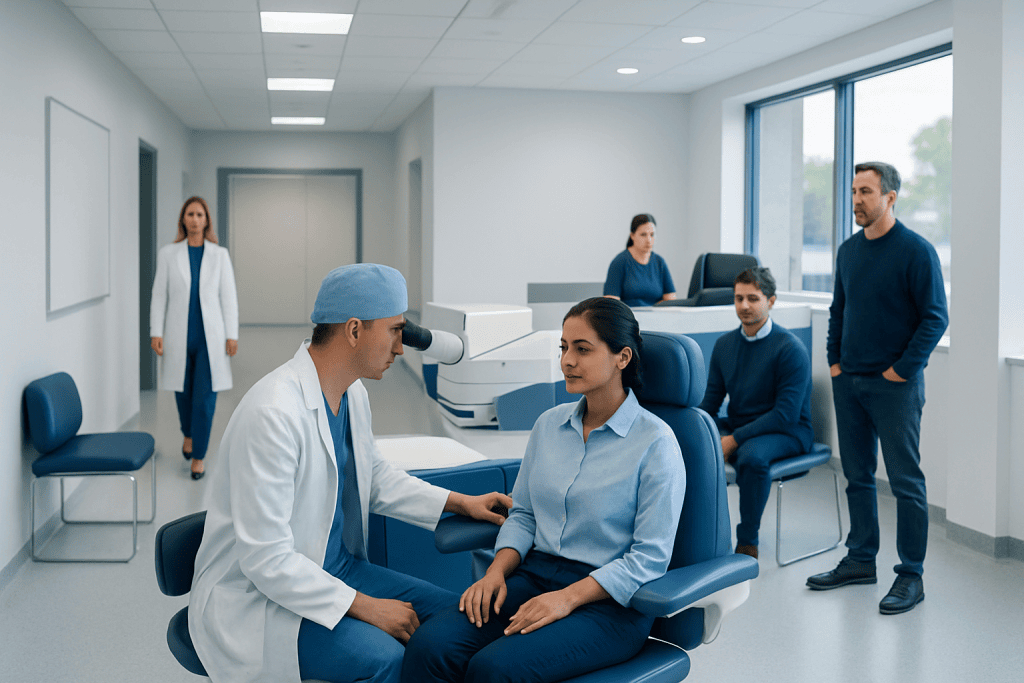
Eye laser vision correction can treat common refractive errors such as nearsightedness, farsightedness, and astigmatism. Main types include LASIK, PRK, LASEK, and SMILE, and the best option depends on the cornea, prescription, lifestyle, and eye health.
Key Takeaways
- Eye laser vision correction can treat common refractive errors such as nearsightedness, farsightedness, and astigmatism.
- Main types include LASIK, PRK, LASEK, and SMILE, and the best option depends on the cornea, prescription, lifestyle, and eye health.
- A detailed eye examination is essential to confirm whether a person is a good candidate.
- Most people recover well, but temporary dryness, glare, or fluctuating vision can occur during healing.
- Laser vision correction does not prevent normal age-related changes such as presbyopia or cataracts.
Eye laser vision correction is a group of procedures that reshape the cornea to improve how light focuses on the retina. For suitable candidates, it can reduce dependence on glasses or contact lenses, but careful assessment and realistic expectations are important.
Overview
Eye laser vision correction refers to procedures that change the shape of the cornea, the clear front surface of the eye, so that light focuses more accurately on the retina. This can improve vision in people with refractive errors such as myopia (nearsightedness), hyperopia (farsightedness), and astigmatism. The main goal is to reduce reliance on glasses or contact lenses.
Several techniques are used in modern practice. The best-known is LASIK, but other options include PRK, LASEK, and SMILE. Each method has advantages, limitations, and different healing patterns. A patient-friendly explanation from an eye specialist can help clarify which approach is most suitable.
Although laser vision correction is common and generally safe in appropriately selected patients, it is still a medical procedure that requires proper testing, planning, and follow-up. Good results depend not only on the technology used but also on candidacy, surgical expertise, and careful aftercare.
What Conditions Can It Treat?
Laser vision correction is used to treat refractive errors. These are focusing problems rather than eye diseases. In myopia, distant objects appear blurry because light focuses in front of the retina. In hyperopia, near vision and sometimes distance vision can be affected because light focuses behind the retina. In astigmatism, the cornea has an irregular shape, causing blurred or distorted vision at multiple distances.
These procedures do not treat every cause of poor vision. If blurred sight is due to cataracts, retinal disease, glaucoma, severe dry eye, corneal scarring, or conditions such as keratoconus, laser reshaping may not be appropriate. In some cases, another treatment may be safer or more effective.
Laser vision correction also does not stop the natural aging of the eye. Many people will still develop presbyopia with age, making near tasks like reading harder after the 40s. Later in life, cataracts may also develop and may require different care, such as cataract surgery.
Types of Eye Laser Vision Correction
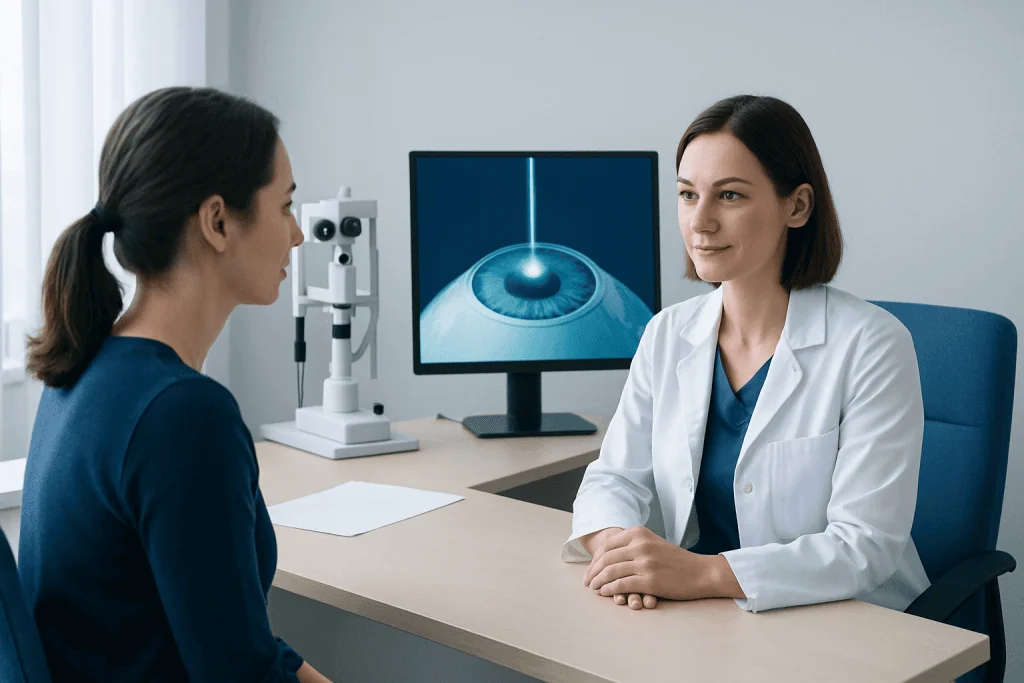
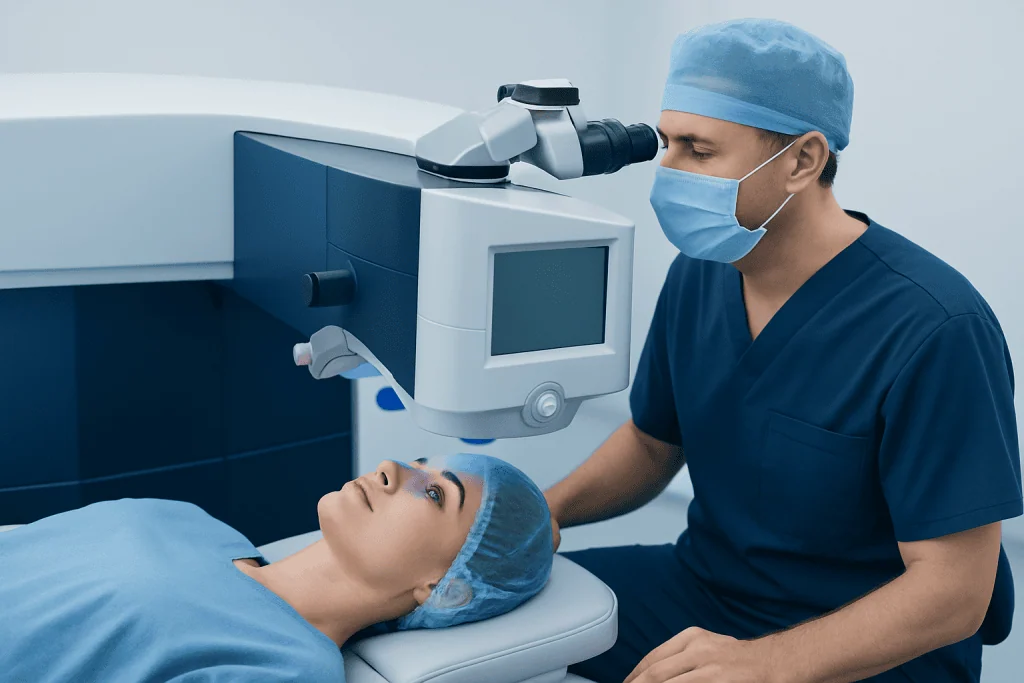
LASIK involves creating a thin flap in the cornea, reshaping the underlying tissue with a laser, and then repositioning the flap. It is well known for rapid visual recovery and relatively little discomfort after surgery. Many patients notice clearer vision within a day or two, although vision may continue to settle over time.
PRK and LASEK work on the surface of the cornea rather than creating a deeper flap. In PRK, the outer corneal layer is removed and allowed to regrow after laser treatment. In LASEK, the surface layer is loosened and repositioned. These options may be considered for people with thinner corneas, certain occupations, or activities where flap-related concerns matter. Healing can take longer than with LASIK, and temporary discomfort is usually greater during the first few days.
SMILE is a newer keyhole-style laser procedure that removes a small piece of corneal tissue through a tiny incision. It is mainly used for myopia, with or without some astigmatism, and may preserve more corneal surface structure than flap-based surgery. A specialist may discuss ReLEx SMILE when it matches the patient’s prescription and eye anatomy.
- LASIK: fast recovery, flap-based procedure
- PRK/LASEK: surface procedures, often considered for thinner corneas
- SMILE: small-incision laser option, mainly for myopia
- Choice depends on prescription, corneal thickness, tear film, and lifestyle
Benefits, Limits, and Possible Risks
The main benefit of eye laser vision correction is greater freedom from glasses or contact lenses in everyday life. Many people find sports, travel, work, and routine activities more convenient after treatment. For some, visual quality also feels more natural without the need for corrective lenses.
However, the procedure has limits. Results can vary, and some people may still need glasses for certain tasks, especially at night or for reading later in life. Laser correction aims to reduce refractive error, but it cannot guarantee perfect vision in every situation.
Possible side effects and risks should be discussed clearly before surgery. Temporary dry eye, light sensitivity, glare, halos, fluctuating vision, and mild discomfort are common during early recovery. Less commonly, there may be under-correction, over-correction, infection, flap complications in LASIK, delayed healing, or persistent visual symptoms. Careful screening helps lower risk, but no surgery is completely risk-free.
Realistic expectations are important. A successful outcome is usually measured by safer, clearer, and more comfortable vision with reduced dependence on corrective lenses, rather than by the promise of flawless eyesight under all conditions.
Who Is a Good Candidate?
A good candidate is usually an adult with a stable prescription, healthy corneas, and no eye disease that would interfere with healing or visual quality. People considering surgery should have a thorough review of their medical history, medications, work demands, hobbies, and expectations. Stable vision over time is important because changing prescriptions can affect long-term results.
Certain factors may make laser vision correction less suitable. These include pregnancy-related vision changes, uncontrolled diabetes, significant dry eye, corneal thinning, keratoconus, active eye infection, severe allergies affecting the eyes, some autoimmune conditions, or unrealistic expectations. Very high refractive errors may also lead a surgeon to discuss other options.
Contact lens use can temporarily change the cornea’s shape, so patients are often advised to stop wearing lenses for a period before measurements are taken. An expert evaluation, often including a detailed eye examination, helps determine whether surgery is appropriate and which technique is likely to be safest.
How Doctors Diagnose and Plan Treatment
Before recommending eye laser vision correction, the ophthalmologist performs a full preoperative assessment. This usually includes measuring the refractive error, checking visual acuity, evaluating the tear film, and examining the health of the cornea, lens, retina, and optic nerve. The aim is to confirm that blurred vision is due to a correctable refractive problem and not another condition.
Specialized corneal mapping and thickness measurements are especially important. These tests help detect irregular corneal shape, subtle ectasia risk, or other reasons why a patient may not be a good candidate for laser reshaping. Pupil size, corneal curvature, and healing factors are also taken into account.
Treatment planning is individualized. The surgeon weighs safety, expected benefit, and the person’s daily needs. Someone who values quick recovery may lean toward one option, while another person with thinner corneas or contact sports exposure may be guided toward a different procedure. The discussion should include alternatives, recovery expectations, and possible future needs for glasses or additional treatment.
Recovery and Aftercare
Recovery depends on the procedure used. After LASIK, many people notice improved vision within 24 to 48 hours. After PRK or LASEK, the surface of the cornea needs more time to heal, so vision often improves more gradually over days to weeks. SMILE recovery is often fairly quick, though individual healing varies.
In the first days after surgery, common symptoms include tearing, burning, a gritty sensation, mild light sensitivity, and blurred or fluctuating vision. Doctors usually prescribe eye drops to reduce inflammation and prevent infection, and lubricating drops are commonly recommended to ease dryness. Patients should avoid rubbing the eyes and follow all instructions carefully.
During recovery, it is often advised to avoid swimming pools, hot tubs, eye makeup for a period, dusty environments, and contact sports until cleared by the surgeon. Sunglasses can help with comfort outdoors. Follow-up visits are important so the ophthalmologist can confirm proper healing and address any concerns early.
Most people can return to many normal activities fairly soon, but visual recovery is not identical for everyone. Night glare, halos, or dryness may improve gradually. Patients should contact their doctor promptly if they develop worsening pain, sudden vision loss, marked redness, or discharge.
When to See a Doctor and Long-Term Considerations
Anyone interested in eye laser vision correction should first speak with a qualified ophthalmologist rather than assuming they are automatically a candidate. Professional assessment is especially important for people with dry eye symptoms, previous eye injury, long-term contact lens use, diabetes, autoimmune conditions, or a family history of corneal disease.
After surgery, urgent medical advice is needed if there is severe pain, rapidly worsening vision, increasing redness, significant light sensitivity, or signs of infection. Early review helps protect vision and allows prompt treatment if a problem develops.
Over the long term, most patients continue routine eye care even if they no longer need glasses for many tasks. Age-related changes can still occur, including presbyopia and cataracts. Ongoing eye health checks remain important, particularly for people with medical conditions that affect the eyes.
For international patients seeking assessment and treatment, Acibadem International’s multidisciplinary eye specialists and JCI-accredited hospitals provide evaluation and care for refractive vision problems and related eye conditions.
Frequently asked questions
Is eye laser vision correction permanent?
The corneal reshaping itself is permanent, but the eyes can still change over time. Aging, presbyopia, cataracts, and other factors may affect vision later, so some people may still need glasses in the future.
Does laser eye surgery hurt?
Most patients feel little or no pain during the procedure because numbing drops are used. Mild discomfort, burning, tearing, or a gritty sensation can happen afterward, especially with surface procedures such as PRK.
How long does recovery take after laser vision correction?
Recovery time depends on the technique used and the individual’s healing response. LASIK often has quicker visual recovery, while PRK and LASEK usually take longer for the surface of the cornea to heal and vision to stabilize.
Can everyone have LASIK or another laser eye procedure?
No. Some people are not suitable candidates because of thin or irregular corneas, unstable prescriptions, severe dry eye, certain health conditions, or other eye diseases. A full eye assessment is needed to decide safely.
Will laser vision correction remove the need for reading glasses?
Not always. Many people still develop presbyopia as they age, even if distance vision improves after surgery. Reading glasses may still be needed later for close work.
What is the difference between LASIK and PRK?
LASIK usually involves creating a corneal flap and often offers faster recovery with less early discomfort. PRK treats the corneal surface without a flap, which may suit some patients better, but healing and visual recovery usually take longer.
This article is for general information only and is not a substitute for professional medical advice. Please consult a qualified doctor about your individual situation.
Eye Laser in Turkey — costs, top hospitals & a free quote
JCI-accredited · board-certified surgeons · reply within 24h
Add us as a Preferred Source to see more of our trusted health content across Google Search, AI Overviews and Discover.

Ophthalmology
Comprehensive eye care from laser vision correction to retina, cornea and cataract surgery.
75 specialists in this unitRelated Treatments
More from the Health Library

Blocked Tear Duct in Adults: Causes, Diagnosis, and Treatment Options

Uveitis: Eye Inflammation, Pain, and Vision Risks
Pediatric Eye Exam: What to Expect at Your Child’s Visit

Contact Lenses: Which Type Is Best for Your Vision Needs?

What Does OD Mean in Eye Care? Eye Doctor Titles Explained