Stereotactic Radiosurgery for Trigeminal Neuralgia: When Is It Considered?

Trigeminal neuralgia causes sudden, electric shock-like facial pain that can be severe and recurrent. Stereotactic radiosurgery is a non-invasive treatment that targets the trigeminal nerve with focused radiation.
Key Takeaways
- Trigeminal neuralgia causes sudden, electric shock-like facial pain that can be severe and recurrent.
- Stereotactic radiosurgery is a non-invasive treatment that targets the trigeminal nerve with focused radiation.
- It is usually considered after medication is ineffective, not tolerated, or when surgery carries higher risk.
- Pain relief may take several weeks or months, and some people may need additional treatment later.
- A neurologist and neurosurgeon help decide whether radiosurgery, other procedures, or continued medication is the best approach.
Stereotactic radiosurgery for trigeminal neuralgia is a non-invasive treatment that uses highly focused radiation to reduce severe facial nerve pain. It is often considered when medication no longer controls symptoms well, causes troublesome side effects, or when open surgery is not the best option.
Overview: what stereotactic radiosurgery is and why it may be used
Trigeminal neuralgia is a chronic pain condition affecting the trigeminal nerve, which carries sensation from the face to the brain. The pain is often described as sudden, stabbing, or electric shock-like, and it may be triggered by everyday activities such as talking, chewing, brushing teeth, or even a light breeze on the face. For many people, symptoms can become disruptive enough to affect eating, sleeping, social interaction, and overall quality of life.
Stereotactic radiosurgery for trigeminal neuralgia is a highly focused radiation treatment designed to target a small portion of the trigeminal nerve. Despite the word “surgery,” there is no incision. The goal is to reduce the nerve’s ability to send pain signals. This treatment is most commonly performed with systems such as Gamma Knife, though other radiosurgery platforms may also be used.
Doctors usually consider this option after standard medicine treatment has not provided enough relief or has caused side effects that are difficult to manage. It may also be an appropriate choice for people who want to avoid open surgery or who have health conditions that make other procedures less suitable. In many cases, stereotactic radiosurgery is discussed as one of several treatment pathways for trigeminal neuralgia.
Symptoms that may lead to treatment evaluation
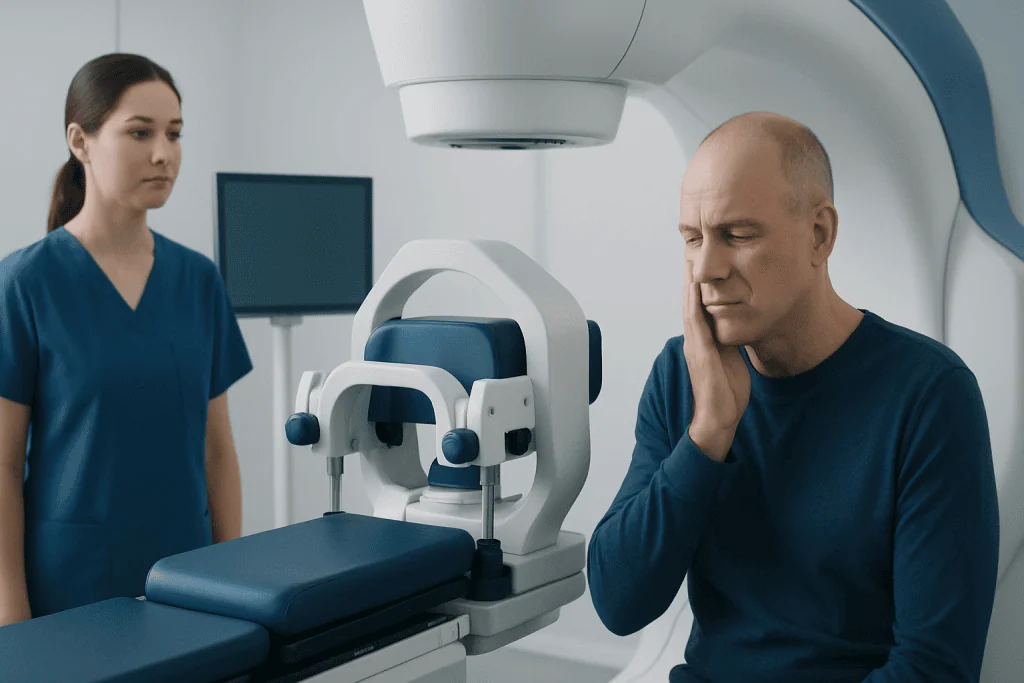
The hallmark symptom of trigeminal neuralgia is intense facial pain on one side of the face. Attacks are usually brief, lasting seconds to a couple of minutes, but they can happen in rapid clusters. Some people have pain-free periods between episodes, while others experience more frequent or worsening attacks over time.
The pain often affects the cheek, jaw, teeth, gums, lips, or less commonly the eye and forehead. Many patients struggle at first because the pain may be mistaken for a dental problem, sinus trouble, or another facial pain disorder. Conditions such as cluster headache or tension-type headache can also cause head or face discomfort, but trigeminal neuralgia has a distinct shock-like pattern and typical triggers.
Features that often prompt referral to a specialist include pain that is no longer controlled by medication, increasing attack frequency, side effects from treatment, or uncertainty about the diagnosis. A careful assessment matters because the best treatment depends on whether the pain pattern truly fits classic trigeminal neuralgia or suggests another cause of facial pain.
- Sudden, severe, electric shock-like facial pain
- Pain triggered by chewing, speaking, touching the face, or brushing teeth
- Episodes affecting one side of the face
- Symptoms that return despite medication
- Medication side effects such as sleepiness, dizziness, or poor balance
When stereotactic radiosurgery is considered

Stereotactic radiosurgery is generally not the first treatment used. Most people begin with medications that calm overactive nerve signaling. If those medicines work well and are well tolerated, no procedure may be needed. Radiosurgery becomes more relevant when the balance changes: pain control is incomplete, doses need to increase, or side effects begin to interfere with daily life.
It may be considered for older adults, for people with other medical conditions that raise the risk of anesthesia or open procedures, and for those who prefer a non-invasive approach. It can also be an option after pain returns following a prior procedure. In some cases, a patient may be choosing between radiosurgery and other interventions, such as percutaneous procedures or microvascular decompression.
Doctors also look at the overall pattern of disease. Brain MRI may show a blood vessel pressing on the nerve, which can support the diagnosis and help guide treatment planning. Even when nerve compression is suspected, radiosurgery may still be chosen if a less invasive method is preferred. Evaluation by specialists in neurology, neurosurgery, and neuroradiology helps determine whether this approach fits the patient’s symptoms, age, imaging findings, and goals.
In general, stereotactic radiosurgery may be considered when:
- Medication does not provide enough pain relief
- Medication causes bothersome side effects
- Open surgery is higher risk or not preferred
- Pain has returned after previous treatment
- The diagnosis has been confirmed and the pain pattern matches trigeminal neuralgia
How diagnosis and treatment planning are done
Before recommending stereotactic radiosurgery, the care team confirms the diagnosis as carefully as possible. This usually begins with a detailed description of the pain: where it occurs, what it feels like, how long attacks last, and what triggers them. A neurological examination helps identify any numbness, weakness, or other findings that might suggest a different condition.
MRI is commonly used to look for structural causes of trigeminal neuralgia. Imaging can help detect whether a blood vessel is contacting the nerve and can also rule out other rare causes of facial pain, such as multiple sclerosis plaques or a tumor near the nerve. In selected cases, physicians may recommend additional assessment through neurophysiology services or specialist review if the symptoms are unusual.
When radiosurgery is chosen, treatment planning is very precise. The team identifies the exact target on the trigeminal nerve and calculates how to deliver radiation while minimizing exposure to nearby tissue. On the day of treatment, a head frame or mask may be used to keep the head still. The process is carefully organized so that the radiation reaches the intended point accurately and safely.
What happens during treatment and how well it works
Stereotactic radiosurgery is usually done as an outpatient procedure, meaning the patient often goes home the same day. Depending on the system used, preparation may include placement of a light frame or use of a custom mask, followed by imaging for treatment planning. The treatment itself is painless. The patient lies still while the machine delivers focused radiation to the selected part of the trigeminal nerve.
Unlike some surgical procedures, pain relief is not usually immediate. Many people notice improvement gradually over several weeks, and for some it may take a few months. This delayed effect is important to understand in advance so expectations are realistic. During this time, doctors may advise continuing current medication and then adjusting it gradually if symptoms improve.
Radiosurgery can provide meaningful pain relief for many patients, but results vary. Some become pain-free, some have fewer or less intense attacks, and some eventually need another treatment because pain returns. The benefits and limitations should be discussed openly before treatment. For people exploring broader non-surgical and procedure-based care pathways, related specialty input such as interventional neurology or headache medicine may also help refine diagnosis and symptom management.
Possible side effects, risks, and limits of radiosurgery
Stereotactic radiosurgery is generally considered less invasive than open surgery, but it still has potential side effects and limits. The most common treatment-related issue is facial numbness or altered sensation. In some people this is mild and not bothersome, while in others it may be more noticeable. Less commonly, unusual sensations such as tingling can occur.
Not everyone gets complete pain relief, and relief may fade over time. Some people continue to need medication, although often at lower doses. Because the treatment works gradually, it is not ideal when a person needs immediate control of severe pain. The decision to proceed should therefore weigh how quickly relief is needed, the person’s health status, and preferences regarding risk and recovery.
Other procedures have their own advantages and disadvantages. For example, microvascular decompression may offer longer-lasting relief in selected patients with nerve compression, but it is an open operation and involves anesthesia. Percutaneous procedures may provide faster relief but can also cause numbness. A specialist discussion helps compare these options in a balanced way.
Recovery, self-care, and follow-up after treatment
Recovery after stereotactic radiosurgery is usually straightforward. Most patients can return to normal activities fairly soon, depending on how they feel after the procedure and whether any sedation was used. It is common to continue existing pain medicine at first, because the benefit of treatment may not appear right away.
Follow-up appointments are important to review symptom changes, adjust medications, and monitor for side effects such as numbness. Patients are often encouraged to keep a simple pain diary that notes attack frequency, severity, and triggers. This can help the care team judge whether treatment is working and whether additional support is needed.
Self-care focuses on reducing triggers where possible and protecting nutrition and hydration if chewing has been painful. Soft foods, good oral hygiene, and stress management may help some people cope during flare-ups. Near the end of the care pathway, some international patients choose centers with coordinated neurology and neurosurgery services; Acibadem International’s multidisciplinary specialists in JCI-accredited hospitals diagnose and treat trigeminal neuralgia for international patients.
When to see a doctor
Anyone with sudden, recurrent, severe facial pain should seek medical evaluation, especially if the pain is triggered by normal daily activities. Early assessment can help confirm whether the problem is trigeminal neuralgia or another condition requiring different treatment. Prompt review is also important when pain leads to difficulty eating, poor sleep, or significant distress.
People already diagnosed with trigeminal neuralgia should contact their doctor if medicines stop working, side effects become troublesome, or attacks become more frequent or severe. A specialist consultation may be helpful to discuss whether stereotactic radiosurgery or another procedure is appropriate. New symptoms such as facial numbness, hearing changes, weakness, or symptoms on both sides of the face should also be assessed, because they may suggest a need for further evaluation.
Emergency care may be needed if severe pain is accompanied by other neurological symptoms such as sudden weakness, confusion, or difficulty speaking, as these are not typical features of trigeminal neuralgia and may point to another urgent problem.
Frequently asked questions
Is stereotactic radiosurgery the same as brain surgery?
No. Stereotactic radiosurgery does not involve an incision, and no part of the skull is opened. It uses highly focused radiation to treat a small target on the trigeminal nerve.
When do doctors usually recommend stereotactic radiosurgery for trigeminal neuralgia?
It is usually considered when medicines no longer control pain well, when side effects become difficult to tolerate, or when a person is not a good candidate for open surgery. It may also be used if pain returns after another procedure.
How quickly does pain improve after radiosurgery?
Pain relief is often gradual rather than immediate. Some people improve within a few weeks, while others may need a few months to notice the full effect.
Can trigeminal neuralgia come back after radiosurgery?
Yes. Some patients have long-lasting relief, but pain can return over time. If that happens, the care team may review medication changes or discuss other procedures.
What are the main side effects of stereotactic radiosurgery?
The most common side effect is facial numbness or altered sensation. Many people tolerate this well, but the degree can vary, so it should be discussed carefully before treatment.
Is stereotactic radiosurgery better than microvascular decompression?
Neither treatment is automatically better for everyone. Microvascular decompression may provide durable relief for selected patients, especially when a blood vessel is compressing the nerve, while radiosurgery offers a non-invasive option with a different risk profile.
References
- National Institute of Neurological Disorders and Stroke
- National Health Service
- American Association of Neurological Surgeons
- International Association for the Study of Pain
- Mayo Clinic
This article is for general information only and is not a substitute for professional medical advice. Please consult a qualified doctor about your individual situation.
Explore treatments in Turkey — costs, top hospitals & a free quote
JCI-accredited · board-certified surgeons · reply within 24h
Add us as a Preferred Source to see more of our trusted health content across Google Search, AI Overviews and Discover.

Neurology
Diagnosis and treatment of disorders of the brain, spinal cord, nerves and muscles.
51 specialists in this unit