

Silicone Breast Enlargement: What to Know Before Surgery

Silicone breast enlargement can enhance size, restore volume, or improve breast symmetry. Implants vary in shape, size, profile, texture, and placement, so planning is individualized.
Key Takeaways
- Silicone breast enlargement can enhance size, restore volume, or improve breast symmetry.
- Implants vary in shape, size, profile, texture, and placement, so planning is individualized.
- Breast augmentation is surgery with possible risks, including capsular contracture, rupture, infection, and the need for future procedures.
- Recovery takes time, and final results usually appear after swelling settles and tissues adjust.
- Regular follow-up and breast health screening remain important after silicone implants.
Silicone breast enlargement is a form of breast augmentation that uses silicone implants to increase breast size or improve shape and symmetry. Before surgery, patients benefit from understanding implant options, expected results, possible risks, recovery, and the importance of choosing a qualified plastic surgeon.
Overview of Silicone Breast Enlargement
Silicone breast enlargement, often called breast augmentation with silicone implants, is a surgical procedure used to increase breast size, improve shape, restore lost volume, or correct asymmetry. Some people choose it for cosmetic reasons, while others consider it after pregnancy, weight changes, or surgery that has altered the breasts. Silicone implants are filled with a cohesive silicone gel designed to feel more similar to natural breast tissue than saline-filled implants.
The procedure is usually planned after a detailed consultation that covers goals, body proportions, existing breast tissue, skin quality, and overall health. A surgeon will typically discuss what is realistically achievable rather than focusing only on cup size, because outcomes depend on chest width, breast shape, skin elasticity, and implant dimensions.
Silicone implants are part of the broader field of aesthetic breast surgery. In some situations, enlargement may also be considered together with breast lifting or reconstructive procedures if the concern includes sagging or volume loss rather than size alone.
Who May Consider This Surgery and What Results to Expect
People may consider silicone breast enlargement if they want fuller breasts, improved balance between the breasts, or restored volume after pregnancy, breastfeeding, or weight loss. It may also be an option for those seeking correction of developmental differences or changes after previous breast procedures. A person should be physically healthy, have stable expectations, and understand that surgery can improve proportions but cannot create perfection.
Results are influenced by the implant selected, the patient’s natural anatomy, and surgical technique. Some prefer a subtle increase, while others want a more noticeable change. The best outcomes usually come from careful matching of implant size and profile to the chest and breast tissues so that the result looks proportionate and feels comfortable.
In some cases, implants are not the only approach. A surgeon may explain whether alternatives or related procedures are more suitable, such as breast reduction for symptoms caused by overly large breasts, or breast reconstruction when rebuilding breast shape after cancer treatment or other major breast changes.
Implant Types, Placement, and Surgical Planning
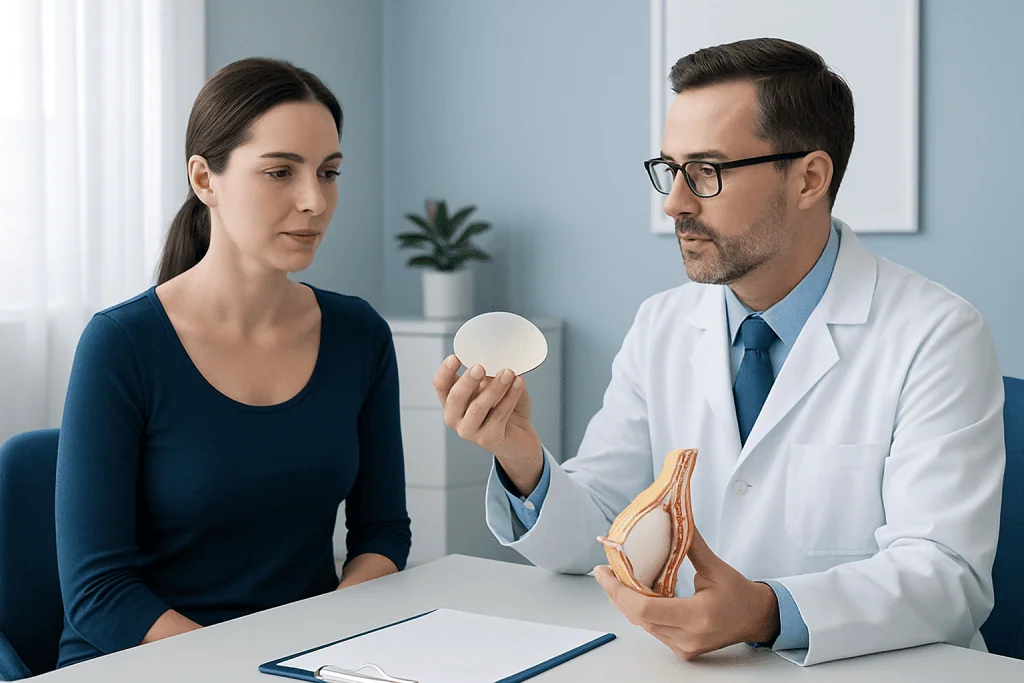
Silicone implants come in different shapes, sizes, and profiles. Round implants often provide more fullness in the upper breast, while anatomical or teardrop-shaped implants may be chosen for a more contoured appearance in selected patients. The surgeon also considers implant profile, which describes how much the implant projects forward from the chest wall.
Implants may be placed above or below the chest muscle, depending on the patient’s anatomy, lifestyle, and cosmetic goals. Placement under the muscle or partially under the muscle may provide more soft-tissue coverage in some people, while placement above the muscle may be considered when enough natural tissue is present. The incision may be made in the fold under the breast, around the areola, or less commonly in another location.
During planning, the surgeon evaluates skin stretch, breast position, nipple level, and chest symmetry. If there is significant drooping, an implant alone may not achieve the desired shape, and a breast lift may be discussed. People with related breast concerns, including enlarged breast tissue patterns or other contour differences, may also be assessed in the context of conditions such as gynecomastia in male patients or accessory breast tissue in specific anatomical areas.
Benefits, Limits, and Possible Risks
The main benefit of silicone breast enlargement is improved breast volume and shape, often with a texture many patients describe as natural-feeling. The procedure can also improve body proportions, clothing fit, and confidence for some individuals. When breast asymmetry is present, implants may help create a more balanced appearance.
At the same time, implants have limits. They do not stop the natural effects of aging, gravity, pregnancy, or weight fluctuation. Breasts may continue to change over time, and some patients may need additional procedures in the future to maintain or revise results.
Like any surgery, breast augmentation carries risks. These can include bleeding, infection, scarring, anesthesia-related complications, changes in nipple or breast sensation, delayed wound healing, implant displacement, visible rippling, and dissatisfaction with cosmetic outcome. There are also implant-specific risks such as capsular contracture, which is tightening of scar tissue around the implant, and implant rupture. Although silicone implant rupture may not always be obvious, regular follow-up helps identify concerns early.
Patients should also know that scar healing varies from person to person. Those who are prone to thicker scars may wish to discuss a history of raised scarring, including keloid scars, during consultation so the surgical team can plan incision care and follow-up appropriately.
Consultation, Evaluation, and Preparing for Surgery
A thorough consultation is an important part of planning silicone breast enlargement. The surgeon reviews medical history, medications, allergies, smoking status, previous operations, and family or personal history of breast disease. A breast examination helps assess symmetry, tissue quality, skin elasticity, and nipple position. In some patients, imaging such as mammography or ultrasound may be recommended before surgery according to age, symptoms, risk factors, or screening guidelines.
Patients are usually advised to ask practical questions about incision location, implant manufacturer and type, expected scarring, likely feel and shape, possible future replacement, breastfeeding considerations, and how surgery might affect exercise or work routines. Clear conversation about goals and concerns helps reduce misunderstandings and supports informed decision-making.
Preparation often includes stopping smoking, avoiding certain medications or supplements that may increase bleeding risk if a doctor advises this, arranging transportation, and planning time away from strenuous activity. The surgeon may take measurements and photographs and may use sizing tools to help guide implant selection. For some people who already have implants and are considering revision, options such as breast prosthesis removal may also be part of the discussion.
Recovery and Long-Term Care
After surgery, it is normal to have swelling, tightness, mild bruising, and discomfort for the first days to weeks. Pain is usually managed with medicines recommended by the surgical team. Many patients can return to light daily activities fairly soon, but strenuous exercise, heavy lifting, and upper-body strain usually need to be limited for a period advised by the surgeon.
The breasts often sit higher on the chest at first and gradually settle as swelling improves and tissues relax. Final shape may take several weeks or months to become clearer. Support garments, incision care, sleep position, and follow-up visits all play a role in recovery.
Long-term care remains important because breast implants are not considered lifetime devices. Some patients may never need replacement for many years, while others may need revision because of rupture, capsular contracture, asymmetry, implant movement, or changing cosmetic preferences. Ongoing breast cancer screening should continue based on age and risk factors, and patients should tell imaging specialists that they have implants so the appropriate techniques can be used.
Near the end of the care journey, patients who travel for treatment should also plan how postoperative reviews will be handled. Acibadem International’s multidisciplinary specialists and JCI-accredited hospitals diagnose and treat patients seeking breast procedures, including support for international follow-up planning where appropriate.
When to Contact a Doctor
Patients should contact their doctor if they notice increasing pain, marked swelling on one side, fever, spreading redness, unusual drainage from the incision, shortness of breath, or any sudden change in breast shape. These symptoms do not always mean a serious problem, but they should be assessed promptly.
It is also important to seek medical advice for new firmness, persistent discomfort, changes in implant position, numbness that does not improve, or concerns that an implant may have ruptured. Any new breast lump or skin change should be evaluated according to standard breast health guidance, whether or not implants are present.
Regular follow-up gives patients a chance to discuss healing, appearance, comfort, and long-term monitoring. A qualified plastic surgeon can explain whether findings are part of normal recovery or whether tests or treatment are needed.
Frequently asked questions
How long do silicone breast implants last?
Silicone breast implants are durable, but they are not considered lifetime devices. Some people keep the same implants for many years, while others need revision or replacement earlier because of rupture, capsular contracture, changes in breast shape, or personal preference.
Are silicone implants safe?
Silicone implants are widely used and approved in many countries when selected appropriately and placed by qualified surgeons. However, they still involve surgical and implant-related risks, so safety depends on careful patient selection, informed consent, skilled surgery, and follow-up care.
Will silicone breast enlargement affect mammograms?
Breast implants can make some mammogram views more complex, but screening is still possible. Patients should inform the imaging center that they have implants so technicians can use implant-specific techniques and obtain the most useful images.
Can a person breastfeed after breast augmentation?
Many people can breastfeed after breast augmentation, but this cannot be guaranteed. The ability to breastfeed may depend on the surgical approach, implant placement, and whether milk ducts or nerves are affected, as well as individual factors unrelated to surgery.
How painful is recovery after silicone breast enlargement?
Some soreness, tightness, and pressure are common, especially in the first several days. Discomfort is usually manageable with the postoperative plan provided by the surgeon, and most people gradually feel better as swelling decreases and activity is slowly resumed.
Do silicone implants need special monitoring?
Yes, regular clinical follow-up is important even when there are no symptoms. Because silicone implant rupture may be silent, a doctor may recommend periodic imaging or assessment based on the implant type, the patient’s age, symptoms, and current medical guidance.
References
- U.S. Food and Drug Administration
- American Society of Plastic Surgeons
- National Health Service
- Mayo Clinic
- International Society of Aesthetic Plastic Surgery
This article is for general information only and is not a substitute for professional medical advice. Please consult a qualified doctor about your individual situation.
Explore treatments in Turkey — costs, top hospitals & a free quote
JCI-accredited · board-certified surgeons · reply within 24h
Add us as a Preferred Source to see more of our trusted health content across Google Search, AI Overviews and Discover.

Related Treatments
Related Conditions
More from the Health Library



Related Specialists
Assoc. Prof. Dr. Erdem Güven (m)
Aesthetic Plastic & Reconstructive Surgery
Prof. Dr. Şükrü Yazar
Aesthetic Plastic & Reconstructive Surgery
Prof. Dr. Hakan Ağır
Aesthetic Plastic & Reconstructive Surgery
Prof. Dr. Bülent Saçak
Aesthetic Plastic & Reconstructive Surgery