

Accessory Breast Tissue in Men: Causes, Symptoms, and Treatment Options

Accessory breast tissue in men is extra breast tissue that forms along the embryologic milk line, often near the armpit. It is usually benign, but any new or changing lump should be assessed by a doctor.
Key Takeaways
- Accessory breast tissue in men is extra breast tissue that forms along the embryologic milk line, often near the armpit.
- It is usually benign, but any new or changing lump should be assessed by a doctor.
- Symptoms may include a visible bulge, tenderness, rubbing discomfort, or swelling with weight changes or hormonal shifts.
- Diagnosis often involves a physical exam and imaging such as ultrasound, and sometimes a biopsy if the diagnosis is unclear.
- Treatment is not always necessary, but surgical removal or contouring may help if the tissue causes symptoms or cosmetic concerns.
Accessory breast tissue in men is an uncommon but usually benign condition in which extra breast tissue develops outside the usual chest area, most often near the armpit. It may be noticed as a soft lump, fullness, or tenderness, and treatment depends on symptoms, appearance, and the need to rule out other causes.
Overview
Accessory breast tissue in men refers to additional breast tissue that develops outside the normal breast area. This tissue forms during fetal development along the so-called milk line, which extends from the armpit down toward the groin. In most people, this extra tissue disappears before birth, but in some, a small amount remains. When it persists, it may appear later in life as a soft fullness or lump.
In men, accessory breast tissue is most often found in the armpit region, though it can occur anywhere along the milk line. It may contain fatty tissue, glandular breast tissue, or a combination of both. Some people notice it only because of appearance, while others feel discomfort with arm movement, exercise, friction from clothing, or localized tenderness.
Although the condition is usually harmless, it can be confused with other causes of swelling in the armpit or chest wall. These include enlarged lymph nodes, lipomas, cysts, skin conditions, and gynecomastia, which is enlargement of the usual breast tissue on the chest. Because the possible causes are different, a proper medical assessment is important.
For many patients, reassurance is all that is needed once the diagnosis is confirmed. If the tissue causes symptoms or affects body image, treatment may be considered. Options can include observation, surgical removal, or contouring procedures tailored to the amount and location of the tissue.
Symptoms
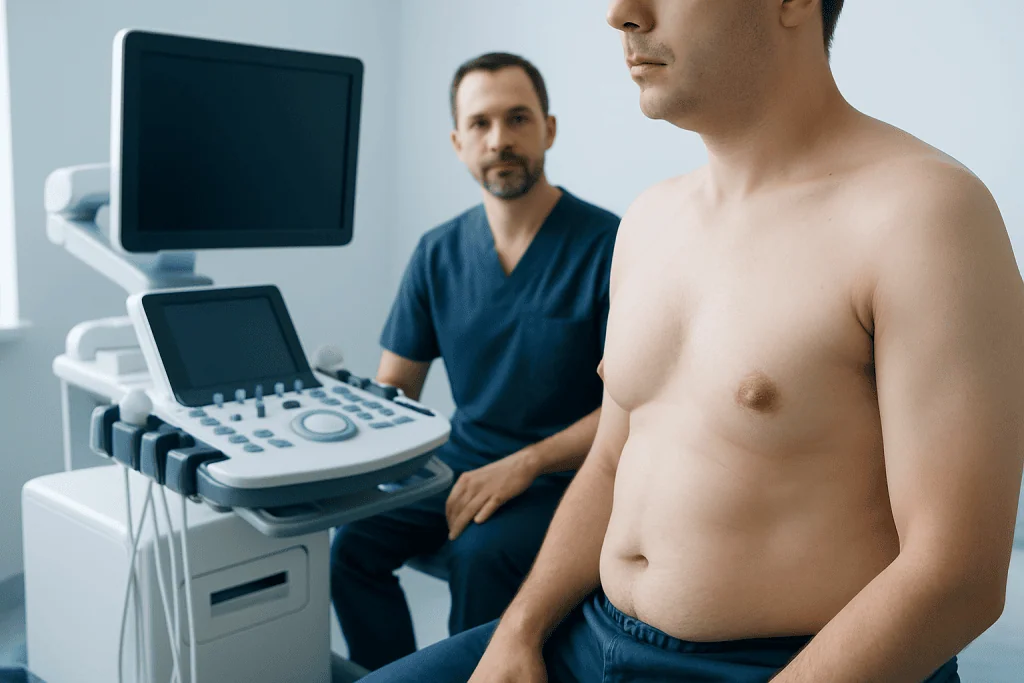
The most common symptom of accessory breast tissue in men is a soft or firm lump-like area, usually in one or both armpits. Some men describe it as a bulge that becomes more noticeable in fitted clothing or when raising the arms. Others may feel a localized fullness rather than a distinct lump.
Symptoms can vary depending on how much glandular tissue and fat are present. Some men have no discomfort at all, while others notice tenderness, sensitivity to touch, chafing, or a feeling of heaviness in the area. If the tissue is near the armpit, repetitive arm movement may lead to irritation during exercise or daily activities.
Accessory breast tissue can also change over time. Weight gain may make it more prominent, and hormonal changes may affect its size or sensitivity. In rare cases, there may be skin changes or a small accessory nipple, though many people with accessory tissue do not have any visible nipple or areola.
A medical review is especially important if the swelling is new, rapidly enlarging, hard, fixed in place, or associated with skin dimpling, discharge, or enlarged lymph nodes. These features do not automatically mean something serious, but they should not be ignored and deserve prompt evaluation.
Causes and Risk Factors

Accessory breast tissue develops before birth. During embryologic development, a pair of milk lines form on the body. Usually, most of this tissue regresses, leaving breast tissue only in the normal chest area. If a portion does not fully disappear, accessory breast tissue can remain. This means the condition is congenital, even if it is not recognized until adolescence or adulthood.
The exact reason it becomes noticeable in some men later in life is not always clear. Changes in body weight, increases in local fat, and hormonal influences can make the tissue easier to see or feel. Puberty, aging, and certain endocrine conditions may affect breast-related tissues in general.
It is also important to distinguish accessory breast tissue from other conditions. For example, a fatty lump may be a lipoma rather than breast tissue, and chest enlargement may be due to gynecomastia rather than tissue in the armpit or along the milk line. In some cases, both conditions may exist together.
While accessory breast tissue itself is not usually dangerous, the same broad principle that applies to normal breast tissue applies here as well: unusual changes should be checked. A family history of breast disease, significant hormonal disorders, or persistent one-sided enlargement may lead the doctor to recommend closer assessment.
Diagnosis
Diagnosis begins with a detailed medical history and physical examination. The doctor will ask when the fullness or lump was first noticed, whether it changes over time, and whether there is pain, tenderness, skin change, or discharge. They will also assess factors such as weight changes, hormone-related symptoms, medications, and any family history of breast or soft tissue conditions.
On examination, the location, texture, mobility, and symmetry of the tissue can provide important clues. Accessory breast tissue often appears in a typical location along the milk line, especially in the armpit. However, because many other conditions can mimic it, imaging is often helpful to confirm the diagnosis and rule out other causes.
Ultrasound is commonly used as an initial imaging test, particularly for a palpable lump in the armpit or chest wall. In some cases, mammography or MRI may be considered, depending on the person’s age, physical findings, and how certain the diagnosis is. If imaging does not clearly show a benign cause, or if the lump has suspicious features, a needle biopsy may be recommended.
The goal of diagnosis is not only to identify accessory breast tissue but also to exclude enlarged lymph nodes, benign fatty tumors, cysts, inflammation, and less commonly malignancy. Once the cause is confirmed, the doctor can discuss whether no treatment, monitoring, or a procedural approach is the best option.
Treatment Options
Treatment for accessory breast tissue in men depends on symptoms, appearance, and diagnostic certainty. If the tissue is small, clearly benign, and not causing discomfort, observation may be appropriate. Many men choose simple monitoring once they understand that the condition is usually harmless.
If the tissue causes pain, rubbing, movement restriction, or self-consciousness, removal may be considered. Surgical excision is often used when there is a distinct area of glandular tissue or when the diagnosis needs pathologic confirmation after removal. In selected cases with more fatty than glandular tissue, contouring approaches such as liposuction-based contouring may help improve shape.
Some patients benefit from a combined approach, especially when both glandular tissue and fat are present. A surgeon may discuss tailored options through accessory breast treatment or broader body contouring procedures depending on the location and extent of tissue. If there is also enlargement of the normal breast area, evaluation for gynecomastia may be part of treatment planning.
After treatment, the removed tissue is often sent for laboratory examination to confirm the diagnosis. Recovery depends on the extent of the procedure, but most patients can return to normal activities gradually as advised by their surgical team. As with any procedure, risks such as bruising, swelling, contour irregularity, scarring, or infection should be discussed with a qualified doctor beforehand.
Prevention and Self-care
Because accessory breast tissue develops before birth, there is no proven way to prevent it. However, some practical steps may help reduce irritation and make the area less bothersome. Maintaining a stable, healthy weight can lessen the prominence of fatty fullness, though it may not eliminate true glandular tissue.
For men who experience rubbing or tenderness near the armpit, choosing looser clothing, smooth seams, and supportive athletic wear can improve comfort. During exercise, reducing repetitive friction may help with soreness. If the area becomes irritated, simple skin care and avoiding harsh products may be useful.
It is also helpful for patients to become familiar with their own body and note any changes. A stable, long-standing area of accessory tissue is different from a new or changing lump. Monitoring for growth, increasing pain, firmness, or skin changes can help people know when to seek re-evaluation.
Self-care should not replace medical advice. If there is uncertainty about the diagnosis, repeated irritation, or concern about appearance and quality of life, consultation with a doctor can clarify the options and support a plan that fits the patient’s needs.
When to See a Doctor
A doctor should assess any new lump in the armpit, chest wall, or along the milk line, even if it seems mild. While accessory breast tissue is often benign, it can look similar to other conditions that need different treatment. A professional evaluation is the safest way to reach the right diagnosis.
Prompt review is especially important if the area is rapidly enlarging, hard, fixed, persistently painful, or associated with redness, warmth, discharge, skin dimpling, or enlarged lymph nodes. These signs can have many explanations, including infection or inflammation, but they should be checked without delay.
Men should also seek advice if the tissue affects exercise, causes repeated chafing, limits arm movement, or leads to significant self-consciousness. Treatment decisions are not based only on medical risk; comfort and quality of life matter as well. In appropriate cases, a referral to a plastic surgeon or breast specialist may be helpful.
For international patients seeking coordinated evaluation, Acibadem International’s multidisciplinary specialists in JCI-accredited hospitals diagnose and treat conditions such as accessory breast tissue with individualized planning. A consultation can help determine whether observation, imaging, or a procedure is the most suitable next step.
Frequently asked questions
Is accessory breast tissue in men common?
It is considered uncommon, but it is a recognized condition. Some men may have very mild tissue that goes unnoticed unless it becomes more visible with weight or hormonal changes.
Can accessory breast tissue in men be mistaken for gynecomastia?
Yes. Gynecomastia affects the usual breast area on the chest, while accessory breast tissue is extra tissue outside the normal breast location, often near the armpit. A doctor can tell the difference with an exam and, if needed, imaging.
Is accessory breast tissue in men cancerous?
Most cases are benign. However, any new, enlarging, hard, or unusual lump should be evaluated because breast-type tissue can develop many of the same conditions as normal breast tissue.
Will weight loss make accessory breast tissue go away?
Weight loss may reduce fullness if the area contains a significant amount of fat. True glandular accessory breast tissue may become less noticeable but often does not disappear completely.
How is accessory breast tissue diagnosed?
Diagnosis usually starts with a physical exam and medical history. Ultrasound is commonly used, and some patients may need additional imaging or a biopsy if the findings are not clear.
When is surgery recommended?
Surgery may be recommended if the tissue causes pain, repeated irritation, limited movement, or cosmetic concerns, or if the diagnosis remains uncertain. The exact approach depends on whether the tissue is mainly glandular, fatty, or mixed.
References
- American Cancer Society
- National Health Service
- Merck Manual Consumer Version
- Radiological Society of North America
This article is for general information only and is not a substitute for professional medical advice. Please consult a qualified doctor about your individual situation.
Accessory Breast in Turkey — costs, top hospitals & a free quote
JCI-accredited · board-certified surgeons · reply within 24h
Add us as a Preferred Source to see more of our trusted health content across Google Search, AI Overviews and Discover.

Plastic, Reconstructive & Aesthetic Surgery
Reconstructive and aesthetic procedures for the face and body, performed by experienced surgeons.
35 specialists in this unitRelated Treatments
Related Conditions
More from the Health Library

Related Specialists

Assoc. Prof. Dr. Erdem Güven (m)
Aesthetic Plastic & Reconstructive Surgery
Prof. Dr. Şükrü Yazar
Aesthetic Plastic & Reconstructive Surgery
Prof. Dr. Hakan Ağır
Aesthetic Plastic & Reconstructive Surgery
Prof. Dr. Bülent Saçak
Aesthetic Plastic & Reconstructive Surgery