

Accessory Breast Tissue in Men: Causes, Symptoms, and When to Seek Evaluation

Accessory breast tissue in men is a developmental variation present from early life, even if it becomes more noticeable later. It most often appears along the embryologic milk line, especially near the armpit, and may feel like a soft lump or fullness.
Key Takeaways
- Accessory breast tissue in men is a developmental variation present from early life, even if it becomes more noticeable later.
- It most often appears along the embryologic milk line, especially near the armpit, and may feel like a soft lump or fullness.
- A doctor may recommend examination and imaging to confirm the diagnosis and rule out other causes such as enlarged lymph nodes, lipoma, or gynecomastia.
- Treatment is not always necessary, but surgery may be considered for discomfort, recurrent swelling, or cosmetic reasons.
- Any new, growing, painful, or unusual chest or underarm lump should be assessed by a qualified clinician.
Accessory breast tissue in men is an uncommon but real condition in which extra breast tissue develops outside the usual chest area, often near the armpit. It is usually benign, but evaluation is helpful if it causes discomfort, changes in size, or cosmetic concern.
Overview
Accessory breast tissue in men refers to extra breast tissue that develops outside the usual breast area. It is also called ectopic or supernumerary breast tissue, depending on whether it appears as tissue alone or includes an extra nipple. This tissue forms during fetal development and may remain unnoticed for years.
In males, accessory breast tissue is less commonly discussed than in females, but it can occur. The most frequent location is the armpit, though it may appear anywhere along the so-called milk line, which runs from the underarm down toward the groin. In many people, it is harmless and found only when a person notices a small bulge, asymmetry, or soft lump.
Because this tissue can resemble fat, a skin fold, or another type of lump, proper evaluation is important. It may also be confused with gynecomastia, which is enlargement of the usual breast tissue on the chest rather than tissue located in an extra site. Understanding the difference can help guide the right next steps.
Symptoms and What It Can Feel Like
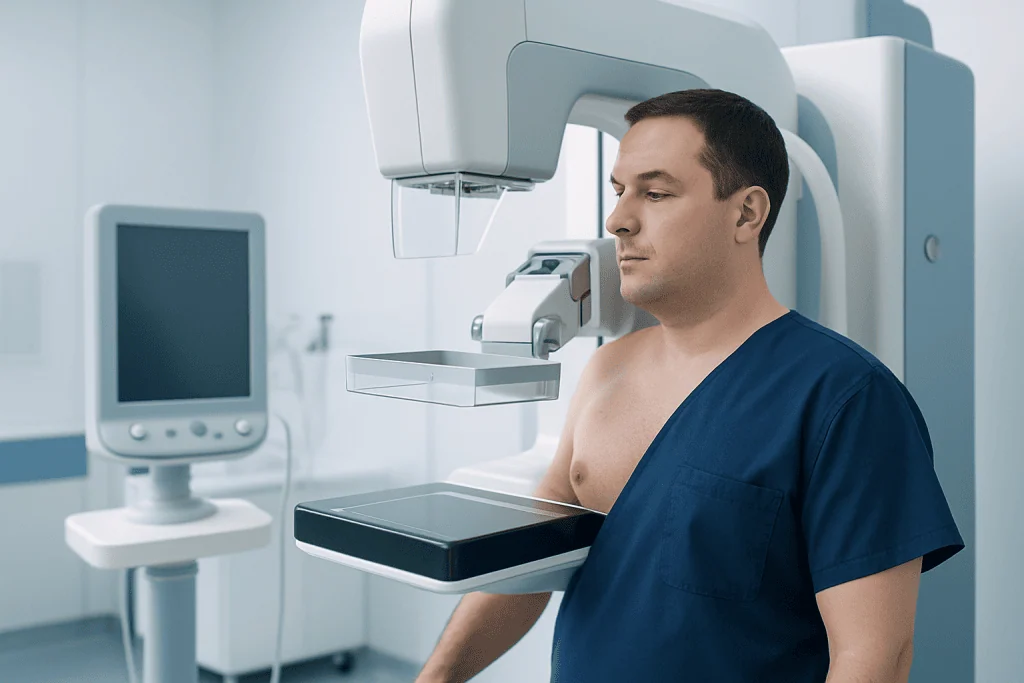
Accessory breast tissue in men may cause no symptoms at all. Some people notice only a small fullness under one or both arms, a soft mobile lump, or a visible contour difference compared with the other side. Others become aware of it during adolescence, weight changes, or adulthood when the area becomes more noticeable.
Possible symptoms can include tenderness, swelling, rubbing against clothing, or a feeling of heaviness in the underarm area. In some cases, the tissue becomes more obvious with hormonal changes, weight gain, or general changes in body composition. Rarely, there may be a visible nipple-like structure on the skin if supernumerary tissue is present.
Symptoms can vary from person to person, but common features include:
- Soft or firm fullness in the armpit or near the chest wall
- One-sided or two-sided asymmetry
- Discomfort with arm movement or tight clothing
- Cosmetic concern or self-consciousness
- Occasional tenderness or swelling
While most cases are benign, any lump that is hard, fixed, rapidly enlarging, or associated with skin changes deserves medical review. This helps distinguish accessory breast tissue from other underarm or chest conditions.
Causes and Risk Factors
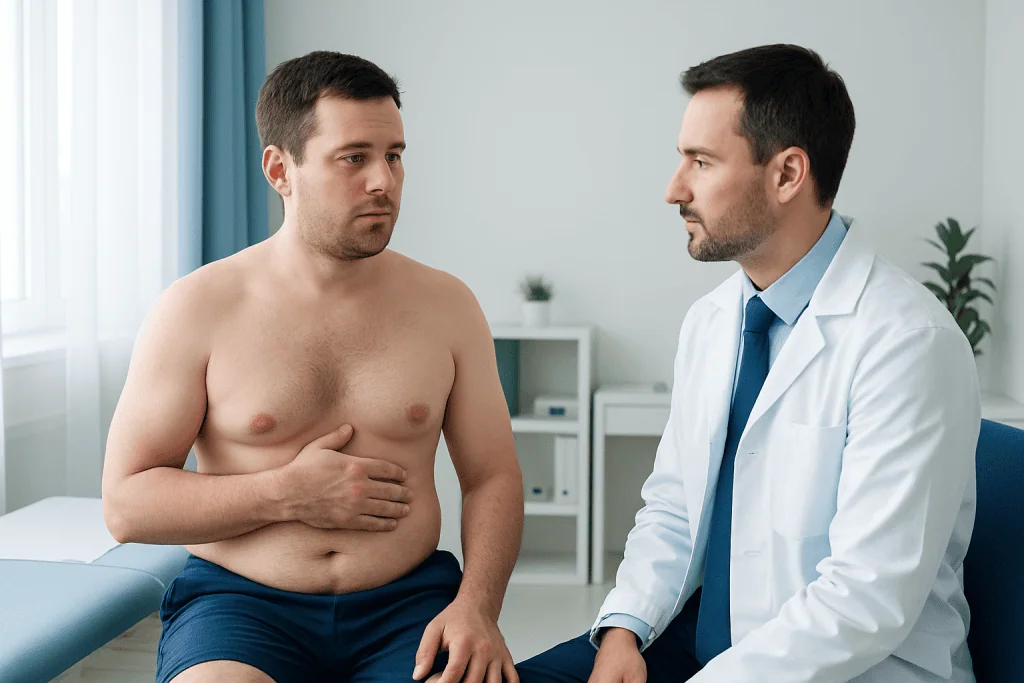
Accessory breast tissue develops before birth. During embryonic development, a line of tissue called the mammary ridge or milk line normally regresses except in the chest area, where the breasts form. If a portion does not fully regress, extra breast tissue may remain. This is a developmental variation rather than something caused by injury or personal habits.
The condition may not become apparent until later in life. Hormonal shifts during puberty can make the tissue more visible, and weight gain may draw attention to the area. In some men, it is only discovered after they seek evaluation for what seems to be an underarm lump or chest asymmetry.
Accessory breast tissue is not the same as simple excess fat. It can contain glandular tissue and may respond to hormones. It is also distinct from standard male chest enlargement such as enlargement of breast tissue in gynecomastia, although the two conditions can sometimes coexist. A family history may be present in some cases, but many people have no known relatives with the same finding.
Diagnosis and Evaluation
Diagnosis starts with a medical history and physical examination. A clinician will ask when the fullness was first noticed, whether it changes over time, and whether there is pain, swelling, or other symptoms. The location of the tissue is an important clue, especially when it sits along the milk line or in the axilla.
Imaging may be recommended when the diagnosis is uncertain or when the area feels more like a discrete lump. Ultrasound is often used first because it can help distinguish glandular tissue from fat, cysts, or enlarged lymph nodes. In selected cases, mammography or other imaging may be considered, particularly if there are atypical findings or concern about another diagnosis.
Doctors also consider other possible causes of a lump or bulge in the same region. These may include lipoma, swollen lymph nodes, cysts, hidradenitis, or skin and soft tissue conditions. The goal is not only to confirm accessory breast tissue but also to exclude problems that require different treatment.
If there are unusual features such as rapid growth, firmness, skin retraction, or nipple discharge from accessory tissue, a biopsy may be advised. Most people do not need this, but it can be helpful when imaging and examination do not provide a clear answer.
Treatment Options
Not everyone with accessory breast tissue in men needs treatment. If the tissue is small, painless, and not bothersome, careful observation may be enough. Reassurance is often helpful once the diagnosis is confirmed and more serious causes have been ruled out.
Treatment may be considered if there is ongoing discomfort, friction with movement, recurrent swelling, or significant cosmetic concern. Surgical removal is the most definitive option when true accessory breast tissue is present. Depending on the amount and type of tissue, treatment may involve direct excision, contouring, or a combination with liposuction techniques to improve the shape of the area.
For men with broader chest contour concerns or overlapping glandular enlargement, the care plan may also involve assessment for aesthetic breast surgery or evaluation of associated gynecomastia. When the problem is clearly localized to ectopic tissue, a focused procedure such as accessory breast surgery may be the most suitable option.
The right approach depends on the amount of glandular tissue, the role of surrounding fat, the exact location, and the person’s goals. A surgeon can explain the expected scar placement, likely contour changes, recovery, and possible risks such as swelling, asymmetry, or recurrence of fullness if tissue remains.
Self-care, Monitoring, and Recovery Considerations
When treatment is not needed right away, self-monitoring is sensible. A person can keep track of whether the tissue changes in size, becomes painful, or begins to interfere with exercise, clothing, or daily comfort. Weight management may change the appearance of nearby fat, but it does not always remove true glandular accessory breast tissue.
People should avoid repeated pressing or checking of the area, as this can make tenderness more noticeable. Supportive clothing and reducing friction around the underarm may help if the tissue rubs during movement. Any sudden change should still be assessed medically rather than managed at home.
If surgery is chosen, recovery usually involves temporary swelling, bruising, and activity modification. The surgeon may recommend wound care, scar care, and a gradual return to exercise. Following these instructions helps healing and supports the best contour result.
Near the end of the care pathway, some patients benefit from consultation with a plastic and reconstructive team experienced in body contour concerns. Acibadem International’s multidisciplinary specialists in JCI-accredited hospitals diagnose and treat accessory breast tissue for international patients, with treatment plans tailored to the individual.
When to Seek Medical Evaluation
Medical evaluation is a good idea for any new underarm or chest-area lump, even when it seems soft or harmless. Accessory breast tissue is one possible explanation, but only an examination can confirm that. Early assessment can provide reassurance and help identify the correct diagnosis.
A prompt appointment is especially important if the area is growing, painful, hard, fixed, or linked to skin changes. Redness, warmth, persistent swelling, or drainage may suggest inflammation or another condition rather than simple accessory tissue. Men with a personal history of breast or hormonal problems should also mention this during evaluation.
It is also reasonable to seek advice if the issue causes embarrassment, clothing problems, or discomfort with sports and arm movement. Even benign accessory tissue can affect quality of life. A qualified doctor can discuss whether observation, imaging, or treatment would be most appropriate.
Frequently asked questions
Is accessory breast tissue in men rare?
It is considered uncommon, and it is likely under-recognized because some cases are small and cause no symptoms. Men may only discover it when they notice an underarm bulge or seek care for asymmetry.
Can accessory breast tissue in men become cancerous?
Most accessory breast tissue is benign. However, because it is breast tissue, unusual changes such as a hard mass, rapid growth, skin changes, or persistent pain should be evaluated by a doctor to rule out rare but important problems.
How is accessory breast tissue different from gynecomastia?
Gynecomastia affects the usual breast tissue on the chest, often beneath or around the nipple area. Accessory breast tissue is extra tissue located outside the normal breast area, most commonly in the armpit, although both conditions can occur in the same person.
Will weight loss make accessory breast tissue go away?
Weight loss may reduce nearby fatty fullness and make the contour less obvious in some people. However, true glandular accessory breast tissue may remain, so appearance and symptoms do not always fully resolve with weight change alone.
What tests are used to diagnose accessory breast tissue?
Doctors usually begin with a physical examination and medical history. Ultrasound is commonly used when imaging is needed, and additional tests may be recommended if the findings are unclear or unusual.
When is surgery considered?
Surgery may be considered when the tissue causes pain, rubbing, swelling, restricted movement, or cosmetic distress. The decision depends on symptoms, the amount of tissue present, and the person’s preferences after medical evaluation.
References
- American Society of Plastic Surgeons
- American College of Radiology
- Mayo Clinic
- National Health Service
- StatPearls
This article is for general information only and is not a substitute for professional medical advice. Please consult a qualified doctor about your individual situation.
Accessory Breast in Turkey — costs, top hospitals & a free quote
JCI-accredited · board-certified surgeons · reply within 24h
Add us as a Preferred Source to see more of our trusted health content across Google Search, AI Overviews and Discover.

Plastic, Reconstructive & Aesthetic Surgery
Reconstructive and aesthetic procedures for the face and body, performed by experienced surgeons.
35 specialists in this unitRelated Treatments
Related Conditions
More from the Health Library

Related Specialists

Assoc. Prof. Dr. Erdem Güven (m)
Aesthetic Plastic & Reconstructive Surgery
Prof. Dr. Şükrü Yazar
Aesthetic Plastic & Reconstructive Surgery
Prof. Dr. Hakan Ağır
Aesthetic Plastic & Reconstructive Surgery
Prof. Dr. Bülent Saçak
Aesthetic Plastic & Reconstructive Surgery