

Accessory Breast Tissue in Men: Symptoms, Diagnosis, and When Surgery Is Considered

Accessory breast tissue in men is usually a benign developmental condition present from birth, even if it is noticed later in life. It often appears near the armpit and may feel like fullness, swelling, or a lump that changes with weight or hormones.
Key Takeaways
- Accessory breast tissue in men is usually a benign developmental condition present from birth, even if it is noticed later in life.
- It often appears near the armpit and may feel like fullness, swelling, or a lump that changes with weight or hormones.
- A doctor may use physical examination and imaging tests such as ultrasound or mammography to confirm the diagnosis and rule out other causes.
- Treatment is not always necessary, but surgery may be considered if the tissue causes discomfort, asymmetry, or concern about appearance.
- Any new, growing, painful, or firm chest or underarm lump should be evaluated by a qualified clinician.
Accessory breast tissue in men is an uncommon but usually benign condition in which extra breast tissue develops outside the normal chest area, often near the armpit. It may be noticed as a soft lump, fullness, or tenderness, and treatment depends on symptoms, appearance, and the results of medical evaluation.
Overview
Accessory breast tissue in men refers to extra breast tissue that develops outside the usual breast area. It is also called ectopic breast tissue or supernumerary breast tissue. This tissue most often appears along the so-called “milk line,” an embryonic line that runs from the underarm to the groin, but in practice it is most commonly noticed near the armpit.
This condition begins during fetal development. In most people, the early tissue along the milk line disappears before birth, leaving breast tissue only in the normal chest area. When a small amount remains, it can later become noticeable as a soft swelling, fullness, or lump. Although it is present from birth, some men do not become aware of it until puberty, adulthood, weight changes, or hormonal fluctuations make it more visible.
Accessory breast tissue is different from many other underarm or chest lumps because it is made of breast tissue rather than only fat or enlarged lymph nodes. It can occur alone or alongside other breast-related conditions. For example, some men may also have gynecomastia, which is enlargement of normal breast tissue in the chest. While both conditions can affect appearance and comfort, they are not exactly the same.
Symptoms and What It May Feel Like
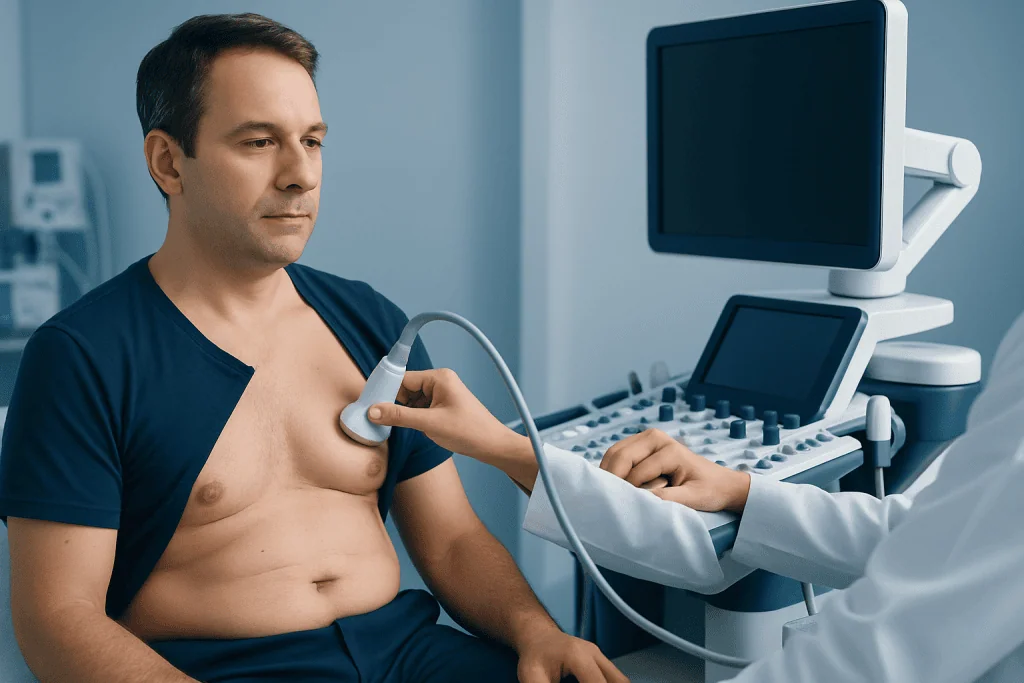
Many men notice accessory breast tissue as a small bulge or fullness under the arm. In some cases, it feels soft and mobile, while in others it may seem firmer. The size can vary from a subtle area of thickening to a more visible lump that creates asymmetry in clothing or when the arm is raised.
Symptoms are often mild, but some people experience tenderness, swelling, or sensitivity. These symptoms may become more noticeable with weight gain, hormonal changes, or friction from clothing. Occasionally, the area may feel uncomfortable during exercise or when carrying bags that press on the underarm.
Possible features include:
- A soft or firm lump near the armpit or along the chest wall
- Visible fullness or asymmetry
- Tenderness or discomfort to pressure
- A change in size over time
- Skin irritation from rubbing or sweating in the area
Accessory breast tissue usually does not cause serious problems, but it can affect self-confidence and body image. Because other conditions can also cause underarm masses, it is important not to assume the cause without proper medical assessment.
Causes and Risk Factors

The underlying cause of accessory breast tissue is developmental. During early embryonic growth, a line of primitive breast tissue forms on both sides of the body. Normally, most of this tissue regresses. If a portion remains, accessory breast tissue can develop. This is why the condition is considered congenital, even if it is discovered much later.
Men are generally less likely than women to notice symptoms because male breast tissue is usually less hormonally active. Still, the tissue can enlarge or become easier to feel during periods of hormonal change, puberty, weight gain, or aging. In some cases, extra fat in the area can make the fullness more prominent, and this may overlap with chest contour concerns such as male breast enlargement.
Accessory breast tissue is not caused by poor hygiene or injury. It is also not the same as a simple fatty lump, though these can look similar. Family history is not always present, but some developmental traits may run in families. A medical evaluation helps distinguish accessory breast tissue from lipomas, enlarged lymph nodes, skin cysts, and other benign or less common conditions.
How Doctors Diagnose It
Diagnosis starts with a detailed medical history and physical examination. A doctor will ask when the swelling was first noticed, whether it changes in size, and whether there is pain, tenderness, skin change, or nipple-like tissue. They will also ask about medications, hormone-related conditions, weight changes, and any personal or family history of breast disease.
On examination, the clinician assesses the location, size, texture, and mobility of the lump. Accessory breast tissue often sits in a typical location, especially the axilla, or underarm. However, because several conditions can mimic it, imaging is often recommended. Ultrasound is commonly used and can help identify whether the area contains breast tissue, fat, fluid, or a lymph node. In selected cases, mammography or MRI may also be used.
If the findings are unclear, or if there are unusual features such as a hard fixed mass, rapid growth, or suspicious skin changes, the doctor may recommend a biopsy. This involves taking a small tissue sample for laboratory examination. Most cases prove to be benign, but evaluation is important because, although uncommon, accessory breast tissue can develop the same types of benign or malignant changes as normal breast tissue.
Treatment Options and When Surgery Is Considered
Treatment depends on symptoms, examination findings, and the person’s preferences. If accessory breast tissue is small, clearly benign, and not causing discomfort or cosmetic concern, observation may be all that is needed. A doctor may simply advise monitoring for changes in size, texture, or symptoms over time.
Surgery may be considered when the tissue causes discomfort, restricts movement, creates a visible contour problem, or leads to ongoing worry after evaluation. The goal is usually to remove the extra tissue and improve the shape of the area. Depending on the amount and type of tissue present, surgeons may use direct excision, liposuction, or a combination approach. In some cases, this can be discussed as part of accessory breast treatment or broader aesthetic breast surgery.
Before surgery, the surgeon explains what can realistically be achieved, where scars may be placed, and what recovery may involve. As with any procedure, there are potential risks such as bruising, swelling, contour irregularity, fluid collection, numbness, or scarring. People prone to raised scars may wish to discuss scar planning, especially if there is a history of keloid scars.
In selected cases where excess fatty tissue is a major component, techniques related to liposuction or body contouring may be part of the surgical plan. The best approach is individualized and should be decided after assessment by a qualified surgeon.
Prevention, Self-care, and Living With the Condition
Because accessory breast tissue develops before birth, there is no proven way to prevent it. However, self-care can help reduce irritation and make the area easier to monitor. Maintaining a stable weight may reduce changes in fullness, especially when the area contains both glandular tissue and fat. Comfortable clothing that does not rub the underarm can also help if the area is tender.
People who are observing the condition without surgery should become familiar with how it normally looks and feels. This can make it easier to notice changes such as increasing size, new pain, firmness, or skin changes. Any new change should be discussed with a doctor rather than managed at home without advice.
Emotional comfort matters too. Even when the condition is benign, a visible underarm or chest contour difference can affect confidence, clothing choices, or willingness to exercise and swim. A supportive consultation can help clarify whether reassurance, monitoring, or treatment would be the best next step. Near the end of the care pathway, some international patients choose evaluation at centers such as Acibadem International, where multidisciplinary specialists in JCI-accredited hospitals assess and treat conditions including accessory breast tissue.
When to See a Doctor
Any new lump in the chest or underarm should be assessed by a qualified clinician, even though many causes are benign. Medical review is especially important if the lump is growing, feels hard or fixed, becomes painful, or is associated with skin dimpling, redness, or discharge. These signs do not necessarily mean something serious, but they deserve prompt evaluation.
It is also wise to seek medical advice if the area interferes with daily activities, causes repeated irritation, or creates significant concern about appearance. A specialist can explain whether the finding is likely to be accessory breast tissue, fat accumulation, a skin lesion, or another condition that needs different care.
Early evaluation often brings reassurance. It also helps avoid unnecessary worry and ensures that, if treatment is needed, it can be planned appropriately. Men should feel comfortable raising any concerns about chest or underarm changes with their doctor, as these are common and important health discussions.
Frequently asked questions
Is accessory breast tissue in men common?
It is considered uncommon, but it may be underrecognized because small cases can be mistaken for fat or a minor underarm bulge. Some men only notice it later in life when weight or hormonal changes make it more visible.
Is accessory breast tissue in men dangerous?
In most cases, it is benign and not dangerous. However, because it is true breast tissue, it should still be evaluated if there is a new lump, rapid growth, pain, or unusual skin changes.
How is accessory breast tissue different from gynecomastia?
Gynecomastia is enlargement of normal breast tissue in the chest area beneath or around the nipple. Accessory breast tissue is extra breast tissue located outside the usual breast area, most often near the armpit.
Can accessory breast tissue go away on its own?
It usually does not disappear completely on its own because it is developmental tissue. Its prominence may change with weight, hormones, or age, but persistent tissue generally remains unless it is surgically removed.
What tests are used to confirm the diagnosis?
Doctors often begin with a physical examination and commonly use ultrasound to study the area. Depending on age, symptoms, and findings, they may also recommend mammography, MRI, or, less commonly, a biopsy.
When is surgery recommended?
Surgery may be recommended when accessory breast tissue causes discomfort, repeated irritation, movement problems, or distress about appearance. It may also be advised if imaging is unclear or if tissue diagnosis is needed.
References
- National Health Service
- American College of Radiology
- Mayo Clinic
- Cleveland Clinic
- Merck Manual Consumer Version
This article is for general information only and is not a substitute for professional medical advice. Please consult a qualified doctor about your individual situation.
Accessory Breast in Turkey — costs, top hospitals & a free quote
JCI-accredited · board-certified surgeons · reply within 24h
Add us as a Preferred Source to see more of our trusted health content across Google Search, AI Overviews and Discover.

Plastic, Reconstructive & Aesthetic Surgery
Reconstructive and aesthetic procedures for the face and body, performed by experienced surgeons.
35 specialists in this unitRelated Treatments
Related Conditions
More from the Health Library

Related Specialists
Assoc. Prof. Dr. Erdem Güven (m)
Aesthetic Plastic & Reconstructive Surgery
Prof. Dr. Şükrü Yazar
Aesthetic Plastic & Reconstructive Surgery
Prof. Dr. Hakan Ağır
Aesthetic Plastic & Reconstructive Surgery
Prof. Dr. Bülent Saçak
Aesthetic Plastic & Reconstructive Surgery