

Aesthetic Definition: The Difference Between Medical and Everyday Use

In everyday language, aesthetic usually refers to beauty, style, or a particular visual taste. In medicine, aesthetic commonly describes treatments that improve appearance and may also support comfort, confidence, or function.
Key Takeaways
- In everyday language, aesthetic usually refers to beauty, style, or a particular visual taste.
- In medicine, aesthetic commonly describes treatments that improve appearance and may also support comfort, confidence, or function.
- Aesthetic and cosmetic are related terms, but they are not always exact synonyms in clinical practice.
- Some aesthetic procedures are elective, while others overlap with reconstructive care after injury, illness, or congenital differences.
- The best treatment choice depends on personal goals, anatomy, health status, and advice from a qualified specialist.
The term “aesthetic” is often used to describe beauty, style, or visual appeal in daily life. In medicine, however, it has a more specific meaning related to appearance, symmetry, reconstruction, and sometimes improved function as well as looks.
Overview: What Does “Aesthetic” Mean?
The aesthetic definition depends on context. In everyday speech, “aesthetic” usually refers to beauty, appearance, design, or a recognizable visual style. A person might talk about a home’s aesthetic, a fashion aesthetic, or an artist’s aesthetic to describe how something looks and the feeling it creates.
In healthcare, the word has a narrower and more practical meaning. Medical professionals often use “aesthetic” to describe treatments or procedures intended to improve appearance, harmony, proportion, or visible signs of aging. In some cases, these treatments are chosen mainly for appearance. In others, they also help with comfort, self-confidence, clothing fit, or physical function.
This is why the medical meaning of aesthetic can overlap with plastic surgery, dermatology, ophthalmology, dentistry, and other specialties. Aesthetic care is not only about changing how a person looks. It may also be part of care after weight loss, childbirth, trauma, burns, scarring, or congenital conditions that affect the face or body.
Everyday Use of Aesthetic

Outside medicine, aesthetic is a broad cultural and personal term. It often describes a sense of beauty or a style preference, such as minimalist, classic, natural, or bold. In this sense, there is no single correct aesthetic because tastes differ from person to person and between cultures.
People also use aesthetic to describe visual harmony. For example, they may say that a room has a calm aesthetic, or that a photograph is aesthetically pleasing. The focus is usually on appearance, mood, and artistic impression rather than health.
This everyday meaning matters because it shapes expectations. When someone first hears about aesthetic treatments, they may imagine only beauty trends or social media ideals. In medical settings, however, specialists aim for something more individualized: natural proportion, balance with the person’s features, and a result that fits the patient’s goals and overall well-being.
Medical Use of Aesthetic
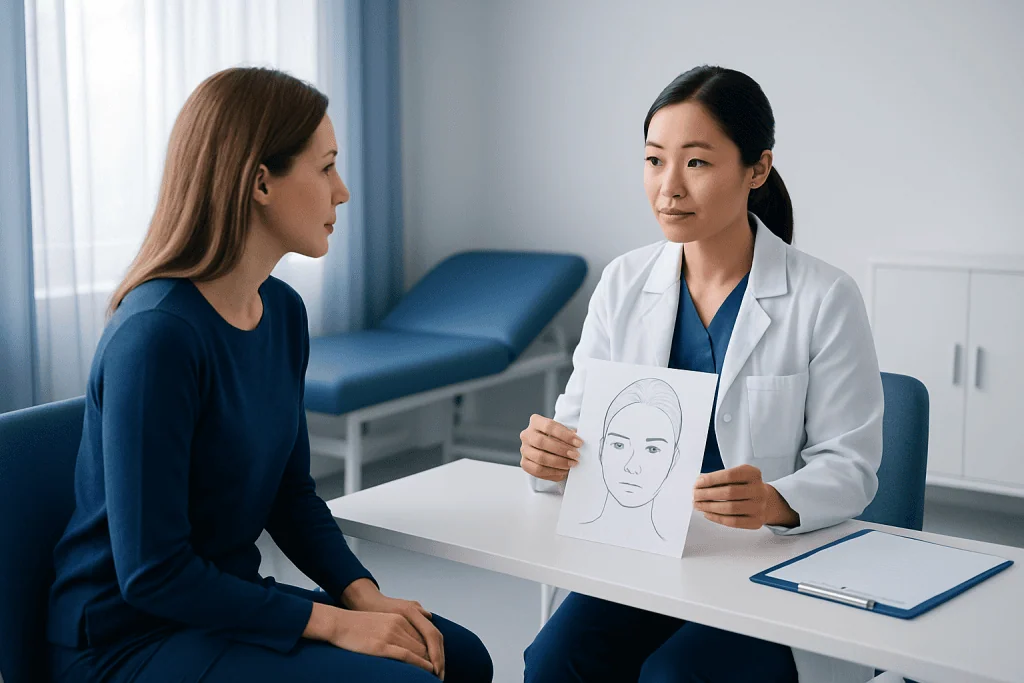
In medicine, aesthetic usually refers to interventions that improve visible form. These can include surgical and non-surgical treatments for the face, breasts, body, skin, and eyelids. Common examples include scar revision, contouring procedures, breast reshaping, and treatments that address age-related changes in skin and soft tissues.
Importantly, medical aesthetic care is not always separate from functional care. A person may seek treatment because of a visible concern, but the same procedure can also improve comfort or daily life. For example, drooping eyelids may affect both appearance and visual field. Scar treatment may improve the look of the skin while also reducing tightness or movement restriction.
There is also a close relationship between aesthetic and reconstructive medicine. Reconstructive care focuses on restoring form and function after congenital conditions, trauma, disease, or surgery. Yet reconstructive procedures almost always include an aesthetic goal as well, because shape, symmetry, and tissue appearance are important parts of recovery. Examples include care after burns, treatment for facial trauma, or surgery related to microtia.
Aesthetic vs Cosmetic vs Reconstructive
The words aesthetic and cosmetic are often used as if they mean exactly the same thing, but there can be subtle differences. “Cosmetic” often emphasizes appearance change alone. “Aesthetic” may suggest a broader clinical goal of harmony, proportion, and a natural-looking result. In practice, many clinics and specialists use both terms, and the overlap is considerable.
Reconstructive treatment is different in its primary purpose. It aims to restore normal form and function after injury, disease, surgery, or congenital differences. However, reconstructive surgery is not separate from appearance. Good reconstructive care also considers symmetry, contour, and emotional well-being, because visible recovery can be an important part of quality of life.
For patients, the main question is not which label is used, but what the treatment is intended to achieve. A consultation should clarify whether a procedure is elective or medically necessary, what functional benefits are possible, and what result is realistic. This discussion helps patients make informed decisions without confusion about terminology.
- Aesthetic: focuses on appearance, harmony, and proportion; may overlap with function.
- Cosmetic: commonly used for elective appearance-enhancing treatments.
- Reconstructive: restores form and function after trauma, disease, surgery, or birth differences.
Examples of Aesthetic Treatments in Medicine
Aesthetic medicine includes a wide range of options. Some are non-surgical, such as skin resurfacing, scar care, and injectables. Others are surgical, including facial contouring, breast reshaping, and body contouring after major weight change. The most appropriate treatment depends on anatomy, skin quality, overall health, and the patient’s goals.
Examples include procedures for the eyelids and surrounding tissues, such as oculoplastic treatment, especially when a concern involves both appearance and eye-area function. Body-focused options may include body contouring or classic liposuction for selected patients. Breast-related concerns may be addressed through aesthetic breast surgery when shape, size, or symmetry is the main issue.
Aesthetic care can also be part of treatment for visible skin changes. Someone with acne scars, keloid-prone scars, or contour irregularities may seek improvement because these changes affect confidence or comfort. In such cases, a specialist will usually assess skin type, scar pattern, and healing history before recommending treatment. This is especially important for people with conditions such as keloid scars, where scar behavior influences the treatment plan.
How Doctors Decide Whether a Treatment Is Appropriate
Medical aesthetic decisions begin with a detailed consultation. The clinician will usually ask what bothers the patient, how long the concern has been present, whether it affects function, and what kind of result the patient hopes to achieve. This conversation matters because one person may want a subtle refinement, while another may be seeking reconstruction after injury or surgery.
The evaluation typically includes a physical examination and a review of general health, medications, smoking status, allergies, and previous procedures. Photographs may be used for planning and for discussing proportion or asymmetry. In some cases, especially when function is also affected, more specialized testing or consultation with another department may be helpful.
Appropriate treatment also depends on expectations. Doctors generally look for realistic goals, an understanding of recovery, and a clear reason for seeking treatment. If a patient is under major emotional stress or expects perfection, the specialist may recommend waiting, additional counseling, or a different approach. Safe care is not only about technical skill; it is also about choosing the right time and the right treatment for the right person.
Benefits, Limits, and Safety Considerations
The possible benefits of aesthetic treatment can include improved facial or body balance, smoother contour, reduced visibility of scars, or greater confidence in social situations. For some people, the benefit is practical as well. Clothing may fit better, skin folds may feel more comfortable, or a repaired area may look more natural after trauma or illness.
At the same time, every medical treatment has limits. Anatomy, skin quality, age, scarring tendency, and healing response all affect the final result. No procedure can guarantee perfection or permanently stop natural aging. Good specialists focus on achievable improvement and explain in advance what a treatment can and cannot do.
Safety should always come first. Whether a treatment is surgical or non-surgical, patients should look for qualified clinicians, a proper medical assessment, clear informed consent, and suitable follow-up care. People should be cautious about trend-driven procedures, unverified claims, or treatment decisions based only on photographs from social media. If care is being planned abroad, it is especially important to understand the aftercare process and the credentials of the hospital and specialists.
When to Seek Advice and What to Ask
A person may consider a medical consultation if a visible concern causes distress, affects confidence, follows an injury or surgery, or interferes with comfort or function. This can include excess skin after weight loss, eyelid changes, prominent scars, asymmetry, congenital differences, or contour concerns that do not improve with lifestyle measures alone.
Helpful questions to ask include: What are the treatment options? Is this mainly aesthetic, or is there also a functional issue? What results are realistic for this anatomy? What are the common risks, the likely recovery time, and the alternatives to treatment? Clear answers can help patients decide whether to proceed now, later, or not at all.
Near the end of the decision process, some patients also benefit from asking about multidisciplinary care. This can be useful when appearance concerns overlap with eye health, skin disease, scarring, trauma, or reconstructive needs. Acibadem International’s multidisciplinary specialists and JCI-accredited hospitals diagnose and treat aesthetic and reconstructive concerns for international patients, with treatment planning based on individual medical needs rather than one-size-fits-all solutions.
Frequently asked questions
What is the simple aesthetic definition?
In simple terms, aesthetic refers to appearance, beauty, or visual style. In medicine, it usually means treatments that improve how a feature looks, sometimes alongside comfort or function.
Is aesthetic the same as cosmetic?
They are closely related, and many people use them interchangeably. However, aesthetic can sometimes imply a broader medical focus on balance, proportion, and natural-looking results, while cosmetic often refers more specifically to elective appearance changes.
Can an aesthetic procedure also be medically necessary?
Yes. Some procedures improve appearance and also address a functional problem, such as eyelid drooping that affects vision or scar treatment that reduces tightness. This is why a doctor’s assessment is important before deciding on treatment.
Does aesthetic medicine only include surgery?
No. Aesthetic medicine includes both surgical and non-surgical options. Depending on the concern, treatment may involve skin therapies, scar care, contouring procedures, or reconstructive approaches.
How do doctors decide if someone is a good candidate for aesthetic treatment?
Doctors consider general health, anatomy, healing history, smoking status, expectations, and the person’s reasons for seeking treatment. A good candidate usually has realistic goals and understands both the potential benefits and the limitations.
Are aesthetic treatments always about beauty standards?
Not necessarily. Many people seek treatment for symmetry, comfort, recovery after illness or injury, or to feel more at ease in daily life. Good medical care is individualized and should not be based on pressure to match a trend.
References
- American Society of Plastic Surgeons
- International Society of Aesthetic Plastic Surgery
- American Academy of Dermatology
- American Academy of Ophthalmology
- National Health Service
This article is for general information only and is not a substitute for professional medical advice. Please consult a qualified doctor about your individual situation.
Explore treatments in Turkey — costs, top hospitals & a free quote
JCI-accredited · board-certified surgeons · reply within 24h
Add us as a Preferred Source to see more of our trusted health content across Google Search, AI Overviews and Discover.

Related Treatments
Related Conditions
More from the Health Library



Related Specialists
Assoc. Prof. Dr. Erdem Güven (m)
Aesthetic Plastic & Reconstructive Surgery
Prof. Dr. Şükrü Yazar
Aesthetic Plastic & Reconstructive Surgery
Prof. Dr. Hakan Ağır
Aesthetic Plastic & Reconstructive Surgery
Prof. Dr. Bülent Saçak
Aesthetic Plastic & Reconstructive Surgery