ALS vs Peripheral Neuropathy: How Specialists Investigate Progressive Weakness
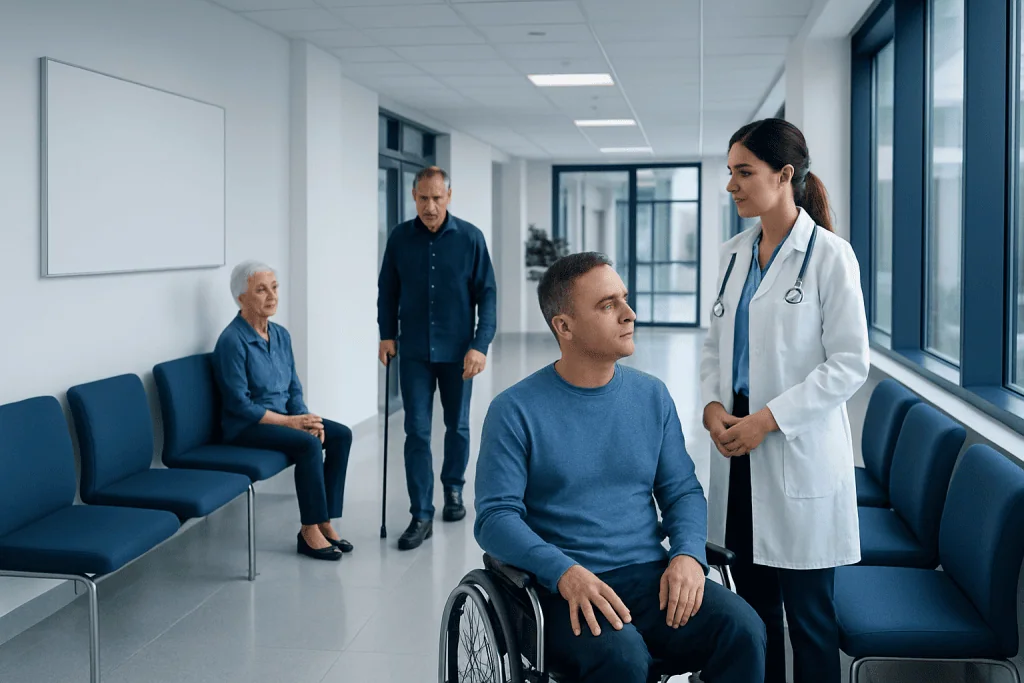
ALS mainly affects motor neurons and typically causes progressive weakness, muscle wasting, fasciculations, and signs of upper motor neuron involvement, while sensation is usually preserved. Peripheral neuropathy affects peripheral nerves and often includes numbness, tingling, burning pain, imbalance, or reduced reflexes, although some forms are predominantly motor.
Key Takeaways
- ALS mainly affects motor neurons and typically causes progressive weakness, muscle wasting, fasciculations, and signs of upper motor neuron involvement, while sensation is usually preserved.
- Peripheral neuropathy affects peripheral nerves and often includes numbness, tingling, burning pain, imbalance, or reduced reflexes, although some forms are predominantly motor.
- EMG and nerve conduction studies are central tests because they help show whether weakness is due to motor neuron disease, peripheral nerve damage, muscle disease, or another cause.
- MRI, blood tests, cerebrospinal fluid analysis, and sometimes genetic testing are used to look for treatable mimics and define the underlying diagnosis.
- Early specialist assessment is important when weakness is progressive, asymmetric, associated with swallowing or breathing symptoms, or accompanied by falls or marked muscle wasting.
Progressive weakness can come from many parts of the nervous system, including motor neurons, peripheral nerves, muscles, or the neuromuscular junction. Specialists distinguish ALS from peripheral neuropathy by combining a detailed history, neurologic examination, electrodiagnostic testing, imaging, and targeted blood or genetic tests.
Overview: Why ALS and Peripheral Neuropathy Can Look Similar
ALS, or amyotrophic lateral sclerosis, and peripheral neuropathy can both cause progressive weakness, muscle cramps, fatigue with activity, and difficulty using the hands or walking. For this reason, a person may worry about ALS when new weakness appears, or a neuropathy may be suspected when symptoms begin in the feet or hands. The important point is that weakness is a sign, not a diagnosis; specialists investigate where the problem is located in the nervous system and why it is happening.
ALS is a type of motor neuron disease. It affects nerve cells in the brain and spinal cord that control voluntary movement. Because sensory nerves are usually not the main target, people with ALS typically do not have prominent numbness, tingling, or burning pain. Peripheral neuropathy, by contrast, affects nerves outside the brain and spinal cord. It often involves sensory fibers, motor fibers, autonomic fibers, or a combination of these.
The distinction is sometimes straightforward, but not always. Certain motor neuropathies, inflammatory neuropathies, spinal cord disorders, muscle diseases, and neuromuscular junction disorders can mimic aspects of ALS. A careful evaluation in neuromuscular diseases focuses on pattern recognition, objective testing, and ruling out treatable causes before a final diagnosis is made.
Symptoms Specialists Compare During the History
The medical history helps determine how weakness started, how quickly it has progressed, and which body regions are involved. ALS often begins focally, such as weakness in one hand, foot drop, slurred speech, or difficulty swallowing, and then gradually spreads to other regions. Patients may notice muscle twitching, cramps, stiffness, or loss of muscle bulk. Sensory complaints are usually mild or absent, although discomfort from cramps or stiffness may occur.
Peripheral neuropathy more commonly begins in the longest nerves, so symptoms often start in the toes and feet before moving upward, sometimes later involving the fingers. Sensory symptoms are common: numbness, tingling, burning, electric sensations, temperature sensitivity, or unsteadiness in the dark. Weakness may appear later, especially with conditions that affect motor fibers or with advanced neuropathy.
Doctors also ask about autonomic symptoms, such as dizziness on standing, changes in sweating, bladder or bowel changes, or digestive motility problems, because these may point toward certain neuropathies. Other clues include diabetes, thyroid disease, vitamin deficiencies, kidney disease, autoimmune disease, infections, toxin or medication exposures, alcohol use, family history, and recent illnesses. In ALS assessment, specialists also ask about voice changes, choking, weight loss, shortness of breath when lying flat, and emotional lability, as these can influence supportive care and urgency of testing.
What the Neurologic Examination Looks For

The neurologic examination is often the first step that separates ALS from peripheral neuropathy. Specialists test muscle strength in specific patterns, compare the right and left sides, check muscle tone, look for wasting and fasciculations, and assess coordination and gait. They also examine reflexes, sensation, speech, swallowing function, and sometimes breathing mechanics.
ALS classically produces a combination of lower motor neuron signs and upper motor neuron signs. Lower motor neuron signs include weakness, muscle wasting, reduced tone, and fasciculations. Upper motor neuron signs include brisk reflexes, increased tone or spasticity, and certain abnormal reflexes. The presence of both types of signs in more than one body region raises concern for motor neuron disease, although further testing is always required.
Peripheral neuropathy more often causes reduced or absent reflexes in the affected nerves, loss of vibration or pinprick sensation, and weakness in a length-dependent pattern, such as ankle dorsiflexion weakness or hand weakness in later stages. However, some neuropathies are patchy, asymmetric, rapidly progressive, or mainly motor. This is why the examination guides, but does not replace, electrodiagnostic and laboratory testing.
Electrodiagnostic Testing: EMG and Nerve Conduction Studies
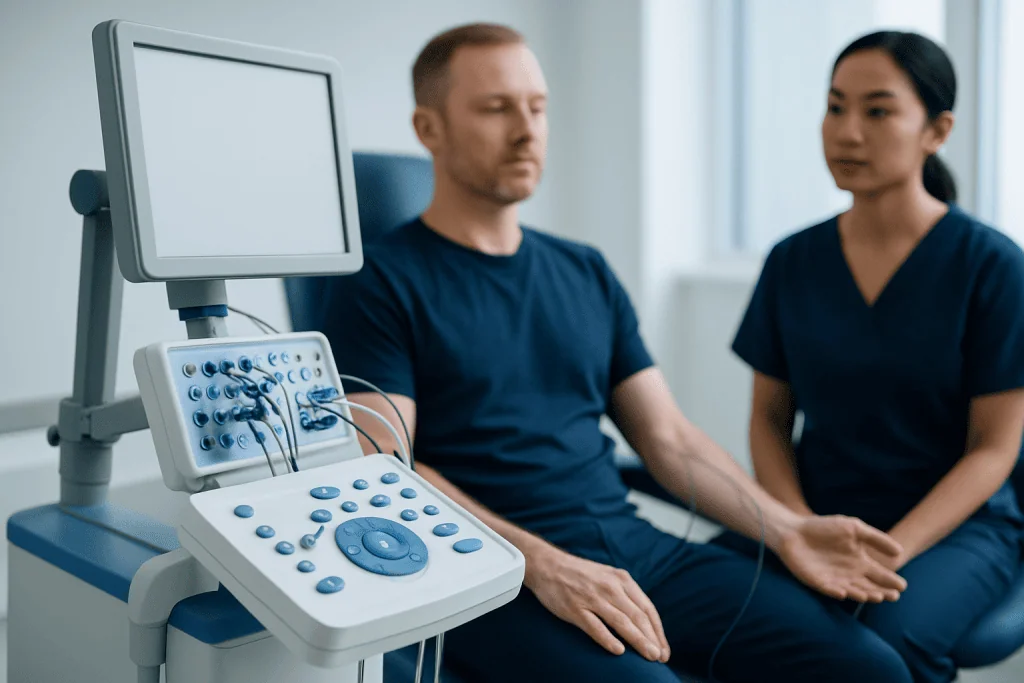
Electromyography, often called EMG, and nerve conduction studies are key investigations for progressive weakness. Nerve conduction studies measure how electrical signals travel through peripheral nerves. They can show whether a neuropathy is affecting the nerve axon, the myelin insulation, motor fibers, sensory fibers, or multiple nerve distributions. This information helps identify patterns such as polyneuropathy, mononeuropathy, radiculopathy, or demyelinating neuropathy.
Needle EMG evaluates electrical activity within muscles. In ALS, EMG may show evidence of active and chronic denervation in multiple body regions, reflecting loss of motor neuron input to muscles. Sensory nerve conduction studies are usually normal in ALS because sensory nerves are not primarily affected. In peripheral neuropathy, sensory responses are often abnormal when sensory fibers are involved, and motor responses may show slowing, conduction block, or reduced amplitudes depending on the cause.
These tests require expert interpretation because abnormal findings can overlap. For example, a pinched nerve in the spine, an inflammatory motor neuropathy, or long-standing nerve compression may produce denervation in selected muscles. A clinical neurophysiology evaluation helps match test findings with the examination and symptom pattern rather than relying on a single result in isolation.
Imaging, Blood Tests, and Other Investigations
MRI is often used to look for structural conditions that may mimic ALS or neuropathy. Cervical spinal cord compression, lumbar spine disease, brain lesions, tumors, inflammation, and vascular abnormalities can sometimes cause progressive weakness or abnormal reflexes. Imaging does not diagnose ALS by itself, but it is valuable for excluding other conditions that may be treatable or require a different plan. In selected cases, neuroradiology supports interpretation of complex brain, spine, or nerve imaging.
Blood tests are tailored to the clinical picture. Common evaluations may include glucose or HbA1c, vitamin B12, thyroid function, kidney and liver function, inflammatory markers, autoimmune tests, serum protein studies, infectious testing, and markers of muscle disease. These tests can identify common and treatable causes of neuropathy or weakness, such as diabetes-related neuropathy, vitamin deficiency, thyroid disease, inflammatory neuropathy, or medication-related nerve injury.
Additional tests may include cerebrospinal fluid analysis, genetic testing, antibody panels, respiratory function tests, swallowing assessment, or muscle and nerve ultrasound. Genetic testing may be considered when there is a family history of ALS, early onset disease, or features suggesting an inherited neuropathy. The goal is not to perform every possible test, but to choose the investigations most likely to clarify the diagnosis and guide care.
Diagnosis: How Specialists Reach a Conclusion
ALS is diagnosed through a combination of clinical findings, disease progression, and supportive electrodiagnostic evidence, while excluding conditions that could better explain the symptoms. International diagnostic frameworks for motor neuron disease help clinicians evaluate upper and lower motor neuron involvement in different body regions. A diagnosis is usually made by a neurologist experienced in neuromuscular disorders, often after follow-up confirms the pattern over time.
Peripheral neuropathy is diagnosed by identifying the pattern of nerve involvement and, whenever possible, its cause. Specialists consider whether the neuropathy is acute or chronic, symmetric or asymmetric, sensory, motor, autonomic, axonal, demyelinating, inherited, metabolic, toxic, infectious, or immune-mediated. This classification matters because several neuropathies have specific treatments or can improve when an underlying cause is addressed.
Sometimes the first evaluation does not provide a final answer. In that situation, doctors may repeat the neurologic examination, review prior test results, repeat EMG after an interval, or monitor the speed and spread of symptoms. This stepwise approach can be reassuring because it reduces the chance of mislabeling a treatable condition as ALS or overlooking an evolving motor neuron disorder. Care pathways for motor neuron disease and peripheral nerve disorders often involve neurologists, rehabilitation physicians, respiratory specialists, speech and swallowing therapists, dietitians, and mental health support when needed.
Treatment Options and Supportive Care
Treatment depends on the final diagnosis. For ALS, current care focuses on slowing disease progression where appropriate, maintaining function, supporting breathing and nutrition, managing symptoms, and preserving quality of life. A neurologist may discuss disease-modifying medications, respiratory monitoring, noninvasive ventilation when indicated, speech and swallowing support, mobility aids, nutritional planning, and advance care planning. Rehabilitation is adjusted to maintain safe activity without overfatigue.
For peripheral neuropathy, treatment targets the cause whenever possible. This may include optimizing blood glucose in diabetes, replacing deficient vitamins, changing a nerve-toxic medication under medical supervision, treating autoimmune or inflammatory neuropathy, managing infections, or addressing inherited neuropathy with supportive strategies. Painful neuropathy may require medication, topical approaches, physical therapy, balance training, foot care, and fall-prevention measures.
Because progressive weakness can affect movement, independence, breathing, swallowing, and emotional wellbeing, multidisciplinary care is often beneficial. Acibadem International’s multidisciplinary specialists and JCI-accredited hospitals evaluate and treat neurological conditions for international patients, including complex neuromuscular presentations, with diagnostic testing coordinated according to individual needs. Any treatment plan should be discussed with a qualified doctor who can interpret results in the context of the patient’s full health history.
When to See a Doctor
A medical evaluation is recommended for any weakness that is progressive, persistent, unexplained, or interfering with daily activities. People should seek prompt assessment if weakness is asymmetric, spreading from one region to another, associated with muscle wasting or frequent fasciculations, or accompanied by slurred speech, swallowing difficulty, shortness of breath, repeated falls, or new problems lifting the foot or gripping objects.
Neuropathy symptoms also deserve attention, especially when numbness or burning pain is worsening, balance is affected, wounds appear on numb feet, symptoms involve the hands and feet, or autonomic symptoms develop. Earlier evaluation may identify reversible causes, reduce complications, and guide safer exercise, footwear, and fall-prevention strategies.
Urgent emergency care is needed for sudden weakness, facial drooping, severe back pain with bladder or bowel changes, rapidly ascending weakness, new breathing difficulty, or weakness after trauma. These symptoms may reflect conditions other than ALS or chronic neuropathy and require immediate assessment.
Frequently asked questions
Can peripheral neuropathy be mistaken for ALS?
Yes, some neuropathies, especially motor-predominant or inflammatory forms, can resemble ALS at first. Specialists use the pattern of symptoms, neurologic examination, EMG and nerve conduction studies, imaging, and laboratory tests to distinguish them. This is important because several neuropathies are treatable or manageable in specific ways.
Does numbness make ALS unlikely?
Prominent numbness, tingling, burning pain, or loss of sensation is more typical of peripheral neuropathy than ALS. However, mild sensory symptoms can occur for unrelated reasons, and a person can have more than one condition. A neurologist can determine whether sensory symptoms match the weakness pattern.
What test is most useful for ALS vs peripheral neuropathy?
EMG and nerve conduction studies are among the most useful tests because they evaluate muscles, motor nerves, and sensory nerves. In ALS, sensory nerve studies are usually normal, while EMG may show denervation in multiple regions. In peripheral neuropathy, nerve conduction studies often show sensory or motor nerve abnormalities that fit a neuropathy pattern.
Can blood tests diagnose ALS?
Blood tests do not usually diagnose ALS directly. They are used to look for other causes of weakness, such as vitamin deficiencies, thyroid disease, autoimmune disease, infections, metabolic disorders, or muscle inflammation. Excluding treatable mimics is an important part of the ALS diagnostic process.
How quickly does ALS weakness progress compared with neuropathy?
ALS usually progresses gradually over months and spreads to additional body regions, although the rate varies widely. Peripheral neuropathy can be slow, fast, stable, relapsing, or improving depending on the cause. The timeline is one clue, but it is not enough to make a diagnosis without examination and testing.
Should a person wait to see if weakness improves?
Progressive or unexplained weakness should not be ignored, especially if it affects walking, hand function, speech, swallowing, or breathing. Early evaluation can identify treatable conditions and help arrange supportive care if needed. A primary care doctor may start the workup, but referral to a neurologist is often appropriate.
References
- National Institute of Neurological Disorders and Stroke
- American Academy of Neurology
- Mayo Clinic
- Muscular Dystrophy Association
- European Academy of Neurology
This article is for general information only and is not a substitute for professional medical advice. Please consult a qualified doctor about your individual situation.
Peripheral Neuropathy in Turkey — costs, top hospitals & a free quote
JCI-accredited · board-certified surgeons · reply within 24h
Add us as a Preferred Source to see more of our trusted health content across Google Search, AI Overviews and Discover.

Physical Medicine & Rehabilitation
Restoring movement and function after injury, surgery or neurological conditions.
150 specialists in this unit