

Arm Lipo: Procedure, Recovery, and Expected Results

Arm lipo targets stubborn fat in the upper arms, but it is not a weight-loss procedure. The best candidates are close to a stable weight and have good skin tone and elasticity.
Key Takeaways
- Arm lipo targets stubborn fat in the upper arms, but it is not a weight-loss procedure.
- The best candidates are close to a stable weight and have good skin tone and elasticity.
- Swelling, bruising, and temporary soreness are common during recovery and improve over time.
- Final arm lipo results are usually gradual and become clearer as swelling settles.
- In some cases, arm lipo may be combined with skin-tightening or an arm lift for better contour.
Arm lipo, also called arm liposuction, is a cosmetic procedure that removes localized fat from the upper arms to create a slimmer, more defined contour. It works best for people with good skin elasticity and realistic expectations about recovery and results.
Overview: What Arm Lipo Is
Arm lipo is a cosmetic surgery procedure designed to remove pockets of excess fat from the upper arms. The goal is to improve arm shape, reduce fullness, and create a smoother contour between the shoulder and elbow. Many people consider it when diet and exercise have improved overall health but have not changed stubborn fat in this area.
This procedure is commonly performed on the back or underside of the upper arms, where fatty tissue can collect and make clothing fit tightly or make the arms feel out of proportion with the rest of the body. Arm lipo can be done as a standalone procedure or as part of broader body contouring, depending on the person’s goals.
It is important to understand that arm lipo removes fat, not significant loose skin. If the skin has lost elasticity, liposuction alone may not produce the desired smooth, firm appearance. In these cases, a surgeon may discuss combining arm liposuction with other contouring options, such as an arm lift, for a more balanced result.
Who May Be a Good Candidate

Good candidates for arm lipo are usually adults who are in generally good health, close to a stable body weight, and bothered by localized upper-arm fat that has not improved with lifestyle changes. They should also have realistic expectations and understand that body contouring can improve shape, but not create perfection.
Skin quality matters. When the skin has good elasticity, it can often contract more smoothly after fat removal. Younger patients or those with mild skin laxity may see better natural tightening than people with more significant loose or hanging skin.
Arm lipo may be less suitable for someone with marked skin laxity after major weight loss, certain medical conditions that increase surgical risk, or expectations that surgery will dramatically change overall body weight. For people who have undergone major weight changes, a surgeon may consider more extensive contouring approaches such as post-weight-loss body contouring. A careful consultation helps determine the safest and most appropriate plan.
How the Procedure Is Performed
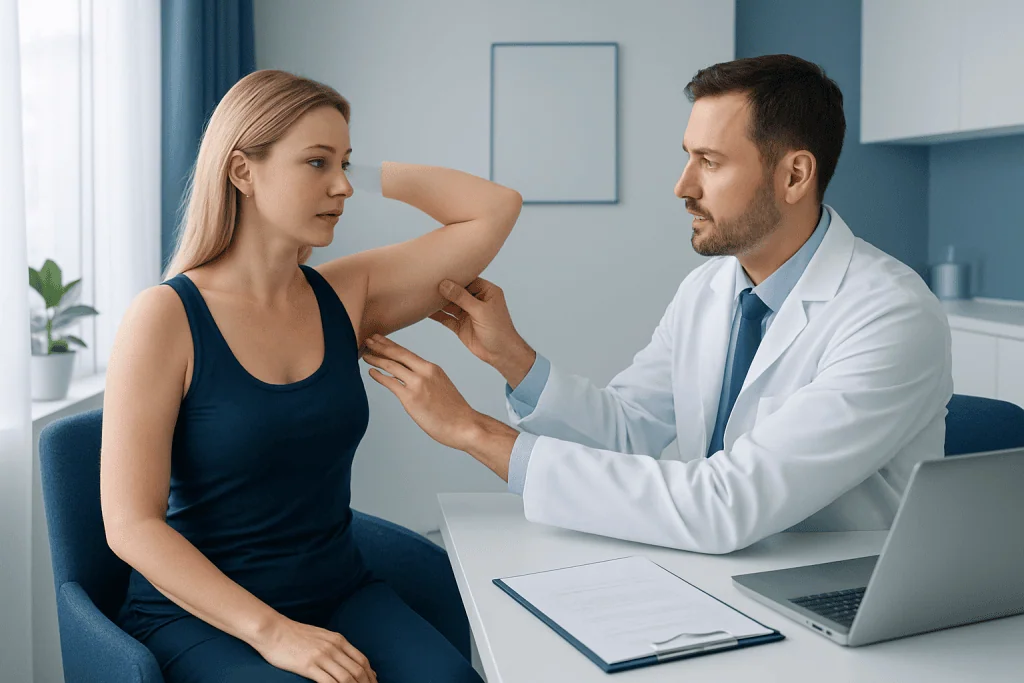
Arm lipo is usually performed by a plastic surgeon in an operating room or procedure setting. After the treatment area is marked, anesthesia is used for comfort. Depending on the extent of the procedure and whether it is combined with other treatments, this may involve local anesthesia with sedation or general anesthesia.
Small incisions are made in discreet areas of the arm. A fluid may be introduced first to help reduce bleeding and make fat removal easier. The surgeon then inserts a thin tube called a cannula to gently loosen and suction out fat from targeted areas. The aim is not only to remove fat, but to do so evenly to preserve a natural contour.
The exact technique may vary. Some patients are treated with traditional approaches such as classic liposuction, while others may benefit from a more targeted plan for the upper arms. Procedure time depends on how much fat is removed, whether one or both arms are treated, and whether other body areas are addressed during the same operation.
At the end of the procedure, the small incisions are closed or left to drain briefly, depending on the surgeon’s method. A compression garment is usually placed on the arms to support healing and help control swelling.
Recovery After Arm Lipo
Recovery after arm lipo is typically manageable, but it takes time. Mild to moderate swelling, bruising, soreness, tightness, and temporary numbness are common in the first days to weeks. Most people notice that the arms feel tender and somewhat stiff early on, especially when lifting, reaching, or dressing.
Compression garments are often recommended for a period after surgery because they help reduce swelling and support the new contour as the tissues heal. Walking and light movement are usually encouraged soon after the procedure, but strenuous exercise, heavy lifting, and upper-body workouts are generally delayed until the surgeon says it is safe.
Many people return to desk-based work within several days to about two weeks, depending on their comfort level and the extent of surgery. Jobs that require repeated arm movement or physical labor may require a longer recovery period. Visible swelling can make the arms look larger than expected at first, which is a normal part of healing.
Following aftercare instructions is important for comfort and safety. Patients should keep follow-up appointments, take prescribed medications as directed, care for incision sites properly, and contact their doctor if they develop concerning symptoms such as worsening redness, severe pain, fever, or sudden swelling.
Expected Results and Possible Limitations
Arm lipo can create a slimmer and more proportionate upper-arm shape, but the final result is not immediate. Early changes may be visible once some swelling goes down, but the contour continues to improve over weeks and months as the tissues settle. Patience is important during this phase.
Results tend to look most natural when the skin can adapt well after fat removal. If there is significant looseness, the arm may look less full but not necessarily firmer. In those cases, the surgeon may explain that liposuction alone has limits and that a lifting procedure may provide a more complete improvement.
The fat cells removed during liposuction do not grow back in the same way, but remaining fat cells can still enlarge with future weight gain. For that reason, long-term results depend partly on maintaining a stable weight and healthy habits. It is also normal for the right and left arms to have small natural differences.
Scars from arm lipo are usually small because the incisions are small. However, each person heals differently. People who have a history of thick or raised scarring may want to discuss this with their surgeon, especially if they have previously developed keloid scars or prominent scar tissue.
Risks, Side Effects, and Safety Considerations
Like any surgical procedure, arm lipo carries risks as well as benefits. Common temporary effects include swelling, bruising, soreness, numbness, firmness under the skin, and mild contour irregularities while healing is still underway. These often improve gradually with time.
Less common but important risks can include infection, bleeding, fluid collection, asymmetry, changes in skin sensation, persistent contour unevenness, scarring, and reactions related to anesthesia. Rarely, more serious complications can occur, which is why it is important to have the procedure performed by a qualified surgeon in an appropriate medical setting.
A thorough preoperative assessment helps improve safety. Patients should tell their doctor about all medical conditions, prior surgeries, medications, smoking, supplements, and any history of poor wound healing. Smoking and nicotine products may impair healing, so surgeons often advise stopping them before and after surgery.
Choosing an experienced plastic surgeon and following instructions carefully before and after surgery are among the best ways to reduce risk. Patients should feel comfortable asking how much improvement is realistic, what the recovery timeline may look like, and whether a combined approach would better match their goals.
Preparing for Surgery and Supporting Recovery
Preparation often begins with a consultation, photographs, and a review of medical history. The surgeon may recommend tests or medication adjustments before surgery. Patients are usually advised to maintain a stable weight, arrange transportation and support at home, and prepare comfortable clothing that is easy to put on without excessive arm movement.
Healthy routines can support recovery. Good hydration, balanced nutrition, and avoiding smoking may help the body heal more effectively. It is also helpful to create a recovery area at home where frequently used items are easy to reach without repeated stretching or lifting.
After surgery, gradual return to activity is usually encouraged. Gentle walking can support circulation, while overexertion too soon may worsen swelling or discomfort. Sleeping in a comfortable position and wearing the recommended compression garment as instructed may also help during the first part of healing.
For some patients, arm contouring is considered alongside other aesthetic concerns, such as changes in the chest or body shape. Depending on a person’s needs, related procedures such as aesthetic breast surgery may be discussed separately as part of a broader treatment plan. Near the end of the decision process, patients may also wish to know that Acibadem International’s multidisciplinary specialists and JCI-accredited hospitals diagnose and treat this condition for international patients.
When to See a Doctor
Anyone considering arm lipo should see a qualified plastic surgeon for an individualized assessment. A consultation is especially important if there is significant loose skin, a history of difficult healing, or uncertainty about whether liposuction or another procedure is more suitable.
After surgery, routine follow-up visits help the surgeon monitor healing and answer questions about activity, compression, and scar care. Patients should not rely only on online timelines, because recovery varies from person to person.
Medical attention should be sought promptly if symptoms suggest a complication. Examples include fever, increasing redness, drainage with a bad odor, severe or one-sided swelling, shortness of breath, chest pain, or pain that is rapidly worsening instead of improving. Quick assessment can help identify and treat problems early.
Frequently asked questions
What is the difference between arm lipo and an arm lift?
Arm lipo removes excess fat through small incisions and is best for people whose main concern is fullness. An arm lift removes loose skin and may also address fat, so it is often more suitable when the upper arms have significant sagging. A surgeon can explain which option better fits a person’s skin quality and goals.
How long does it take to recover from arm lipo?
Early recovery often takes days to a couple of weeks, depending on the extent of the procedure and the person’s daily activities. Swelling and firmness can last longer, and the final contour develops gradually over weeks to months. Following aftercare instructions can help support a smoother recovery.
Are arm lipo results permanent?
The fat cells removed during arm lipo are permanently removed from the treated area. However, remaining fat cells can still enlarge if a person gains weight, which may affect the long-term contour. Maintaining a stable weight helps preserve results.
Will there be visible scars after arm lipo?
Arm lipo uses small incisions, so scars are usually small and placed as discreetly as possible. Over time, many scars fade, although the final appearance varies from person to person. People with a history of raised or thick scars should discuss this during consultation.
Is arm lipo painful?
Most people experience soreness, tightness, and tenderness rather than severe pain. Discomfort is usually most noticeable in the first few days and then gradually improves. The care team typically provides guidance on pain control and activity during recovery.
Can exercise get rid of upper arm fat without surgery?
Exercise can strengthen the arm muscles and support overall fat loss, which may improve appearance for some people. However, localized fat in the upper arms can be resistant even in otherwise healthy individuals. Arm lipo may be considered when stubborn fat remains despite consistent lifestyle measures.
References
- American Society of Plastic Surgeons
- International Society of Aesthetic Plastic Surgery
- National Health Service
- Mayo Clinic
- U.S. Food and Drug Administration
This article is for general information only and is not a substitute for professional medical advice. Please consult a qualified doctor about your individual situation.
Joint and spine care in Turkey — expert assessment & treatment
JCI-accredited · board-certified surgeons · reply within 24h
Add us as a Preferred Source to see more of our trusted health content across Google Search, AI Overviews and Discover.

Related Treatments
Related Conditions
More from the Health Library



Related Specialists

Assoc. Prof. Dr. Erdem Güven (m)
Aesthetic Plastic & Reconstructive Surgery
Prof. Dr. Şükrü Yazar
Aesthetic Plastic & Reconstructive Surgery
Prof. Dr. Hakan Ağır
Aesthetic Plastic & Reconstructive Surgery
Prof. Dr. Bülent Saçak
Aesthetic Plastic & Reconstructive Surgery