Astigmatism Surgery: LASIK, SMILE, or Toric Lens Treatment?
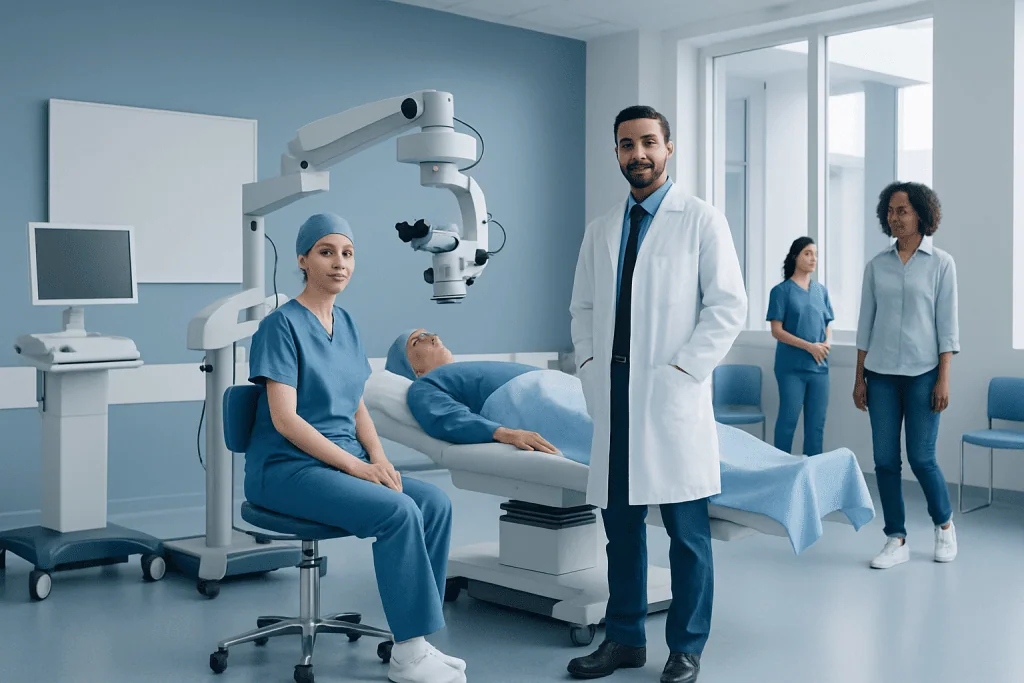
Astigmatism can often be treated effectively with laser vision correction or toric lens procedures. LASIK and SMILE reshape the cornea, while toric lens treatment corrects astigmatism inside the eye.
Key Takeaways
- Astigmatism can often be treated effectively with laser vision correction or toric lens procedures.
- LASIK and SMILE reshape the cornea, while toric lens treatment corrects astigmatism inside the eye.
- Not every patient is a candidate for every procedure; corneal thickness, dry eye, age, and overall eye health matter.
- A detailed eye examination is essential before choosing surgery.
- Recovery time, visual goals, and the presence of cataracts help guide treatment selection.
Astigmatism surgery can help correct blurred or distorted vision caused by an irregularly curved cornea or lens. The best option depends on the degree of astigmatism, the health of the eye, age, and whether a person is also developing cataracts or other vision changes.
Overview of Astigmatism Surgery
Astigmatism is a common refractive error that causes blurred, stretched, or shadowed vision. It usually happens when the cornea, the clear front surface of the eye, is shaped more like an oval than a smooth sphere. In some people, the natural lens inside the eye also contributes to the problem. Because light does not focus evenly on the retina, both near and distance vision can be affected.
Glasses and contact lenses are often the first ways to correct astigmatism. However, some people prefer a longer-term solution that reduces dependence on lenses. Astigmatism surgery includes several approaches, most commonly corneal laser procedures such as LASIK and SMILE, as well as lens-based procedures using toric intraocular lenses.
There is no single “best” surgery for everyone. The right choice depends on how strong the astigmatism is, whether a person also has nearsightedness or farsightedness, the shape and thickness of the cornea, age, and whether cataracts are present. A specialist uses detailed measurements to match the procedure to the individual eye.
Symptoms and When Astigmatism May Need Treatment
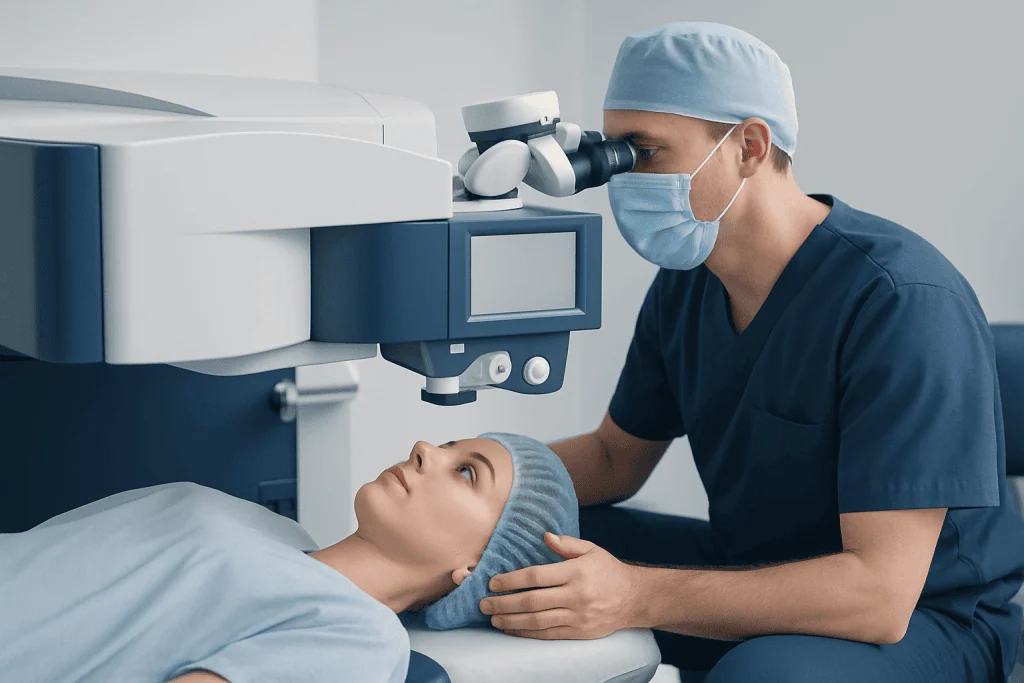
Many people with astigmatism notice blurred vision at all distances, difficulty seeing clearly at night, eye strain, or headaches after reading or screen use. Some describe letters and lights as having a shadow, halo, or smear around them. These symptoms may be mild at first, so a person may not realize that astigmatism is the cause.
Astigmatism does not always require surgery. If glasses or contact lenses provide clear, comfortable vision, non-surgical treatment may be all that is needed. Surgery is usually considered when a person wants less dependence on corrective lenses, cannot tolerate contact lenses, or has a degree of astigmatism that affects daily activities despite updated prescriptions.
It is also important to confirm that vision changes are truly due to astigmatism and not another eye condition. Problems such as cataracts, corneal disease, or retinal disorders can also blur vision and may need a different treatment plan. A complete eye examination helps clarify the cause.
How LASIK, SMILE, and Toric Lens Treatment Differ
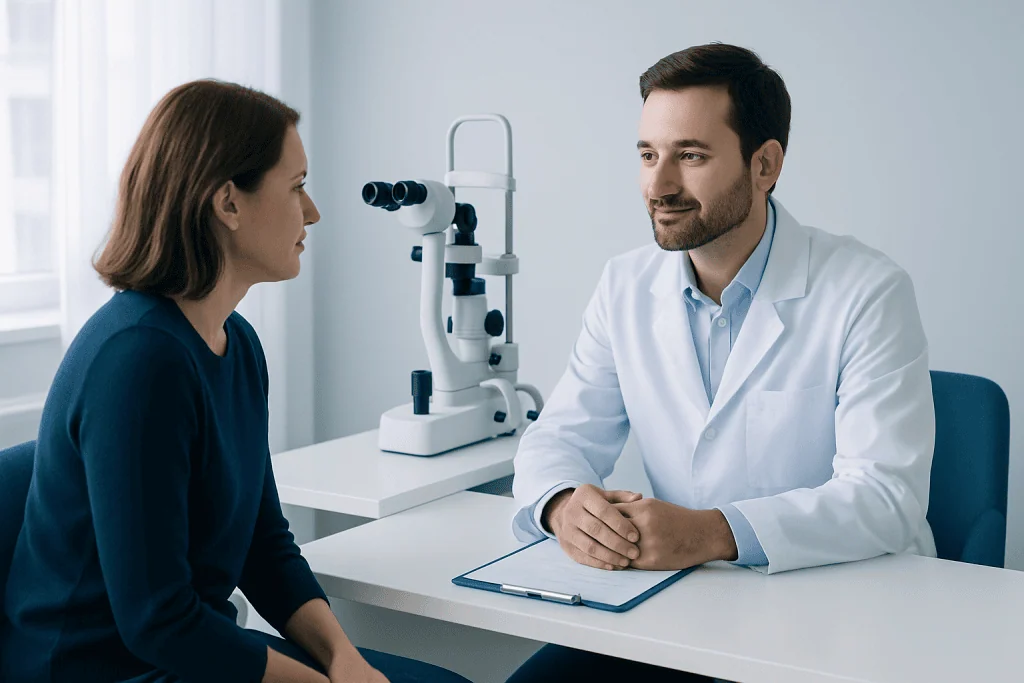
LASIK and SMILE are both laser-based procedures that correct astigmatism by changing the shape of the cornea. In LASIK, a thin flap is created in the cornea, and an excimer laser reshapes the underlying tissue to improve how light focuses. This can treat astigmatism along with nearsightedness and, in selected cases, farsightedness. It is one of the most established forms of laser vision correction.
SMILE is a newer keyhole-style laser procedure used mainly for myopia with astigmatism. Instead of making a larger flap, the surgeon creates and removes a small disc of corneal tissue through a tiny incision. Because the surface of the cornea is disturbed less, SMILE may be an attractive option for some patients, although suitability depends on the refractive error and the surgeon’s assessment.
Toric lens treatment works differently. Rather than reshaping the cornea, it uses a specially designed lens implanted inside the eye to correct astigmatism. This is often done during cataract surgery or as a lens-based refractive procedure in selected adults. Toric lenses can be especially helpful when a person has cataracts, is not a good candidate for corneal laser surgery, or has other reasons to consider a lens-based solution.
Who May Be a Good Candidate for Each Option
A good candidate for LASIK usually has a stable vision prescription, healthy corneas, and enough corneal thickness for safe reshaping. The eyes should also be free from untreated infection, significant scarring, or progressive corneal weakness. People with severe dry eye, certain autoimmune diseases, or unstable prescriptions may need another approach.
SMILE may be considered for adults with myopia and astigmatism who have suitable corneal measurements and stable vision. It can be appealing to people who want a small-incision procedure, but it is not ideal for every prescription type. If a person has substantial farsightedness, certain irregular corneal patterns, or eye surface disease, another option may be more appropriate.
Toric lens treatment may suit patients who have astigmatism together with cataracts, age-related lens changes, or refractive needs that are better addressed inside the eye. Lens-based treatment may also be discussed when laser corneal surgery is not advisable. In every case, the surgeon looks at pupil size, corneal topography, tear film quality, retina health, and the person’s expectations before recommending surgery.
Tests Used to Choose the Right Procedure
Choosing the best astigmatism surgery requires more than a standard glasses prescription. The ophthalmologist measures the exact amount and axis of astigmatism, checks visual acuity, and examines the front and back of the eye. Corneal topography or tomography creates a map of the cornea’s shape, which helps detect whether the astigmatism is regular or irregular.
Corneal thickness is measured because laser procedures remove a small amount of tissue and require a safety margin. Tear film testing can identify dry eye, which may affect comfort and recovery after surgery. The doctor also checks the lens, retina, and optic nerve to make sure that another eye condition is not limiting vision.
These tests are especially important because not all blurred vision is straightforward astigmatism. Some patients may have corneal conditions that need additional assessment, including referral for corneal specialist care when the surface of the eye is abnormal. Accurate testing helps improve safety and gives a more realistic idea of the likely result.
Benefits, Risks, and Recovery
The main benefit of astigmatism surgery is clearer vision with less need for glasses or contact lenses. Many patients achieve excellent functional vision, but results vary. Some people still need glasses for certain tasks, especially reading with age, very fine detail work, or night driving. The goal is improved visual quality, not a guarantee of perfect vision in every situation.
Each procedure has possible risks and side effects. After LASIK or SMILE, temporary dryness, glare, halos, fluctuating vision, or light sensitivity can occur while the eyes heal. Less commonly, there may be undercorrection, overcorrection, infection, inflammation, or the need for an enhancement procedure. Lens-based surgery has its own risks, such as lens rotation, inflammation, increased eye pressure, or retinal complications in selected patients.
Recovery is often relatively quick, but the timeline differs by procedure. LASIK vision may improve within days, while SMILE recovery can also be rapid but may vary. Lens-based treatment usually requires the eye to settle over days to weeks. The surgeon gives specific instructions about eye drops, activity restrictions, and follow-up visits, and it is important to follow them carefully.
Prevention, Self-care, and When to See a Doctor
Astigmatism itself usually cannot be prevented because it is often related to the natural shape of the eye. However, protecting overall eye health is important. Regular eye exams, proper contact lens hygiene, prompt treatment of eye irritation, and avoiding rubbing the eyes aggressively may help reduce complications that can affect the cornea.
A person should see an eye doctor if vision becomes blurry, distorted, or difficult at night; if headaches and eye strain are frequent; or if glasses no longer seem to provide clear vision. Sudden changes in vision, eye pain, flashes of light, increasing redness, or a curtain-like shadow in the field of vision need urgent medical attention because they can suggest problems beyond simple astigmatism.
Anyone considering surgery should ask about expected results, alternatives, risks, and long-term follow-up. For international patients, Acibadem International’s multidisciplinary eye specialists and JCI-accredited hospitals diagnose and treat refractive conditions with individualized planning. A careful consultation remains the safest way to decide whether surgery is suitable and which option best fits the patient’s needs.
Frequently asked questions
Is LASIK or SMILE better for astigmatism?
Neither procedure is automatically better for every person. LASIK is widely used for astigmatism and can treat a broad range of refractive errors, while SMILE may be a good option for selected patients with myopia and astigmatism. The best choice depends on corneal measurements, prescription, eye surface health, and the surgeon’s evaluation.
Can toric lenses correct astigmatism permanently?
Toric intraocular lenses are designed to provide long-term correction of astigmatism inside the eye. They can be very effective, especially when placed during cataract surgery. However, the final result depends on accurate positioning, healing, and the presence of any other eye conditions.
Who is not a good candidate for astigmatism surgery?
Some people may not be suitable because of thin or irregular corneas, unstable vision prescriptions, significant dry eye, untreated eye disease, or certain medical conditions. Pregnancy, active infection, or unrealistic expectations can also affect timing or eligibility. A detailed assessment is needed before surgery is recommended.
Does astigmatism surgery hurt?
Most procedures are done with numbing eye drops, so pain during surgery is usually minimal. Mild discomfort, watering, light sensitivity, or a gritty feeling can happen afterward, especially in the first few days. The care team usually provides instructions and medications to help manage recovery comfortably.
Will glasses still be needed after surgery?
Many people need glasses much less often after astigmatism surgery, but some still use them for certain tasks. Reading glasses may still become necessary with age, even if distance vision improves well. The exact outcome depends on the procedure, the prescription, and how the eyes heal.
How long does recovery take after astigmatism surgery?
Initial recovery is often quick, especially after LASIK or SMILE, but vision can continue to stabilize over several weeks. Lens-based procedures also require follow-up while the eye settles. The surgeon will explain when it is safe to return to work, exercise, swimming, and driving.
This article is for general information only and is not a substitute for professional medical advice. Please consult a qualified doctor about your individual situation.
Astigmatism in Turkey — costs, top hospitals & a free quote
JCI-accredited · board-certified surgeons · reply within 24h
Add us as a Preferred Source to see more of our trusted health content across Google Search, AI Overviews and Discover.

Ophthalmology
Comprehensive eye care from laser vision correction to retina, cornea and cataract surgery.
75 specialists in this unitRelated Treatments
More from the Health Library

Is LASIK Permanent? How Stable Are the Results?

Presbyopia: Age-Related Near Vision Changes Explained

How Old Do You Have to Be to Get LASIK?
Glaucoma Surgery: What It Does and When It Is Recommended
Eye Laser Vision Correction: Types, Benefits, and Recovery