Barrett’s Esophagus Treatment: When Is Ablation Recommended?

Barrett’s esophagus is a change in the lining of the lower esophagus, often linked to long-term acid reflux. Ablation is not needed for everyone and is most often recommended when dysplasia is found.
Key Takeaways
- Barrett’s esophagus is a change in the lining of the lower esophagus, often linked to long-term acid reflux.
- Ablation is not needed for everyone and is most often recommended when dysplasia is found.
- High-grade dysplasia usually requires endoscopic treatment, often with ablation and sometimes endoscopic resection.
- Low-grade dysplasia may also be treated with ablation after expert confirmation of the diagnosis.
- Ongoing acid suppression and regular surveillance endoscopy remain important even after treatment.
Barrett’s esophagus treatment depends on whether the tissue shows dysplasia, which means precancerous cell changes. Ablation is usually considered when dysplasia is confirmed, especially high-grade dysplasia, because it can remove abnormal lining and reduce the risk of progression to cancer.
Overview: What Barrett’s Esophagus Means
Barrett’s esophagus is a condition in which the normal lining of the lower esophagus changes after repeated exposure to stomach acid. It is most often associated with chronic gastroesophageal reflux, also known as reflux disease. The main reason it matters is that this altered lining can, in some people, develop precancerous changes called dysplasia.
Not everyone with Barrett’s esophagus will need a procedure. Many people are managed with acid-suppressing medication, lifestyle measures, and regular follow-up endoscopy. The decision about treatment depends mainly on biopsy results, the length and appearance of the Barrett’s segment, and the person’s overall health.
When doctors discuss Barrett’s esophagus treatment, they usually separate patients into groups: no dysplasia, indefinite for dysplasia, low-grade dysplasia, high-grade dysplasia, or early cancer. This classification helps guide whether careful surveillance is enough or whether endoscopic therapy, such as ablation, is the safer choice.
Symptoms and Why Barrett’s Esophagus Is Often Found During Testing
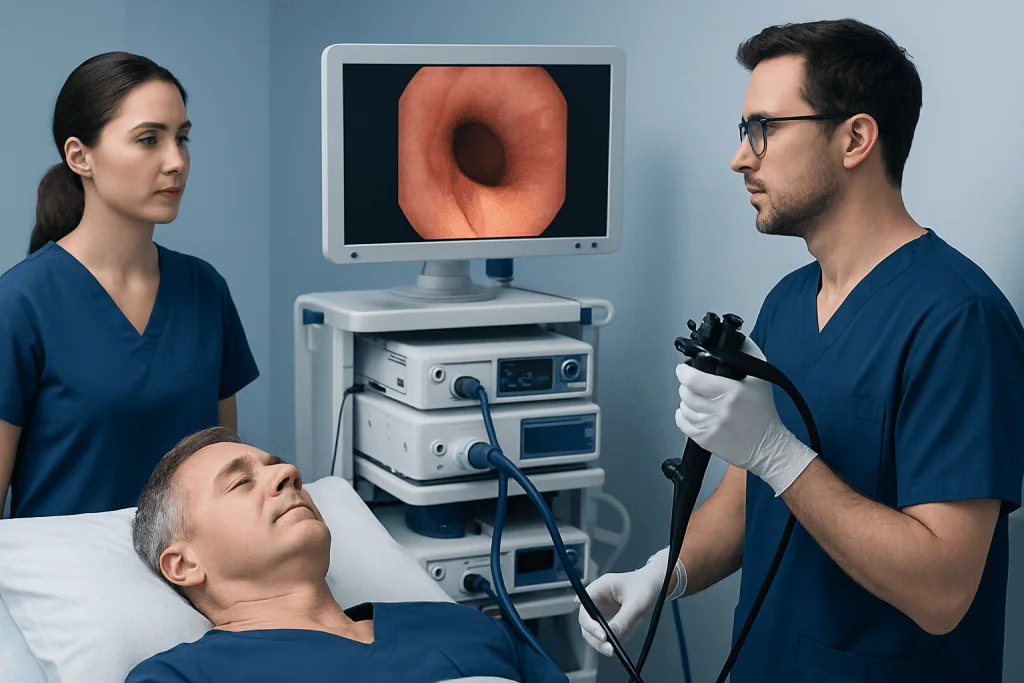
Barrett’s esophagus itself usually does not cause specific symptoms. Most people feel symptoms related to reflux rather than the Barrett’s tissue itself. Common complaints include heartburn, sour taste in the mouth, regurgitation, chest discomfort after meals, chronic cough, throat irritation, or trouble swallowing.
Some people have very little reflux discomfort and are surprised when Barrett’s esophagus is found during an endoscopy. This is one reason regular evaluation may be advised for certain people with long-standing reflux, especially if they also have risk factors such as male sex, obesity, smoking history, older age, or a family history of Barrett’s or esophageal cancer.
Symptoms such as progressive difficulty swallowing, unintentional weight loss, vomiting blood, black stools, or persistent chest pain need prompt medical attention because they can suggest complications or another condition. Related problems such as esophagitis or hiatal hernia may be present and can influence both symptoms and management.
Causes, Risk Factors, and How Dysplasia Develops
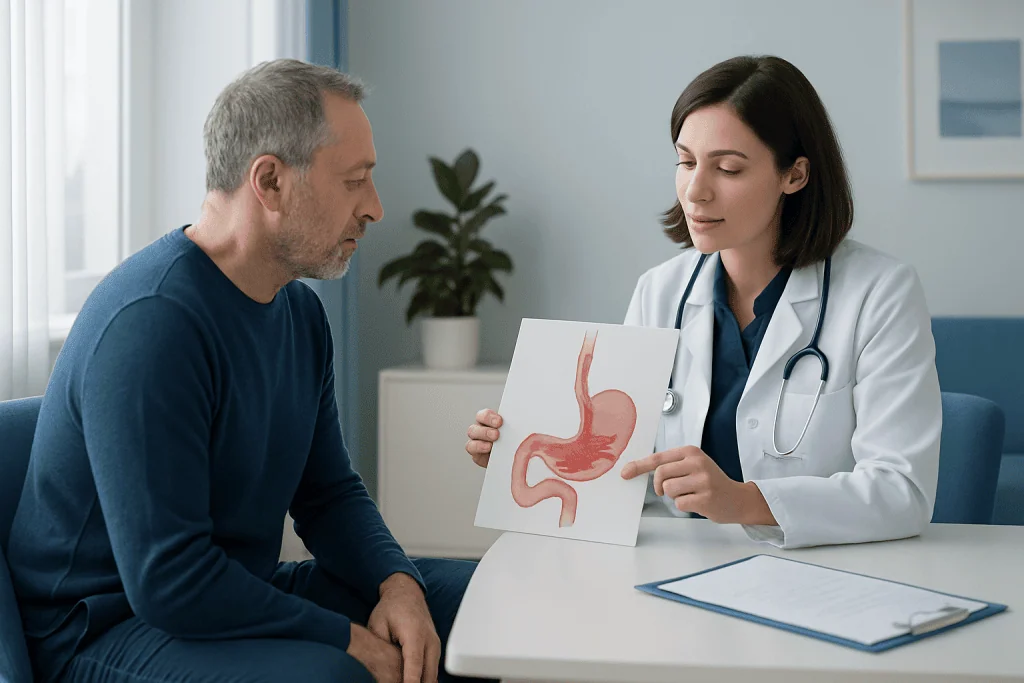
The most important driver of Barrett’s esophagus is long-term acid reflux. Repeated irritation from acid and sometimes bile can damage the esophageal lining over time. In response, the body replaces the normal cells with a different type of lining that is more resistant to that irritation, but this changed lining carries a higher cancer risk than normal esophageal tissue.
Several factors can increase the likelihood of developing Barrett’s esophagus or of having a more complicated course. These include chronic reflux symptoms, central obesity, smoking, older age, male sex, and a family history of Barrett’s esophagus or esophageal adenocarcinoma. A history of severe reflux complications may also raise concern.
Dysplasia means the cells show abnormal precancerous changes under the microscope. It is graded as low-grade or high-grade. Because inflammation can sometimes make biopsies difficult to interpret, many specialists recommend that dysplasia be confirmed by an expert gastrointestinal pathologist before major treatment decisions are made. This careful review helps avoid overtreatment and makes sure true high-risk changes are not missed.
How Doctors Diagnose Barrett’s Esophagus and Assess Risk
Diagnosis is made with upper endoscopy and biopsy. During endoscopy, the doctor looks at the esophagus, identifies areas suspicious for Barrett’s lining, and takes multiple tissue samples. The pathology report then determines whether Barrett’s esophagus is present and whether dysplasia is seen.
If any raised, nodular, irregular, or visibly abnormal area is seen, this is especially important because visible lesions can contain more advanced precancerous changes or early cancer. In that situation, the doctor may recommend endoscopic removal of the visible area first, rather than ablation alone, so the tissue can be examined more completely.
Risk assessment includes the biopsy grade, the extent of the Barrett’s segment, whether lesions are visible, and whether reflux is well controlled. Many patients also undergo ongoing evaluation and management of the underlying Barrett esophagus and associated reflux. A careful, stepwise assessment helps match the treatment intensity to the true level of risk.
When Is Ablation Recommended?
Ablation is most clearly recommended for Barrett’s esophagus with confirmed high-grade dysplasia. In this setting, the risk of progression to esophageal cancer is considered significant enough that endoscopic treatment is generally preferred over surveillance alone. Current practice often combines endoscopic removal of any visible abnormal areas with ablation of the remaining Barrett’s lining.
Ablation is also commonly recommended for confirmed low-grade dysplasia, especially when the diagnosis has been reviewed by an expert pathologist. In many patients, treating low-grade dysplasia can lower the chance that the disease will progress to high-grade dysplasia or cancer. However, the decision is individualized, and some people may discuss surveillance as an alternative depending on age, medical conditions, and personal preference.
For Barrett’s esophagus without dysplasia, ablation is usually not recommended routinely. Instead, treatment focuses on controlling reflux, often with acid-reducing medication, and following a surveillance schedule with repeat endoscopy. If the pathology is described as indefinite for dysplasia, doctors often first optimize reflux treatment and repeat biopsies later, because active inflammation can mimic precancerous changes.
In early cancer limited to the superficial layers of the esophagus, endoscopic therapy may still be possible in selected cases. This often involves endoscopic mucosal resection or other advanced techniques, followed by ablation of any remaining Barrett’s tissue. A multidisciplinary team helps determine whether endoscopic treatment is appropriate or whether surgery or oncology care is needed.
Ablation Methods and Other Treatment Options
The most widely used ablation method is radiofrequency ablation, which delivers controlled heat to remove the abnormal surface lining. Another method, cryotherapy, uses extreme cold to destroy abnormal tissue. Both are performed through an endoscope and are designed to allow healthy tissue to regrow while reducing the amount of Barrett’s lining.
If there is a visible lesion, ablation alone is usually not enough. Doctors often perform endoscopic mucosal resection first to remove the abnormal area and obtain a precise tissue diagnosis. After that, additional ablation may be used to treat any remaining flat Barrett’s tissue. This combination approach is common in high-grade dysplasia and selected cases of very early cancer.
Medication remains an important part of care. Proton pump inhibitors are commonly used to lower acid exposure and help healing, before and after endoscopic treatment. Managing ongoing reflux is essential because persistent acid injury can interfere with recovery and may increase the chance of recurrence. Patients who have swallowing problems or another esophageal motility issue, such as achalasia, may need a tailored evaluation.
Most ablation treatments require more than one session. Follow-up endoscopy is still necessary after successful treatment because Barrett’s tissue or dysplasia can return. In experienced centers, treatment is planned as a process rather than a single procedure, with repeated assessment to confirm that the abnormal lining has been eradicated.
Recovery, Follow-Up, and Prevention of Recurrence
After ablation, patients may have temporary chest discomfort, sore throat, or mild difficulty swallowing. These symptoms are often short-lived, but the care team will explain what is expected and which warning signs should prompt urgent contact. A temporary soft diet and careful attention to medications may be advised during recovery.
Long-term management focuses on reducing acid exposure and monitoring the esophagus. This usually includes continued acid suppression, weight management when appropriate, avoiding tobacco, limiting triggers that worsen reflux, not lying down soon after meals, and elevating the head of the bed if nighttime reflux is a problem. These steps support healing but do not replace medical follow-up.
Surveillance remains important even after the Barrett’s lining appears to be gone. Follow-up endoscopy checks whether there has been complete eradication and looks for recurrence of intestinal metaplasia or dysplasia. The exact schedule depends on the original pathology and the treatment course.
For patients seeking coordinated care, Acibadem International’s multidisciplinary specialists and JCI-accredited hospitals evaluate and treat Barrett’s esophagus, including advanced endoscopic options such as specialized gastroenterology assessment when needed for international patients.
When to See a Doctor
A person should see a doctor if reflux symptoms are frequent, persistent, or no longer respond well to treatment. Medical review is also important if symptoms begin after age 50, if there is a long history of heartburn, or if there are risk factors for Barrett’s esophagus. Early evaluation can help determine whether endoscopy is appropriate.
Urgent medical attention is needed for red-flag symptoms such as trouble swallowing that is getting worse, food sticking, vomiting blood, black stools, significant unexplained weight loss, or ongoing chest pain. These symptoms do not always mean cancer, but they should be assessed promptly.
Anyone who has already been diagnosed with Barrett’s esophagus should keep scheduled surveillance appointments and discuss biopsy results carefully with a gastroenterologist. Questions about dysplasia, pathology review, and whether ablation is appropriate are best answered in the context of a person’s endoscopy findings and overall health.
Frequently asked questions
Does everyone with Barrett’s esophagus need ablation?
No. Ablation is usually recommended when biopsies show confirmed dysplasia, especially high-grade dysplasia. People with Barrett’s esophagus without dysplasia are often managed with reflux treatment and regular surveillance endoscopy instead.
What is the difference between low-grade and high-grade dysplasia?
Both terms describe precancerous changes in the Barrett’s lining seen under the microscope. High-grade dysplasia shows more advanced abnormality and generally carries a higher risk of progression, so endoscopic treatment is usually advised. Low-grade dysplasia may also be treated, especially after expert pathology confirmation.
Is ablation a surgery?
Ablation is usually not open surgery. It is typically done through an endoscope passed through the mouth, so there are no external incisions. Many patients go home the same day, although recovery instructions and follow-up are still important.
Can Barrett’s esophagus come back after ablation?
Yes, it can recur even after successful treatment. That is why continued acid suppression and scheduled surveillance endoscopy are recommended. Regular follow-up helps detect and treat any recurrence early.
What if the biopsy says ‘indefinite for dysplasia’?
This usually means the pathologist cannot say with confidence whether true dysplasia is present, often because inflammation is affecting the tissue. Doctors commonly strengthen reflux treatment and repeat endoscopy with biopsies later. In some cases, a second pathology review is also helpful.
Will reflux medicine still be needed after ablation?
Often, yes. Acid suppression remains an important part of care because it supports healing and helps reduce ongoing irritation of the esophagus. The exact treatment plan should be decided with a gastroenterologist based on symptoms, endoscopy findings, and response to therapy.
References
- American College of Gastroenterology
- American Gastroenterological Association
- National Institute of Diabetes and Digestive and Kidney Diseases
- National Cancer Institute
- European Society of Gastrointestinal Endoscopy
This article is for general information only and is not a substitute for professional medical advice. Please consult a qualified doctor about your individual situation.
Persistent digestive symptoms? Get evaluated in Turkey
JCI-accredited · board-certified surgeons · reply within 24h
Add us as a Preferred Source to see more of our trusted health content across Google Search, AI Overviews and Discover.

Gastroenterology
Diagnosis and treatment of the digestive system and liver, with advanced endoscopy.
43 specialists in this unit