

Brachioplasty Before and After: Results Guide

Brachioplasty is designed to improve the shape of the upper arms by removing loose skin and, in some cases, excess fat. Early after-surgery changes can look different from final results because swelling, bruising, and scar healing take time.
Key Takeaways
- Brachioplasty is designed to improve the shape of the upper arms by removing loose skin and, in some cases, excess fat.
- Early after-surgery changes can look different from final results because swelling, bruising, and scar healing take time.
- Good candidates are usually at a stable weight, in generally good health, and bothered by hanging upper-arm skin.
- Scars are expected with brachioplasty, but their position and appearance depend on the surgical technique and healing process.
- Following aftercare instructions closely can support healing and help optimize the final contour.
Brachioplasty, also called an arm lift, is a body-contouring procedure that removes excess skin and reshapes the upper arms. Before-and-after results can be significant, but they develop over time as swelling improves, scars mature, and tissues settle.
Overview: What brachioplasty before and after usually means
Brachioplasty is a surgical procedure that reshapes the upper arm by removing excess skin and sometimes reducing extra fat. It is most often chosen by people who have loose, hanging skin on the inner or underside of the upper arm, often after major weight loss, aging, or natural loss of skin elasticity. When patients ask about “before and after” results, they are usually referring to how much firmer, smoother, and more proportionate the arms may look after healing.
The “before” stage includes a careful evaluation of skin quality, fat distribution, muscle tone, overall health, and personal goals. The “after” stage is not a single moment but a process. Arms may look swollen, bruised, or uneven in the early days after surgery, and this is a normal part of recovery. Final contour usually becomes clearer over weeks to months, while scars continue to soften and mature over a longer period.
Brachioplasty is part of the broader field of body contouring and may be performed alone or combined with other procedures when appropriate. In some cases, surgeons may also recommend arm liposuction if excess fat is a significant part of the concern. The goal is not perfection, but a more balanced arm shape that better matches the rest of the body.
Who may benefit from an arm lift
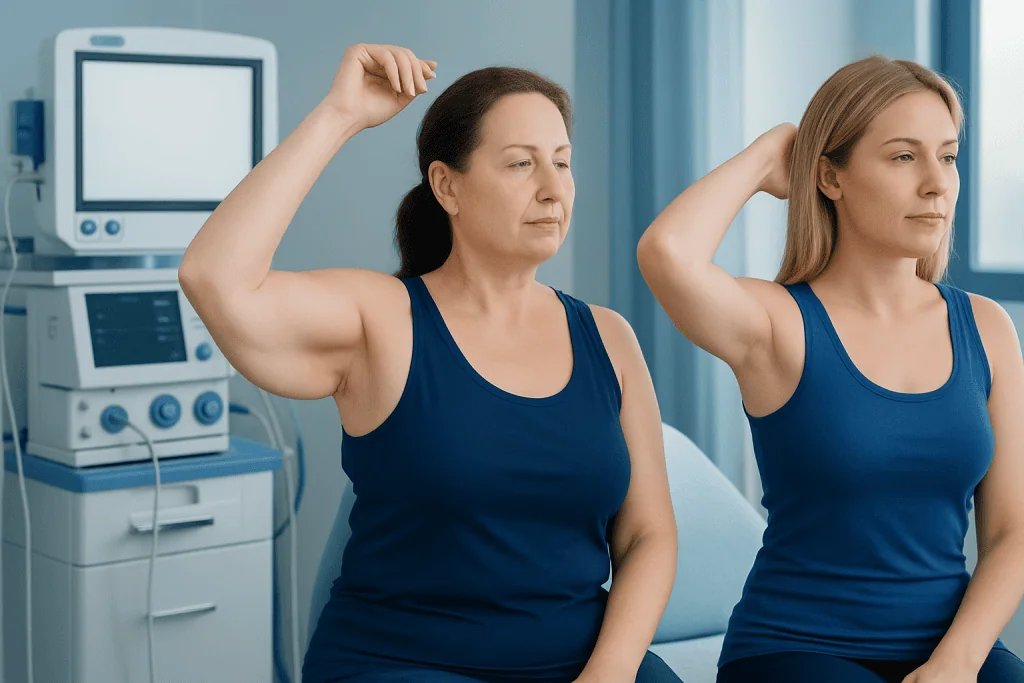
An arm lift may be helpful for adults who are bothered by loose upper-arm skin that does not improve with exercise. This is common after substantial weight loss, including after pregnancy or lifestyle-related changes, and it can also happen with normal aging. Exercise can strengthen underlying muscles, but it cannot remove stretched skin once skin elasticity has been significantly reduced.
People who tend to be most satisfied with brachioplasty usually have realistic expectations. They understand that the procedure can improve contour but will leave a scar, and that healing takes time. Candidates are often at or near a stable weight, do not smoke or are willing to stop as advised, and do not have uncontrolled medical conditions that could interfere with healing.
For individuals after major weight changes, an arm lift may be discussed alongside other post-weight-loss contouring procedures. A consultation helps determine whether surgery is the best option, whether liposuction alone may help, or whether waiting until weight is more stable would likely lead to a better long-term result.
What changes can be expected in before-and-after results

Most brachioplasty before-and-after improvements involve a tighter arm outline, less hanging skin, and a more defined transition from the armpit to the elbow. Clothing may fit more comfortably, and some people feel more confident wearing short sleeves or fitted garments. The result can look especially noticeable in people who had a significant amount of loose skin before surgery.
However, results vary from person to person. The final look depends on the amount of excess skin, whether fat removal is also needed, natural tissue quality, age, body weight, and individual healing patterns. Arms may also have mild asymmetry before surgery, and although surgeons aim for balance, the two arms may not heal in exactly the same way.
Patients should also understand that brachioplasty mainly improves contour rather than muscle definition. If a person is expecting a highly athletic appearance, the surgeon will clarify what surgery can and cannot do. Photographs taken before surgery can be helpful because they provide a realistic way to compare progress over time rather than relying on memory alone.
Scarring is an important part of the before-and-after discussion. Depending on the technique used, the scar may be placed in the armpit area, along the inner arm, or both. Some people are more prone to raised or thickened scars, including keloid scars, so this risk should be discussed in advance.
How surgeons plan the procedure
Brachioplasty is not a one-size-fits-all operation. During consultation, the surgeon assesses how much excess skin is present, where it is located, and whether the patient also has localized fat. This helps determine the surgical approach. A limited arm lift may be enough when looseness is mild and mainly near the armpit, while more extensive laxity may require a longer incision down the inner arm.
The medical team will also review health history, medications, smoking status, previous surgeries, and any skin-healing concerns. Some conditions can affect circulation or wound healing, so careful planning is important for safety. If there is a history of prominent scarring, swelling disorders, or previous trauma to the area, that may influence the surgical plan.
In selected cases, brachioplasty can be combined with liposuction to improve the overall contour. The surgeon explains where incisions are likely to be placed, what kind of scar to expect, and how much improvement is realistic. This planning stage is a key reason why before-and-after results differ between individuals.
Recovery timeline: from early healing to final results
Immediately after brachioplasty, the arms are typically supported with dressings and sometimes compression garments. Swelling, bruising, tightness, and temporary discomfort are common in the early recovery period. The arms may initially look larger or more uneven than expected because tissues are still reacting to surgery. This does not reflect the final result.
In the first few weeks, patients are usually advised to limit heavy lifting, repetitive arm motions, and strenuous exercise. Gentle walking is often encouraged, but the exact timeline depends on the surgeon’s advice and the extent of the procedure. Most people gradually return to routine activities, while more intense exercise may need to wait longer so the incisions can heal properly.
Visible improvement often becomes clearer as swelling decreases over several weeks. Even then, the contour can continue to refine over a few months. Scars often look pink, firm, or raised at first and then slowly soften and fade. Scar maturation can take many months, and careful sun protection is generally advised to help minimize discoloration.
Patients should contact their surgical team if they notice increasing redness, worsening pain, fever, unusual drainage, or sudden swelling. While most recoveries are straightforward, prompt medical advice is important if something does not seem right. In people with a history of skin injury or healing complications, such as after burns, individualized planning and follow-up may be especially important.
Risks, limitations, and what affects results
Like any surgery, brachioplasty has possible risks. These can include bleeding, infection, fluid collection, delayed wound healing, numbness, asymmetry, contour irregularities, and noticeable scarring. Not every patient experiences these issues, but understanding them is an important part of informed decision-making.
There are also practical limitations. Brachioplasty can remove loose skin, but it cannot stop future aging or weight fluctuations. If a person gains or loses a significant amount of weight after surgery, the contour may change again. Skin quality also matters; some tissues naturally retract and heal better than others, and this influences the final appearance.
Lifestyle factors can affect outcomes as well. Smoking, poor nutrition, uncontrolled diabetes, and returning too quickly to strenuous activity may interfere with healing. Following postoperative instructions carefully, keeping follow-up appointments, and discussing concerns early can make recovery smoother and help protect the result.
How to prepare and support the best possible outcome
Preparation starts well before the day of surgery. Patients are usually encouraged to reach a stable weight, review their medications with the surgical team, and stop smoking if advised. It is also helpful to arrange support at home, especially for daily tasks that require lifting, reaching, or carrying during the first part of recovery.
Taking preoperative photographs, asking detailed questions, and discussing goals openly can make expectations clearer. Patients may want to ask where the scar will be, how long compression garments might be needed, when driving and exercise can resume, and what changes are likely to be temporary versus long lasting. This kind of planning often makes the before-and-after journey less stressful.
After surgery, protecting the incisions, attending follow-up visits, maintaining a healthy diet, and avoiding nicotine can support recovery. Once healing is further along, the surgeon may recommend scar care measures. For people exploring options in specialized centers, Acibadem International’s multidisciplinary specialists in JCI-accredited hospitals diagnose and treat concerns related to arm lift surgery for international patients.
When to speak with a qualified plastic surgeon
A consultation is appropriate when loose upper-arm skin causes self-consciousness, discomfort in clothing, skin rubbing, or difficulty feeling comfortable after major weight loss. A specialist can explain whether brachioplasty, liposuction, or another approach is more suitable. The decision should be individualized rather than based only on photographs seen online.
It is also wise to seek evaluation if expectations feel uncertain. Some people mainly need reassurance about recovery and scarring, while others may benefit from understanding that surgery is not the only option. A good consultation should include an honest discussion of likely benefits, limitations, recovery time, and risks.
Second opinions can be useful, especially for complex cases or previous surgery. The best results usually come from careful planning, realistic goals, and a clear understanding that “after” photos reflect both surgical technique and the body’s healing process over time.
Frequently asked questions
How long does it take to see final brachioplasty results?
Early changes are visible soon after surgery, but the final result takes time. Swelling gradually improves over weeks, and the arm contour usually continues to settle over several months. Scars may keep maturing for much longer.
Will there always be a scar after an arm lift?
Yes, brachioplasty involves incisions, so some degree of scarring is expected. The length and location depend on how much skin needs to be removed and which technique is used. Surgeons generally place scars where they can be less noticeable, but they do not disappear completely.
Can exercise replace brachioplasty?
Exercise can strengthen muscles and improve overall fitness, but it cannot remove stretched, excess skin. If the main issue is loose skin after weight loss or aging, surgery may be the only effective way to change that contour significantly. A consultation can help determine whether surgery is appropriate.
Is brachioplasty only for people after major weight loss?
No. Although many patients seek brachioplasty after major weight loss, others choose it because of age-related skin laxity or natural differences in upper-arm shape. The key factor is whether excess skin is present and whether it causes cosmetic or practical concerns.
Does brachioplasty remove fat as well as skin?
It can, but not always. Some procedures focus mainly on removing loose skin, while others include liposuction if excess fat is also contributing to the arm shape. The surgeon decides this based on anatomy, skin quality, and treatment goals.
How painful is brachioplasty recovery?
Most people describe recovery as involving soreness, tightness, and limited arm movement rather than severe pain alone. Discomfort is usually most noticeable in the early healing period and tends to improve gradually. The surgical team provides guidance on how to manage recovery safely.
References
- American Society of Plastic Surgeons
- National Health Service
- Mayo Clinic
- U.S. Food and Drug Administration
This article is for general information only and is not a substitute for professional medical advice. Please consult a qualified doctor about your individual situation.
Medical weight-loss options in Turkey — costs & eligibility
JCI-accredited · board-certified surgeons · reply within 24h
Add us as a Preferred Source to see more of our trusted health content across Google Search, AI Overviews and Discover.

Related Treatments
Related Conditions
More from the Health Library



Related Specialists
Assoc. Prof. Dr. Erdem Güven (m)
Aesthetic Plastic & Reconstructive Surgery
Prof. Dr. Şükrü Yazar
Aesthetic Plastic & Reconstructive Surgery
Prof. Dr. Hakan Ağır
Aesthetic Plastic & Reconstructive Surgery
Prof. Dr. Bülent Saçak
Aesthetic Plastic & Reconstructive Surgery