Carotid Artery Stenting for Stroke Prevention: Who May Benefit?

Carotid artery stenting can reduce stroke risk in selected people with significant carotid artery narrowing. It is often considered for patients who have had stroke-like symptoms or who may be at higher risk from open surgery.
Key Takeaways
- Carotid artery stenting can reduce stroke risk in selected people with significant carotid artery narrowing.
- It is often considered for patients who have had stroke-like symptoms or who may be at higher risk from open surgery.
- Diagnosis usually involves ultrasound and sometimes CT angiography, MR angiography, or catheter angiography.
- The procedure places a small mesh tube called a stent to keep the artery open and improve blood flow to the brain.
- Long-term stroke prevention also depends on medicines, blood pressure control, cholesterol management, and smoking cessation.
Carotid artery stenting is a minimally invasive procedure used to open narrowed carotid arteries and lower the risk of stroke in carefully selected patients. It may be considered when artery narrowing is significant, symptoms have occurred, or traditional surgery is not the best option.
Overview
Carotid artery stenting is a procedure used to treat narrowing in the carotid arteries, the major blood vessels in the neck that carry blood to the brain. When these arteries become narrowed by fatty deposits called plaque, blood flow can be reduced or small pieces of plaque can travel to the brain. This can raise the risk of a transient ischemic attack or stroke.
The main goal of carotid artery stenting is stroke prevention. During the procedure, a doctor guides a thin tube called a catheter through a blood vessel, usually from the groin or wrist, to the narrowed carotid artery. A small balloon may be used to widen the area, and then a metal mesh tube called a stent is placed to help keep the artery open.
Carotid artery stenting is not the right choice for everyone. In some cases, carotid endarterectomy, which is open surgery to remove plaque, may be preferred. The best approach depends on the degree of narrowing, whether symptoms have occurred, overall health, age, and the anatomy of the blood vessels. Careful evaluation by a stroke and vascular team is important.
Who May Benefit from Carotid Artery Stenting?
Carotid artery stenting may benefit people who have significant carotid artery stenosis and are considered at increased risk of stroke. It is often considered when a person has already had symptoms related to reduced brain blood flow, such as temporary weakness, speech difficulty, vision loss in one eye, or a transient ischemic attack. Symptoms suggest that the narrowing may already be affecting circulation or sending small clots to the brain.
It may also be an option for patients who are not ideal candidates for carotid surgery. This can include people with certain heart or lung conditions, prior neck surgery, prior radiation to the neck, difficult-to-reach arterial blockages, or other features that make surgery more complex. In these cases, a minimally invasive approach can be attractive because it avoids a larger neck incision.
Doctors usually look at several factors together before recommending stenting:
- Whether the carotid narrowing is symptomatic or asymptomatic
- How severe the narrowing appears on imaging
- The patient’s age and general health
- The shape and location of the plaque
- Whether the risks of surgery may be higher than the risks of stenting
Even when stenting is technically possible, it is only recommended when the expected benefit in stroke prevention outweighs the risks of the procedure itself. That decision is individualized and usually made by specialists in neurology, vascular care, and image-guided procedures such as interventional neuroradiology or interventional neurology.
Symptoms and Warning Signs of Carotid Artery Narrowing
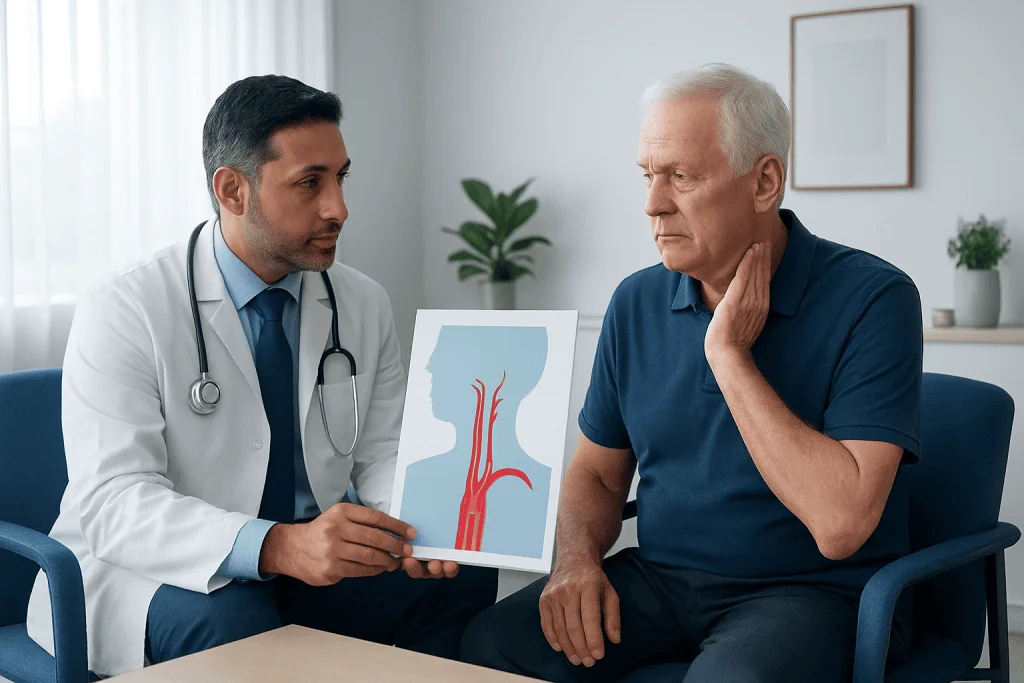
Carotid artery narrowing often causes no symptoms until blood flow becomes significantly reduced or a small clot travels to the brain. For that reason, some people first learn they have carotid disease after a doctor hears a bruit, an abnormal sound over the artery, or after imaging is done for another reason.
When symptoms do occur, they are usually sudden and brief, especially in transient ischemic attacks. Common warning signs include weakness or numbness on one side of the face or body, trouble speaking or understanding speech, sudden vision loss or dimming in one eye, dizziness, or loss of coordination. These symptoms may last only minutes, but they should never be ignored.
These warning signs can also point to stroke, which is a medical emergency. Fast treatment can limit brain injury and improve outcomes. Anyone with sudden neurological symptoms should seek urgent medical care right away, even if symptoms improve quickly.
Causes and Risk Factors
The most common cause of carotid artery narrowing is atherosclerosis. This happens when cholesterol, inflammatory cells, and other substances build up inside the artery wall to form plaque. Over time, plaque can make the artery narrower and less flexible. In some cases, the surface of the plaque can become unstable, making it more likely to shed debris or promote clot formation.
Several well-known risk factors increase the chance of developing carotid artery disease. These include older age, smoking, high blood pressure, high cholesterol, diabetes, obesity, physical inactivity, and a family history of vascular disease. People who already have coronary artery disease or peripheral artery disease may also be more likely to have carotid narrowing.
Reducing these risk factors is a key part of care, whether or not a procedure is performed. In many patients, lifestyle changes and medical therapy can help slow progression and lower the chance of stroke, heart attack, and other vascular complications.
How Doctors Diagnose It
Diagnosis usually begins with a medical history, a neurological exam, and noninvasive imaging. Carotid ultrasound is often the first test because it can estimate how much the artery is narrowed and show how blood is moving through the vessel. It is painless, widely available, and does not use radiation.
If more detail is needed, doctors may use CT angiography or MR angiography to examine the carotid arteries and brain circulation. In some cases, catheter angiography is performed. This test gives highly detailed images and may be used when planning treatment, though it is more invasive than ultrasound or CT and is used selectively.
Imaging helps answer several important questions:
- How severe is the narrowing?
- Is the patient’s recent symptom likely related to this artery?
- What is the exact shape and location of the blockage?
- Would surgery or stenting be safer and more effective?
Specialists may also evaluate the heart, blood pressure, kidney function, and current medications before recommending treatment. Advanced imaging and procedure planning are often coordinated through services such as neuroradiology to support safe decision-making.
Treatment Options and What the Procedure Involves
Treatment for carotid artery narrowing can include medication alone, carotid endarterectomy, or carotid artery stenting. Medicines commonly focus on reducing clotting risk, lowering cholesterol, and controlling blood pressure and diabetes. For some people with mild disease or lower-risk plaque, medical treatment and close follow-up may be enough.
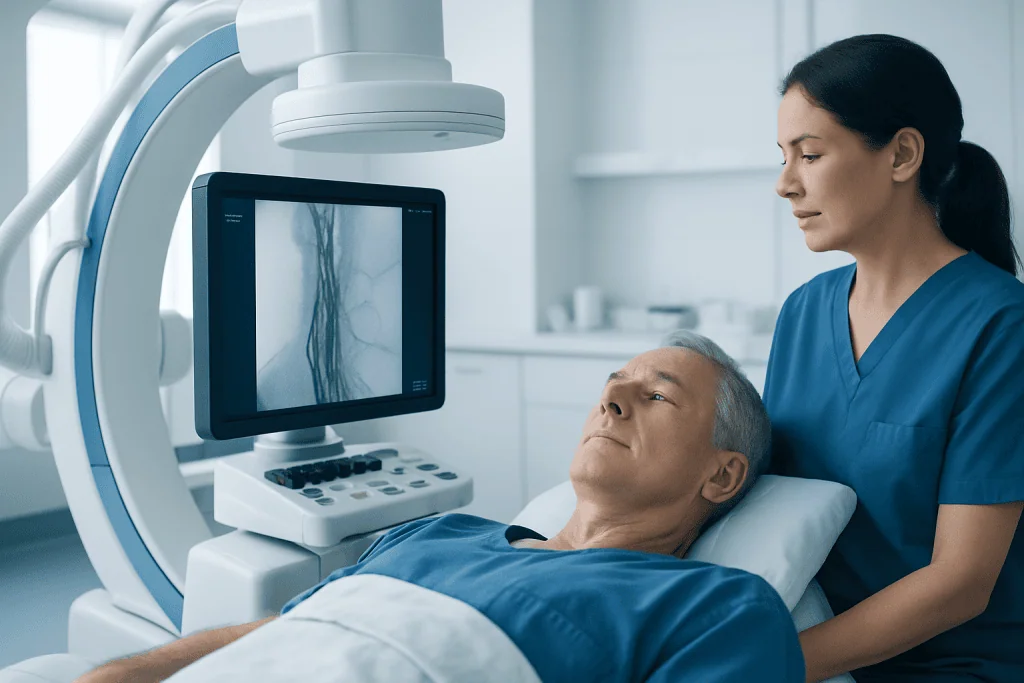
Carotid artery stenting is usually performed in a hospital by a specialist using X-ray guidance. A catheter is inserted into a blood vessel and advanced to the carotid artery. In many cases, a small protection device is used beyond the narrowing to catch debris during the procedure. The narrowed area may be widened with a balloon, and then a stent is placed to support the artery wall and improve blood flow.
Patients are typically monitored closely during and after the procedure. Most stay in the hospital for a short period so the team can watch for changes in blood pressure, heart rhythm, or neurological status. Recovery is often quicker than with open surgery, but follow-up remains important.
Like all procedures, carotid stenting has potential risks. These can include stroke during or soon after the procedure, bleeding at the catheter site, artery injury, reaction to contrast dye, or re-narrowing over time. The medical team carefully weighs these risks against the expected benefit in preventing future stroke.
Recovery, Prevention, and Long-Term Self-care
After carotid artery stenting, long-term care does not end with the procedure. Patients usually need regular follow-up visits and repeat imaging, often with carotid ultrasound, to confirm that the stent remains open and that no important re-narrowing is developing. Taking prescribed medicines exactly as directed is especially important after stent placement.
Stroke prevention also depends heavily on controlling vascular risk factors. Helpful steps include stopping smoking, eating a heart-healthy diet, being physically active within a doctor’s guidance, maintaining a healthy weight, and managing cholesterol, diabetes, and blood pressure. These measures protect not only the carotid arteries but also the heart and circulation throughout the body.
Patients should ask their doctor about activities, travel, wound care, and when they can return to work or exercise. Some people, especially older adults with several medical conditions, may benefit from coordinated follow-up in services such as geriatric neurology when neurological and vascular issues overlap.
For international patients who need evaluation or treatment, Acibadem International offers multidisciplinary assessment in JCI-accredited hospitals, where specialists diagnose and treat carotid artery disease and related neurological conditions.
When to See a Doctor
A doctor should be consulted if there are sudden episodes of weakness, numbness, speech difficulty, vision changes, or unexplained loss of balance. Even if symptoms last only a few minutes and then resolve, they can signal a transient ischemic attack and should be assessed promptly. Early treatment can help prevent a future stroke.
People with known carotid artery narrowing should also seek medical review if they develop new symptoms, have trouble taking prescribed medicines, or have concerns after a stenting procedure such as swelling, bleeding, or worsening neurological symptoms. Regular follow-up is important, because carotid disease can progress silently.
Emergency care is needed right away for any signs of stroke. Acting quickly gives the best chance of protecting brain function and receiving appropriate treatment without delay.
Frequently asked questions
What is carotid artery stenting?
Carotid artery stenting is a minimally invasive procedure that opens a narrowed carotid artery in the neck. A small mesh tube called a stent is placed inside the artery to help keep it open and reduce stroke risk.
Who is a good candidate for carotid artery stenting?
It may be appropriate for people with significant carotid artery narrowing, especially if they have had stroke-like symptoms or a transient ischemic attack. It may also be considered when open surgery carries higher risk because of age, other illnesses, prior neck treatment, or challenging anatomy.
Is carotid artery stenting better than surgery?
Neither option is automatically better for every patient. Some people are better served by carotid endarterectomy, while others may benefit more from stenting. The choice depends on symptoms, imaging findings, overall health, age, and procedural risk.
How long does recovery take after carotid artery stenting?
Recovery is often relatively quick, and many patients return home after a short hospital stay. However, the exact timeline varies depending on general health, the complexity of the procedure, and whether any symptoms were present beforehand.
Can carotid artery narrowing come back after stenting?
Yes, re-narrowing can happen in some cases, which is why follow-up appointments and ultrasound checks are important. Long-term risk can be lowered by taking prescribed medicines and addressing factors such as smoking, cholesterol, high blood pressure, and diabetes.
What symptoms should prompt urgent medical attention?
Sudden weakness, numbness, trouble speaking, vision loss, or difficulty walking should always be treated as urgent. Even if these symptoms go away quickly, they may signal a transient ischemic attack or stroke and require immediate assessment.
References
- World Health Organization
- American Heart Association
- American Stroke Association
- National Institute of Neurological Disorders and Stroke
- Society for Vascular Surgery
This article is for general information only and is not a substitute for professional medical advice. Please consult a qualified doctor about your individual situation.
Explore treatments in Turkey — costs, top hospitals & a free quote
JCI-accredited · board-certified surgeons · reply within 24h
Add us as a Preferred Source to see more of our trusted health content across Google Search, AI Overviews and Discover.
Check your numbers in seconds
BMI, calories, due date, blood pressure and 30+ more clinical calculators — free, instant, doctor-reviewed ranges.

Neurology
Diagnosis and treatment of disorders of the brain, spinal cord, nerves and muscles.
51 specialists in this unit