Cataract Surgery vs Refractive Lens Exchange: Which Is the Better Option?

Cataract surgery treats a cloudy natural lens, while refractive lens exchange mainly aims to reduce dependence on glasses or contact lenses before a significant cataract develops. Both procedures remove the eye’s natural lens and replace it with an artificial intraocular lens.
Key Takeaways
- Cataract surgery treats a cloudy natural lens, while refractive lens exchange mainly aims to reduce dependence on glasses or contact lenses before a significant cataract develops.
- Both procedures remove the eye’s natural lens and replace it with an artificial intraocular lens.
- The best choice depends on symptoms, lens clarity, age, refractive error, retinal health, and lifestyle needs.
- Not everyone is a good candidate for premium lens implants or refractive lens exchange.
- A detailed eye examination is essential before choosing either option.
Cataract surgery and refractive lens exchange are similar lens replacement procedures, but they are performed for different reasons. The better option depends on whether a cataract is present, the person’s age, prescription, eye health, and visual goals.
Overview: How the Two Procedures Differ
When comparing cataract surgery vs refractive lens exchange, it helps to know that the operations are technically very similar. In both procedures, the eye’s natural lens is removed and replaced with an artificial intraocular lens, often called an IOL. The main difference is the reason for surgery.
Cataract surgery is done when the natural lens has become cloudy and begins to affect vision. A cataract can cause blurred sight, glare, faded colors, difficulty driving at night, and trouble with daily tasks. In this setting, the main goal is to remove the cloudy lens and restore clearer vision, often with the added benefit of correcting some refractive error through the choice of lens implant.
Refractive lens exchange, sometimes called clear lens exchange, is usually performed before a cataract becomes significant. The natural lens is still relatively clear, but the person may want a more permanent solution for farsightedness, presbyopia, or a high prescription that is not ideal for corneal laser procedures. The aim is vision correction rather than cataract treatment.
Because the surgery itself is similar, people often wonder which is “better.” In practice, neither is automatically better for everyone. The right option depends on diagnosis, symptoms, eye structure, and personal goals after a thorough eye examination.
Who May Benefit From Cataract Surgery
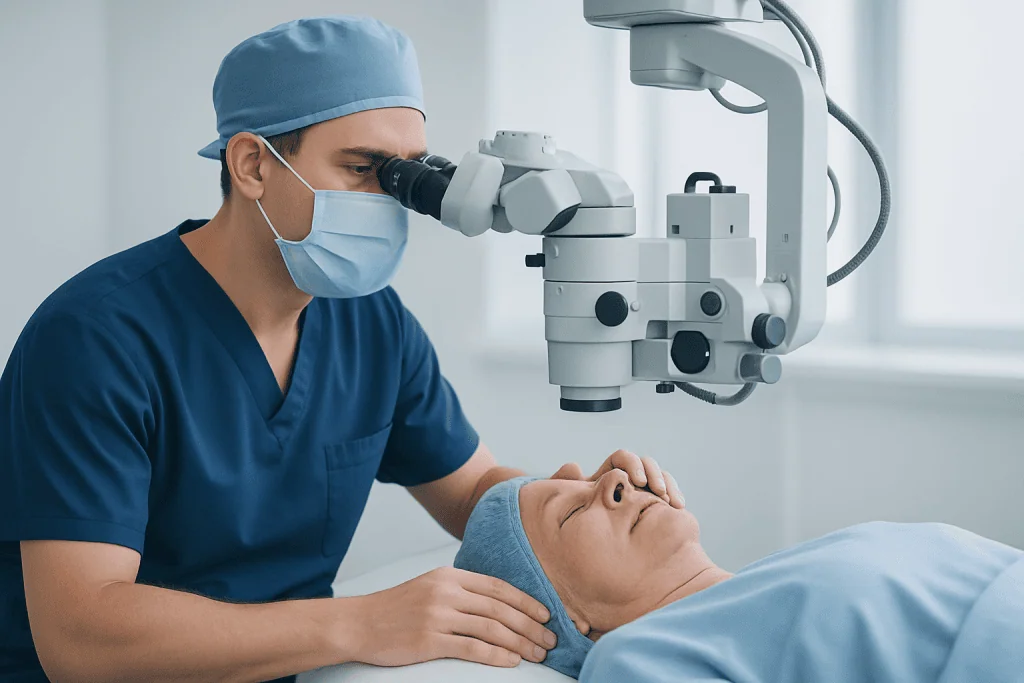
Cataract surgery is generally recommended when a cataract interferes with daily life or makes it harder to work, read, drive, or recognize faces. A cataract is not always removed the moment it appears. Many people can wait until their symptoms become bothersome, unless the cataract is creating other eye problems or preventing important retinal evaluation or treatment.
Typical symptoms include blurry or dim vision, increasing glare from sunlight or headlights, halos around lights, frequent prescription changes, poor night vision, and colors that seem less bright. Some people notice that glasses no longer improve vision well enough. These are common signs that cataracts may be affecting visual quality.
Cataract surgery may also be the better option when the eye has other conditions that need careful coordination, such as retinal disease, glaucoma, or diabetic eye disease. In these cases, the surgeon considers not only clearer vision but also the overall health of the eye and the safest lens choice.
For patients with a true cataract, cataract surgery is usually preferred over refractive lens exchange because the cloudy lens is already a medical problem that should be addressed directly. In that situation, replacing the lens can both treat the cataract and reduce refractive error at the same time through cataract surgery.
Who May Benefit From Refractive Lens Exchange
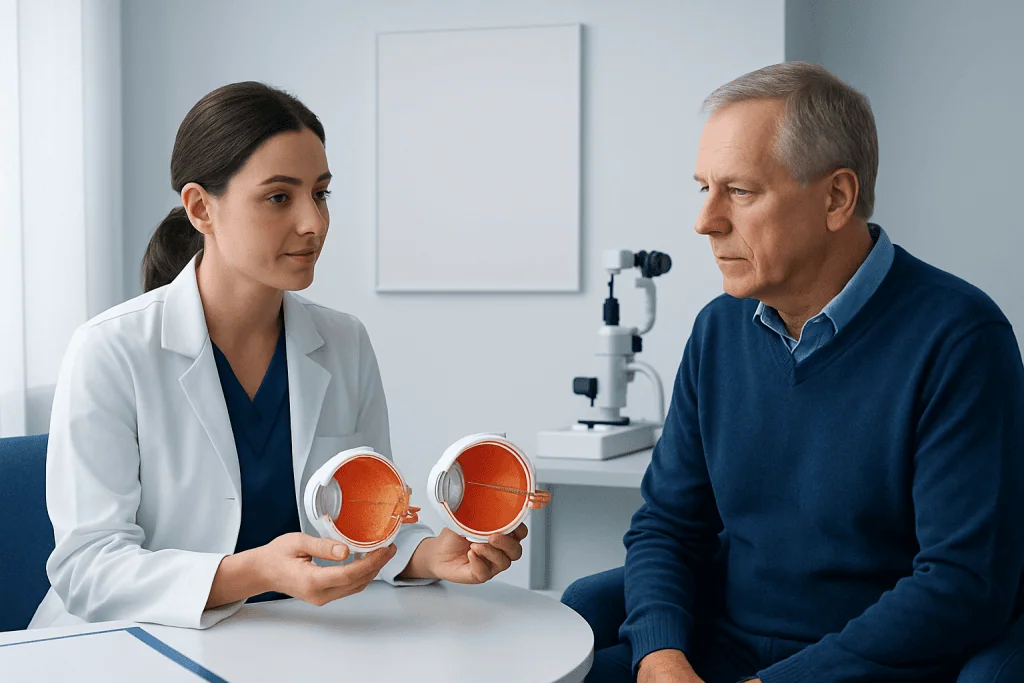
Refractive lens exchange may be considered for adults, often over the age of 40, who want to reduce dependence on glasses or contact lenses and who are not ideal candidates for laser vision correction on the cornea. It is especially relevant for people with presbyopia, significant farsightedness, or a high prescription that may not be best treated with procedures such as LASIK.
As people age, the natural lens loses flexibility, making it harder to focus up close. This age-related change is called presbyopia. Refractive lens exchange can address presbyopia by replacing the natural lens with an implant chosen for distance, near, intermediate, or a blend of these ranges, depending on the lens type and the patient’s priorities.
It may also be an option for some people with strong astigmatism or farsightedness, especially if they wish to avoid future cataract surgery since the natural lens has already been replaced. However, this does not mean it is the right choice for every person with a prescription problem. Retinal health, corneal shape, dry eye, and tolerance for visual side effects all matter.
Because refractive lens exchange is usually elective and focused on convenience and visual independence, expectations should be realistic. Some people still need glasses for certain activities, and some lens designs can increase glare, halos, or reduced contrast in low light.
Similarities, Lens Options, and Important Trade-Offs
Both cataract surgery and refractive lens exchange are usually performed as outpatient procedures using small incisions. The cloudy or clear natural lens is broken up and removed, and a foldable artificial lens is placed inside the eye. Recovery is often fairly quick, but the exact healing timeline varies from person to person.
A major part of planning is selecting the intraocular lens. Monofocal lenses usually provide one main focal point, commonly distance vision, with glasses often still needed for reading. Toric lenses can help correct astigmatism. Multifocal or extended-depth-of-focus lenses may reduce the need for glasses at more than one distance, but they can also cause halos, glare, or reduced contrast sensitivity in some patients.
This is one reason why a procedure is not judged only by whether the lens can be removed. The more important question is whether the eye is suitable for a certain lens design. For example, people with retinal disease, irregular corneas, significant dry eye, or some neuro-visual conditions may not be good candidates for premium implants even if they are good candidates for lens surgery itself.
People considering their options may also compare lens replacement with non-lens alternatives such as updated glasses, contact lenses, or corneal laser procedures. The best treatment balances safety, visual quality, long-term expectations, and the person’s daily needs rather than choosing the most advanced-sounding approach.
How Doctors Decide Which Option Is Better
Choosing between cataract surgery and refractive lens exchange starts with diagnosis. If the natural lens is significantly cloudy and causing symptoms, cataract surgery is usually the appropriate pathway. If the lens is still clear, the question becomes whether lens replacement is the best refractive solution or whether another option would be safer or more suitable.
The eye specialist will review several factors, including age, prescription, corneal thickness and shape, tear film quality, pupil size, retinal status, history of eye disease, and previous eye surgery. People with a history of retinal tears, macular problems, or diabetes may need especially careful assessment. In some cases, additional testing is performed to measure the eye accurately and screen for hidden conditions.
Lifestyle matters as well. Someone who does a lot of night driving may prioritize crisp low-light vision and may prefer a monofocal lens. Another person may accept some nighttime halos in exchange for less need for reading glasses. No lens type is ideal for every lifestyle, which is why personalized counseling is so important.
Doctors also discuss expectations openly. Lens surgery can greatly improve vision, but it does not guarantee perfect sight in every setting. Some people may still need glasses for fine print, prolonged computer work, or very sharp distance tasks. The best option is usually the one that matches the eye’s health with realistic visual goals.
Risks, Recovery, and Long-Term Outlook
Both cataract surgery and refractive lens exchange are commonly performed and generally safe in experienced hands, but every eye procedure carries risk. Possible complications include infection, inflammation, increased eye pressure, retinal detachment, lens positioning issues, swelling in the cornea or retina, and the need for additional treatment. These complications are uncommon but important to understand.
Recovery often involves using prescribed eye drops, avoiding rubbing the eye, and following guidance about water exposure, makeup, heavy lifting, and exercise. Vision may improve quickly, but it can still fluctuate during early healing. The final visual result may take several weeks, especially if both eyes are treated at different times.
One long-term point is that cataract surgery removes an existing cloudy lens, while refractive lens exchange removes a lens that may later have formed a cataract. That means refractive lens exchange also prevents future cataract development in that eye because the natural lens has already been replaced. However, this advantage should be weighed against the fact that it is still an intraocular surgery performed mainly for refractive benefit.
Some people develop a cloudy membrane behind the implant months or years later. This is not a new cataract and can often be treated with a brief laser procedure if needed. Ongoing follow-up remains important, especially for people with other eye conditions affecting the retina or optic nerve.
Questions to Ask Before Choosing a Procedure
Before deciding, patients may find it helpful to ask what problem the surgery is intended to solve. Is the main issue a cataract that is reducing visual quality, or is the goal to reduce dependence on glasses despite a relatively clear lens? This single question often clarifies whether cataract surgery or refractive lens exchange is the more logical option.
Other useful questions include what type of lens is being recommended, whether glasses may still be needed afterward, what side effects are possible at night, and whether any other eye conditions could affect the outcome. It is also reasonable to ask whether a non-surgical option or a corneal-based laser procedure would be more appropriate.
People should mention all medications, prior eye operations, and systemic health conditions such as diabetes or autoimmune disease. These details can influence healing and lens selection. A careful, individualized discussion is especially important if the patient has high expectations for spectacle independence.
For those seeking specialist assessment abroad, Acibadem International’s multidisciplinary eye teams in JCI-accredited hospitals diagnose and treat lens conditions for international patients, including comprehensive planning for eye surgery when appropriate.
When to See an Eye Doctor
An eye doctor should be consulted if vision becomes blurry, dim, or increasingly affected by glare, halos, faded colors, or difficulty driving at night. A person should also seek assessment if glasses no longer provide enough improvement or if they are considering surgery to reduce dependence on corrective lenses.
Urgent medical attention is needed for sudden vision loss, flashes of light, a shower of new floaters, severe eye pain, marked redness, or a curtain-like shadow in the vision. These symptoms are not typical of routine cataracts and may point to a more urgent eye problem.
Regular eye examinations are also important with age, especially after 40 and for people with diabetes, strong prescriptions, or a family history of eye disease. Many lens and retinal problems develop gradually and are easier to manage when found early.
In short, the better option is the one that fits the condition being treated. Cataract surgery is generally best for a symptomatic cloudy lens, while refractive lens exchange may suit selected patients seeking refractive correction with a clear or minimally cloudy lens. A qualified ophthalmologist can help weigh benefits, limitations, and safety for the individual eye.
Frequently asked questions
Is refractive lens exchange the same as cataract surgery?
The surgical steps are very similar because both procedures remove the natural lens and replace it with an artificial intraocular lens. The key difference is why they are done: cataract surgery treats a cloudy lens, while refractive lens exchange is mainly performed to correct vision when the lens is still clear or only mildly changed.
Which is safer, cataract surgery or refractive lens exchange?
The procedures have similar surgical risks because they involve the same part of the eye. Safety depends more on the patient’s eye health, age, retinal status, lens choice, and the experience of the treating team than on the name of the procedure itself.
Can refractive lens exchange prevent cataracts later in life?
Yes. Because the natural lens is removed during refractive lens exchange, that eye cannot develop a future cataract in the removed lens. Even so, this does not automatically make it the best choice, because it is still an intraocular surgery that should be selected carefully.
Will glasses still be needed after either procedure?
Some people become less dependent on glasses, but not everyone becomes completely glasses-free. The need for glasses afterward depends on the type of lens implant, the health of the eye, and the person’s goals for distance, reading, and computer vision.
Who is not a good candidate for premium multifocal lenses?
People with certain retinal problems, irregular corneas, significant dry eye, or other conditions that reduce visual quality may not be ideal candidates. In these cases, a monofocal lens may provide more reliable, sharper vision with fewer night-vision side effects.
Is LASIK better than refractive lens exchange?
Not necessarily. LASIK reshapes the cornea, while refractive lens exchange replaces the natural lens, so they are suited to different patients. Age, prescription, corneal thickness, presbyopia, and overall eye health help determine which approach is more appropriate.
This article is for general information only and is not a substitute for professional medical advice. Please consult a qualified doctor about your individual situation.
Cataract Surgery in Turkey — costs, top hospitals & a free quote
JCI-accredited · board-certified surgeons · reply within 24h
Add us as a Preferred Source to see more of our trusted health content across Google Search, AI Overviews and Discover.

Ophthalmology
Comprehensive eye care from laser vision correction to retina, cornea and cataract surgery.
75 specialists in this unitRelated Treatments
More from the Health Library

Pink Eye at Home: How to Care for Conjunctivitis and Avoid Spread
Contact Lens Eye Exams: Why Proper Fitting Matters for Comfort and Safety
Can Eye Surgery Improve Vision? Your Treatment Options

Can You Wear Contacts After LASIK? What to Know

Blocked Tear Duct Surgery in Adults: What to Expect From DCR