IVF With Adenomyosis: Diagnosis, Treatment Planning, and Success Factors

Adenomyosis is a uterine condition in which endometrial-like tissue grows within the muscle wall of the uterus, sometimes affecting implantation and pregnancy outcomes. Diagnosis is usually based on expert transvaginal ultrasound and, when needed, pelvic MRI to assess whether disease is focal or diffuse.
Key Takeaways
- Adenomyosis is a uterine condition in which endometrial-like tissue grows within the muscle wall of the uterus, sometimes affecting implantation and pregnancy outcomes.
- Diagnosis is usually based on expert transvaginal ultrasound and, when needed, pelvic MRI to assess whether disease is focal or diffuse.
- IVF planning may include ovarian stimulation, embryo freezing, hormonal suppression before embryo transfer, or surgery in selected cases.
- Success depends on age, ovarian reserve, embryo quality, severity of adenomyosis, associated conditions such as endometriosis, and the chosen transfer strategy.
- Patients should seek individualized advice from a reproductive medicine specialist, especially if they have heavy periods, pelvic pain, recurrent miscarriage, or previous IVF failure.
Adenomyosis can make conception and embryo implantation more challenging, but many patients can still pursue IVF with a carefully individualized plan. Accurate imaging, control of inflammation and uterine activity, embryo quality, and coordinated fertility care are central to treatment decisions.
Overview: How Adenomyosis Relates to IVF
Adenomyosis is a benign condition in which tissue similar to the uterine lining is found within the muscular wall of the uterus. This can cause the uterus to become enlarged, inflamed, and more contractile than usual. Some people have clear symptoms, while others discover adenomyosis during fertility testing after months or years of trying to conceive.
For patients considering IVF with adenomyosis, the key question is not simply whether pregnancy is possible, but how to prepare the uterus and embryo transfer plan in the safest and most effective way. Adenomyosis may be linked with lower implantation rates, higher miscarriage risk, and more difficult menstrual symptoms, although outcomes vary widely depending on age, embryo quality, severity of disease, and associated conditions.
Modern fertility care approaches adenomyosis as one part of a broader reproductive picture. A patient may also have endometriosis, fibroids, polyps, low ovarian reserve, male factor infertility, or previous failed transfers. Careful evaluation helps specialists decide whether to proceed directly with IVF treatment, use a freeze-all embryo strategy, add hormonal preparation before transfer, or consider other interventions first.
Symptoms and Fertility Clues
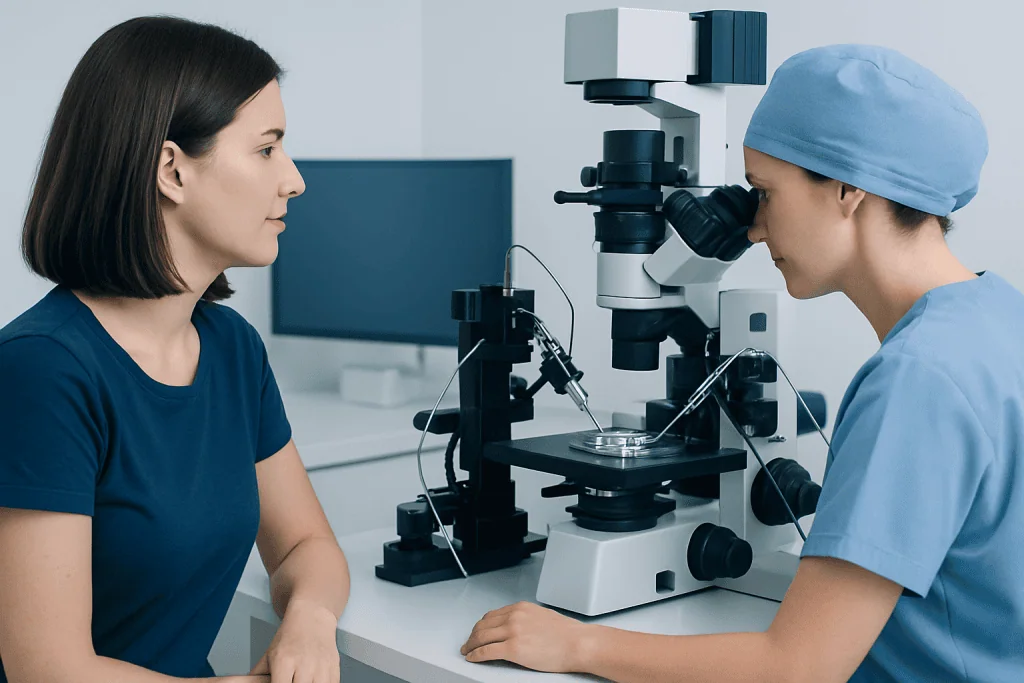
Adenomyosis can present in different ways. Some patients have painful, heavy, or prolonged periods; others have pelvic pressure, bloating, or pain during intercourse. Symptoms may become more noticeable in the late 30s or 40s, but adenomyosis can also occur in younger patients, particularly when it coexists with endometriosis.
From a fertility perspective, adenomyosis may be suspected when menstrual pain is significant, the uterus feels enlarged on examination, or ultrasound shows characteristic changes in the uterine muscle. It may also be considered in patients with recurrent implantation failure, unexplained infertility, or recurrent miscarriage, especially when other tests have not found a clear explanation.
Common features that may prompt fertility assessment include:
- Heavy bleeding or clots during menstruation
- Severe cramps that interfere with daily life
- Chronic pelvic pain or pelvic heaviness
- Spotting before or after periods
- Previous IVF cycles with good embryos but no implantation
- Pregnancy loss where other causes have been excluded
These symptoms are not specific to adenomyosis. Fibroids, endometriosis, uterine polyps, hormonal conditions, and bleeding disorders can cause similar complaints, so diagnosis should be made by a qualified clinician using appropriate imaging and examination.
Causes and Risk Factors
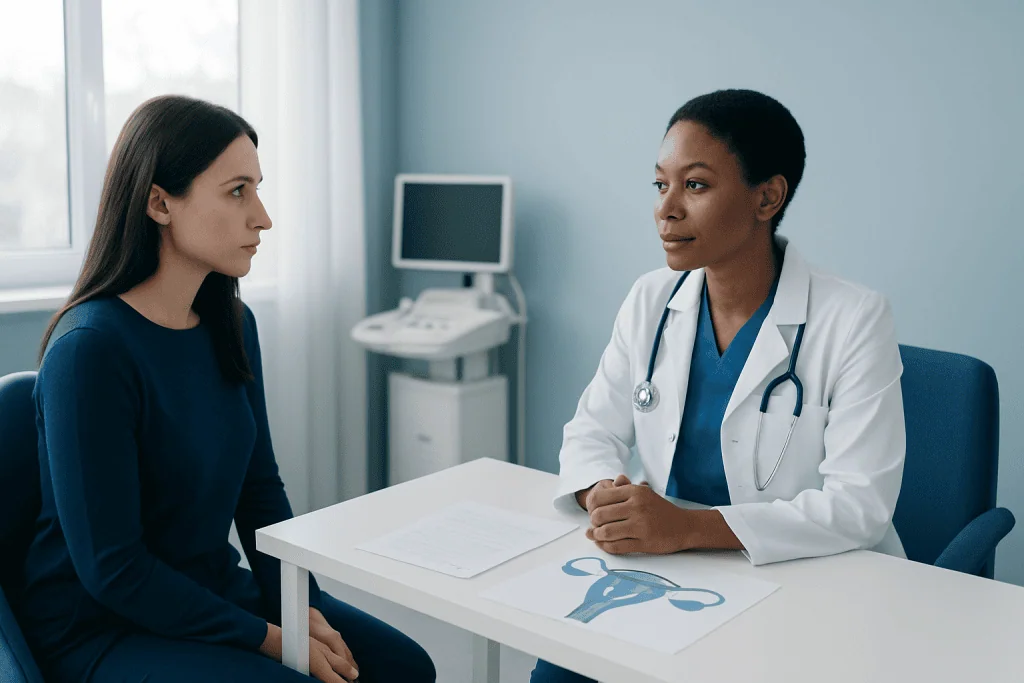
The exact cause of adenomyosis is not fully understood. Several mechanisms have been proposed, including movement of endometrial tissue into the uterine muscle, inflammation at the junction between the lining and muscle of the uterus, tissue changes after uterine procedures, and hormonal or immune factors. Estrogen appears to play a role, which helps explain why symptoms often improve after menopause.
Risk factors may include increasing reproductive age, previous pregnancy, prior uterine surgery such as cesarean section or curettage, and coexisting endometriosis. However, adenomyosis can also occur without obvious risk factors. It is important for patients not to view the diagnosis as something they caused through lifestyle or activity.
In fertility care, adenomyosis is often assessed alongside other causes of female infertility. Endometriosis, fibroids that distort the uterine cavity, hydrosalpinx, thyroid disease, ovulation disorders, and male factor infertility may all influence the final plan. Identifying these factors early helps avoid a one-size-fits-all approach.
Diagnosis Before IVF
Accurate diagnosis is essential before designing an IVF plan. The first-line test is usually transvaginal ultrasound performed by an experienced clinician. Findings may include an enlarged globular uterus, asymmetrical thickening of the uterine wall, small cyst-like spaces within the muscle, fan-shaped shadowing, or an irregular junctional zone. Three-dimensional ultrasound can add useful information in some cases.
Pelvic MRI may be recommended when ultrasound findings are unclear, when disease appears extensive, or when surgery is being considered. MRI can help distinguish adenomyosis from fibroids and can show whether the condition is focal, such as an adenomyoma, or diffuse throughout the uterine wall. This distinction may affect treatment planning.
Diagnosis is usually clinical and radiological rather than based on biopsy, because tissue confirmation is not typically needed when fertility preservation is the goal. A full fertility work-up may also include ovarian reserve tests, semen analysis, thyroid and prolactin testing when indicated, uterine cavity evaluation, and screening for other conditions that may affect pregnancy.
Patients should ask whether the adenomyosis appears mild, moderate, or severe; whether it involves the inner junctional zone; whether the uterine cavity is distorted; and whether there are coexisting findings such as endometriosis, fibroids, or polyps. These details are more useful for IVF planning than the diagnosis alone.
Treatment Planning for IVF With Adenomyosis
Treatment planning is individualized. In some patients with mild adenomyosis, good ovarian reserve, and no major uterine distortion, clinicians may proceed with ovarian stimulation and embryo creation without delay. In others, especially those with severe symptoms, a markedly enlarged uterus, or previous failed transfers, the team may recommend additional preparation before embryo transfer.
A common strategy is to stimulate the ovaries, create embryos, and freeze suitable embryos for transfer later. This allows time to treat adenomyosis-related inflammation and uterine activity before placing an embryo. Hormonal suppression using medications such as gonadotropin-releasing hormone agonists may be considered before frozen embryo transfer, particularly in more extensive disease, but the duration and suitability depend on the patient’s age, ovarian reserve, symptoms, and prior response to treatment.
Other options may include progestin-based therapy for symptom control, although some methods are not compatible with immediate attempts to conceive and must be timed carefully. Surgery is not routine for diffuse adenomyosis because removing widespread disease can weaken the uterine wall and may increase pregnancy risks. However, surgery may be discussed for selected focal adenomyosis, significant cavity distortion, or coexisting fibroids or endometriosis.
Embryo strategy also matters. When sperm-related factors are present, intracytoplasmic sperm injection may be used as part of IVF to support fertilization. Preimplantation genetic testing may be discussed in selected cases, especially with advanced maternal age or recurrent miscarriage, but it is not a treatment for adenomyosis itself and is not needed for every patient.
IVF Success Factors and Embryo Transfer Decisions
The chance of success with IVF depends on several combined factors. Maternal age and ovarian reserve strongly influence the number and genetic health of embryos. Adenomyosis mainly affects the uterine environment, so even when high-quality embryos are available, transfer timing and uterine preparation may be important.
Extent of disease is also relevant. Focal adenomyosis may sometimes be more clearly localized, while diffuse adenomyosis can involve a larger part of the uterine muscle. A thickened or disrupted junctional zone, increased uterine contractions, inflammation, and altered blood flow have all been proposed as mechanisms that may reduce receptivity, although the impact varies between individuals.
Frozen embryo transfer is often considered when the medical team wants to separate ovarian stimulation from uterine preparation. This may be helpful because stimulation temporarily raises hormone levels, and some clinicians prefer transfer after the uterus has been prepared in a more controlled hormonal environment. The best protocol may be natural, modified natural, or hormone replacement, depending on ovulation patterns and clinical history.
Success is also influenced by practical details: controlling anemia from heavy bleeding, optimizing thyroid function and metabolic health, treating hydrosalpinx if present, ensuring the uterine cavity is free of polyps or submucosal fibroids, and planning early pregnancy monitoring. Patients should be reassured that adenomyosis does not automatically rule out IVF success, but it does justify thoughtful preparation.
Self-Care, Lifestyle, and Pregnancy Considerations
Self-care cannot cure adenomyosis, but it can support overall fertility treatment and well-being. Patients with heavy menstrual bleeding should be assessed for iron deficiency and anemia. Pain should be managed with a clinician’s guidance, especially when actively trying to conceive or preparing for embryo transfer, because some medications may not be appropriate at certain times.
General health measures can improve readiness for IVF and pregnancy. These include stopping smoking, moderating alcohol, maintaining a balanced diet, aiming for a healthy weight, staying physically active within comfort limits, and managing chronic conditions such as diabetes, hypertension, thyroid disease, or autoimmune disorders. Sleep and stress support are also important, not because stress is the cause of adenomyosis, but because fertility treatment can be emotionally demanding.
Pregnancy with adenomyosis may require closer obstetric follow-up. Some studies associate adenomyosis with increased risks such as miscarriage, preterm birth, fetal growth concerns, and abnormal placental attachment, but individual risk varies. Early confirmation of pregnancy location, monitoring of symptoms, and coordinated care between fertility and obstetric teams help support safer decision-making.
Patients traveling for fertility care should bring previous imaging, operative notes, stimulation records, embryo reports, and laboratory results. At Acibadem International, multidisciplinary specialists in JCI-accredited hospitals evaluate and treat fertility conditions, including adenomyosis-related IVF planning, for international patients as part of coordinated reproductive care.
When to See a Fertility Specialist
A fertility specialist should be consulted if a patient has been trying to conceive without success for 12 months, or after 6 months if aged 35 or older. Earlier assessment is reasonable when periods are very painful or heavy, adenomyosis or endometriosis has already been diagnosed, there has been recurrent miscarriage, or previous IVF cycles have not resulted in pregnancy.
Medical attention is also important for severe pelvic pain, bleeding that causes dizziness or fatigue, symptoms of anemia, or rapidly worsening pelvic pressure. These symptoms do not necessarily indicate a dangerous problem, but they deserve evaluation and treatment so that fertility care can proceed on a clearer and safer basis.
Before starting IVF, patients may find it helpful to ask their doctor: How severe is the adenomyosis? Is the uterine cavity normal? Should embryos be frozen before transfer? Is hormonal suppression recommended? Are there other conditions that should be treated first? Clear answers to these questions can make treatment planning more understandable and less stressful.
Frequently asked questions
Can IVF work if someone has adenomyosis?
Yes, IVF can work for patients with adenomyosis, but the treatment plan may need to be adjusted. Success depends on age, ovarian reserve, embryo quality, severity of adenomyosis, and whether other conditions are present. Many specialists consider careful uterine preparation before embryo transfer.
Is fresh or frozen embryo transfer better with adenomyosis?
There is no single best choice for every patient. Frozen embryo transfer is often considered when the doctor wants time for hormonal suppression or a more controlled uterine environment before transfer. The decision should be based on imaging findings, symptoms, embryo availability, and prior IVF history.
Does adenomyosis always cause infertility?
No, adenomyosis does not always cause infertility, and some people conceive naturally. However, it may affect implantation, miscarriage risk, or menstrual health in some patients. A fertility evaluation can help determine whether adenomyosis is likely to be an important factor.
Should adenomyosis be treated before IVF?
Sometimes, but not always. Mild adenomyosis may not require a delay before IVF, while more extensive disease or previous failed transfers may lead the doctor to recommend hormonal preparation or other treatment before embryo transfer. Surgery is reserved for selected cases and is not routine for diffuse adenomyosis.
How is adenomyosis diagnosed before fertility treatment?
Diagnosis is usually made with expert transvaginal ultrasound, sometimes supported by pelvic MRI. These tests look for changes in the uterine muscle and junctional zone. The results help the fertility team decide whether the condition is focal or diffuse and how it may affect treatment planning.
Can adenomyosis come back after treatment?
Symptoms can recur after temporary hormonal treatment because adenomyosis is influenced by hormones. Some treatments aim to control the condition long enough to improve the timing of embryo transfer rather than permanently remove it. Long-term management depends on fertility goals, symptom severity, and age.
What should patients bring to an IVF consultation for adenomyosis?
Patients should bring previous ultrasound or MRI reports, surgical notes, fertility test results, semen analysis, medication history, and records from any prior IVF cycles. Embryo reports and transfer details are especially helpful if there have been failed cycles. This information allows the specialist to build a more personalized plan.
References
- European Society of Human Reproduction and Embryology
- American Society for Reproductive Medicine
- Royal College of Obstetricians and Gynaecologists
- International Society of Ultrasound in Obstetrics and Gynecology
- World Health Organization
This article is for general information only and is not a substitute for professional medical advice. Please consult a qualified doctor about your individual situation.
IVF & fertility treatment in Turkey — success rates and costs
JCI-accredited · board-certified surgeons · reply within 24h
Add us as a Preferred Source to see more of our trusted health content across Google Search, AI Overviews and Discover.
Check your numbers in seconds
BMI, calories, due date, blood pressure and 30+ more clinical calculators — free, instant, doctor-reviewed ranges.

Related Treatments
Related Conditions
More from the Health Library



Related Specialists

Prof. Dr. Bülent Tıraş
Gynecology & Obstetrics
Prof. Dr. Mete Güngör
Gynecology & Obstetrics
Prof. Dr. Faruk Suat Dede
Gynecology & Obstetrics
Prof. Dr. Tansu Küçük
Gynecology & Obstetrics