IVF With Diminished Ovarian Reserve: What Treatment Planning Looks Like

Diminished ovarian reserve means the ovaries have fewer eggs remaining, but pregnancy may still be possible. IVF planning often depends on age, AMH, antral follicle count, FSH levels, and previous treatment response.
Key Takeaways
- Diminished ovarian reserve means the ovaries have fewer eggs remaining, but pregnancy may still be possible.
- IVF planning often depends on age, AMH, antral follicle count, FSH levels, and previous treatment response.
- Treatment goals may include retrieving available eggs efficiently, considering embryo freezing, and discussing alternatives early when appropriate.
- A lower ovarian reserve does not always mean natural conception or IVF is impossible, but success rates may be lower.
- Emotional support and clear counseling are important parts of fertility care.
IVF with diminished ovarian reserve requires careful, individualized treatment planning rather than a one-size-fits-all approach. The process usually includes ovarian reserve testing, realistic discussion of expected egg numbers, and a plan that balances time, cost, and the couple’s family-building goals.
Overview: what diminished ovarian reserve means in IVF
Diminished ovarian reserve describes a lower-than-expected number of eggs in the ovaries for a person’s age. It does not measure the chance of pregnancy perfectly, and it does not always mean infertility. However, it can affect how the ovaries respond to fertility medicines and how many eggs may be collected during an IVF cycle.
In practical terms, IVF with diminished ovarian reserve is usually planned around a smaller expected egg yield. The aim is to make the most of the eggs available, while also being honest about the possibility that fewer embryos may develop. For some patients, this means adjusting medication protocols; for others, it may mean discussing more than one cycle, embryo banking, or alternative family-building options.
Diminished ovarian reserve is different from complete loss of ovarian function. Some patients still ovulate regularly and may still conceive naturally. Others may have irregular periods or conditions linked to reduced egg supply, including premature ovarian insufficiency. A fertility specialist uses testing and medical history to understand where a patient falls on this spectrum.
Because every case is different, treatment planning often focuses on both medical facts and personal goals. Age, relationship status, desire for one or more children, timeline, and emotional readiness can all shape the IVF strategy.
Common signs and how it is detected
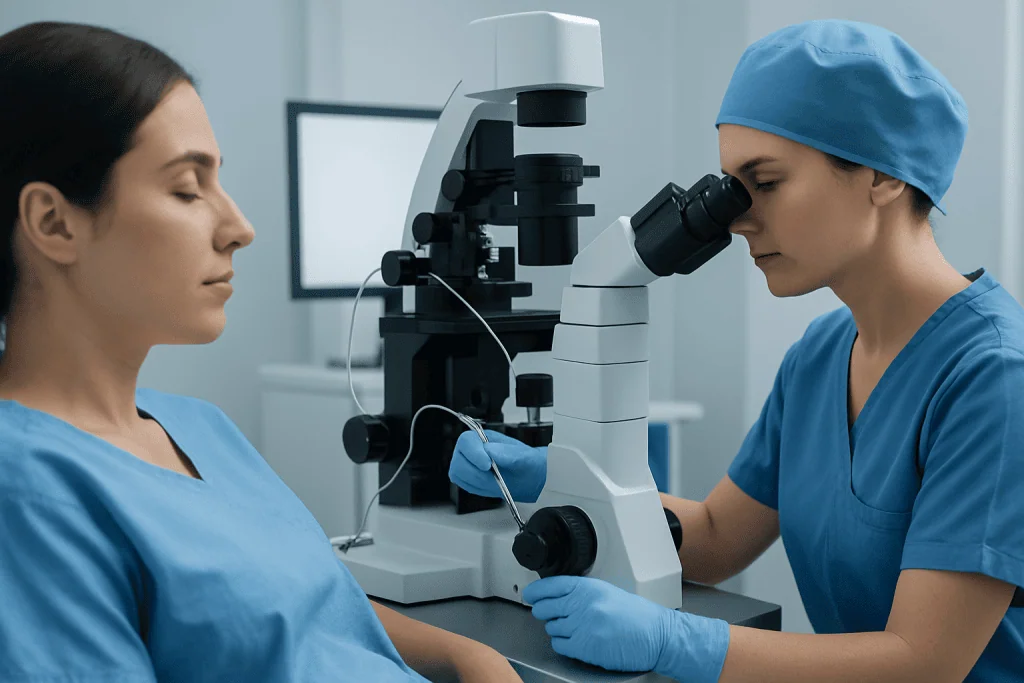
Many people with diminished ovarian reserve have no obvious symptoms. Some learn about it only after fertility testing or after a lower-than-expected response in a previous treatment cycle. Others may notice shorter menstrual cycles, changes in cycle regularity, or increasing difficulty becoming pregnant.
Doctors do not diagnose diminished ovarian reserve based on symptoms alone. Instead, it is usually suspected when ovarian reserve tests suggest a reduced number of remaining eggs. These tests may be done early in the menstrual cycle and often include blood tests and ultrasound.
Common clues can include:
- Low anti-Müllerian hormone (AMH) levels
- A low antral follicle count on ultrasound
- Higher follicle-stimulating hormone (FSH) levels, especially on cycle day 2 or 3
- A previous poor or limited response to ovarian stimulation
- Difficulty conceiving, especially with advancing age
It is important to remember that these findings help estimate ovarian response, not guarantee IVF results. A person with low ovarian reserve may still produce usable eggs, and embryo quality also depends strongly on age and individual biology.
Causes and risk factors
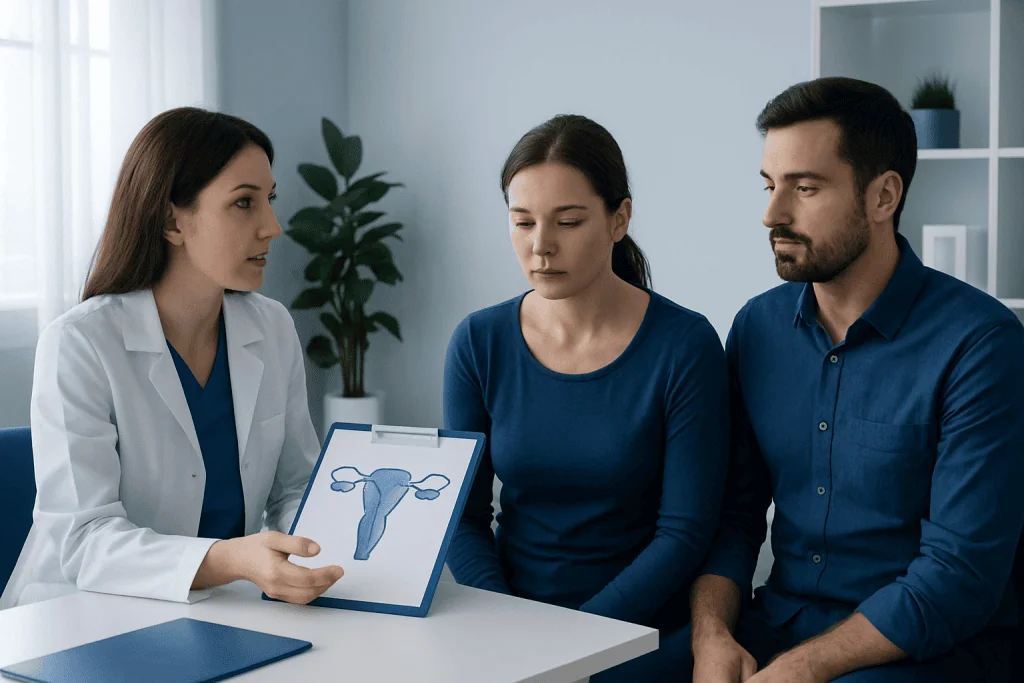
The number of eggs in the ovaries naturally declines with age, so aging is the most common reason for diminished ovarian reserve. This decline becomes more noticeable in the mid-to-late reproductive years, but it can happen earlier in some people. Age also affects egg quality, which is an important part of IVF planning.
Other factors may contribute to reduced ovarian reserve. These include prior ovarian surgery, endometriosis, certain genetic conditions, autoimmune disorders, chemotherapy or pelvic radiation, and smoking history. Some patients have reduced reserve without a clear cause.
Doctors also look for related gynecologic conditions that may affect fertility overall, even if they do not directly cause diminished ovarian reserve. For example, ovarian anatomy may be influenced by ovarian cysts, and the uterine cavity may need assessment if there is concern for issues such as endometrial polyps. A full fertility evaluation helps identify whether more than one factor is affecting the chance of pregnancy.
Although lifestyle cannot restore egg supply, general health still matters. Body weight, sleep, chronic illness management, and avoiding tobacco can support overall reproductive health and help patients prepare for treatment safely.
How fertility specialists evaluate ovarian reserve
Treatment planning begins with a detailed fertility evaluation. The specialist reviews age, menstrual history, previous pregnancies, past fertility treatment, pelvic surgery, family history of early menopause, and any medical conditions that could affect reproductive health. The partner’s fertility is also assessed because IVF planning should consider both sides of the couple.
Ovarian reserve is commonly evaluated using AMH, day 2 or 3 FSH and estradiol levels, and transvaginal ultrasound to count antral follicles. These tests estimate how the ovaries may respond to stimulation. They do not directly count every remaining egg and cannot predict pregnancy with complete accuracy.
Other tests may be recommended depending on the case. These can include thyroid function, prolactin, uterine cavity assessment, and semen analysis. If cycles are irregular, doctors may also look for hormonal disorders such as polycystic ovary syndrome or evaluate for other causes of ovulation problems.
During counseling, many clinics explain that ovarian reserve tests are most useful for planning, not for labeling a patient’s future. A low AMH level may suggest fewer eggs retrieved, but it does not always mean no viable embryos or no chance of pregnancy. Clear interpretation of test results helps set realistic expectations without taking away hope.
What treatment planning usually looks like
IVF planning for diminished ovarian reserve is highly individualized. The first step is often to define the main goal: pregnancy as soon as possible, preserving fertility for later use, or creating embryos for more than one child if feasible. The answer affects how aggressive or conservative the treatment approach should be.
Specialists then decide how to stimulate the ovaries. Some patients may receive conventional stimulation with carefully selected medication doses, while others may be considered for modified approaches based on prior response. The goal is not simply to use more medication, but to choose a protocol that is most likely to recruit the follicles available in that cycle.
In some situations, the doctor may discuss back-to-back cycles or embryo banking if the expected number of eggs per retrieval is low. For selected patients, fertilizing retrieved eggs with ICSI may be recommended, particularly if there is also a male factor issue or only a limited number of eggs are available. The overall pathway usually falls within a broader IVF treatment plan tailored to the individual.
Planning also includes discussion of cycle cancellation risk, expected egg numbers, embryo testing when appropriate, and whether donor eggs might be considered now or later. These conversations can be emotionally difficult, but they are an important part of honest, compassionate fertility care.
Treatment options, outcomes, and alternatives
The main treatment option is usually female infertility treatment through IVF using the patient’s own eggs, if ovarian function is still present. In some cases, intrauterine insemination may be considered, but when ovarian reserve is clearly low and time is important, IVF is often favored because it gives more information about egg response and embryo development in a shorter period.
Some patients may respond with only a few eggs, and occasionally none are retrieved despite stimulation. Even so, one good-quality embryo can be enough for pregnancy. This is why doctors usually focus on individualized prognosis rather than egg count alone. Success depends on several factors, especially age, egg quality, sperm quality, and uterine health.
If repeated cycles produce very few or no viable embryos, the care team may discuss alternatives such as donor eggs or, less commonly, donor embryos depending on local practice and personal preferences. These options can offer a higher chance of pregnancy for some patients, particularly when egg quality is severely affected by age or ovarian insufficiency.
Patients should also know that fertility treatment is not only medical but emotional. Decisions about when to continue, pause, or change direction can be exhausting. Counseling, support groups, and time to ask questions can help patients make choices that align with their values and long-term plans.
Self-care, preparation, and when to seek specialist advice
There is no proven lifestyle change that can reverse diminished ovarian reserve, but healthy preparation can support treatment. Patients are often advised to avoid smoking, limit alcohol, manage chronic illnesses, maintain a balanced diet, and discuss any supplements or medications with their doctor. Prenatal vitamins with folic acid are commonly recommended before attempting pregnancy.
Because time may matter, early specialist review is important if a person is over 35 and has not conceived after 6 months of trying, or is under 35 and has not conceived after 12 months. Earlier evaluation is also sensible for anyone with irregular periods, prior ovarian surgery, endometriosis, a history suggesting early menopause, or previous poor response to fertility treatment.
It is also wise to seek help if there are symptoms that may point to other reproductive issues, such as very painful periods, unusually heavy bleeding, pelvic pain, or prior pregnancy losses. Fertility specialists can assess whether additional factors are affecting conception and explain the full range of infertility care options available.
For international patients who need coordinated fertility evaluation and treatment, Acibadem International’s multidisciplinary specialists and JCI-accredited hospitals provide diagnosis and care plans for complex reproductive conditions. Whatever the setting, patients benefit most from a clinic that offers clear counseling, evidence-based treatment, and individualized follow-up.
Frequently asked questions
Can someone get pregnant with diminished ovarian reserve?
Yes, pregnancy can still be possible with diminished ovarian reserve. The condition means fewer eggs are available, but it does not automatically mean pregnancy cannot happen. The likelihood depends on age, egg quality, sperm factors, and overall reproductive health.
Does a low AMH mean IVF will not work?
No. A low AMH level suggests the ovaries may produce fewer eggs during stimulation, but it does not predict pregnancy perfectly. Some patients with low AMH still produce embryos and achieve pregnancy, especially when treatment is carefully planned.
Why is age so important in diminished ovarian reserve?
Age affects both the number of eggs and their quality. Even with the same ovarian reserve test results, a younger patient may have a different outlook than an older patient because chromosomal quality tends to decline over time. This is why treatment counseling always includes age alongside hormone testing.
How many IVF cycles might be needed?
There is no single number that applies to everyone. Some patients conceive in one cycle, while others may need more than one retrieval or transfer to create a reasonable chance of success. The plan usually depends on ovarian response, embryo development, and personal goals.
Can supplements improve ovarian reserve?
No supplement has been proven to restore egg supply or reverse diminished ovarian reserve. Some doctors may discuss supplements as part of general preconception care, but patients should avoid assuming they can replace evidence-based fertility treatment. It is safest to review any supplement with a qualified clinician.
When should donor eggs be discussed?
Donor eggs may be discussed when repeated IVF cycles result in very few eggs, poor embryo development, or no pregnancy, especially at older reproductive ages. This conversation can happen early as part of informed planning, even if a patient first wishes to try treatment with their own eggs. The right timing is personal and should be guided by medical advice and the patient’s preferences.
References
- American Society for Reproductive Medicine
- European Society of Human Reproduction and Embryology
- Centers for Disease Control and Prevention
- National Institute for Health and Care Excellence
- World Health Organization
This article is for general information only and is not a substitute for professional medical advice. Please consult a qualified doctor about your individual situation.
IVF & fertility treatment in Turkey — success rates and costs
JCI-accredited · board-certified surgeons · reply within 24h
Add us as a Preferred Source to see more of our trusted health content across Google Search, AI Overviews and Discover.

Related Treatments
Related Conditions
More from the Health Library



Related Specialists

Prof. Dr. Mehmet Cihat Ünlü
Gynecology & Obstetrics
Prof. Dr. Mete Güngör
Gynecology & Obstetrics
Prof. Dr. Bülent Tıraş
Gynecology & Obstetrics
Prof. Dr. Tansu Küçük
Gynecology & Obstetrics