IVF With Donor Sperm: Who It Helps and How Treatment Is Planned

IVF with donor sperm can help single women, same-sex female couples, and couples affected by severe male infertility or genetic concerns. Treatment planning usually includes fertility testing, donor selection, counseling, and a decision about whether standard IVF or ICSI is most appropriate.
Key Takeaways
- IVF with donor sperm can help single women, same-sex female couples, and couples affected by severe male infertility or genetic concerns.
- Treatment planning usually includes fertility testing, donor selection, counseling, and a decision about whether standard IVF or ICSI is most appropriate.
- Success depends on several factors, especially the age and ovarian reserve of the person providing the eggs and overall reproductive health.
- Donor sperm is carefully screened, but legal, ethical, and emotional aspects are also important parts of planning.
- A personalized fertility plan helps choose the safest and most effective route to pregnancy.
IVF with donor sperm is a fertility treatment option for people who cannot use a partner’s sperm or choose donor conception for personal, medical, or family-building reasons. Careful planning includes fertility evaluation, donor screening, cycle preparation, and support for medical and emotional decisions along the way.
Overview
IVF with donor sperm is a form of assisted reproduction in which eggs are fertilized using sperm from a screened donor rather than a male partner. The embryos created in the laboratory are then transferred to the uterus, with the aim of achieving pregnancy. This approach may be part of IVF treatment or, in some situations, another fertility method such as insemination may be considered first.
This treatment can help different individuals and families. It may be used by single women, female couples, and heterosexual couples in which a male partner has no sperm, very poor sperm quality, or a significant inherited condition that they do not wish to pass on. It can also be considered when previous treatments using partner sperm have not been successful.
Although the term focuses on sperm donation, treatment planning looks at the whole fertility picture. Doctors assess ovarian reserve, the uterus, fallopian tubes when relevant, hormone levels, menstrual history, and any medical conditions that may affect pregnancy. The goal is to choose the treatment pathway that best matches the patient’s health, timeline, and family-building wishes.
Who It Helps
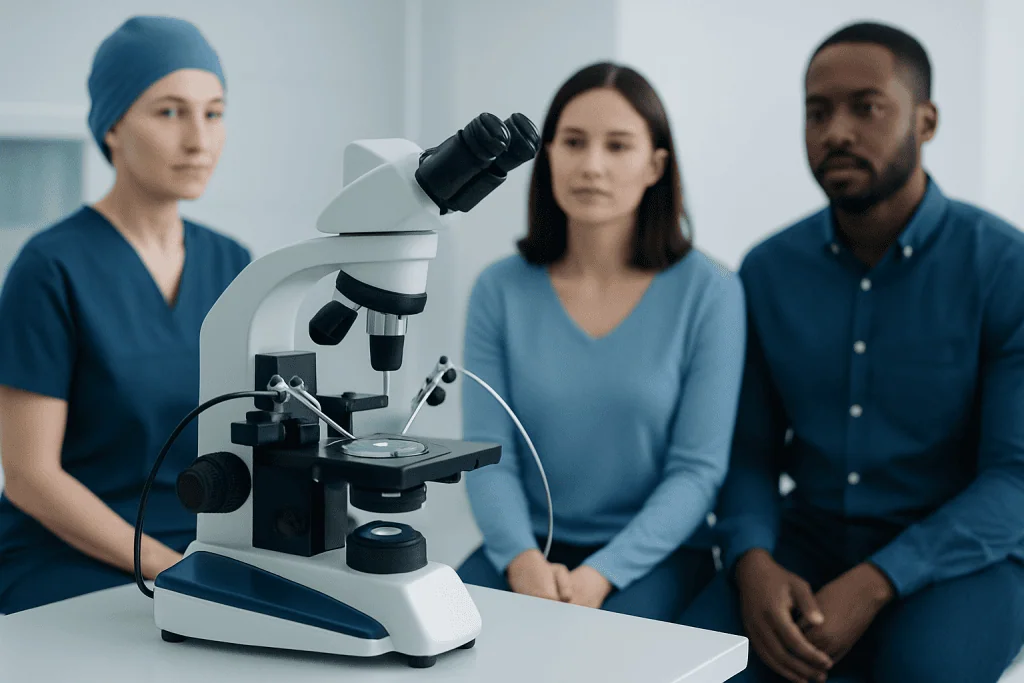
IVF with donor sperm may be recommended when pregnancy is not possible or is less likely with a partner’s sperm. Common reasons include azoospermia, severe sperm abnormalities, previous vasectomy without available sperm retrieval, failed fertilization in prior cycles, or a known genetic disorder in the male partner. In some cases, donor sperm is chosen after careful discussion of risks, alternatives, and personal preferences.
It is also an important option for people building families outside a heterosexual partnership. Single women and same-sex female couples may use donor sperm with IVF when there is a need to improve timing, increase pregnancy chances, or address female fertility factors at the same time. For example, if a patient also has ovulation problems related to polycystic ovary syndrome or reduced ovarian reserve, IVF may be more suitable than simpler methods.
Some patients pursue IVF with donor sperm because of additional reproductive conditions that affect implantation or miscarriage risk. Issues such as uterine septum, endometrial abnormalities, or a history of recurrent pregnancy loss may need evaluation before treatment begins. In these situations, donor sperm is only one part of the overall fertility plan.
How Treatment Is Planned

Planning begins with a detailed fertility consultation. The team usually reviews age, medical history, menstrual cycles, past pregnancies, prior fertility treatment, medications, and lifestyle factors. Blood tests may check hormone levels and ovarian reserve, while ultrasound helps assess the ovaries and uterus. Depending on the situation, additional imaging or procedures may be advised to look for conditions such as fibroids, polyps, or tubal disease.
The donor selection process is another major step. Donors are generally screened for infectious diseases, family history, and selected genetic conditions according to local regulations and clinic protocols. Patients may choose an anonymous or identity-release donor where legally available, and they may consider blood group, physical characteristics, educational information, and personal values. The clinic also checks that the donor sperm sample meets laboratory standards for use in treatment.
Doctors then create an individualized treatment plan. This includes deciding whether to use a natural or medicated cycle, how the ovaries will be stimulated, when eggs will be collected, and whether fertilization should be performed with conventional IVF or ICSI. If there are broader female fertility issues, these are managed as part of female infertility care. Counseling is often recommended so patients can discuss legal, emotional, and future family communication questions before treatment starts.
The IVF Process With Donor Sperm
In a typical IVF cycle, the ovaries are stimulated with medication so that several eggs can mature at the same time. During this period, the clinic monitors follicle growth with ultrasound and blood tests. When the eggs are ready, a minor procedure called egg retrieval is performed to collect them from the ovaries.
In the laboratory, the donor sperm sample is thawed and prepared. The eggs are then fertilized either by placing sperm around the eggs in a culture dish or by injecting a single sperm into each mature egg if ICSI is being used. Fertilized eggs are monitored as they develop into embryos over several days.
One embryo, or sometimes more depending on medical guidance and local practice, is transferred to the uterus at the most appropriate stage. Any additional good-quality embryos may be frozen for future use. About 10 to 14 days later, a blood test is usually performed to check for pregnancy. Even when donor sperm is used, the factors that most often influence success are egg quality, embryo development, uterine health, and the age of the person providing the eggs.
Success Rates, Benefits, and Limitations
IVF with donor sperm can offer a good chance of pregnancy, especially when the donor sperm has been carefully screened and the person undergoing treatment has favorable reproductive health. In many cases, donor sperm avoids sperm-related problems that may have reduced the chances of fertilization before. This can make treatment more efficient for some couples and individuals.
However, success is never guaranteed. Age remains one of the strongest influences on outcome, particularly because egg quality declines over time. Ovarian reserve, embryo quality, uterine conditions, and general health also play important roles. If a patient has conditions such as premature ovarian insufficiency or severe endometriosis, the treatment plan may need to be adjusted.
There are also emotional and practical considerations. Patients may need time to think about donor anonymity, future disclosure to a child, the number of families created from one donor where regulated, and storage of embryos for later use. These questions are normal and often benefit from counseling with fertility specialists and mental health professionals experienced in donor conception.
Safety, Risks, and Emotional Considerations
IVF with donor sperm is generally considered safe when carried out in a licensed fertility center. Donor screening reduces the chance of infectious disease transmission and may lower the risk of certain inherited conditions, although no testing can remove all risk completely. Patients should ask how donors are screened, what genetic testing is included, and what local laws say about donor records and consent.
The medical risks are mostly those associated with IVF itself rather than the donor sperm. These may include side effects from ovarian stimulation, ovarian hyperstimulation syndrome in some patients, discomfort after egg retrieval, and the possibility of multiple pregnancy if more than one embryo is transferred. There is also a risk that the cycle may not lead to usable embryos or pregnancy.
Emotional support is an important part of safe care. Patients may experience hope, uncertainty, grief related to infertility, or mixed feelings about using donor gametes. Open discussion with the care team, a counselor, and trusted family members can help. Near the end of treatment planning, some patients also discuss pregnancy care and future monitoring needs, especially if they have medical conditions that could affect pregnancy.
Preparing for Treatment and When to Seek Specialist Advice
Before starting treatment, patients are often advised to optimize general health. Helpful steps may include stopping smoking, limiting alcohol, maintaining a healthy weight, managing chronic conditions, taking folic acid if recommended, and reviewing medications with a doctor. Good preparation supports both conception and a healthy pregnancy.
Specialist advice is appropriate for anyone who is considering donor conception and wants to understand the options clearly. It is especially important to seek a fertility evaluation if pregnancy has not occurred after trying for an expected length of time, if menstrual cycles are irregular, if there is a known sperm problem, or if there is a history of pelvic infection, surgery, miscarriage, or inherited disease. Early assessment may prevent delays and clarify whether IVF, insemination, or another approach is more suitable.
Patients who want coordinated care may benefit from a multidisciplinary fertility center. Acibadem International’s multidisciplinary specialists and JCI-accredited hospitals diagnose and treat fertility conditions for international patients, including donor-sperm treatment planning where legally appropriate. The best next step is a consultation with a qualified fertility specialist who can explain options, tests, timelines, and likely outcomes for the individual situation.
Frequently asked questions
Is IVF with donor sperm the same as insemination with donor sperm?
No. In insemination, donor sperm is placed into the reproductive tract around ovulation, while in IVF, eggs are collected and fertilized in the laboratory before an embryo is transferred. IVF is usually chosen when there are additional fertility factors or when a higher level of treatment is needed.
Who is a good candidate for IVF with donor sperm?
Good candidates include single women, same-sex female couples, and couples affected by severe male infertility or genetic concerns related to the male partner. It may also help when previous treatment with partner sperm has not worked. A fertility specialist can decide whether IVF is the best option after testing.
How is donor sperm screened?
Donor sperm is usually screened under clinic and legal requirements that may include infectious disease testing, medical history review, family history assessment, and selected genetic screening. The laboratory also checks sample quality for treatment use. Exact screening protocols can vary by country and clinic.
Does using donor sperm improve IVF success?
It can improve the chances of fertilization when sperm-related problems are the main barrier. However, overall IVF success still depends heavily on egg quality, age, embryo development, and uterine health. Donor sperm does not remove all reasons why IVF may be unsuccessful.
Can embryos from donor sperm be frozen for future pregnancy attempts?
Yes. If more than one good-quality embryo develops, extra embryos may be frozen for later use. This can make future attempts simpler and may reduce the need to repeat all parts of a new stimulation cycle.
Do patients need counseling before using donor sperm?
Counseling is often strongly recommended and may be required in some settings. It can help patients think through legal, ethical, and emotional questions, including how and when to discuss donor conception with a future child. Many people find this support helpful before, during, and after treatment.
References
- World Health Organization
- American Society for Reproductive Medicine
- European Society of Human Reproduction and Embryology
- Centers for Disease Control and Prevention
- National Institute for Health and Care Excellence
This article is for general information only and is not a substitute for professional medical advice. Please consult a qualified doctor about your individual situation.
IVF & fertility treatment in Turkey — success rates and costs
JCI-accredited · board-certified surgeons · reply within 24h
Add us as a Preferred Source to see more of our trusted health content across Google Search, AI Overviews and Discover.
Check your numbers in seconds
BMI, calories, due date, blood pressure and 30+ more clinical calculators — free, instant, doctor-reviewed ranges.

Related Treatments
Related Conditions
More from the Health Library



Related Specialists

Prof. Dr. Mehmet Cihat Ünlü
Gynecology & Obstetrics
Prof. Dr. Mete Güngör
Gynecology & Obstetrics
Prof. Dr. Bülent Tıraş
Gynecology & Obstetrics
Prof. Dr. Tansu Küçük
Gynecology & Obstetrics