IVF With Donor Sperm: Who May Consider It and How Treatment Works

IVF with donor sperm may be considered by single women, same-sex female couples, and couples with severe male-factor infertility or genetic concerns. Donor sperm is typically obtained from screened sperm banks or approved donors under local legal and medical regulations.
Key Takeaways
- IVF with donor sperm may be considered by single women, same-sex female couples, and couples with severe male-factor infertility or genetic concerns.
- Donor sperm is typically obtained from screened sperm banks or approved donors under local legal and medical regulations.
- The IVF process includes fertility assessment, ovarian stimulation, egg retrieval, fertilization in the lab, and embryo transfer.
- Counseling, legal guidance, and discussion of donor anonymity or identity-release options are important parts of planning.
- Success depends on several factors, especially age, egg quality, uterine health, and the overall fertility diagnosis.
IVF with donor sperm is a fertility option for people who cannot use a partner’s sperm or choose donor conception to build a family. Treatment follows the usual IVF steps, with careful medical screening, counseling, and donor selection to support informed, safe care.
Overview
IVF with donor sperm is a type of assisted reproduction in which eggs are fertilized using sperm from a donor rather than from a current male partner. It can help people conceive when sperm is unavailable, when there is a significant male fertility problem, or when there is concern about passing on a serious inherited condition. For many patients, this pathway offers a practical and carefully regulated way to build a family.
In vitro fertilization, or IVF treatment, means that eggs are collected from the ovaries and combined with sperm in a laboratory. If fertilization occurs, one or more embryos may later be transferred to the uterus. Donor sperm may also be used in intrauterine insemination in some cases, but IVF may be preferred when there are additional fertility factors, previous unsuccessful treatments, or a need for embryo testing.
The decision to use donor sperm is both medical and personal. It often involves questions about emotional readiness, future family conversations, privacy, and legal rules that vary by country. A fertility team usually helps patients understand each step so that treatment decisions feel informed and supported.
Who May Consider IVF With Donor Sperm
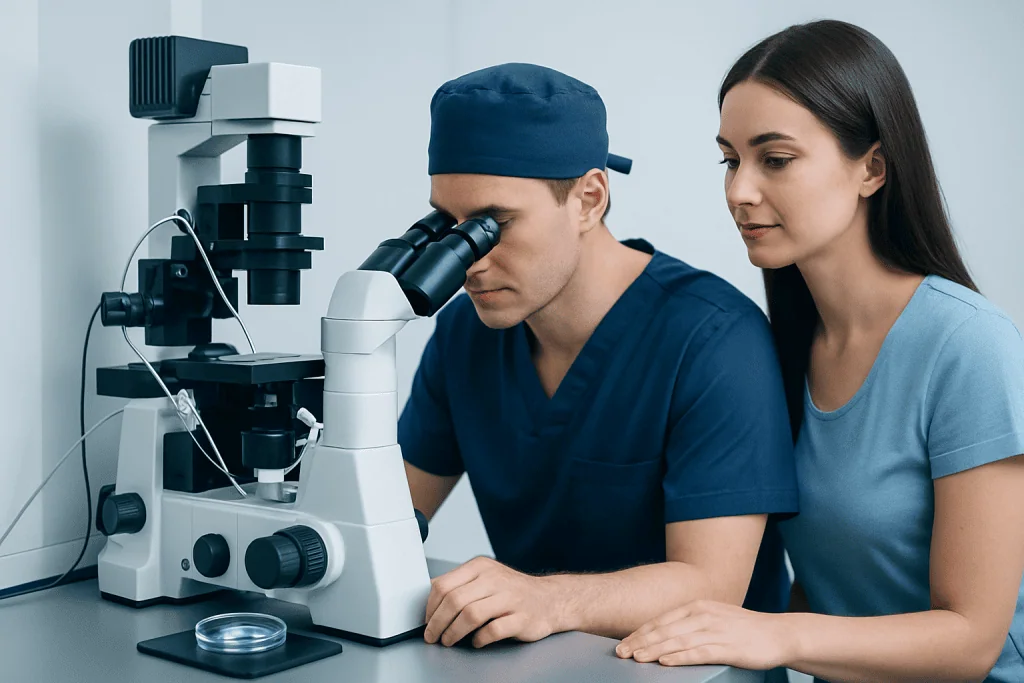
IVF with donor sperm may be considered by several groups of patients. This includes single women who wish to conceive, female same-sex couples, and heterosexual couples in which a male partner has no usable sperm or has a condition that makes donor sperm the safest option. It may also be relevant when previous fertility treatment using partner sperm has not resulted in pregnancy.
Medical reasons can include severe male-factor infertility, such as very low sperm count, absent sperm production, or poor sperm quality that greatly limits the chance of fertilization. Some patients pursue donor sperm after vasectomy when sperm retrieval is not possible or not desired, or after cancer treatment that affected fertility. In other situations, the concern is not sperm quantity but the risk of passing on a serious genetic disorder.
IVF may also be recommended when there are additional female fertility issues that need treatment at the same time. For example, ovulation problems, female infertility factors, or age-related decline in egg quality may make IVF more suitable than insemination alone. Conditions such as premature ovarian insufficiency or structural uterine concerns can also affect the treatment plan and should be assessed early.
Not everyone using donor sperm needs IVF. Some patients have no fertility problems apart from lacking sperm access, and they may first be offered insemination. The most suitable treatment depends on age, ovarian reserve, fallopian tube status, previous pregnancies, and the reason donor sperm is being used.
Donor Selection, Screening, and Counseling

Donor sperm is usually obtained through regulated sperm banks or approved donation programs. Donors are commonly screened for infectious diseases, relevant medical history, and selected genetic conditions according to local standards. Programs may also review family history, physical traits, blood group, and in some settings psychological background, although exact practices vary by clinic and country.
Patients are often asked to think carefully about what matters most in donor selection. Some prefer anonymous donation where permitted, while others choose identity-release donors, meaning the child may be able to access identifying information at a certain age under local law. Matching for blood type, ethnicity, or general physical characteristics may be possible, but it is usually discussed as a personal preference rather than a medical necessity.
Counseling is an important part of treatment. It can help patients reflect on disclosure to future children, communication with partners or family members, and expectations around parenthood. Counseling may be especially valuable when donor conception follows difficult infertility experiences, including long-standing infertility or previous pregnancy losses such as recurrent pregnancy loss.
Legal aspects should also be reviewed before treatment starts. Rules can differ on donor anonymity, parental rights, the number of families created from one donor, and whether imported donor sperm is allowed. A fertility clinic can explain the requirements in the country where treatment takes place, but patients may also need independent legal advice.
How the IVF Process Works
The IVF process usually starts with a fertility evaluation. This may include blood tests to check ovarian reserve and hormone levels, pelvic ultrasound, and a review of menstrual history and general health. The uterus may be examined to look for issues that could affect implantation, such as fibroids, endometrial polyps, or a uterine septum. Treatment planning is then personalized based on the patient’s age, diagnosis, and reproductive goals.
Most IVF cycles involve ovarian stimulation with hormone medicines so that multiple eggs mature in one cycle. During this phase, the clinic monitors follicle growth with ultrasound and sometimes blood tests. When the eggs are ready, a short procedure called egg retrieval is performed. The eggs are then combined with donor sperm in the laboratory, and in some cases a single sperm is injected directly into an egg using ICSI if the embryology team believes it will improve fertilization or if laboratory circumstances make it appropriate.
Embryos are observed in the lab for several days as they develop. The team then selects an embryo for transfer into the uterus, either in the same cycle or after freezing for a later cycle. Some patients may also discuss preimplantation genetic testing, depending on age, reproductive history, or known medical concerns. A pregnancy test is usually done about two weeks after embryo transfer.
If pregnancy occurs, early ultrasound confirms that the embryo implanted inside the uterus and helps rule out complications such as ectopic pregnancy. Although IVF can be highly effective for some patients, outcomes vary and more than one cycle may be needed. The fertility team can explain what is realistic for the individual situation.
Benefits, Limitations, and Success Factors
One of the main benefits of IVF with donor sperm is that it can make pregnancy possible when there is no safe or available way to use partner sperm. It also allows close control in the laboratory, which can be helpful when there are additional fertility concerns. For patients who need embryo freezing, genetic testing, or coordinated timing, IVF may offer more flexibility than simpler treatments.
At the same time, IVF is more complex, time-intensive, and costly than insemination. It involves injections, frequent monitoring, a minor egg retrieval procedure, and emotional ups and downs while waiting for results. Even when donor sperm quality is good, pregnancy is never guaranteed because success depends on many factors beyond the sperm sample itself.
The most important success factors often include the age of the person providing the eggs, egg and embryo quality, uterine health, and any underlying fertility diagnosis. Conditions affecting ovulation or ovarian reserve, including polycystic ovary syndrome or reduced ovarian function, may influence the approach. Lifestyle factors such as smoking, significant alcohol use, unmanaged chronic illness, and obesity can also affect outcomes.
For some patients, donor eggs or additional treatment options may eventually be discussed if repeated IVF cycles do not succeed. This does not mean earlier treatment was inappropriate; it reflects the individualized nature of fertility care. Regular, open discussion with the fertility team helps patients understand next steps and maintain realistic expectations.
Preparation, Self-care, and Emotional Considerations
Preparing for IVF with donor sperm usually involves optimizing general health before treatment begins. Patients are commonly advised to stop smoking, limit alcohol, aim for a healthy body weight, sleep well, and manage chronic conditions such as thyroid disease or diabetes with their doctor. Taking folic acid before conception is also routinely recommended for many people trying to become pregnant.
Practical preparation matters too. IVF involves appointments, injections, medication schedules, and periods of uncertainty, so it can help to plan work leave, transportation, and emotional support in advance. Some patients find it useful to keep written questions for clinic visits, especially around donor selection, embryo freezing, or the number of embryos recommended for transfer.
Emotional responses to donor conception vary widely. Some people feel relief and hope, while others experience grief related to infertility or the loss of a genetic link for one partner. These feelings can exist at the same time. Speaking with a fertility counselor or mental health professional can help patients process these emotions and prepare for future conversations with children about their origins.
Good self-care also means recognizing limits. It is reasonable to ask the clinic about treatment timing, whether a break between cycles is sensible, and what support services are available. Patients who travel for care may wish to choose centers with coordinated multidisciplinary services; near the end of the treatment journey, some international patients consider Acibadem International, where multidisciplinary specialists in JCI-accredited hospitals diagnose and treat fertility conditions.
When to See a Fertility Specialist
It is a good idea to see a fertility specialist before starting donor sperm treatment rather than making assumptions about which method will be best. Even when the main issue is sperm access, a basic fertility evaluation can identify factors that influence whether insemination or IVF is more appropriate. Early assessment is especially important for patients over 35, those with irregular periods, prior pelvic infections, endometriosis, or previous reproductive surgery.
Medical review is also important if there is a history of miscarriage, known uterine abnormalities, chronic health conditions, or symptoms such as severe pelvic pain or very heavy menstrual bleeding. These issues may not prevent pregnancy, but they can affect planning and success. Prompt evaluation may reduce delays and help avoid treatments that are less likely to work.
Patients should seek medical advice right away during treatment or early pregnancy if they develop severe abdominal pain, heavy bleeding, fainting, fever, or symptoms of ovarian hyperstimulation such as rapid swelling and shortness of breath. These problems are not common, but they need urgent assessment. Routine follow-up after embryo transfer is also important so the clinic can confirm pregnancy location and early development.
Because fertility care involves medical, emotional, and legal considerations, specialist guidance can make the process clearer and more manageable. A reproductive endocrinologist, embryologist, counselor, and where needed a genetics professional can work together to help patients move forward with confidence and realistic expectations.
Frequently asked questions
Is IVF with donor sperm the same as insemination with donor sperm?
No. In insemination, donor sperm is placed into the reproductive tract around ovulation, while in IVF eggs are collected and fertilized in the laboratory before embryo transfer. IVF is usually chosen when there are additional fertility factors, previous unsuccessful treatment cycles, or a need for more laboratory control.
Who may be offered donor sperm IVF?
It may be offered to single women, female same-sex couples, and couples with severe male-factor infertility or genetic concerns linked to the male partner. It can also be considered when using partner sperm is not possible or has not led to pregnancy despite treatment.
How is donor sperm screened?
Donor sperm is generally sourced from regulated programs that screen donors for infectious diseases, medical history, and selected genetic conditions according to local rules. The exact screening panel and donor eligibility criteria can vary by country and clinic.
Can a child conceived with donor sperm be healthy?
Yes, many children conceived with donor sperm are healthy. As with any pregnancy, health depends on many factors, including the health of the person carrying the pregnancy, egg quality, prenatal care, and chance events that can occur in all pregnancies.
Does IVF with donor sperm have a higher success rate?
Success can be favorable when donor sperm quality is good, but it still depends mostly on the age and reproductive health of the person providing the eggs and carrying the pregnancy. The condition of the uterus, embryo quality, and any underlying fertility diagnosis also matter.
Will patients need counseling before using donor sperm?
Many clinics recommend or require counseling because donor conception can raise emotional, ethical, and legal questions. Counseling can help patients think about donor choice, future disclosure to children, and how to manage stress during treatment.
This article is for general information only and is not a substitute for professional medical advice. Please consult a qualified doctor about your individual situation.
IVF & fertility treatment in Turkey — success rates and costs
JCI-accredited · board-certified surgeons · reply within 24h
Add us as a Preferred Source to see more of our trusted health content across Google Search, AI Overviews and Discover.
Check your numbers in seconds
BMI, calories, due date, blood pressure and 30+ more clinical calculators — free, instant, doctor-reviewed ranges.

Related Treatments
Related Conditions
More from the Health Library

Unexplained Infertility and IVF: When Treatment May Be Recommended

Intrauterine Insemination: IUI Candidates, Process, and Outcomes

IVF With Adenomyosis: How It Can Affect Fertility Treatment

When Is IVF a Good Next Step After Failed IUI?

Egg Freezing Before IVF: Who May Benefit and What to Expect

IVF Cost in Turkey: What Affects the Price and What May Be Included
Gynecology & Obstetrics Specialists at Acibadem

Dr. Cem Öncüloğlu
Gynecology & Obstetrics
Dr. Cemile Alçay
Gynecology & Obstetrics
Assoc. Prof. Dr. Ceren Yıldız Eren
Gynecology & Obstetrics
Prof. Dr. Çetin Kılıççı
Gynecology & Obstetrics