Low Ovarian Reserve: AMH, Egg Count, and Fertility Planning

Low ovarian reserve mainly describes egg quantity, not a definite diagnosis of infertility. AMH and antral follicle count help estimate how the ovaries may respond to fertility treatment.
Key Takeaways
- Low ovarian reserve mainly describes egg quantity, not a definite diagnosis of infertility.
- AMH and antral follicle count help estimate how the ovaries may respond to fertility treatment.
- Age remains one of the most important factors because egg quality changes over time.
- Some people with low ovarian reserve can conceive naturally, while others may benefit from earlier fertility specialist care.
- Treatment planning may include timed intercourse, ovulation induction, IVF, fertility preservation, or donor eggs depending on individual goals.
Low ovarian reserve means the ovaries may have fewer eggs than expected for a person’s age, but it does not always mean pregnancy is impossible. AMH blood testing, antral follicle count ultrasound, age, and medical history help doctors guide realistic fertility planning.
Overview
Low ovarian reserve, also called diminished ovarian reserve, means the ovaries are thought to contain a lower number of remaining eggs than expected for a person’s age. Ovarian reserve naturally declines over time, but in some people this decline appears earlier or is identified when they are trying to conceive. The condition is usually assessed through blood tests and ultrasound rather than by symptoms alone.
It is important to understand what ovarian reserve testing can and cannot show. These tests estimate egg quantity and how the ovaries may respond to medications used in fertility treatment. They do not directly measure whether a person can conceive in a specific month, and they do not fully measure egg quality. Egg quality is closely related to age, which is why age and ovarian reserve results are interpreted together.
A diagnosis of low ovarian reserve can feel emotionally difficult, especially for someone planning a family. However, it is not the same as having no eggs, and it does not automatically mean that pregnancy cannot happen. The result is best used as a planning tool, helping a fertility specialist recommend the most appropriate timing, tests, and treatment options.
AMH, Egg Count, and What the Tests Mean

Anti-Müllerian hormone, or AMH, is a hormone produced by small developing follicles in the ovaries. Because these follicles reflect the pool of eggs that may be available for growth, AMH is commonly used as a marker of ovarian reserve. A lower AMH level may suggest a lower number of remaining follicles, while a higher AMH level may be seen in people with a larger follicle pool, including some people with polycystic ovary syndrome.
Antral follicle count, often called AFC, is an ultrasound measurement of the small follicles visible in the ovaries at the beginning of a menstrual cycle. This is sometimes described as an “egg count,” although it is not a count of all eggs in the ovaries. Instead, it shows how many small follicles are visible and potentially responsive during that cycle. AMH and AFC often provide complementary information.
Other tests may include follicle-stimulating hormone, known as FSH, and estradiol measured early in the menstrual cycle. These results can help doctors understand how hard the brain is working to stimulate the ovaries. Because hormone values vary between laboratories and may be influenced by cycle timing, contraception, recent pregnancy, or medical treatment, results should be reviewed with a qualified clinician rather than interpreted in isolation.
Symptoms and How Low Ovarian Reserve Is Found
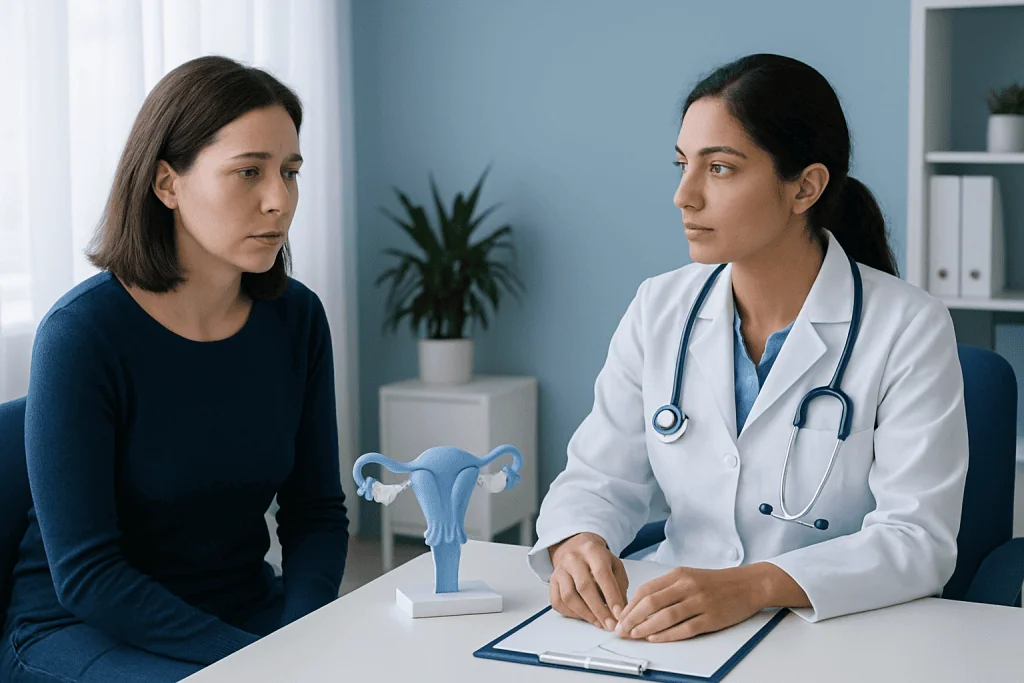
Many people with low ovarian reserve have no clear symptoms. Menstrual periods may still be regular, ovulation may still occur, and overall health may feel unchanged. For this reason, the condition is often discovered during fertility evaluation, before IVF, after difficulty conceiving, or when someone requests information about future fertility planning.
Some people may notice changes in the menstrual cycle, such as shorter cycles, lighter bleeding, or skipped periods. These changes can happen for many reasons and do not always mean low ovarian reserve. They may also be related to stress, thyroid disease, high prolactin, weight changes, perimenopause, or other hormonal conditions.
Low ovarian reserve may also be considered when a person has fewer eggs collected than expected during IVF stimulation, or when the ovaries respond less strongly to fertility medications. In these situations, the information helps specialists adjust treatment plans and discuss realistic chances using the patient’s own eggs.
Causes and Risk Factors
Age is the most common reason ovarian reserve declines. People are born with a finite number of eggs, and that number gradually decreases throughout life. The decline becomes more noticeable in the later reproductive years, and egg quality also changes with age. This is why two people with similar AMH values may have different fertility outlooks depending on their age.
Low ovarian reserve can also occur earlier because of medical, genetic, or environmental factors. Sometimes no clear cause is found. A careful medical history helps the doctor identify possible contributors and decide whether additional testing is useful.
- Previous ovarian surgery, especially removal of ovarian cysts or endometriosis-related surgery
- Endometriosis or significant pelvic inflammatory disease
- Chemotherapy, radiation therapy, or certain medications that can affect the ovaries
- Family history of early menopause or premature ovarian insufficiency
- Genetic conditions or chromosome-related differences
- Smoking and some environmental exposures
- Autoimmune conditions affecting ovarian function
Having a risk factor does not mean low ovarian reserve will definitely occur. It simply means earlier fertility counseling may be helpful, especially for people who want children in the future but are not ready to try to conceive now.
Diagnosis and Fertility Assessment
Diagnosis begins with a detailed discussion of age, menstrual pattern, pregnancy history, previous surgeries, medical treatments, family history, and reproductive goals. The clinician may ask how long the person has been trying to conceive, whether ovulation is regular, and whether there have been previous miscarriages or fertility treatments. A complete fertility assessment often includes both partners when applicable.
Blood tests commonly include AMH, early-cycle FSH and estradiol, thyroid-stimulating hormone, and prolactin when clinically indicated. A transvaginal ultrasound is usually used to assess antral follicle count and to look for conditions such as fibroids, ovarian cysts, or endometriosis-related cysts. In some cases, tests for fallopian tube openness or semen analysis are also important because ovarian reserve is only one part of fertility.
Results are interpreted as a pattern rather than a single number. For example, a low AMH with a low AFC may support the diagnosis of diminished ovarian reserve, while conflicting results may need repeat testing or review of timing and medications. The goal is not only to label the condition, but to guide decisions such as whether to continue trying naturally, move sooner to treatment, freeze eggs or embryos, or consider other family-building options.
Treatment Options and Fertility Planning
Treatment depends on age, test results, how long pregnancy has been attempted, whether there is a partner or sperm source, and personal preferences. Some people with low ovarian reserve may still try naturally for a limited period, especially if they are younger, ovulating regularly, and there are no other fertility factors. Doctors may recommend timing intercourse around ovulation and avoiding unnecessary delays.
For others, fertility treatment may be considered sooner. Options can include ovulation induction or ovarian stimulation with intrauterine insemination in selected cases, although these approaches may be less helpful when egg numbers are very low or age-related egg quality is a major concern. IVF is often discussed because it allows the ovaries to be stimulated, eggs to be retrieved, and embryos to be created and assessed in a laboratory setting.
In IVF, people with low ovarian reserve may produce fewer eggs than expected, and more than one treatment cycle may sometimes be discussed. Protocols can be individualized, but no medication can create new eggs. Treatment aims to use the available follicles as effectively and safely as possible. For some patients, embryo freezing or egg freezing may be considered, especially when pregnancy is planned later or before medical treatments that may affect the ovaries.
If the chance of pregnancy with one’s own eggs is very low, donor eggs may be discussed as an option. This is a personal decision that involves medical, emotional, ethical, legal, and sometimes cultural considerations. A good fertility consultation should provide clear information, time for questions, and support for the patient’s values and goals.
Prevention and Self-care
Not all causes of low ovarian reserve can be prevented, and there is no proven lifestyle change that can restore the number of eggs in the ovaries. However, general health habits can support fertility and help prepare the body for pregnancy or fertility treatment. Stopping smoking is especially important because smoking is associated with earlier ovarian aging and lower fertility.
A balanced diet, regular physical activity, adequate sleep, and management of chronic conditions such as thyroid disease, diabetes, or autoimmune illness may support overall reproductive health. People should avoid starting supplements, hormones, or alternative treatments without medical advice, especially during fertility treatment, because some products can interfere with medications or medical conditions.
Fertility planning is also a form of self-care. People who know they want children later, have a family history of early menopause, have endometriosis, or are facing chemotherapy or pelvic radiation should ask about fertility preservation early. Earlier counseling often gives patients more options and more time to make decisions.
When to See a Doctor
A medical consultation is recommended if a person has been trying to conceive for 12 months without pregnancy before age 35, or for 6 months at age 35 or older. Earlier evaluation is also appropriate after age 40, with irregular or absent periods, known endometriosis, previous ovarian surgery, repeated miscarriage, or a history of cancer treatment. People who are not currently trying to conceive but are concerned about future fertility can also seek counseling.
Urgent or prompt medical review may be needed if periods stop unexpectedly, if there are symptoms of early menopause such as hot flashes with missed periods, or if pelvic pain suggests an ovarian cyst or endometriosis. These symptoms do not always indicate low ovarian reserve, but they deserve proper evaluation.
International patients may choose centers with coordinated fertility, gynecology, genetics, embryology, and counseling services. Acibadem International’s multidisciplinary specialists and JCI-accredited hospitals diagnose and treat low ovarian reserve and related fertility concerns for international patients, with individualized assessment and care planning. Patients should discuss their results and options with a qualified fertility specialist before making treatment decisions.
Frequently asked questions
Does low AMH mean a person cannot get pregnant?
No. Low AMH suggests a lower number of remaining follicles, but it does not prove that pregnancy cannot happen. Some people with low AMH conceive naturally, especially if they are younger and ovulate regularly. A fertility specialist can interpret AMH together with age, ultrasound findings, and other fertility factors.
Is antral follicle count the same as the total number of eggs left?
No. Antral follicle count shows the small follicles visible on ultrasound during a particular cycle. It is an estimate of ovarian response, not a count of every egg remaining in the ovaries. It is useful when combined with AMH and clinical history.
Can low ovarian reserve be improved with supplements?
No supplement has been proven to restore ovarian reserve or create new eggs. Some supplements may be discussed in fertility care, but they should be used only with medical guidance. The most important step is timely evaluation and a plan suited to the patient’s age and goals.
Can IVF help with low ovarian reserve?
IVF may help some people with low ovarian reserve by stimulating available follicles and retrieving eggs for fertilization. However, the number of eggs collected may be lower, and success depends strongly on age, egg quality, sperm factors, and embryo development. A specialist can explain realistic expectations and possible protocols.
Should someone freeze eggs if they have low ovarian reserve?
Egg freezing may be considered, but the decision depends on age, AMH, antral follicle count, personal goals, and how many eggs are likely to be collected. People with low ovarian reserve may need individualized counseling because fewer eggs may be available in each cycle. Embryo freezing may also be discussed if there is a sperm source.
How often should AMH be repeated?
AMH usually does not need frequent repetition unless there is a specific clinical reason or previous results are unclear. Values can vary between laboratories and may be affected by some medications or recent reproductive events. A doctor can advise whether repeating the test would change management.
This article is for general information only and is not a substitute for professional medical advice. Please consult a qualified doctor about your individual situation.
Hair transplant in Turkey — costs, graft counts & a free assessment
JCI-accredited · board-certified surgeons · reply within 24h
Add us as a Preferred Source to see more of our trusted health content across Google Search, AI Overviews and Discover.
Check your numbers in seconds
BMI, calories, due date, blood pressure and 30+ more clinical calculators — free, instant, doctor-reviewed ranges.

Related Treatments
Related Conditions
More from the Health Library

IVF With Donor Sperm: Who May Benefit and How It Works

Infertility in Women: Common Causes and How It Is Diagnosed

IVF With Donor Eggs: Candidates, Process, and Success Factors

Adenomyosis and IVF: Implantation Challenges and Treatment Options

IVF With Blocked Sperm Retrieval: TESE, ICSI, and Treatment Planning

What Is Fertilization? How Egg and Sperm Join to Start Pregnancy
Gynecology & Obstetrics Specialists at Acibadem

Assoc. Prof. Dr. Arzu Yurci
Gynecology & Obstetrics
Dr. Asmar Hasanova
Gynecology & Obstetrics
Dr. Ayberk Çakır
Gynecology & Obstetrics
Dr. Ayfer Pepekal Kükrer
Gynecology & Obstetrics