Lumbar Puncture for Brain and Nerve Infections: What Results Show

Lumbar puncture collects a small sample of cerebrospinal fluid, the clear fluid surrounding the brain and spinal cord. Results often include opening pressure, white blood cell count, protein, glucose, culture, Gram stain, and molecular tests such as PCR.
Key Takeaways
- Lumbar puncture collects a small sample of cerebrospinal fluid, the clear fluid surrounding the brain and spinal cord.
- Results often include opening pressure, white blood cell count, protein, glucose, culture, Gram stain, and molecular tests such as PCR.
- Different infection types can create different cerebrospinal fluid patterns, but results must always be interpreted with symptoms, examination findings, and imaging when needed.
- Doctors may delay or avoid lumbar puncture in selected patients until brain imaging or blood-clotting checks confirm it is safe.
- After the procedure, mild back soreness or headache can occur; urgent medical advice is needed for severe or persistent symptoms.
A lumbar puncture, also called a spinal tap, helps doctors examine cerebrospinal fluid for signs of infection, inflammation, and pressure changes around the brain, spinal cord, and nerves. The results can support a diagnosis such as meningitis, encephalitis, or certain nerve root infections and help guide the safest treatment plan.
Overview: Why Lumbar Puncture Is Used
A lumbar puncture is a diagnostic procedure in which a doctor places a thin needle into the lower back to collect cerebrospinal fluid, often shortened to CSF. CSF is the clear fluid that cushions the brain and spinal cord. Because it circulates around the central nervous system, it can provide important clues when doctors suspect infections involving the brain, meninges, spinal cord, nerve roots, or nearby structures.
The test is commonly used when meningitis or encephalitis is being considered. Meningitis is inflammation of the protective membranes around the brain and spinal cord, while encephalitis is inflammation of the brain tissue itself. Lumbar puncture may also help evaluate infections that affect nerve roots, such as certain viral, bacterial, tuberculosis-related, fungal, or tick-borne infections. In some patients, it is part of a broader neuroinfectious diseases evaluation.
The goal is not only to confirm whether an infection is present, but also to understand what type of infection is most likely. This matters because bacterial, viral, fungal, and tuberculosis-related infections may require different treatments and different levels of monitoring. In urgent situations, treatment may begin before all results are available, while laboratory testing continues to refine the diagnosis.
When Doctors Recommend the Test
A lumbar puncture may be recommended when symptoms and examination findings suggest a possible infection of the central nervous system. These symptoms can overlap with other conditions, so the decision is based on the full clinical picture, not a single symptom. Doctors also consider age, immune system health, recent travel, vaccination history, medications, and exposure to infections.
Symptoms that may lead to lumbar puncture include fever with severe headache, neck stiffness, confusion, unusual sleepiness, seizures, light sensitivity, persistent vomiting, weakness, numbness, balance problems, or a sudden change in behavior. In babies and young children, signs may be less specific, such as poor feeding, irritability, a bulging soft spot, reduced alertness, or a high-pitched cry. Children with suspected nervous system infections are often assessed by specialists in neuropediatrics or pediatric neurology.
Sometimes, lumbar puncture is done after other tests, such as blood tests or brain imaging, especially if there are warning signs that require extra safety checks. In other cases, the need for CSF testing is urgent, and doctors may perform it promptly while also starting treatment. The exact timing depends on the suspected diagnosis, the patient’s stability, and whether there are factors that could make the procedure unsafe.
How the Procedure Is Performed and Safety Checks

Before a lumbar puncture, the medical team reviews the patient’s symptoms, medications, allergies, bleeding risk, and recent imaging if available. Blood tests may be used to check platelet count or clotting status, especially in patients taking blood thinners or those with liver disease or blood disorders. The puncture is performed low in the back, below the usual end of the spinal cord, which helps reduce the risk of direct spinal cord injury.
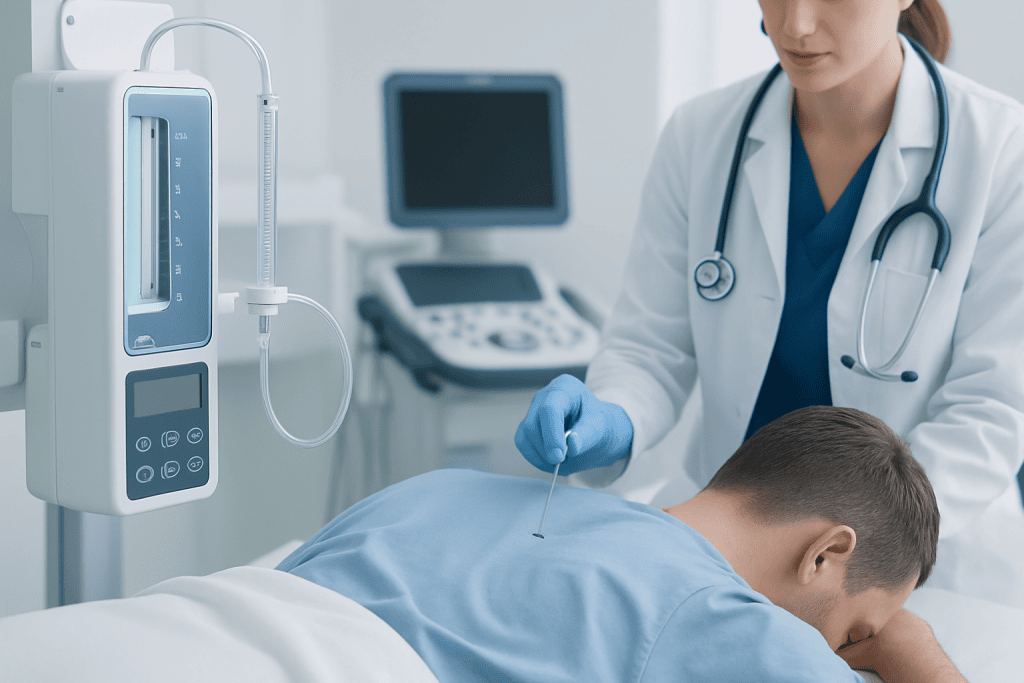
During the procedure, the patient usually lies on the side with knees drawn up or sits leaning forward. The skin is cleaned carefully, and local anesthetic is used to numb the area. A thin needle is then guided between the bones of the lower spine into the CSF space. The doctor may measure the opening pressure, collect several small tubes of fluid for laboratory testing, and then remove the needle and apply a dressing.
In some situations, brain CT or MRI is needed before lumbar puncture. This is most often considered when a patient has focal neurological signs, papilledema, a new seizure, significantly reduced consciousness, known brain mass, or certain immune system risks. Imaging services such as neuroradiology assessment can help doctors decide whether lumbar puncture is safe and whether another diagnosis may explain the symptoms.
Most people tolerate the procedure well. Common after-effects include temporary lower back soreness or a post-lumbar puncture headache, which often improves with fluids, rest, and medical guidance. Serious complications are uncommon, but doctors take precautions to reduce risks such as bleeding, infection, or pressure-related problems in carefully selected patients.
What Lumbar Puncture Results Can Show
Lumbar puncture results are interpreted as a set of findings rather than a single yes-or-no answer. The first observations may include CSF appearance and opening pressure. Normal CSF is typically clear. Cloudy or turbid CSF may suggest a high number of white blood cells or microorganisms, although appearance alone is never enough for diagnosis. Opening pressure can be increased in several infections, but it may also be affected by position, anxiety, or other medical conditions.
The laboratory usually reports cell count and differential, protein, and glucose. A raised white blood cell count in CSF is called pleocytosis and suggests inflammation or infection. The type of white blood cell can be helpful: neutrophils are often more prominent in many bacterial infections, while lymphocytes are often more prominent in viral, tuberculosis-related, fungal, or partially treated infections. CSF protein may rise when the blood-brain barrier is inflamed. CSF glucose is interpreted alongside blood glucose; low CSF glucose can be a clue to bacterial, tuberculosis-related, or fungal infection.
Microbiology tests look more directly for the cause. Gram stain can sometimes identify bacteria quickly, while culture helps grow and identify organisms and guide antibiotic choice. Polymerase chain reaction, or PCR, detects genetic material from viruses and some bacteria, often more rapidly than culture. Additional tests may include cryptococcal antigen, fungal culture, acid-fast bacilli testing, tuberculosis PCR, syphilis testing, Lyme-related antibody tests, or autoimmune and inflammatory markers when infection is uncertain.
Doctors may describe results as suggestive rather than definitive, particularly early in illness or after antibiotics have already been started. A normal or near-normal first CSF result does not always exclude infection if symptoms strongly suggest it. In selected cases, repeat lumbar puncture, additional blood testing, EEG, or MRI may be needed to clarify the diagnosis.
Common CSF Patterns in Brain and Nerve Infections
Different infections can create recognizable CSF patterns, although exceptions are common. Bacterial meningitis often causes high opening pressure, many white blood cells with a neutrophil predominance, high protein, and low glucose. Gram stain or culture may identify the bacteria, but results can be negative if antibiotics were given before the sample was collected. Because bacterial meningitis can progress quickly, doctors often start antibiotics promptly when it is suspected.
Viral meningitis and encephalitis often show clear CSF, normal or moderately increased pressure, lymphocyte-predominant white blood cells, mildly increased protein, and normal glucose. PCR testing is especially important for viruses such as herpes simplex virus, varicella-zoster virus, and enteroviruses. In suspected encephalitis, CSF findings are combined with brain MRI, EEG, and neurological examination because the infection affects brain tissue as well as the fluid spaces around it.
Tuberculosis-related and fungal infections may show lymphocyte-predominant inflammation, high protein, and low glucose, sometimes with high opening pressure. These infections can be more difficult to confirm because organisms may be present in small numbers and cultures may take longer. Doctors may order larger-volume CSF studies, antigen tests, PCR tests, or repeated sampling when clinical suspicion remains high.
Infections affecting nerve roots or the spinal cord can show raised white blood cells and protein, even when symptoms are mainly weakness, numbness, pain, or bladder changes. Examples include varicella-zoster radiculitis, neuroborreliosis, neurosyphilis, or inflammatory conditions that mimic infection. If the pattern suggests immune-mediated inflammation rather than infection, specialists may broaden testing through services such as neuroimmunology consultation.
Treatment Decisions After Results
Initial treatment decisions often begin before the final CSF report is complete, especially when bacterial meningitis, herpes encephalitis, or another serious infection is possible. Doctors may use empiric treatment, meaning treatment chosen to cover the most likely causes while awaiting laboratory confirmation. Once culture, PCR, antigen, and sensitivity results return, treatment can be narrowed or adjusted.
Treatment depends on the suspected or confirmed cause. Bacterial infections generally require intravenous antibiotics, and the choice may depend on age, immune status, local resistance patterns, and culture results. Viral infections may need supportive care, and some, such as herpes simplex encephalitis or varicella-zoster infection, may require antiviral therapy. Tuberculosis-related and fungal infections usually need specific longer-course treatments under specialist supervision.
CSF results can also guide supportive care and monitoring. High opening pressure may require careful management, particularly in some fungal or tuberculosis-related infections. Seizures, reduced consciousness, breathing problems, or complications seen on imaging may require hospital care and close neurological observation. Rehabilitation may be recommended after recovery if there are lingering problems with memory, speech, balance, or strength.
For international patients, Acibadem International’s multidisciplinary specialists and JCI-accredited hospitals can evaluate and treat brain and nerve infections using coordinated neurology, infectious diseases, imaging, laboratory, and intensive care services when needed. Care plans are individualized according to the diagnosis, test results, and the patient’s overall condition.
Preparing, Recovery, and When to Seek Medical Advice
Preparation for lumbar puncture is usually straightforward, but patients should tell the medical team about blood thinners, aspirin or other antiplatelet medicines, bleeding disorders, allergies, pregnancy, implanted devices, and any previous spine surgery. They should also report current infections of the skin near the lower back. The doctor will explain whether food, drink, or medication changes are needed before the procedure.
After the procedure, patients may be asked to rest for a period of time and drink fluids if appropriate for their medical condition. Mild soreness at the puncture site can occur. A post-lumbar puncture headache may feel worse when sitting or standing and better when lying down. Many improve with conservative measures, but persistent headaches may need medical treatment, such as an epidural blood patch in selected cases.
Medical advice should be sought urgently if a patient develops a severe or worsening headache, fever, increasing back pain, new weakness or numbness, trouble passing urine, confusion, persistent vomiting, fluid leakage or redness at the puncture site, or any symptom that feels concerning after the procedure. Patients should also return for follow-up to review final culture and PCR results, because some important findings become available after the initial report.
Frequently asked questions
Is a lumbar puncture the same as a spinal tap?
Yes. Lumbar puncture and spinal tap are two names for the same procedure. A doctor collects a small amount of cerebrospinal fluid from the lower back to test for infection, inflammation, bleeding, or other nervous system conditions.
Can lumbar puncture prove whether meningitis is bacterial or viral?
It can strongly support the diagnosis and often identify the cause, especially when culture, Gram stain, and PCR tests are positive. However, results must be interpreted with symptoms, blood tests, imaging, and whether antibiotics were already started. Sometimes the exact cause remains uncertain even when the CSF pattern is helpful.
Does a normal lumbar puncture rule out encephalitis?
Not always. Some patients with early encephalitis can have only mild CSF changes, and certain test results may become positive later. If symptoms and examination findings remain concerning, doctors may repeat testing or use MRI, EEG, and additional blood or CSF studies.
Is lumbar puncture painful?
Most patients feel pressure or brief discomfort rather than severe pain, because local anesthetic is used to numb the skin and deeper tissues. Some people notice temporary back soreness afterward. The medical team can explain what to expect and help the patient stay as comfortable as possible.
Why might a CT or MRI be done before lumbar puncture?
Brain imaging may be needed first if doctors are concerned about swelling, a mass, bleeding, or pressure changes that could make lumbar puncture unsafe. This is more likely when there are focal neurological signs, papilledema, new seizures, significant drowsiness, or certain immune system risks. Imaging helps the team choose the safest diagnostic approach.
How long do lumbar puncture results take?
Some results, such as cell count, protein, glucose, and sometimes Gram stain, may be available relatively quickly. PCR tests may return later depending on the organism and laboratory workflow, while cultures can take longer because organisms need time to grow. Doctors often begin treatment before all results are final if the suspected infection requires urgent care.
References
- World Health Organization
- Centers for Disease Control and Prevention
- Infectious Diseases Society of America
- European Society of Clinical Microbiology and Infectious Diseases
- Mayo Clinic
This article is for general information only and is not a substitute for professional medical advice. Please consult a qualified doctor about your individual situation.
Joint and spine care in Turkey — expert assessment & treatment
JCI-accredited · board-certified surgeons · reply within 24h